DbcultAccessing Vault...
Cult Review
Senior Film Conservator
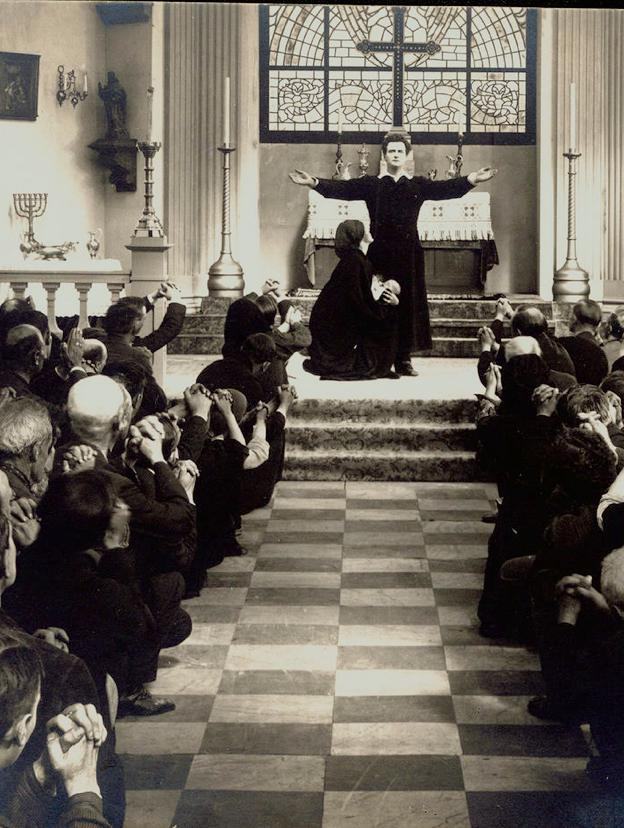
In an era brimming with cinematic spectacles and fleeting entertainment, certain films dare to plumb the profoundest depths of the human psyche, offering not merely a story but an experience. Via Crucis, a title that immediately evokes a journey of suffering and sacrifice, stands as one such audacious endeavor. It is not a film to be passively consumed; rather, it demands active engagement, a willingness to confront the often-uncomfortable truths it lays bare about our collective and individual failings. To label it simply a 'modern passion play' feels almost reductive, yet it perfectly encapsulates the film's ambitious scope: charting the stations of human delusion, sin, and suffering not through the lens of ancient scripture, but within the stark, often unforgiving landscape of contemporary existence. Aage Barfoed, the visionary writer behind this profound work, has crafted a narrative tapestry woven with threads of universal human experience, making it resonate far beyond its initial release.
What truly distinguishes Via Crucis is its meticulous dissection of delusion. This isn't just about outright lies or overt deception; it's about the insidious ways individuals construct elaborate mental frameworks to justify their actions, to shield themselves from uncomfortable truths, or to project their own failings onto others. We witness characters, portrayed with unsettling authenticity by talents such as Aage Bendixen and Ingeborg Spangsfeldt, ensnared in webs of their own making. Perhaps it's the businessman who convinces himself that his ruthless ambition is merely 'pragmatism,' ignoring the human cost of his ascent. Or the socialite who believes her superficial charity absolves her of deeper moral responsibilities. The film masterfully illustrates how these personal delusions often intertwine with societal ones, creating a collective blindness that perpetuates cycles of harm. The narrative doesn't preach; instead, it observes, allowing the audience to recognize these patterns within themselves and the world around them. It’s a chilling reminder that the path to suffering is often paved with good intentions, or at least, self-justified ones.
The subtleties of these self-deceptions are what make the film so compelling. It's not always a grand, dramatic lie, but rather the quiet erosion of self-awareness, the gradual acceptance of a convenient fiction. Moritz Bielawski, alongside Aage Fønss, embodies figures who, perhaps, represent different facets of this internal struggle—one clinging desperately to a fabricated reality, the other slowly succumbing to the weight of their own compromised ideals. The brilliance here lies in the script's refusal to offer easy answers or clear-cut villains. Instead, it posits that we are all, to varying degrees, architects of our own illusions, and the journey of Via Crucis is the painful, often brutal, process of those illusions being shattered. This thematic resonance is perhaps even more potent than the moral decay explored in Dr. Jekyll and Mr. Hyde, where the duality is starkly split; here, the internal conflict is more diffuse, more integrated into the everyday fabric of existence.
Beyond mere delusion, Via Crucis delves headfirst into the concept of sin, redefined for a contemporary context. This isn't about breaking biblical commandments in a literal sense; it's about the myriad ways we betray ourselves, each other, and the very fabric of human decency. The film paints a stark picture of moral compromises, acts of selfishness, and the calculated cruelty that can emerge from ambition or fear. Adam Poulsen and Aage Hertel, amongst the stellar ensemble, contribute to this mosaic of human imperfection, portraying characters whose decisions, seemingly minor at first, cascade into devastating consequences. The 'sins' depicted are often subtle—a whispered lie, a withheld truth, a moment of calculated indifference—yet their impact is profound, echoing the ripple effect of every choice made or avoided. It's a testament to Barfoed’s writing that these transgressions feel both deeply personal and universally applicable, reflecting the hidden moral battles fought in every heart.
The film explores the insidious nature of these modern sins, demonstrating how they often arise not from malice, but from weakness, fear, or an overwhelming desire for personal gain. It interrogates the societal structures that perhaps inadvertently encourage such behavior, subtly critiquing the moral relativism that can permeate a culture. Unlike the overt villainy often seen in films like Treason, where betrayal is a clear, definable act against a nation, the 'sins' in Via Crucis are more existential, more personal, yet no less destructive. They are the quiet compromises that chip away at one's soul, leaving a void that no material success can fill. The brilliance of the screenplay lies in its ability to make these internal struggles feel as dramatic and impactful as any external conflict, forcing the audience to confront the ethical quandaries that define our own lives.
And then, there is the suffering. The titular Via Crucis, or 'Way of the Cross,' implies a journey of agony, and the film certainly delivers on this promise, albeit in an emotionally resonant, rather than overtly graphic, manner. The suffering depicted is multifaceted: the gnawing guilt that follows transgression, the heartbreak of broken trust, the existential despair born from shattered illusions, and the quiet agony of lives lived without genuine connection. The ensemble cast, including the nuanced performances of Aage Bendixen and Ingeborg Spangsfeldt, masterfully convey these various shades of pain, transforming what could have been a didactic exercise into a deeply empathetic exploration of human vulnerability. It's a suffering that stems directly from the preceding delusion and sin, demonstrating an almost karmic inevitability that is both harrowing and profoundly moving.
This cinematic journey through affliction is not gratuitous; it serves a higher purpose, urging introspection. The film doesn't shy away from showing the raw, unvarnished consequences of human folly, echoing the profound personal cost seen in The Martyrdom of Philip Strong, though here the 'martyrdom' is often self-inflicted, a slow burning away of spirit. Each character, in their own way, carries a burden, a cross of their own making, and the film’s visual language, likely employing stark contrasts and evocative compositions, would undoubtedly amplify this sense of weight and inevitability. The direction, guided by Barfoed's script, avoids melodrama, opting instead for a quiet, pervasive sense of pathos that lingers long after the credits roll. The suffering here isn't just an event; it's a state of being, a consequence woven into the very fabric of existence when delusion and sin take root.
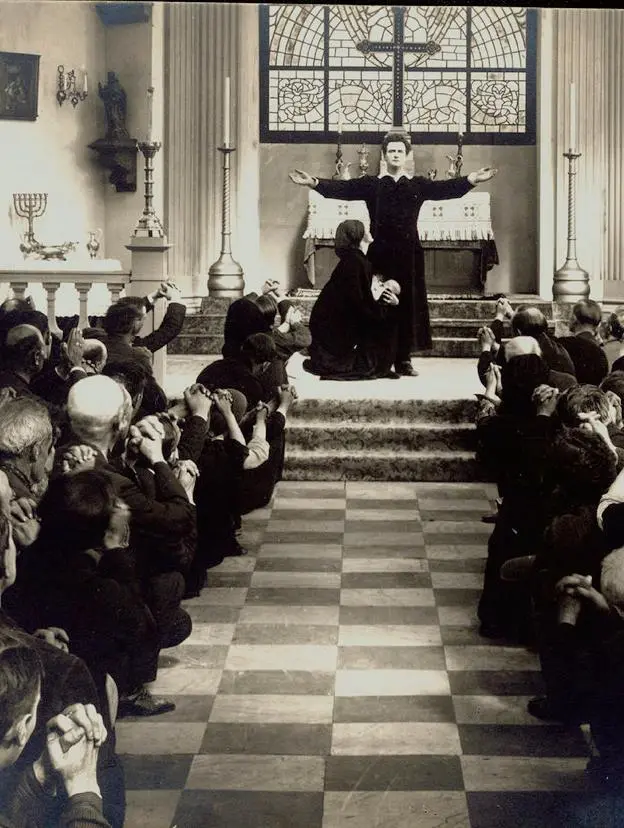
Aage Barfoed's contribution as a writer is nothing short of monumental. He doesn't just present a plot; he constructs an intricate allegory, using the framework of the passion play to explore timeless themes with a fresh, modern sensibility. The screenplay is remarkably dense, yet never opaque, inviting multiple interpretations while maintaining a clear, emotional core. His ability to craft compelling characters, even when they embody archetypal failings, is a testament to his understanding of human nature. The dialogue, one imagines, would be sharp and poignant, cutting through superficiality to reveal the raw nerves beneath. This is not the grand, sweeping epic of An Affair of Three Nations, nor the lighthearted escapism of The Mayor of Filbert; rather, it is a focused, intense examination of internal landscapes, rendered with an almost poetic realism.
Barfoed’s genius lies in his ability to translate abstract concepts—delusion, sin, suffering—into tangible, relatable human experiences. He understands that a 'modern passion play' necessitates a departure from traditional religious iconography, focusing instead on the universal spiritual and psychological struggles that transcend any specific creed. The narrative structure, one can surmise, would be deliberate, each 'station' or segment building upon the last, intensifying the emotional stakes and deepening our understanding of the characters' predicaments. This methodical approach allows the themes to unfold organically, avoiding any sense of forced morality. It's a masterclass in thematic storytelling, where every scene, every interaction, contributes to the overarching exploration of the human condition.
The success of a film so reliant on thematic depth invariably rests on the shoulders of its performers. Aage Bendixen, Ingeborg Spangsfeldt, Moritz Bielawski, Aage Fønss, Aage Hertel, and Adam Poulsen form an ensemble that, one can only imagine, delivers performances of profound sensitivity and power. They are not merely playing characters; they are embodying archetypes of human fallibility and resilience. Their challenge would have been to convey the internal turmoil of delusion and sin without resorting to overt theatricality, allowing the audience to witness the slow erosion of integrity or the agonizing realization of error through subtle gestures, haunted expressions, and nuanced delivery. The film likely thrives on the unspoken, on the weight of unsaid words and the silent battles fought within.
Each actor, in their presumed role, contributes a vital piece to the human puzzle. Spangsfeldt might portray the figure grappling with a profound sense of betrayal, while Bendixen could represent the individual caught in the trap of their own self-aggrandizement. Fønss and Hertel might explore the societal pressures that lead to moral compromise, and Poulsen, perhaps, the figure who ultimately bears the heaviest cross of suffering. Their collective work, guided by Barfoed's insightful script, would undoubtedly create a tapestry of human experience that is both heartbreaking and deeply illuminating. This kind of raw, emotional authenticity is what elevates a film from mere entertainment to a significant cultural artifact, much like the enduring power of character studies in films such as St. Elmo, which also delves into moral and spiritual journeys.
Ultimately, Via Crucis transcends its specific setting to offer a timeless reflection on the human condition. It prompts us to examine our own lives: where do we harbor delusions? What sins, however subtle, do we commit against ourselves or others? What suffering, self-inflicted or otherwise, do we carry? The film doesn't offer easy absolution or simplistic solutions. Instead, it invites contemplation, a deep dive into the mirror of our shared humanity. It suggests that while the 'passion play' may be modern, the struggles it depicts are as ancient as humanity itself, a perpetual cycle of falling and, perhaps, the difficult, often painful, journey towards redemption or at least, self-awareness.
The impact of a film like Via Crucis is not measured by box office receipts or critical accolades alone, but by its capacity to provoke thought, to stir the conscience, and to offer a profound, if challenging, understanding of what it means to be human. It stands as a powerful artistic statement, a cinematic meditation on the paths we choose and the burdens we bear. In its unflinching gaze at delusion, sin, and suffering, it offers not despair, but a poignant call to introspection, a quiet plea for greater empathy and understanding in a world often too quick to judge and too slow to truly see. It solidifies its place not just as a film, but as a vital piece of cultural commentary, much like the social critiques found in films such as The Rack or The Uplifters, which also dissect the pressures and moral dilemmas of their respective societies.
The enduring power of Via Crucis lies in its universal applicability. While specific cultural contexts may shift, the core human experiences of self-deception, moral transgression, and the resultant emotional and psychological anguish remain constant. Barfoed’s work ensures that this 'modern passion play' will continue to resonate with audiences across generations, prompting vital discussions about accountability, empathy, and the arduous, yet essential, journey towards self-knowledge. It is a film that doesn't merely depict life; it interrogates it, challenges it, and in doing so, enriches our understanding of our own complex existence.

IMDb 5.3
1915
Community
Log in to comment.