DbcultAccessing Vault...
Cult Review
Senior Film Conservator
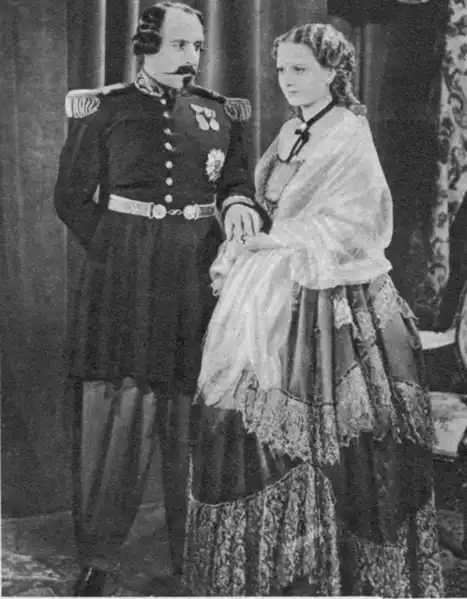
Look, I'm going to be completely honest right out of the gate here. Unless you are a hardcore history student or someone who gets a kick out of finding weird, dusty political propaganda in the bargain bin of cinema history, Villafranca is probably not for you. 🥱
If you want a fun, easy watch on a Friday night, run away. Go watch Josser in the Army instead because this film will make your brain melt from boredom.
But if you are fascinated by how old dictators tried to rewrite history through movies, well, grab some popcorn. This 1934 Italian historical drama has some of the wildest behind-the-scenes baggage you can find.
Yes, you read that right in the credits. Benito Mussolini himself had a hand in writing this thing, alongside Giovacchino Forzano.
Because of that, the whole movie feels less like a story and more like a very loud, very stiff history lecture. It is basically a giant ad for Italian nationalism, wrapped in 19th-century costumes. 🇮🇹
The plot centers around the Treaty of Villafranca in 1859. If you don't know what that is, don't worry—the movie assumes you already have a PhD in Italian unification history and offers zero help to catch you up.
We get scene after scene of men with incredibly fake-looking facial hair standing around massive tables. They stare intensely at maps as if they are trying to set them on fire with their minds.
I swear, half the actors in this movie look like they are constantly trying to read cue cards taped just above the camera lens. Their eyes keep darting upward in this really funny, subtle way.
There is this one scene where King Victor Emmanuel II (played with maximum stiffness by Enzo Biliotti) is trying to look deeply troubled. He just ends up looking like he left his stove on at home. 🤨
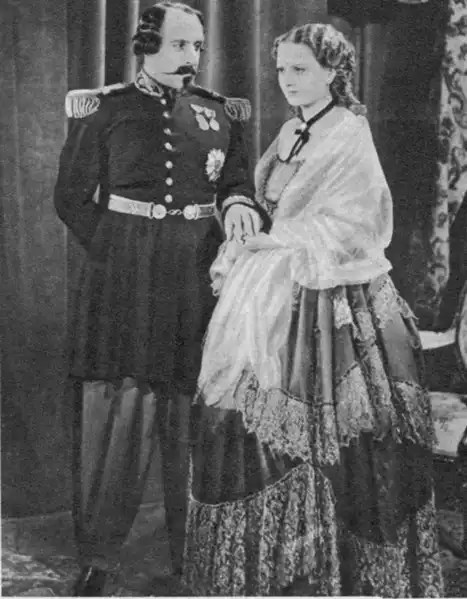
And the pauses! Oh my god, the silences in this movie are brutal.
Two characters will finish a sentence, and then they just... stand there. The camera lingers on them for what feels like ten seconds too long, making the whole thing feel like an awkward Zoom call with bad internet.
It lacks any of the organic drama you might find in other black-and-white films from the era, like The Church and the Woman. Instead, everything here is heavy, slow, and deeply serious.
Let's talk about the sideburns. The actor playing Count Cavour has sideburns so massive they deserve their own credit in the opening crawl.
They look like two fluffy squirrels clinging to the sides of his face. I spent at least ten minutes just staring at them instead of listening to the political dialogue.
There is also a crowd scene near the middle of the film that feels incredibly cheap. You can tell they only had about fifteen extras, so they just had them walk in a circle to make the mob look bigger.
It is these little budget-cutting mistakes that actually make the film watchable. Without them, it would just be a dry textbook come to life.
Probably not, unless you are doing a research paper. It is a slow, clunky relic that is more interesting to talk about than it is to actually sit through.
Still, there is a weird charm to how hard it tries to be important. It is a movie that practically screams "Look at how historic I am!" in every single frame.
Just don't expect to be entertained in the normal sense. It is a museum piece, dusty and slightly broken, but kind of fascinating if you look closely enough. 🏛️
IMDb —
1923
Community
Log in to comment.