DbcultAccessing Vault...
Cult Review
Senior Film Conservator
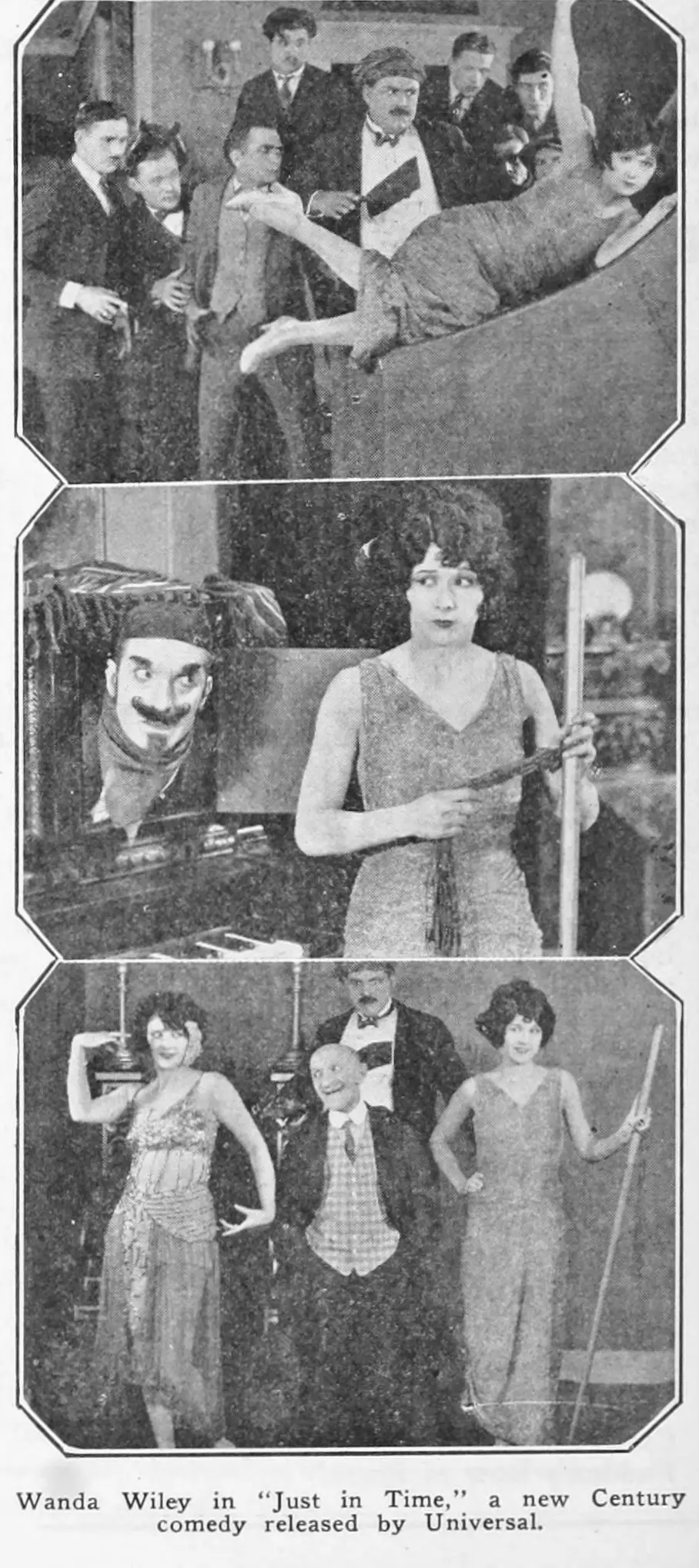
Is Just in Time worth your attention in an age of billion-dollar CGI spectacles? Short answer: yes, but only if you appreciate the raw, unpolished kinetic energy of 1920s physical comedy. This isn't a film for those seeking deep emotional resonance or complex character arcs; it is a film for the historians of movement and the fans of the 'girl reporter' trope that once dominated the silent screen.
This film works because of Wanda Wiley’s fearless physicality, which bridges the gap between slapstick and genuine action. This film fails because its narrative logic is thinner than the newsprint Wanda writes on, relying entirely on a series of convenient coincidences to drive the plot. You should watch it if you have an affinity for the scrappy, low-budget charm of Century Comedies or want to see a female lead who doesn't need a hero to save her.
Wanda Wiley is a name that has largely been swallowed by the tides of film history, which is a genuine tragedy. In Just in Time, she occupies a space somewhere between the deadpan athleticism of Buster Keaton and the pluckiness of a serial queen. Unlike the more refined performances seen in The Four Horsemen of the Apocalypse, Wiley’s work is grounded in the dirt and grime of the streets. She isn't playing a symbol; she’s playing a worker.
The way she moves through the frame is a masterclass in efficiency. In one specific sequence where she is tracking the mysterious band through a series of alleyways, her body language shifts from the inquisitive hunch of a reporter to the coiled tension of an athlete. It is a subtle transition that many of her contemporaries missed. She doesn't just run; she navigates the environment. This is action-comedy in its purest form, where the joke is often found in the sheer audacity of the movement.
Compare her performance here to her work in Let's Go. While that film leaned more into the frantic nature of the chase, Just in Time gives her a bit more narrative meat to chew on. She isn't just running for the sake of a gag; she is running for a purpose. The stakes, involving a kidnapped child, give her movements a frantic edge that elevates the tension beyond the usual two-reeler fare. It is gritty. It is fast. It works.
Before Edward Ludwig became a reliable hand for adventure films and Westerns, he was honing his craft in the trenches of short-form comedy. In Just in Time, his direction is unfussy but remarkably effective. He understands that in a film like this, the camera is merely a witness to the star's prowess. He keeps the shots wide enough to capture the full scope of Wiley’s stunts but cuts with a rhythmic precision that was ahead of its time.
One particular moment stands out: the discovery of the band's rendezvous. Ludwig uses a series of quick cuts between Wanda’s face and the hidden entrance that builds a genuine sense of dread. It’s a technique more commonly found in dramatic thrillers like Alone in London, yet Ludwig integrates it seamlessly into a comedic structure. He doesn't treat the 'mysterious band' as a joke; he treats them as a legitimate threat, which makes Wanda’s eventual victory feel earned rather than scripted.
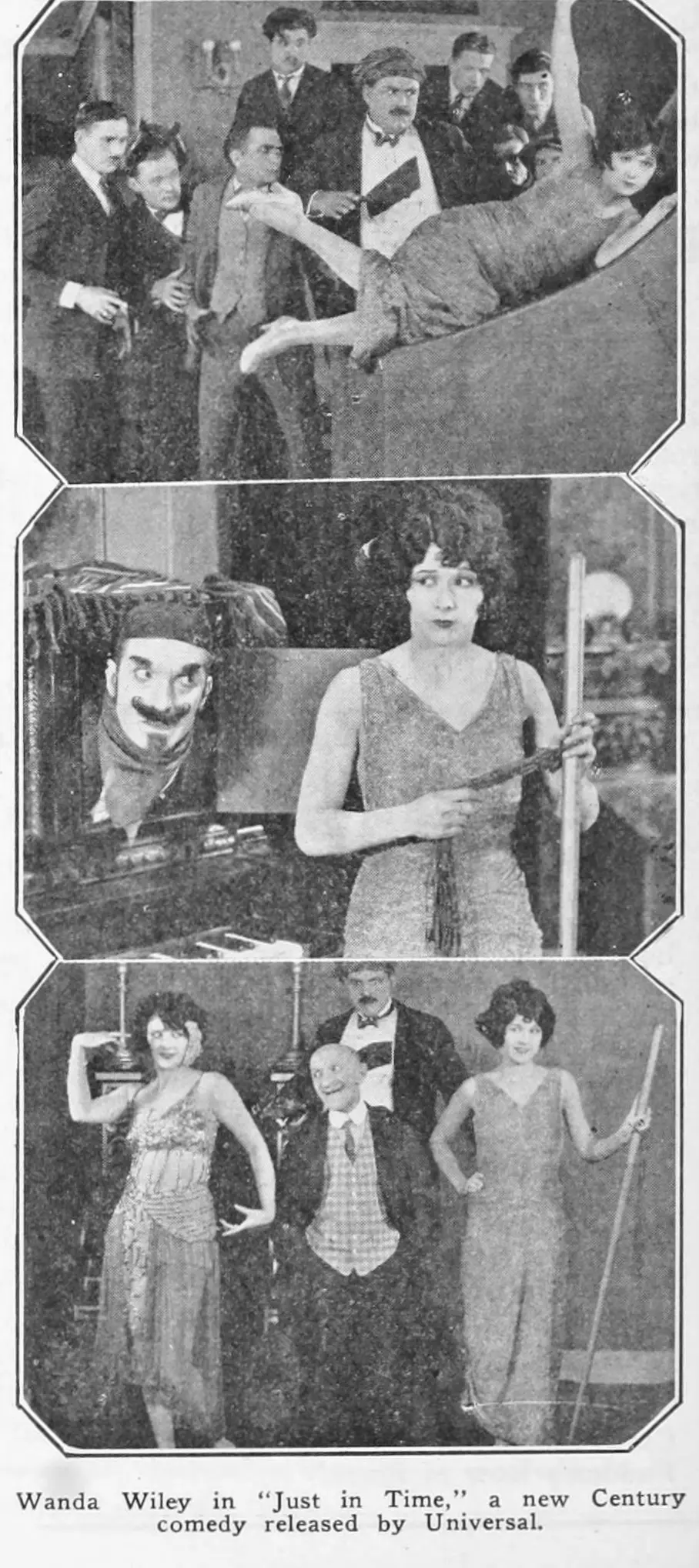
The pacing of the film is relentless. From the moment the editor's son is carried off, the film refuses to breathe. This might be a byproduct of the short runtime, but it feels intentional. Ludwig is pushing the audience through the narrative at the same speed Wanda is pushing through the city. It is a breathless experience that makes modern 'fast-paced' blockbusters look sluggish by comparison. There is no filler here. Every frame serves the chase.
If you are looking for a definitive answer, here it is: Just in Time is a vital watch for anyone interested in the evolution of the female action hero. While it lacks the high-society drama of The Sporting Venus or the domestic tension of Chickie, it offers something those films don't—raw, unadulterated agency. Wanda Wiley doesn't wait for permission to be the hero. She simply is.
However, if you struggle with the technical limitations of 1920s low-budget cinema, you might find the experience jarring. The film is grainy, the lighting is often harsh, and the secondary characters are little more than cardboard cutouts. Joe Bonner, as the supporting male lead, is largely overshadowed by Wiley’s screen presence. He is there to be the foil, but he lacks the charisma to be anything more. The film belongs to Wanda, and everyone else is just occupying space in her world.
The 1920s saw a surge in films featuring independent, working-class women, and Just in Time is a prime example of the 'Girl Reporter' subgenre. Wanda isn't just a writer; she is a detective, a brawler, and a savior. This reflects a broader cultural shift seen in films like Daytime Wives, where women were increasingly depicted in professional roles, albeit often through a comedic lens.
What makes Wanda different is her refusal to be sexualized or victimized. Even when she finds the rendezvous of the band—a moment that would traditionally lead to a 'damsel in distress' scenario—she maintains control. She rescues the editor's son not through luck, but through tactical superiority. It is a surprisingly modern portrayal of competence that feels more progressive than many films produced a decade later. She is the engine of the plot, not the cargo.
Just in Time is a fascinating relic that deserves a spot in the conversation about silent cinema’s greatest hits. It isn't a high-brow artistic statement like Assunta Spina, nor is it a sweeping epic. It is a lean, mean, 20-minute machine designed to entertain and thrill. It works. But it’s flawed. The flaws, however, are easily overlooked when you see Wiley in full flight, leaping over obstacles and taking down goons with a grin.
"Wanda Wiley doesn't just play a reporter; she plays a force of nature that the 1920s newsroom wasn't ready for."
In the end, Just in Time proves that you don't need a massive budget to create a compelling hero. You just need a lead with the guts to do their own stunts and a director who knows when to get out of the way. It’s a scrappy little film that punches way above its weight class. If you have the chance to see it, don't miss out on this window into a time when the movies were moving faster than the world around them.
IMDb 7.8
1919
Community
Log in to comment.