DbcultAccessing Vault...
4.8/10
Senior Film Conservator
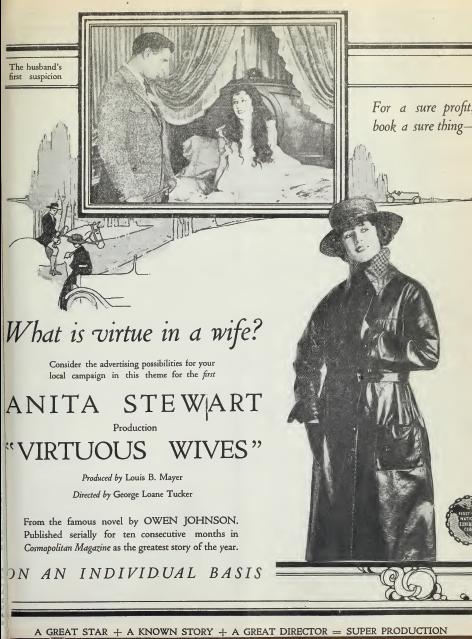
A definitive 4.8/10 rating for a film that redefined the boundaries of cult cinema. Virtuous Wives remains a cornerstone of transgressive art.
The silent era of motion pictures often struggled to balance the histrionic demands of the stage with the burgeoning subtlety of the camera lens. Yet, in Virtuous Wives, director George Loane Tucker manages to capture a zeitgeist of American anxiety that feels startlingly contemporary. Released in 1918, a year defined by global upheaval and shifting social strata, this film serves as a poignant examination of the American Dream’s darker underbelly. It is a work that avoids the simplistic moralizing found in contemporary efforts like Unto Those Who Sin, opting instead for a textured exploration of character transformation.
The narrative pivot—Andrew’s appointment to a Colorado Steel Mill—is more than a mere plot device; it is a thematic catalyst that pits the agrarian innocence of the past against the cold, metallic future of the 20th century. Unlike the romanticized tragedies of Camille, the conflict here is rooted in the socioeconomic reality of the era. Andrew, played with a stolid, if somewhat oblivious, masculinity by Conway Tearle, represents the new industrialist—a man whose success is measured in tonnages and dividends, often at the expense of the emotional architecture of his home.
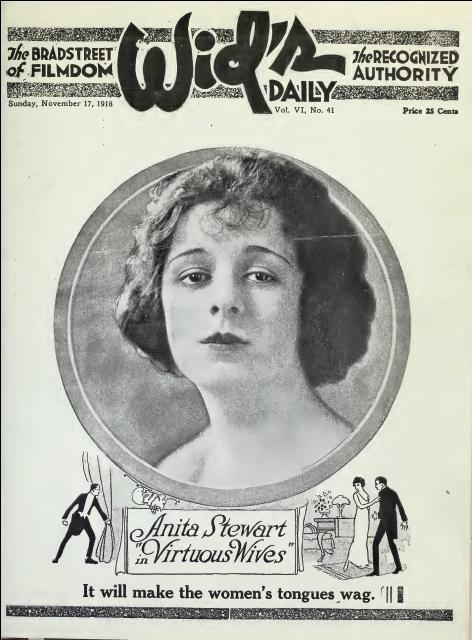
Amy, the heart of this drama, is thrust into a world where her inherent goodness is treated as a quaint relic. The 'virtue' she possesses is not merely chastity, but an authenticity that the nouveau riche of Colorado seek to commodify or crush. The film’s pacing mimics the relentless rhythm of the steel mill itself, building a sense of impending doom as Amy is lured into a social circle that prizes artifice over affection. The presence of Hedda Hopper in the cast adds a layer of meta-textual irony, given her later real-life role as the arbiter of Hollywood’s social hierarchies.
Anita Stewart’s performance is a revelation of silent-era nuance. While many of her peers relied on broad gestures, Stewart utilizes her expressive eyes to convey a shifting spectrum of emotions—from the initial warmth of her domestic bliss to the wide-eyed intoxication of the high life, and finally to a hollowed-out disillusionment. Her portrayal of Amy is a masterclass in internal conflict. We see her grapple with the seductive power of 'riches beyond belief,' a theme that echoes the moral weight found in The Race, though Tucker’s direction provides a more intimate, character-driven focus.
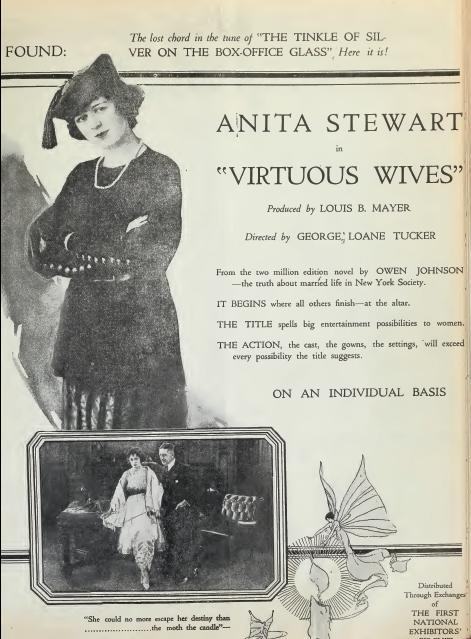
"The tragedy of Amy is not that she loses her money, but that she nearly loses her capacity to value anything that cannot be bought. Tucker frames her amidst the cold grandeur of her new mansion like a specimen in a gilded cage."
The cinematography in Virtuous Wives serves as a bridge between the theatrical past and the cinematic future. The use of deep focus in the scenes within the steel mill creates a sense of overwhelming scale, making the human protagonists seem small and inconsequential against the machinery of progress. This visual strategy stands in stark contrast to the claustrophobic, ornate interiors of the socialite parties. It is a dichotomy that Tucker explores with more sophistication than one might find in The Iron Test, where the industrial setting is often merely a backdrop for action rather than a psychological mirror.
Furthermore, the film’s editing—handled with a rhythmic precision—heightens the tension between Amy’s internal world and her external obligations. The juxtaposition of the roaring furnaces with the silent, icy stares of the Colorado elite creates a sensory experience that transcends the limitations of the silent medium. One can almost smell the ozone and the expensive perfume clashing in the air.
When comparing Virtuous Wives to other contemporary works, its maturity becomes even more apparent. While Carmen focuses on the destructive power of primal passion, Tucker’s film focuses on the destructive power of social aspiration. It shares a certain DNA with The Stubbornness of Geraldine in its depiction of female agency within rigid social structures, but it possesses a grittier, more realistic edge. The film doesn't offer the easy escapism of The Fairylogue and Radio-Plays; instead, it demands that the audience confront the ethical compromises inherent in the pursuit of the American dream.
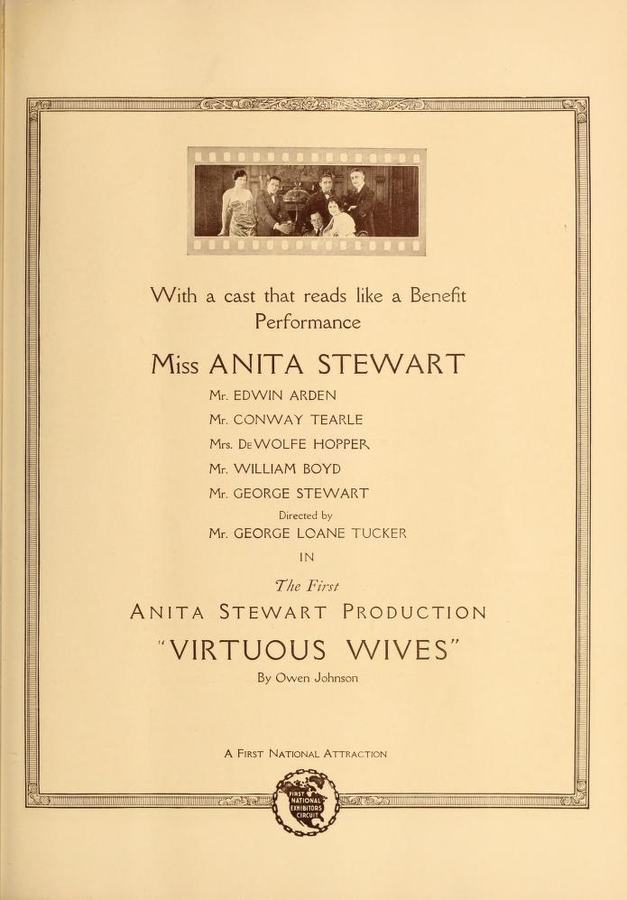
The supporting cast, featuring luminaries like William 'Stage' Boyd and Lucille Clayton, provides a rich tapestry of archetypes that populate this industrial wasteland. Each character serves as a warning or a temptation, creating a moral labyrinth that Amy must navigate. The writing by Owen Johnson and George Loane Tucker himself is sharp, avoiding the mawkish sentimentality that often plagued silent dramas like Lydia Gilmore.
In the grand pantheon of 1910s cinema, Virtuous Wives stands as a precursor to the sophisticated social satires of the 1920s. It anticipates the themes of F. Scott Fitzgerald, capturing the 'restless' quality of a generation that has achieved material success only to find an emotional vacuum at its center. The film’s exploration of the 'hater of men' trope, seen through a more complex lens than in The Hater of Men, suggests a world where gender roles are being re-negotiated in the face of economic shifts.
Viewing the film today, one is struck by how little the core anxieties have changed. The temptation of 'riches beyond belief' and the subsequent pressure to conform to a specific social aesthetic remain potent forces. Tucker does not provide a simplistic 'happily ever after.' Instead, he offers a sobering reflection on the cost of ambition. The final frames of the film leave the viewer with a sense of melancholy—a realization that while Amy may have retained her 'virtue,' the world she inhabits has been forever altered by the industrial fires of Colorado.
The production values of Virtuous Wives were clearly substantial for the time. The costume design, in particular, serves a narrative purpose, tracing Amy’s descent into decadence through increasingly elaborate and restrictive gowns. These sartorial choices highlight the theme of wealth as a form of entrapment, a visual motif that is used with similar effectiveness in Civilization, albeit for different political ends. The set design of the steel mill, with its cavernous halls and hissing steam, provides a proto-expressionist atmosphere that elevates the film above the standard melodrama of its day.
Ultimately, George Loane Tucker’s vision is one of profound empathy. He does not judge Amy for her flirtation with the high life; rather, he blames the systemic pressures that equate worth with wealth. In this regard, Virtuous Wives is a more radical film than it first appears. It questions the very foundations of the industrial society that was then coming into its full, terrifying power. It is a film that deserves a place alongside the great works of the era, such as John Barleycorn or Kidnapped, for its willingness to engage with the complexities of the human condition without resorting to easy answers.
Virtuous Wives is a haunting, visually arresting masterpiece of early American cinema. It is a vital document of a nation in transition, anchored by a career-best performance from Anita Stewart. For those interested in the evolution of social drama and the psychological nuances of the silent screen, this film is an essential, if somber, viewing experience.
IMDb —
1916
Community
Log in to comment.