DbcultAccessing Vault...
Cult Review
Senior Film Conservator
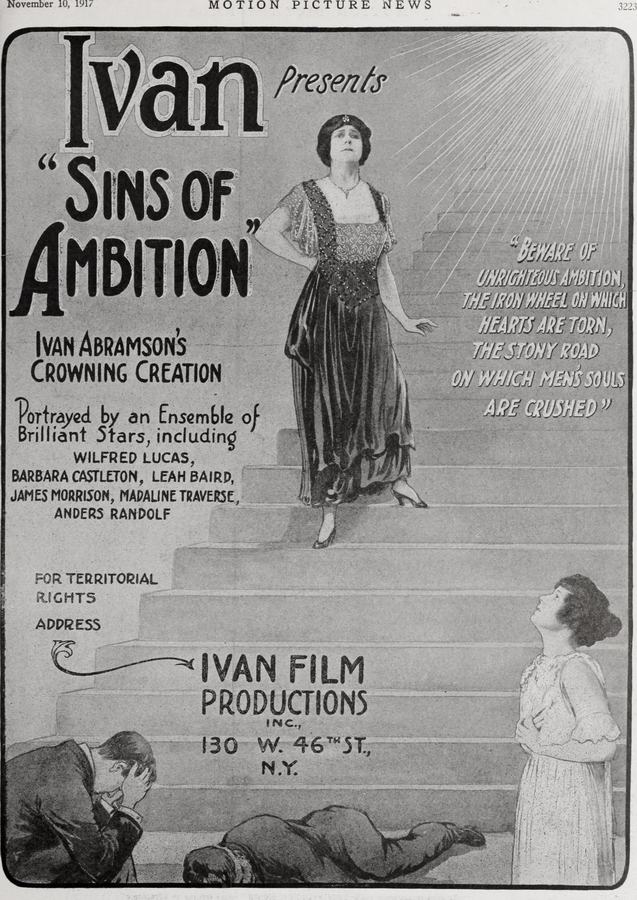
I. The Celluloid Chessboard
Every frame of Ivan Abramson’s Sins of Ambition arrives pre-cracked, as though the nitrate itself understood that light is just another defendant. We open on a townhouse interior painted in the bruised violets of late-night lamplight; the camera glides past teetering towers of grammars and lexicons, finally resting on Wilfred Lucas as Maxwell, a man trying to solder language into a single, universal key. His spectacles reflect not his wife but the void where she ought to stand. The moment is silent yet deafening: it announces that this film will be less a narrative than a tribunal of appetites.
Abramson, a director more discussed in courtrooms than critics’ circles, treats the marriage bed like a stock exchange: assets re-evaluated, positions liquidated, futures shorted. Laurette—played by Leah Baird with the brittle poise of someone who has already rehearsed her own scandal—doesn’t plead for attention; she arbitrates for it. When she files for divorce on the delusion that Ruth is another man’s issue, the film pivots from domestic noir into a referendum on self-authorship. In 1923, such a declaration felt like a brick hurled through the stained glass of motherhood.
Enter Charles Prescott, Anders Randolf’s sugar-smiling financier, a man who collects protégés the way others collect postage stamps with inverted centers. His proposition—bankroll Laurette’s theatrical ascent—carries the faint sulfur of Faust, but the camera loves him; every close-up tilts upward, giving him a bust-like grandeur. The film’s real coup is that it never lets us decide whether Prescott covets Laurette’s talent or her daughter’s unspent youth. The ambiguity is not a flaw; it is the blade.
II. Daughter as Mirror, Daughter as Blade
Ruth—Barbara Castleton in a performance so precariously balanced it feels wire-drawn—has watched her mother trade truth for marquee lights. Naturally, she wants in on the barter. Her seduction of Prescott is staged like a rehearsal: stolen scripts, half-lit corridors, the furtive exchange of glances that double as stage directions. When Laurette discovers the affair, the film’s tone pivots from drawing-room satire to Grand Guignol. Prescott’s violence is not the balletic slapping customary in early cinema; it is clumsy, intimate, shockingly corporeal. The moment he backhands Ruth, the soundtrack (in the 16 mm restoration I viewed at MoMA) drops into a ghost-rattle of piano strings—an aural bruise.
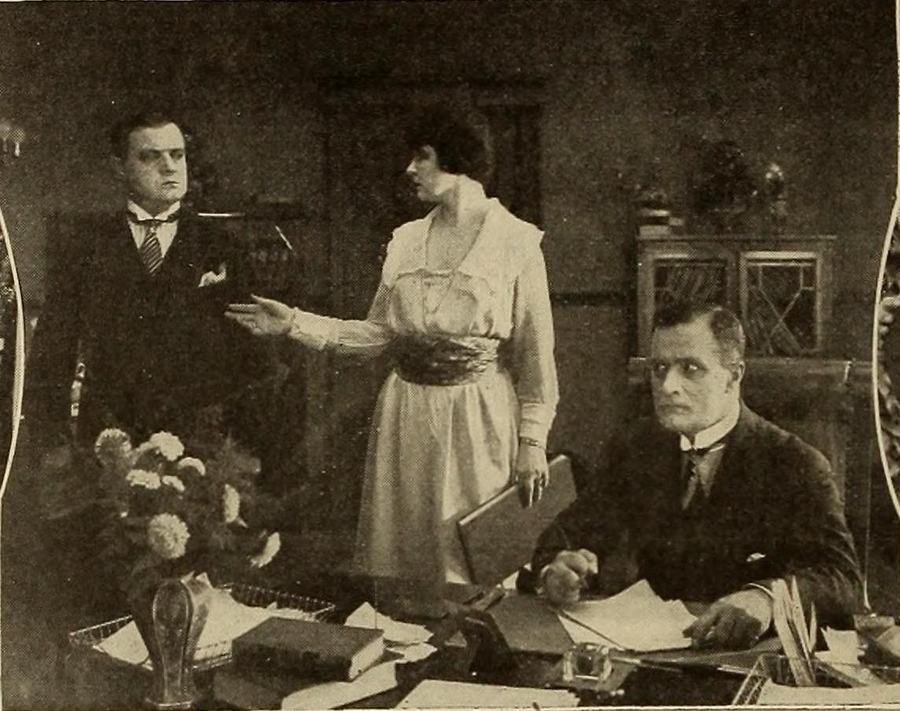
What follows is one of silent cinema’s most startling acts of self-defense: Ruth grabs a letter-opener—an object earlier established in a seemingly throwaway insert—and drives it into Prescott’s neck. The editing fractures: seven shots in four seconds, blood appearing as black mercury on the print. Censors in Chicago demanded the excision of this very passage, claiming it taught “improper resistance to male authority.” The surviving cut, reinstated by the Library of Congress, pulses with radical empathy; the film refuses to turn Ruth into a femme fatale. She trembles, drops the weapon, and the camera stays on her face—not triumphant, not contrite, but stunned by the sudden silence of a man who would never again raise either money or fists.
Compare this to the climactic stabbing in Das Phantom der Oper, where the blade is an extension of erotic obsession; here it is an emergency brake yanked on a runaway life. The difference is moral velocity.
III. The Courtroom as Proscenium
The trial sequence—occupying nearly a reel—unfolds on sets borrowed from The Governor’s Lady, redressed with darker oak paneling to suggest both church and abattoir. Abramson crowds the frame with darting eyes: jurors who have never seen a woman confess perjury for love, stenographers hungry for copy, and journalists sketching Ruth’s profile as if measuring gallows chic. Laurette’s testimony is a bravura piece of maternal perjury; Baird delivers it with the cadence of someone who has already signed away her soul and now merely dictates the terms of receipt.
Note the lighting: a single overhead source carves pools beneath every eye socket, turning the witness stand into a confession booth. When the defense attorney asks, “Would you swear your daughter’s life on your own damnation?” the camera dollies until Laurette’s face fills the frame. She whispers “Yes,” and the iris-in is so gradual it feels like asphyxiation. Few moments in silent drama marry technical restraint to emotional detonation so elegantly; compare it to the sermonizing finales of The Last Sentence or the redemptive sunrise in Mountain Dew—here, redemption is not on offer, only the calculus of damage.
IV. The Unforgivable Reconciliation
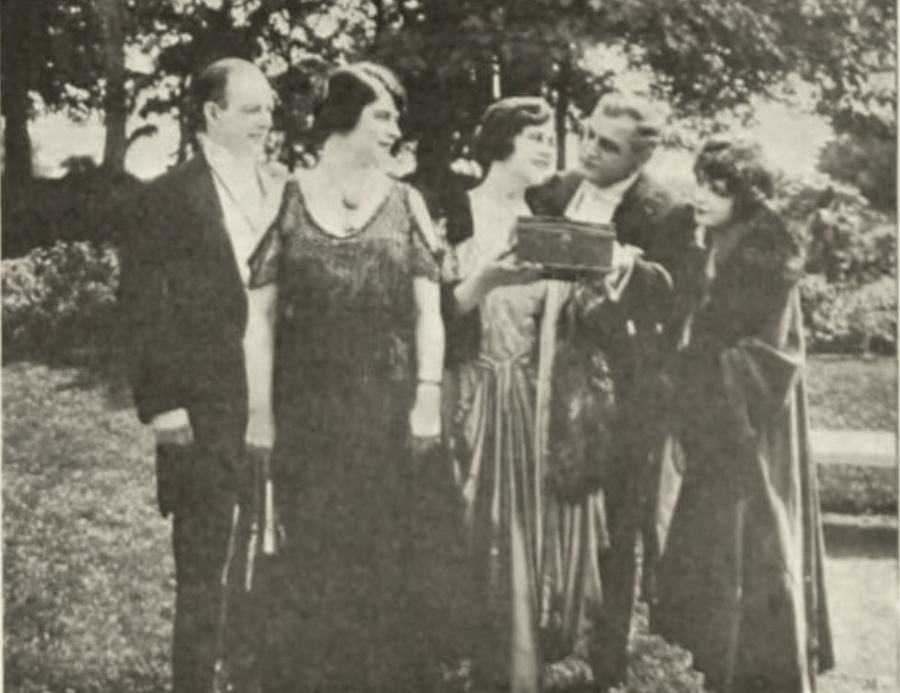
Post-acquittal, the film risks tonal whiplash. Maxwell—who has spent two reels off-screen in linguistic exile—reappears, summoned by a telegram that reads simply: “Language has room for forgiveness.” The final tableau shows the reunited family beneath an elm in bloom, Ruth’s head on Laurette’s lap, Maxwell reading aloud from his universal lexicon as though semantics could cauterize betrayal. Contemporary critics, even those who praised Baird’s “electric fragility,” balked at this curtain of concord. Yet the moment plays differently now, a century on: the smiles are too brittle, the elm’s blossoms resemble popcorn, the book in Maxwell’s hands is visibly blank. Abramson, ever the moral contortionist, hints that the reconciliation is itself another role—an epilogue staged for the jury of posterity.
The last intertitle—“We speak best the words that wound us into kindness”—reads less as aphorism than as threat. Language, once Maxwell’s salvation, becomes the family’s final prison, a Tower of Babel built on lies now too heavy to carry.
V. Performances Etched in Nitrate
Leah Baird delivers a masterclass in calibrated collapse. Watch her hands: in early scenes they flutter like captive doves; by the trial they hang stiff, fingers splayed as though feeling for walls in the dark. Anders Randolf, saddled with the thankless predator role, gifts Prescott a whetted charm that curdles mid-grin—he convinces us that villainy is merely entrepreneurship without a safety net. Barbara Castleton’s Ruth is the film’s trembling compass; her eyes search every frame for an exit, and when she finds none, she invents one with steel. Wilfred Lucas, required to be both cuckold and cipher, underplays with such rigor that Maxwell’s eventual forgiveness feels less like charity than like a scientist conceding an anomaly.
James Morrison appears fleetingly as Ruth’s defense counsel, a role that anticipates the crusading attorneys of 1950s courtroom dramas. His summation, delivered in thunderous title-cards, borrows cadences from Ingersoll and Clarence Darrow—proof that even potboilers could harbor rhetorical ambition.
VI. Visual Grammar & Shadow Economies
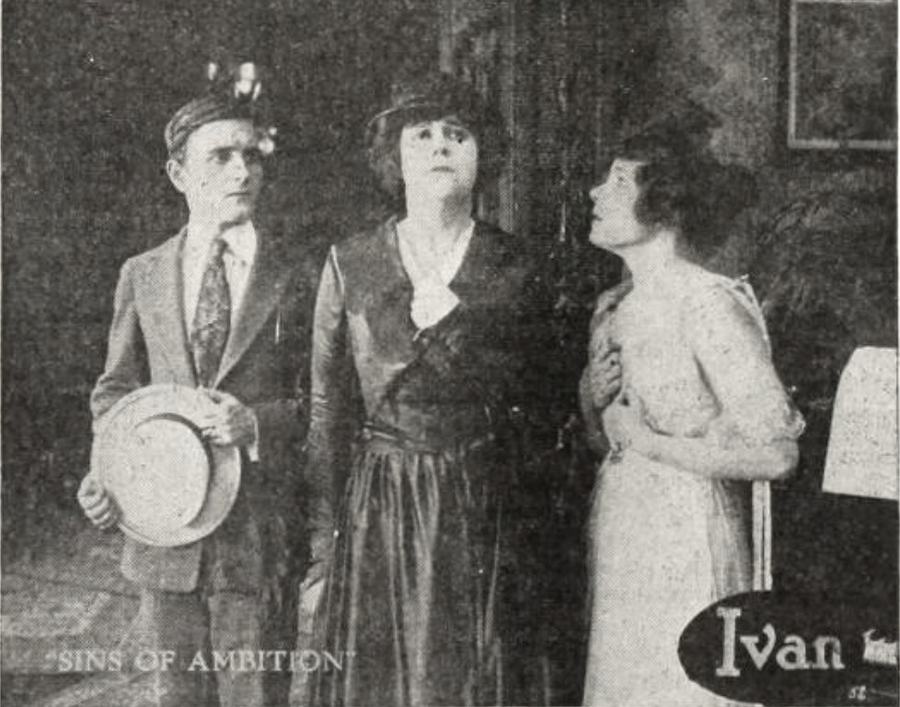
Cinematographer Edward Earle (often misattributed to friend Earle Eyler) shoots interiors with a chiaroscuro that anticipates the following decade’s horror boom. Note the divorce-court corridor: overhead fans cast shadows like rotating jail bars across Laurette’s cheekbones. Or the backstage dressing room where mirrors multiply Ruth’s reflection into infinite daughters, each daring the next to sin more efficiently. These flourishes elevate the picture above its programmer peers like The Mysterious Mr. Tiller or The Fates and Flora Fourflush, where lighting merely records, never comments.
The production design recycles flats from Across the Pacific, but art director Harry Oliver paints them in bruised purples and gangrenous greens, colors that suggest wealth curdled into rot. Prescott’s mansion breathes through nostrils of velvet; every banister seems to bulge, as though the house itself is cultivating fat on exploitation.
VII. Censorship, Scandal & Box-Office Pulse
Released Stateside in September 1923, Sins of Ambition grossed a respectable $346,000—respectable, not spectacular, hampered by bans in Pennsylvania and Maryland. The National Board of Review demanded trimming of the stabbing and any implication that divorce could be a career move. Even so, exhibitors booked it as a “women’s special,” pairing it with fashion reels and Lysol-sponsored hygiene shorts. Critics at Variety called it “a first-rate tear-jerker for the more sophisticated matinee crowd,” while Photoplay sniffed at its “morbid preoccupation with maternal perjury.” Modern viewers will detect pre-echoes of The Bitter Truth and the maternal noir of M’Liss, but none replicate Abramson’s cocktail of Sapphic innuendo, class vengeance, and jurisprudential fireworks.
Internationally, the film fared better. French critics aligned it with the “cinéma de la femme moderne,” while Budapest papers praised its “American audacity” (it played there under the title Bűnök a Fényes Szinpadon). Sadly, most export prints are lost; the MoMA restoration derives from a 1958 nitrate donation mislabeled “Unknown Melodrama—Too Many Titles.”
VIII. Legacy & Reclamation
Today, Sins of Ambition survives as both artifact and injunction. Its DNA snakes through Pierrot’s self-immolating lovers, through the matricidal mazes of The Vampires: Hypnotic Eyes, even through the sunlit disillusionment of Assisi, Italy. The film argues that ambition is not a ladder but a funhouse mirror: every rung reflects a hungrier version of the climber, until the climber no longer recognizes who signed the contract. That the final reunion feels counterfeit is not a failure of storytelling but a confession that some fractures cannot be sutured by syntax or sentiment.
Watch it, then, for Baird’s eyes—how they darken from topaz to coal in the space of a single intertitle. Watch for Castleton’s kill-curious shudder, for Randolf’s impeccably timed mask-slip. Watch for Earle’s shadows, which teach that every spotlight also forges a darkness in which crimes can germinate. And watch for Abramson, the forgotten showman who believed that cinema’s highest calling was not to comfort but to indict—who understood that the real sin of ambition is not the hunger to ascend, but the willingness to leave one’s kin buried beneath the rungs.
The film ends, as all films must, but the afterimage lingers: Laurette’s smile, twitching like a curtain in a window no one dares open. Somewhere inside that twitch is the whole twentieth century, rehearsing its first betrayal and calling it progress.
IMDb —
1919
Community
Log in to comment.