DbcultAccessing Vault...
5.9/10
Senior Film Conservator

A definitive 5.9/10 rating for a film that redefined the boundaries of cult cinema. Waking Up the Town remains a cornerstone of transgressive art.
In the realm of silent cinema, there exist films that transcend their era, speaking to universal themes that continue to resonate with audiences today. 'Waking Up the Town' (1920) is one such movie, a poignant tale of love, ambition, and the unyielding forces of nature.
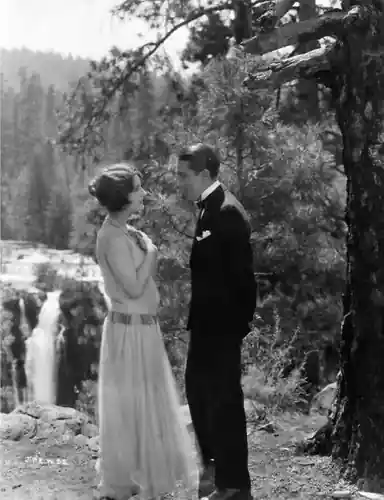
The narrative unfolds with a young girl visiting her grandfather, the proprietor of a humble auto repair shop. It is here that she encounters his handsome assistant, an engineer with a vision to harness the power of a nearby waterfall. This chance meeting blossoms into a romance, as the ingénue finds herself enamored with the charming and industrious young man.

As the story progresses, the engineer's determination to secure financing for his project takes center stage. His efforts to persuade the town banker are meticulously crafted, showcasing his intellect and passion. This subplot serves as a testament to the power of innovation and the challenges faced by visionaries in their pursuit of progress.

However, the film takes a dramatic turn with the introduction of a cataclysmic twist. The grandfather, an amateur astronomer, discovers that the Earth is being pulled out of its orbit, setting a collision course with the moon. This revelation casts a somber tone over the narrative, elevating the film from a simple romance to a complex exploration of human existence in the face of cosmic uncertainty.

The cast delivers commendable performances, with Norma Shearer and Jack Pickford bringing a sense of authenticity to their roles. The chemistry between the leads is palpable, rendering their romance convincing and heartfelt. Alec B. Francis, as the grandfather, brings a sense of gravity to the film, his character's astronomical discovery serving as a poignant reminder of the universe's indifference to human endeavors.

In terms of cinematic craftsmanship, 'Waking Up the Town' exhibits a remarkable level of artistry. The cinematography is crisp, capturing the quaint charm of the town and the serene beauty of the surrounding landscape. The use of symbolism, particularly in the depiction of the waterfall, serves to underscore the themes of nature's power and humanity's place within the larger cosmic order.
When compared to contemporaneous films like Just a Good Guy and King Solomon's Mines, 'Waking Up the Town' stands out for its nuanced exploration of character and theme. While You Find It Everywhere and Babs share similarities in their romantic narratives, 'Waking Up the Town' distinguishes itself through its bold and unflinching portrayal of existential crisis.
The film's themes of love, ambition, and the inexorable forces of nature are timeless, resonating with audiences today. As the characters navigate their personal struggles against the backdrop of an impending catastrophe, the film poses profound questions about the human condition. It is a testament to the power of cinema to transcend its historical context, speaking to universal concerns that continue to captivate viewers.
In conclusion, 'Waking Up the Town' is a masterful work of cinematic art, weaving a complex narrative that is both visually stunning and emotionally resonant. With its talented cast, innovative storytelling, and poignant themes, this film is an essential viewing experience for anyone interested in the evolution of cinema and the exploration of the human experience.
Ultimately, 'Waking Up the Town' serves as a reminder of the power of film to captivate, inspire, and challenge our perceptions of the world and our place within it.
IMDb 6.7
1932
Community
Log in to comment.