DbcultAccessing Vault...
7.5/10
Senior Film Conservator
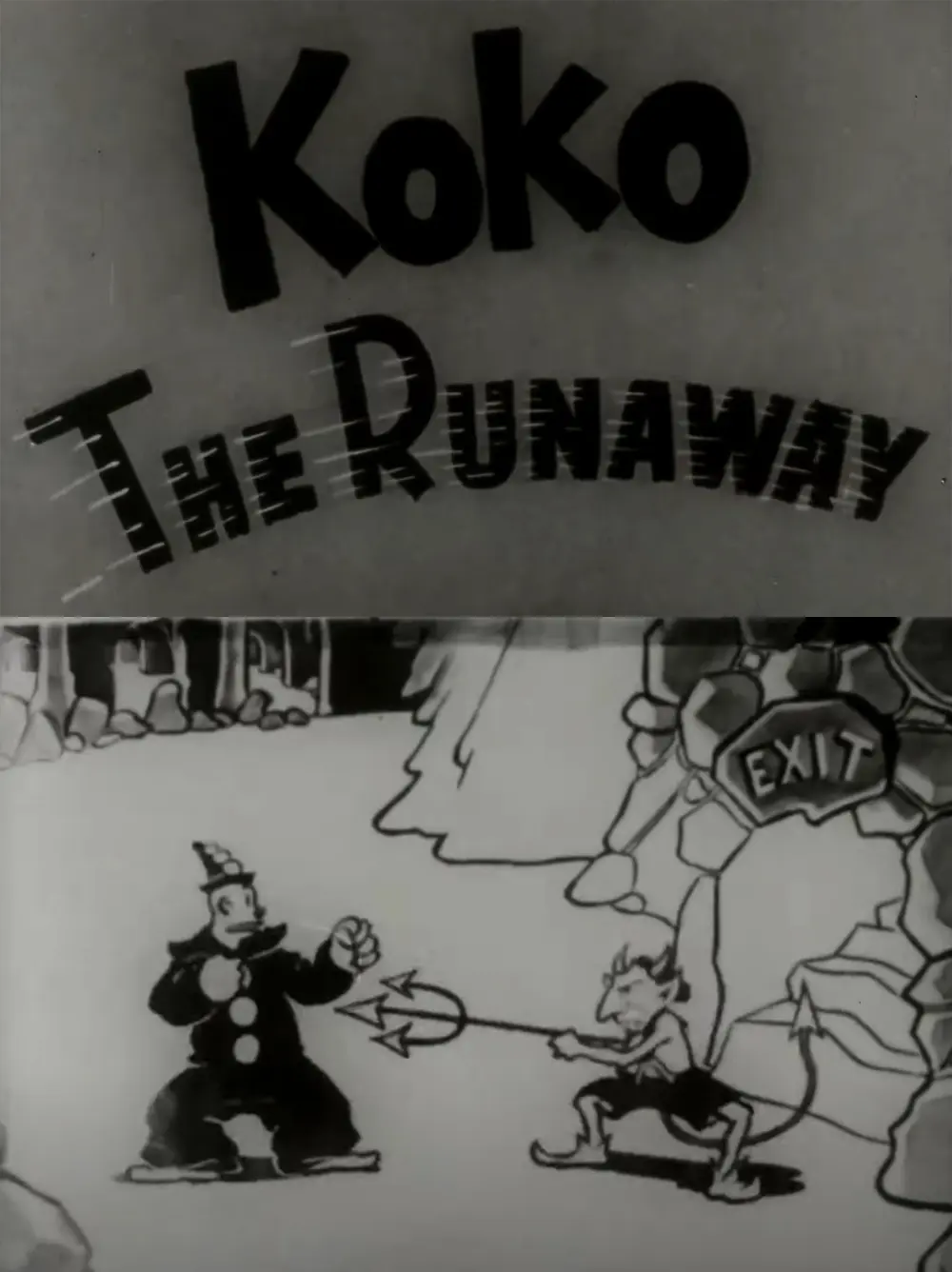
A definitive 7.5/10 rating for a film that redefined the boundaries of cult cinema. The Runaway remains a cornerstone of transgressive art.
The year 1924 stood as a pivotal juncture in the evolution of the moving image, a period where the primitive flickers of the nickelodeon era were being supplanted by a sophisticated, albeit silent, visual language. Amidst this transition, Max Fleischer emerged not merely as a technician, but as a sorcerer of the celluloid. The Runaway (1924) represents a zenith in the 'Out of the Inkwell' series, a work that oscillates violently between whimsical slapstick and a dark, almost Bosch-like surrealism. To watch the Inkwell Clown today is to witness the birth of a kinetic consciousness, a character who understands, however dimly, that he is a prisoner of the pen.
The premise of The Runaway is deceptively simple, yet it harbors a profound philosophical query: what happens when a creation rejects its genesis? Max Fleischer, appearing as himself, acts as the demiurge, birthing the Clown from a drop of ink. The friction begins immediately. Unlike the more subservient characters seen in Be a Little Sport, the Inkwell Clown possesses a volatile, trickster energy. His escape from the drawing board is not just a plot point; it is a breach of the fourth wall that predates the postmodern flourishes of late 20th-century cinema.
As the Clown navigates the studio, the interplay between live-action environments and the hand-drawn interloper creates a jarring, dreamlike aesthetic. This 'mixed-media' approach was revolutionary for the time, providing a sense of depth and tangibility that was absent in more traditional animations like Winter Has Came. The fluidity of movement, achieved through Fleischer’s patented rotoscoping technique, gives the Clown a weight and presence that makes his eventual fall into the floorboards feel remarkably visceral.
The true heart of The Runaway lies in its second act—the descent. When the Clown slips through a crack in the floor, he is not merely falling into a basement; he is falling out of the civilized world and into a primal, infernal nightmare. The depiction of 'Hell' in 1924 animation was rare, and Fleischer handles it with a mixture of grotesque humor and genuine menace. The flames are not merely background elements; they are licking, sentient entities that threaten to consume the very ink that gives the protagonist life.
This sequence mirrors the dread found in contemporaneous European cinema, such as the haunting atmosphere of During the Plague. However, while those films relied on shadows and set design, Fleischer relies on the infinite malleability of the line. In Hell, the rules of physics are discarded. The Clown’s body distorts, stretches, and compresses as he evades demonic entities. It is a masterclass in squash-and-stretch animation, used here not for laughs, but to convey a sense of existential panic.
One cannot discuss The Runaway without acknowledging the technical wizardry of the Fleischer brothers. The Rotoscope, which allowed Max to trace live-action footage frame by frame, provided the Clown with a rhythmic, human-like gait that was startling to 1920s audiences. This realism serves to heighten the absurdity of the Hell sequence. When the Clown interacts with the 'real' world, he feels like an intruder; when he falls into the floorboards, he becomes a victim of a reality even more unstable than his own.
Comparing this to the static staging of The Honor of His House or the theatrical framing of The City of Masks, Fleischer’s work feels decades ahead of its time. He wasn't just filming a story; he was manipulating the medium itself to create a new form of visual experience. The use of high-contrast lighting in the underworld scenes evokes the same mystery found in The White Masks, yet Fleischer applies this to a character made of nothing but black ink and white space.
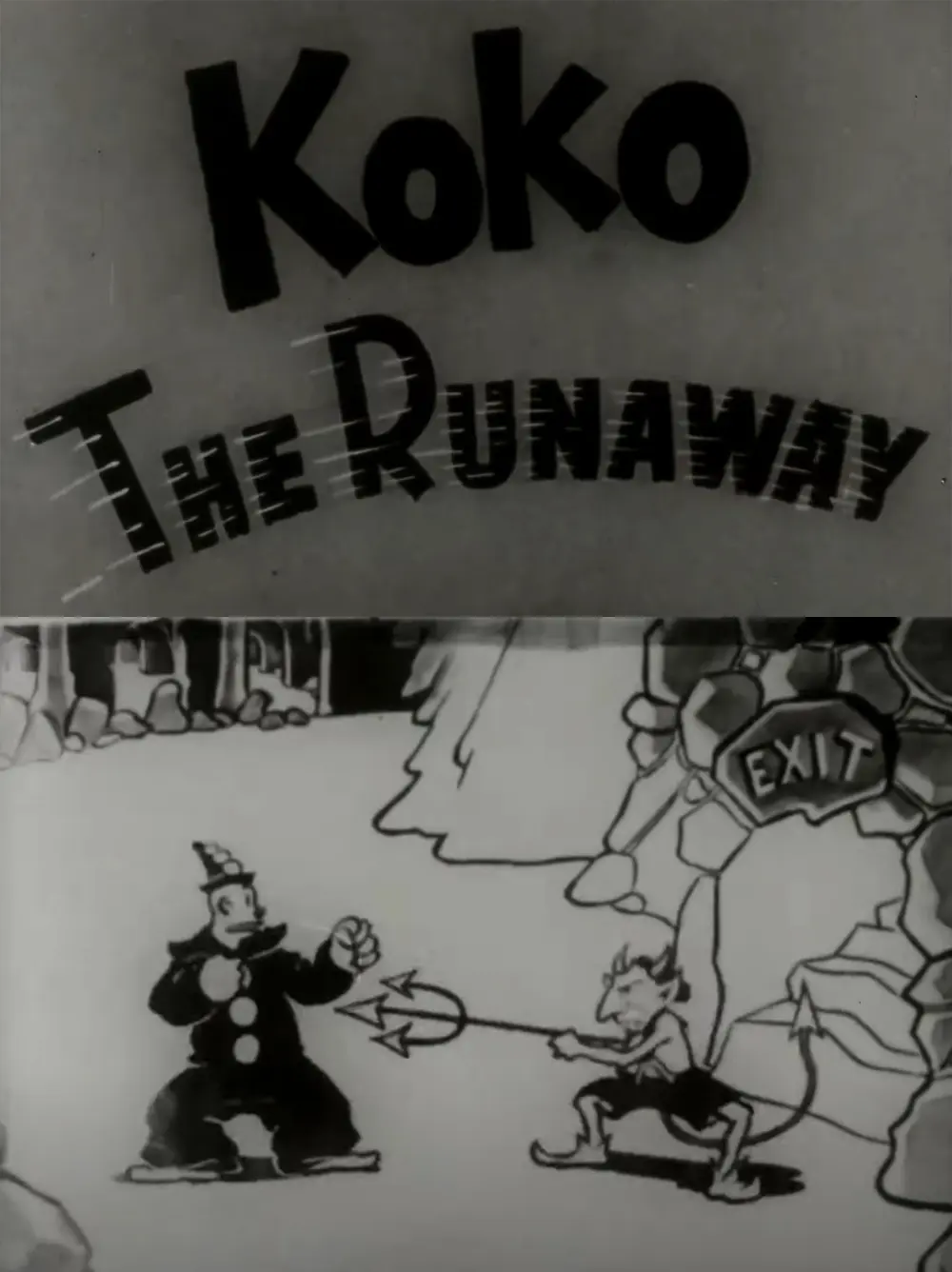
The narrative trajectory of The Runaway is a study in escalating tension. The initial playfulness—a characteristic shared with lighthearted fare like Somebody Lied—gradually curdles into something more sinister. The clown's face, usually a mask of joy, begins to register a spectrum of terror. This psychological depth was uncommon for the 'funny animal' or 'clown' shorts of the era. Fleischer was interested in the pathos of the puppet, the tragedy of the creature that can never truly escape its master's desk.
The film’s pacing is relentless. Once the 'runaway' begins, there is no respite. This breathless quality is reminiscent of the chase sequences in Der Mann ohne Namen - 1. Der Millionendieb, but with the added layer of supernatural peril. The fiery pits are not just obstacles; they are symbolic of the 'erasure' that every animated character fears—the return to the void, the drying of the ink.
In the broader landscape of 1924, cinema was exploring themes of identity and social masquerade. Works like Queens Are Trumps or Alias Mary Brown dealt with the roles individuals play in society. Fleischer takes this a step further by questioning the very nature of existence. If the Clown is merely a series of drawings, does he have a soul to be damned? The descent into Hell suggests that the animator’s ink has a spiritual weight. This isn't just a 'gag' film; it's a proto-horror short that uses the medium of animation to explore the uncanny.
Even when compared to experimental works like La luz, tríptico de la vida moderna, The Runaway holds its own through its sheer imaginative audacity. It lacks the pretension of some 'art' films of the period, yet it achieves a similar level of complexity through its visual metaphors. The crack in the floorboards is the ultimate boundary—the place where the domestic meets the demonic, where the floor of a common studio opens up to reveal the eternal fire.
The influence of The Runaway can be seen in everything from the 'Silly Symphonies' to the psychedelic animations of the 1960s. It established the 'Out of the Inkwell' series as a playground for technical and narrative experimentation. While other filmmakers were focused on the realism of the Swedish exhibition style, as seen in Boman på utställningen, Fleischer was focused on the impossible. He understood that the screen was a window into a world where a clown could fall into Hell and emerge, perhaps, a little more aware of his own artifice.
The film also serves as a poignant reminder of the fragility of early film. Like the fleeting beauty of The Faded Flower, these early shorts often exist in a state of decay. Yet, the vibrancy of the Clown’s movements remains undimmed by a century of time. The flames of Fleischer’s Hell still burn with a bright, orange intensity, a testament to a time when animation was a dangerous, uncharted frontier.
Ultimately, The Runaway is a masterpiece of early 20th-century surrealism. It avoids the moralistic trappings of films like The Torch Bearer or the comedic tropes of Once a Mason. Instead, it offers a raw, unfiltered look at the power of the imagination—and the terrors that lie just beneath the surface of our reality. Max Fleischer didn't just draw a clown; he drew a rebel, and in doing so, he gave us one of the most enduring images of the silent era: a small, ink-black figure standing defiantly against the fires of the abyss.
For the modern viewer, The Runaway is an essential artifact. It challenges our perceptions of what 'cartoon' means and forces us to acknowledge the dark, chaotic roots of the medium. It is a film that demands to be seen, not just as a historical curiosity, but as a living, breathing piece of art that continues to provoke, entertain, and haunt. The Clown may have run away from Max, but he can never run away from us; he is etched into the collective memory of cinema, forever falling, forever burning, and forever ink.
IMDb —
1916
Community
Log in to comment.