DbcultAccessing Vault...
4.9/10
Senior Film Conservator
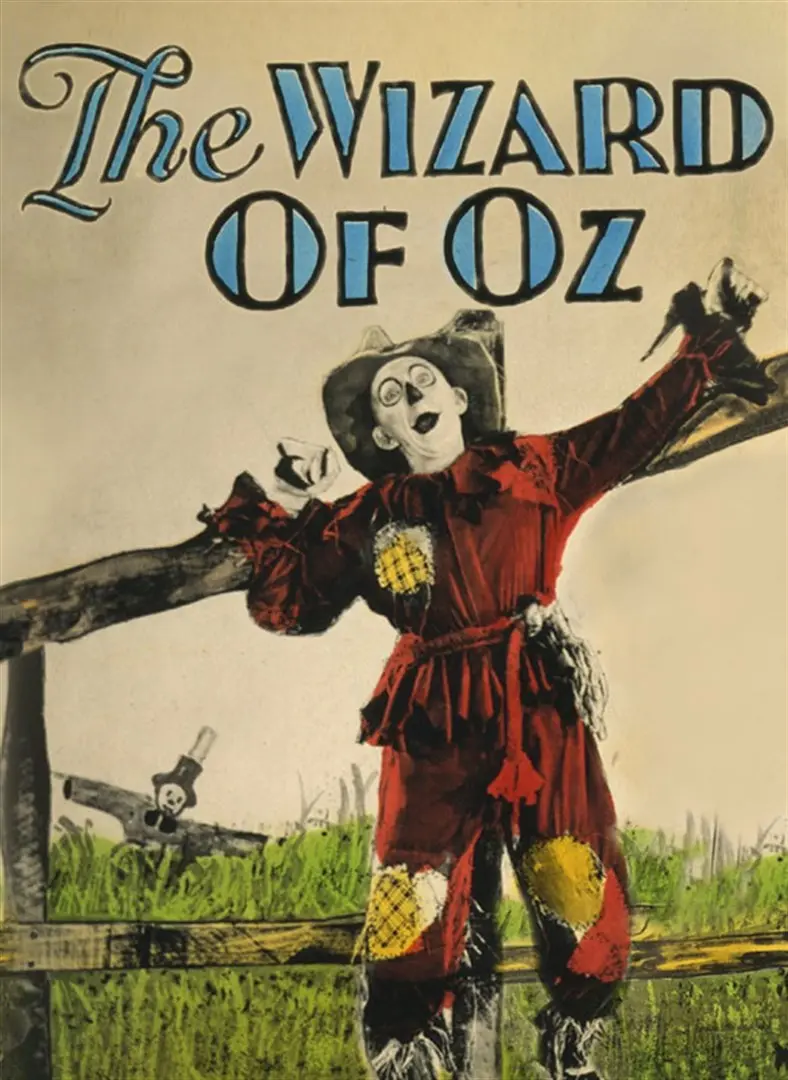
A definitive 4.9/10 rating for a film that redefined the boundaries of cult cinema. The Wizard of Oz remains a cornerstone of transgressive art.
Venturing into the cinematic annals of the 1920s, one often encounters a peculiar blend of nascent artistry and unbridled ambition. Among these early gems, Larry Semon's 1925 adaptation of L. Frank Baum's 'The Wizard of Oz' stands as a fascinating, if idiosyncratic, artifact. Far removed from the technicolor grandeur and musical enchantment that would define its 1939 successor, this silent film offers a distinct, often bewildering, interpretation of Oz, firmly rooted in the slapstick sensibilities of its era. It's a testament to the era's creative ferment, a venture that dared to re-sculpt a beloved literary landscape into something simultaneously recognizable and profoundly alien.
The film's divergence from Baum's original narrative is perhaps its most striking feature. Here, Dorothy Gale (portrayed with earnest charm by Dorothy Dwan) is not merely a Kansas farm girl swept away by a cyclone; she is, astonishingly, the rightful heir to the throne of Oz. This fundamental shift transforms the whimsical journey of discovery into a high-stakes dynastic struggle, pitting the young princess against the nefarious machinations of Prime Minister Kruel (played with suitable villainy by Josef Swickard). Kruel, a character born entirely from the film's creative license, embodies the archetype of the power-hungry usurper, a figure whose ambition threatens to plunge the fantastical realm into perpetual shadow. The narrative thus unfolds as a grand, albeit comically underscored, quest for restoration, rather than a simple yearning for home.
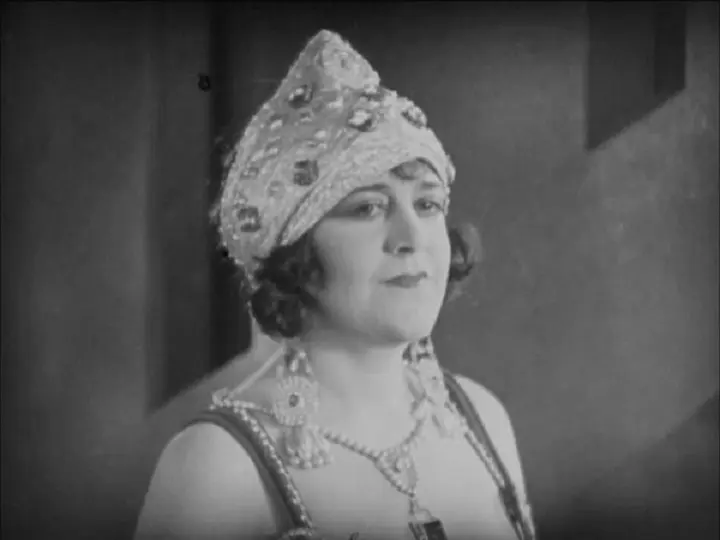
The audacious plot, co-written by L. Frank Baum's son, Frank Joslyn Baum, alongside Leon Lee and Larry Semon himself, transports Dorothy from the mundane plains of Kansas to a magical kingdom teetering on the precipice of tyranny. Her discovery of royal lineage is a pivotal moment, reframing her entire existence and imbuing her journey with a sense of destiny. Prime Minister Kruel, a truly original creation for this film, is the architect of this peril, having seized control through deceit and intimidation. His grip on power is absolute, and the rightful heir, Dorothy, represents a direct threat to his reign. This political intrigue adds a layer of complexity not typically associated with Baum's more innocent tales, positioning the film as a commentary, however lighthearted, on governance and succession.
Dorothy's allies, too, are conceived with a distinct vision. Instead of the iconic Scarecrow, Tin Woodman, and Cowardly Lion as we know them, she encounters three farmhands from her Kansas life who, through a convoluted series of events, find themselves transformed into these very characters. Larry Semon, the film's driving force, takes on the dual role of the original farmhand and the Scarecrow, infusing the character with his signature brand of physical comedy. Oliver Hardy, already a master of the expressive gesture, embodies the Tin Woodman, while William Dinus brings a hesitant charm to the Cowardly Lion. These transformations are less about internal journeys of self-discovery and more about external circumstances, often played for maximal comedic effect. Their collective mission, therefore, becomes not just aiding Dorothy, but also navigating their own bewildering metamorphoses and the inherent dangers of a world they barely comprehend.
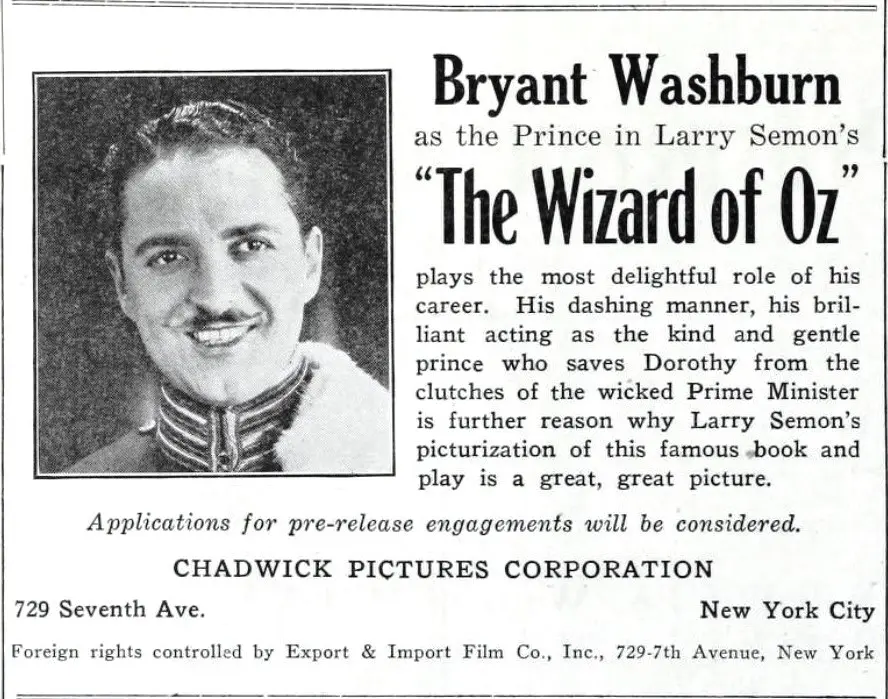
Larry Semon, a titan of silent film comedy, not only directed and co-wrote 'The Wizard of Oz' but also starred in it, imprinting his distinctive style onto every frame. Semon was renowned for his elaborate, often chaotic, slapstick sequences, replete with intricate gags, pratfalls, and frenetic chases. This film is no exception, serving as a sprawling canvas for his comedic genius. His Scarecrow is less the philosophical seeker of brains and more a conduit for physical humor, tumbling, contorting, and reacting to the fantastical world with wide-eyed bewilderment. Semon's directorial choices prioritize spectacle and laughter over strict narrative fidelity, a common approach in the silent era when visual gags often took precedence.
The film's production values, while perhaps not as lavish as some of the epic historical dramas of the time, are commendable for a silent comedy. The sets, particularly those depicting the Emerald City and Kruel's fortress, possess a certain theatrical charm, evocative of stage productions rather than fully immersive cinematic environments. The costumes, too, reflect the era's interpretation of fantasy, blending the whimsical with the practical for comedic effect. Semon's reliance on practical effects and ingenious stunts, a hallmark of his work, is evident throughout, from the perilous escapes to the elaborate contraptions employed by Kruel's forces. This commitment to tangible, on-screen action gives the film a grounded, if absurd, reality.
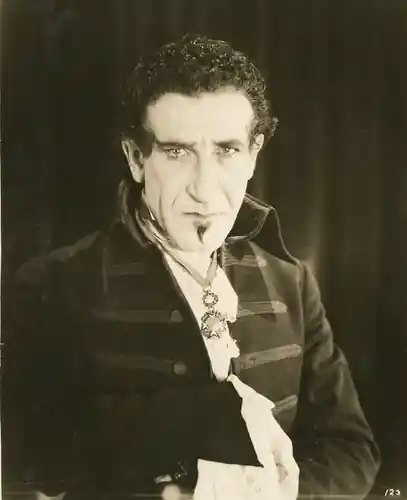
One cannot discuss Semon's influence without acknowledging his audacious approach to the source material. While many adaptations strive for faithfulness, Semon's 'Oz' boldly reinterprets, adding characters, altering motivations, and injecting a heavy dose of his signature brand of physical comedy. This creative liberty, while perhaps jarring for purists, makes the film a unique historical document, showcasing how early filmmakers grappled with bringing beloved stories to the screen while catering to contemporary audience tastes. In an era where films like The Lone Star Ranger (1923) offered straightforward adventure and Foolish Lives explored dramatic narratives, Semon carved out a niche where fantasy was a playground for the absurd.
The cast assembled for this 'Oz' is a fascinating cross-section of silent film talent, a blend of comedic stalwarts and dramatic actors navigating a fantastical landscape. Dorothy Dwan, as the titular Dorothy, anchors the film with a blend of innocence and determination. Her performance, while framed by the broad comedic strokes surrounding her, manages to convey the character's plight and burgeoning courage. She is the emotional core, providing a necessary counterpoint to the more outlandish antics of her companions. Her journey from bewildered farm girl to rightful queen is portrayed with a quiet conviction, even amidst the surrounding chaos.
The supporting cast is equally compelling. Oliver Hardy, prior to his iconic pairing with Stan Laurel, delivers a memorable performance as the Tin Woodman. Even without dialogue, Hardy's expressive face and ponderous movements imbue the character with a distinct personality, oscillating between gentle giant and reluctant participant in the unfolding mayhem. His comedic timing, already finely honed, shines through, making him a standout even in a film dominated by Semon's antics. Watching Hardy in this role offers a glimpse into the formative years of a comedic legend, showcasing his versatility and ability to command the screen with subtle nuances.
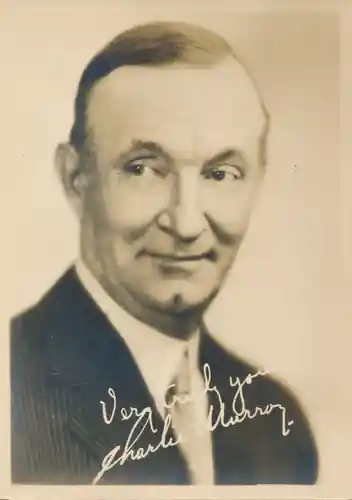
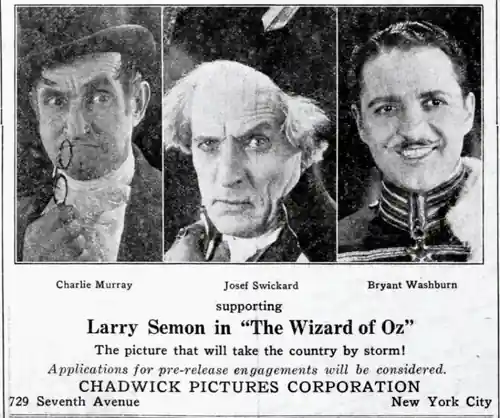
The roster continues with William Dinus as the Cowardly Lion, whose portrayal leans into the character's timidity with exaggerated expressions and physical comedy. Frederick Ko Vert adds to the spectacle as Prince Kynd, a character who further complicates the royal succession narrative. The presence of Mary Carr as Aunt Em and Otto Lederer as the Wizard of Oz grounds the fantastical elements with familiar, if slightly altered, figures from Baum's universe. The ensemble, including Wanda Hawley, Jean Johnston, Charles Murray, William Hauber, Curtis 'Snowball' McHenry, Frank Alexander, Bryant Washburn, Chester Conklin, Virginia Pearson, and Rosalind Byrne, collectively contribute to the film's vibrant, if often overwhelming, energy. Each actor, in their silent pantomime, adds a layer to the film's unique texture, from the broad strokes of comedy to moments of genuine alarm or desperation.
As a product of the silent era, 'The Wizard of Oz' relies entirely on visual storytelling, intertitles, and the expressive power of its performers. Semon, a master of this medium, orchestrates a series of dynamic sequences, employing rapid cuts and elaborate staging to convey both plot and emotion. The film’s visual language is characterized by its kinetic energy, particularly during chase scenes and comedic set pieces. The use of elaborate makeup and costumes helps define characters instantly, a crucial element in a narrative devoid of spoken dialogue. The contrast between the drab Kansas farm and the vibrant, if somewhat artificial, world of Oz is stark, emphasizing Dorothy's transition between realities.
Beyond the slapstick and visual gags, the film does touch upon themes of identity and destiny. Dorothy's transformation from a simple farm girl to a rightful monarch is a potent symbol of latent power and inherited responsibility. The farmhands' metamorphosis into the iconic Oz characters, while played for laughs, also speaks to the idea of ordinary individuals being thrust into extraordinary circumstances, forced to adopt new roles and confront their fears. Prime Minister Kruel, as the embodiment of corrupt power, provides a clear antagonist, allowing the film to explore the perennial struggle between good and evil, even within a comedic framework. This thematic depth, however, often takes a backseat to the relentless pursuit of laughter, a characteristic feature of Semon's cinematic output.
The film's reception upon its release was mixed, reflecting the critical divide between those who appreciated Semon's comedic stylings and those who found his interpretation of Baum's classic too irreverent. It stands as a curious anomaly in the 'Oz' canon, a film that dared to deviate significantly from its source material to carve out its own identity. Its legacy is perhaps less about its enduring popularity and more about its historical significance as an example of early fantasy cinema and the unique creative freedom afforded to silent film comedians. Compared to the more dramatic and straightforward storytelling of contemporaries like Dangerous Days or the more focused narrative of The Inner Voice, Semon's 'Oz' is an outlier, a maximalist comedy that sometimes loses its way in its own ambition.
The primary strength of Semon's 'The Wizard of Oz' undoubtedly lies in its comedic inventiveness. Larry Semon himself is a force of nature, his physical comedy often dazzling in its complexity and sheer audacity. The film is packed with elaborate stunts, intricate gags, and a palpable sense of fun, particularly in the sequences involving Semon and Oliver Hardy. Their chemistry, though not yet fully realized as a duo, provides many of the film's genuine laughs. The audacious reinterpretation of the plot, while controversial, also allows for a fresh, albeit bizarre, narrative trajectory, distinguishing it starkly from other adaptations.
However, the film is not without its considerable weaknesses. The plot, while original, can often feel convoluted and disjointed, struggling to maintain a coherent flow amidst the barrage of comedic set pieces. The narrative logic frequently bends to accommodate a gag, rather than the other way around, which can make sustained engagement challenging. For those expecting the heartfelt magic and poignant themes of Baum's books, this version might feel like a bewildering departure, sacrificing emotional depth for slapstick spectacle. The pacing, too, occasionally falters, with some sequences feeling protracted, diminishing their comedic impact. The sheer volume of visual gags, while impressive, can at times overwhelm the viewer, leading to a sense of fatigue rather than sustained amusement.
Despite these shortcomings, 'The Wizard of Oz' (1925) holds a unique place in film history. It is a testament to the raw, untamed creativity of the silent era, where filmmakers were still experimenting with the boundaries of the medium. It showcases the formidable talents of Larry Semon, a comedian whose influence, though perhaps overshadowed by later stars, was undeniable in his time. It's a film that demands to be viewed through the lens of its own historical context, appreciated not as a definitive adaptation, but as a bold, eccentric, and often hilarious reinterpretation. It's a curio, a cinematic oddity that, even with its flaws, manages to charm and surprise, offering a glimpse into an 'Oz' that few have ever imagined. Its ambition, even if occasionally misplaced, is truly admirable, pushing the boundaries of what a fantasy film could be in the nascent years of cinema, much like how Mutiny challenged conventional adventure narratives or Lest We Forget (1924) tackled historical drama. Semon's 'Oz' remains a vibrant, if peculiar, chapter in the enduring legacy of this beloved story.
IMDb 5.6
1935
Community
Log in to comment.