DbcultAccessing Vault...
6/10
Senior Film Conservator
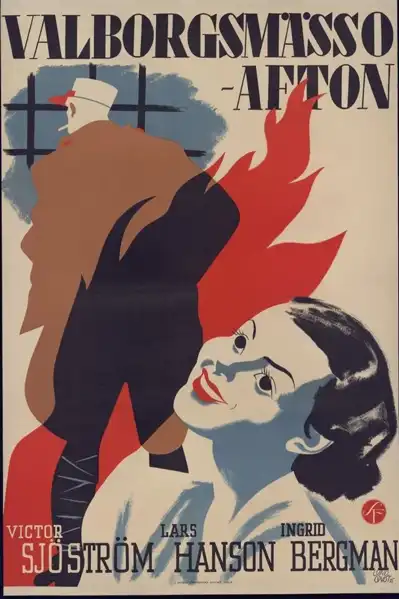
A definitive 6/10 rating for a film that redefined the boundaries of cult cinema. Walpurgis Night remains a cornerstone of transgressive art.
If you are looking for a cozy, slightly dusty black-and-white drama to watch on a rainy Sunday, Walpurgis Night is actually a pretty decent find. It is mostly famous now because a super young Ingrid Bergman is in it, right before she went to Hollywood and became a massive star.
If you hate old-school melodramas where people make terrible life choices because they do not just talk to each other, you will probably hate this. But for vintage cinema fans, it is a neat little time capsule. 🎥
The plot is honestly kind of a mess, but in a fun, gossipy way. Lena, played by Bergman, works for this boss named Johan and she is totally in love with him.
Only problem is, Johan is already married to a woman who absolutely does not want kids. When the wife secretly gets an illegal abortion, things go sideways fast.
The wild part is how Lena's dad—played by the legendary director Victor Sjöström, looking very grumpy—somehow convinces himself that Lena was the one who had the abortion. Like, how do you even make that leap as a parent?
"Oh, my daughter looks sad today, she must have had a secret medical procedure." It is so absurdly dramatic. 🤦♂️
There is a scene early on where Bergman is just typing at her desk, and the way she looks at Johan is so intense. You can tell she was already a better actor than almost everyone else in the room.
Lars Hanson, who plays the boss, has this very stiff, silent-movie way of moving. It is like he forgot he did not have to exaggerate every single gesture for the back row anymore.
I wrote down a note during the middle of the movie about the background noise. The sound design in these 1930s Swedish films is always so weirdly quiet.
You just hear the loud clack-clack-clack of the printing presses and then total, dead silence when people stop talking. It makes the dramatic pauses feel twice as long as they actually are.
Speaking of dramatic pauses, there is a confrontation in an office that goes on for ages. Someone keeps opening and closing a door, and it honestly started to feel like a comedy sketch.
This movie reminds me a bit of how they handled heavy social issues in other European films from the era, like Rose Bernd. They really wanted to teach the audience a lesson about morality, but they also wanted to make sure there was enough juice scandal to keep people buying tickets. ⚖️
Also, can we talk about the hats? Everyone in this movie is wearing a hat that looks slightly too big for their head.
Especially the reporters. They look like kids playing dress-up in their dad's closets.
The whole Walpurgis Night celebration itself—which is supposed to be this big, atmospheric spring festival with bonfires—feels a bit like an afterthought. You get some shots of crowds and fire, but then it is right back to the office drama.
I wanted more of that spooky, outdoor Swedish energy, to be honest. Instead we get people arguing in rooms.
Still, the film gets noticeably better once the misunderstandings reach a boiling point. The final third of the movie moves pretty fast, even if the resolution feels incredibly rushed.
It is like the writers realized they only had five minutes left and needed to wrap up three different subplots immediately.
It is not a masterpiece, but it is a very watchable seventy minutes. Just do not expect it to make a whole lot of sense if you think about the plot for more than two seconds.
If you have got some free time and want to see where one of Hollywood's greatest icons started out, give it a spin. Just do not take the family drama too seriously.
IMDb —
1923
Community
Log in to comment.