DbcultAccessing Vault...
Cult Review
Senior Film Conservator
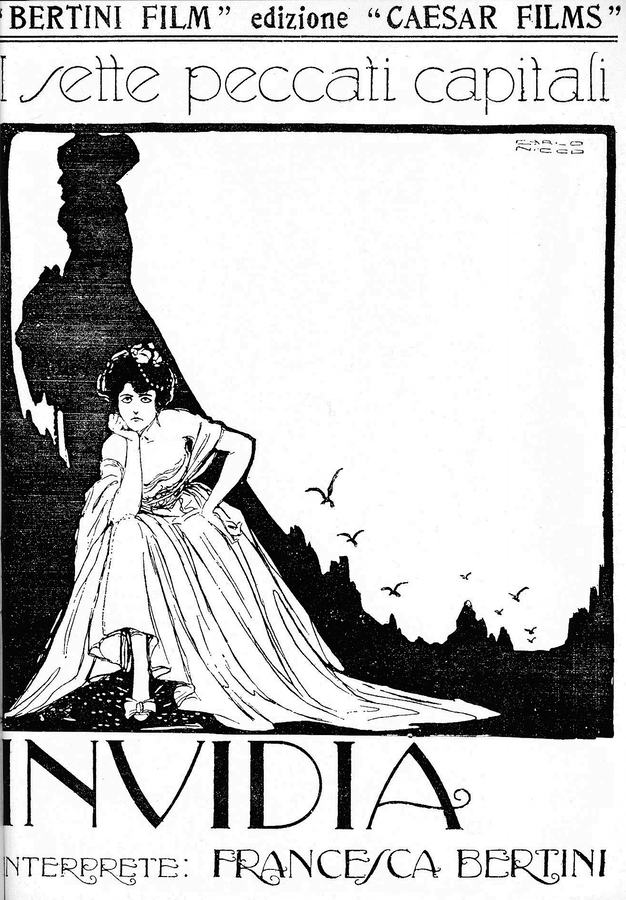
Stepping back into the hallowed halls of early cinema, one encounters L'invidia (1919), a gripping Italian melodrama that, even a century later, retains a potent emotional punch. This silent epic, featuring the formidable Francesca Bertini, delves into the darkest corners of human emotion, particularly the titular sin of envy, crafting a narrative that is as timeless as it is tragic. The film is a masterclass in visual storytelling, relying on the nuanced expressions of its actors and the evocative power of its cinematography to convey a tale of forbidden love, cruel deception, and a mother's unyielding fight for her child. Its dramatic arc, while rooted in the conventions of the era, transcends mere genre trappings to explore universal themes of justice, class struggle, and the enduring strength of the human spirit. The sheer audacity of its plot, combined with a profound psychological insight into human motivations, positions L'invidia as a significant work, not just within Italian cinema, but as a compelling piece of global cinematic heritage.
At its heart, L'invidia spins a yarn that feels both grand and intimately personal. We are introduced to a vibrant dancer, whose artistic passion and unbridled spirit capture the attention of a powerful Count. Their affair, born of illicit desire and societal transgression, blossoms into a secret love, culminating in the birth of a daughter. This clandestine union, however, is a fragile bloom, vulnerable to the frost of external malice. The insidious tendrils of envy, personified by an unnamed antagonist whose motivations are deeply rooted in a desire to sever the dancer from her child and social standing, weave a cruel deception. The mother is tragically convinced that her infant has perished in a fabricated accident, a lie designed to erase her presence and solidify the Count's position without scandal. This act of profound cruelty sets the stage for a narrative of profound suffering and eventual, explosive reckoning. Years later, the truth, as it always does, begins to surface, revealing the daughter alive and well, living under the care of others, blissfully unaware of her true parentage. The dancer, now a woman forged in the fires of grief and injustice, discovers this monstrous deceit. Her initial despair transmutes into a fierce, unwavering resolve. She returns, not as a broken woman, but as a force of nature, driven by an elemental maternal instinct to reclaim what was stolen from her. The confrontation with the Count is a pivotal moment, a clash of wills and class, where the dancer wields the potent weapon of their shared, scandalous past, threatening to expose their former liaison and the subsequent cover-up to the rigid society they inhabit. This narrative thrust, centered on a mother's desperate quest for her child, resonates with a primal force, drawing parallels to other tales of maternal sacrifice and societal oppression, though L'invidia carves its own unique path through the emotional landscape. The film masterfully builds tension, allowing the audience to feel the weight of the dancer's loss and the burning intensity of her eventual determination, making her journey a truly captivating spectacle.
To speak of L'invidia without lavishing praise upon Francesca Bertini would be an oversight of critical proportions. Bertini, a towering figure of early Italian cinema, imbues her character with an astonishing depth and range. Her portrayal of the dancer is a masterclass in silent acting, relying on a symphony of gestures, facial expressions, and body language to convey a maelstrom of emotions. From the carefree exuberance of the young lover to the profound anguish of the grieving mother, and finally, to the steely resolve of the woman fighting for justice, Bertini's performance is nothing short of magnetic. She commands the screen with an effortless grace, her eyes alone capable of telling entire chapters of the story. Her ability to transition from delicate vulnerability to fierce indignation is a testament to her prodigious talent. One can draw parallels to the powerful female protagonists seen in films like The Lie, where a woman's moral fortitude is tested, or even the intense emotional journeys explored in The Trail of the Lonesome Pine, though Bertini's portrayal here feels uniquely Italian in its operatic intensity. Her presence elevates the entire production, transforming what could have been a standard melodrama into a cinematic tour de force. The silent era demanded a particular kind of performer, one who could externalize internal states with clarity and conviction, and Bertini, with her expressive face and controlled physicality, was arguably at the zenith of this art form. Her performance is not merely acting; it is an embodiment, a visceral experience for the viewer, even through the sepia tones of history. The subtle tremor of her hand, the defiant tilt of her chin, the silent scream in her eyes – these are the tools she employs to communicate a rich inner life, making her character's suffering and strength palpable across the decades. This nuanced yet powerful performance cemented her status as a true diva of the silver screen, capable of carrying an entire film on the strength of her presence alone.
While Bertini undeniably anchors L'invidia, the supporting cast plays crucial roles in building the film’s dramatic tension. Guido Trento, as the conflicted Count, delivers a nuanced performance, portraying a man torn between societal expectation, lingering affection, and the consequences of his past actions. His character is not a simple villain but a figure trapped by his own compromises, a complexity that adds layers to the central conflict. Giuletta D'Arienzo, as the daughter, brings an innocence that underscores the tragedy of her stolen upbringing, making the mother's fight all the more poignant. Livio Pavanelli, Luigi Cigoli, Camillo De Riso, and Maria Riccardi, though perhaps given less screen time, contribute effectively to the tapestry of the narrative, each character serving to highlight the social dynamics and moral quandaries at play. Their collective performances, while adhering to the broader, more gestural acting styles prevalent in silent cinema, effectively convey their characters' motivations and reactions, creating a believable world for Bertini’s central drama to unfold within. The interplay between these characters, particularly the unspoken power dynamics and moral compromises, is skillfully rendered, demonstrating the collaborative strength of the ensemble. This collective effort ensures that the emotional stakes remain consistently high, propelling the narrative forward with an unrelenting momentum that captivates the audience. The minor characters, even those with fleeting appearances, contribute to the sense of a fully realized world, populated by individuals whose choices, both good and ill, impact the central tragedy.
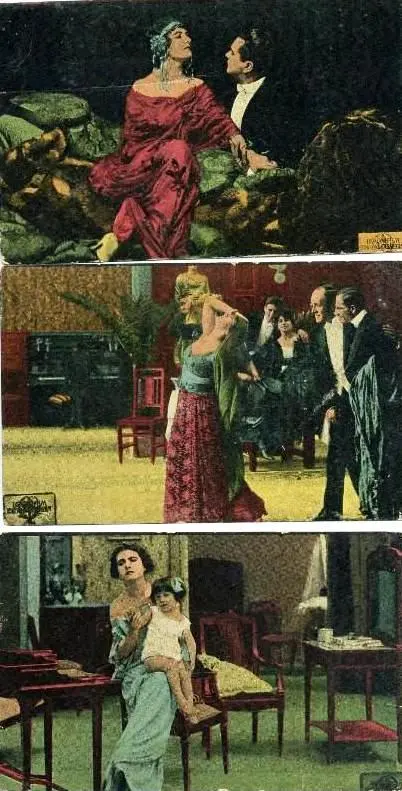
From a technical standpoint, L'invidia is a remarkable example of early 20th-century filmmaking. The cinematography, though perhaps not as overtly experimental as some of its German Expressionist contemporaries, is nevertheless artful and effective. The use of natural light, the framing of shots, and the careful attention to set design all contribute to the film’s rich visual texture. There are sequences that linger in the mind: the vibrant energy of the dancer's early performances, the somber stillness of the scenes depicting her grief, and the dramatic confrontations that punctuate the latter half of the film. The pacing, a critical element in silent cinema, is expertly managed. The film allows moments of quiet reflection to breathe, building suspense and empathy, before accelerating into periods of intense dramatic action. This ebb and flow keeps the viewer engaged, ensuring that the emotional beats land with maximum impact. The intertitles are used judiciously, providing necessary exposition without interrupting the visual flow, a balance that many silent films struggled to achieve. The film's overall aesthetic is one of elegant simplicity, allowing the raw human drama to take center stage. This contrasts with films that might rely more heavily on spectacle, like Prinz Kuckuck - Die Höllenfahrt eines Wollüstlings, which often prioritized visual extravagance. Instead, L'invidia finds its power in the intimate portrayal of human struggle, a testament to the directorial vision that guided its creation. The visual language is clear, concise, and serves the narrative without overwhelming it, a hallmark of well-crafted silent cinema. The meticulous staging of each scene, from opulent ballrooms to humble abodes, further underscores the stark social contrasts that form a crucial backdrop to the personal drama.
The thematic undercurrents of L'invidia are as relevant today as they were a century ago. The central theme of envy, as the title suggests, is explored with chilling precision. It is the driving force behind the initial deception, a destructive emotion that ripples through the lives of all involved. This portrayal of envy is not a simplistic, cartoonish villainy, but a nuanced examination of how festering resentment can lead to devastating acts, eroding not only the lives of its victims but also the moral fabric of its perpetrators. Beyond envy, the film critically examines the rigid class structures of the period. The Count's inability to openly acknowledge his relationship with a dancer, and the lengths to which he (or those around him) goes to maintain his social standing, speak volumes about the societal pressures of the time. The dancer, an artist from a lower social stratum, is inherently vulnerable to the machinations of the powerful, her agency curtailed by her position. This societal critique finds echoes in other films of the era that explored class disparities, albeit with varying degrees of overtness, such as the poignant social commentary found in Just Neighbors or the stark realities depicted in Der Bergführer. Perhaps most powerfully, L'invidia is a profound meditation on motherhood. The dancer's relentless pursuit of her daughter is portrayed as an almost sacred quest, a testament to the unbreakable bond between mother and child. Her fight is not just for her own sake, but for the inherent right to nurture and protect her offspring, a fundamental aspect of the human experience. This theme elevates the film beyond a mere melodrama, imbuing it with a universal resonance that transcends its historical context. It aligns with the powerful portrayals of maternal love and sacrifice seen in films like Father John; or, The Ragpicker of Paris, where familial bonds are tested by extreme circumstances, or even the complex family dynamics in Less Than Kin. The film skillfully intertwines these themes, creating a rich tapestry of human experience that is both heartbreaking and ultimately, inspiring in its depiction of resilience against overwhelming odds. The emotional weight of these interconnected themes is what truly gives the film its lasting power and makes it more than just a period piece.
Released in 1919, L'invidia arrived at a pivotal moment in cinema history, just as the medium was beginning to solidify its narrative forms and attract an increasingly global audience. Italian cinema, particularly its "diva films" starring actresses like Bertini, was a significant force on the international stage, known for their opulent settings, dramatic intensity, and powerful female leads. This film exemplifies many of the strengths of that era: grand dramatic narratives, emotionally charged performances, and a focus on spectacle within a theatrical framework. Its survival and continued appreciation speak volumes about its artistic merit. While some silent films can feel dated to modern viewers, L'invidia manages to maintain a remarkable freshness, largely due to Bertini's incandescent performance and the timeless nature of its central conflict. It serves as a valuable historical document, offering insights into the social mores and cinematic conventions of its time, while simultaneously delivering a narrative that continues to resonate. Its exploration of moral ambiguity and the complexities of human relationships ensures its place as more than just a relic; it is a living piece of cinematic art. Compared to other lesser-known silent films like A léleklátó sugár or Die große Wette, L'invidia stands out for its focused intensity and the sheer star power of its lead, demonstrating the potent combination of compelling story and charismatic performance. It reminds us that even in the nascent stages of cinema, filmmakers were already crafting stories of profound emotional depth and universal appeal. The film's legacy lies not just in its historical significance, but in its ability to still captivate and move audiences today, proving that true artistry transcends the boundaries of time and technology. It’s a testament to the power of silent storytelling when executed with such passion and precision, offering a window into a bygone era yet speaking to contemporary sensibilities about justice and familial bonds.
In conclusion, L'invidia is far more than a historical curiosity; it is a vibrant, compelling piece of cinema that offers a rich emotional experience. Its exploration of envy's destructive power, the complexities of class, and the enduring strength of maternal love makes it a profoundly resonant work. Francesca Bertini's performance alone is worth the price of admission (or the effort of seeking out a restored print), a powerful display of silent acting at its zenith. The film’s visual elegance, thoughtful pacing, and thematic depth combine to create a truly memorable viewing experience. For aficionados of silent film, or anyone interested in the foundational narratives of cinematic storytelling, L'invidia is an essential watch. It stands as a powerful reminder of the artistry and emotional potency that characterized early cinema, demonstrating how universal human dramas could be conveyed with such profound impact even without spoken dialogue. It's a film that lingers, prompting reflection on human nature and the societal forces that shape our lives, a true gem rediscovered from the annals of film history. Its continued relevance ensures that the echoes of its silent rage and unwavering love will persist for generations to come, much like the enduring mystery of The Mystery of the Black Pearl or the adventurous spirit of The Lad and the Lion, though with a distinct dramatic flair. The film is a powerful testament to the timeless appeal of well-told stories, regardless of the technological constraints of their era. Its ability to still evoke such powerful emotions is a testament to the enduring power of classic Italian melodrama and its star.

IMDb —
1929
Community
Log in to comment.