DbcultAccessing Vault...
8.2/10
Senior Film Conservator
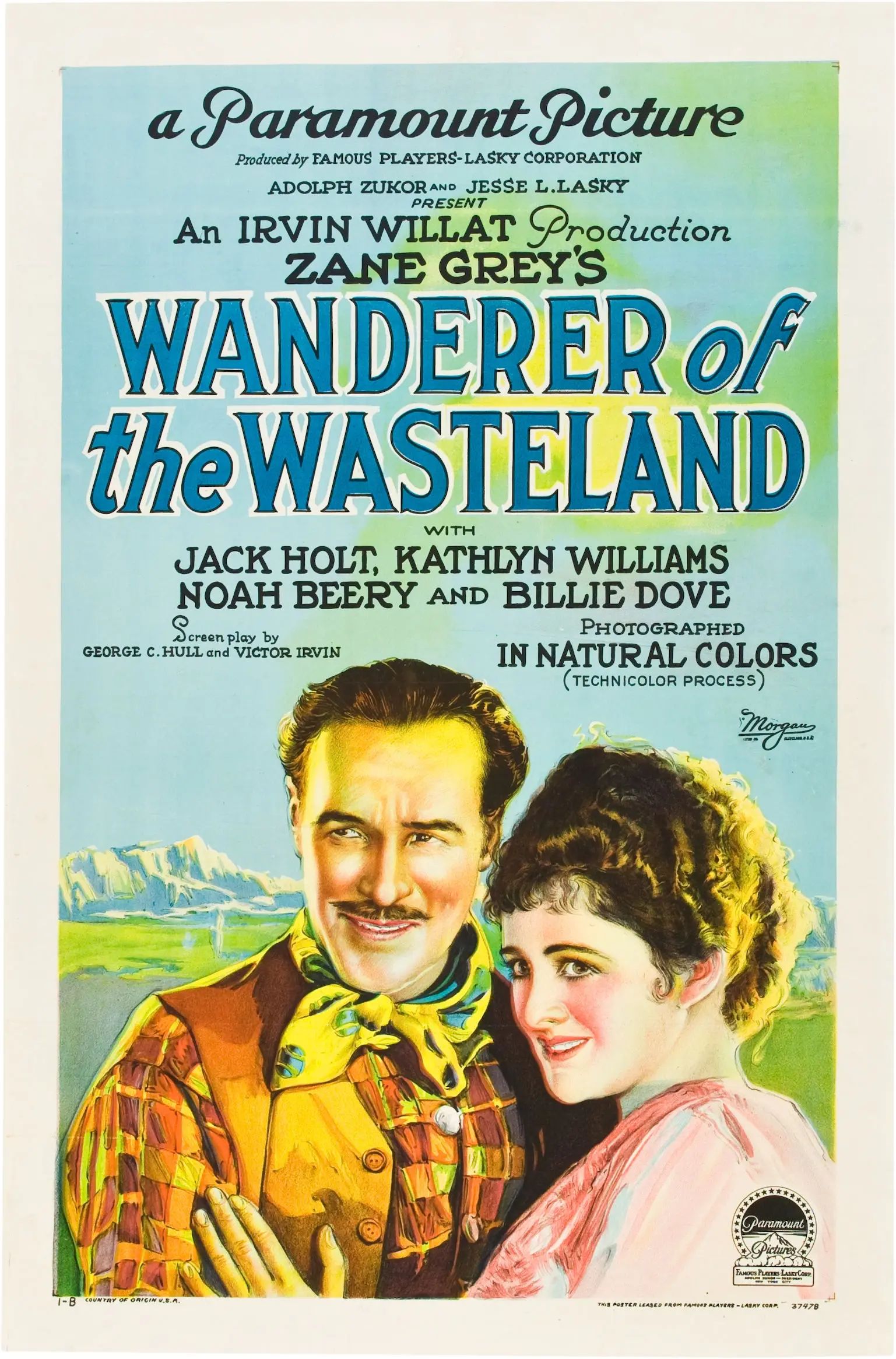
A definitive 8.2/10 rating for a film that redefined the boundaries of cult cinema. Wanderer of the Wasteland remains a cornerstone of transgressive art.
Stepping into the world of Wanderer of the Wasteland is akin to unearthing a forgotten relic, a silent testament to a bygone era of cinematic storytelling. This 1924 adaptation of Zane Grey's celebrated novel plunges viewers into a narrative rife with moral quandaries, the stark beauty of the untamed wilderness, and the relentless pursuit of redemption. It's a film that, even a century later, still resonates with a primal power, reflecting human frailties and the vast, indifferent majesty of nature. As a film critic, I often find myself drawn to these early cinematic endeavors, not just for their historical significance, but for their raw, unadulterated emotional impact, often achieved without the crutch of spoken dialogue. This particular feature, directed by Irvin Willat and a collaborative writing effort by George C. Hull, Victor Irvin, and Zane Grey himself, stands as a compelling example of the silent Western at its most potent.
Our protagonist, Adam Larey, portrayed with a compelling intensity by Jack Holt, begins his journey not as a hero, but as a man undone by passion and quick temper. A mining engineer, a profession that grounds him in the tangible and the logical, finds his world upended by an impulsive act. A quarrel, the kind that simmers with unspoken resentments and explodes in an instant, leads him to shoot his brother, Guerd (George Irving). The immediate aftermath is a blur of panic and flight, culminating in a further transgression: wounding the sheriff during his desperate escape. This opening sequence, while brief, is pivotal. It establishes Adam's character not as inherently malicious, but as tragically flawed, a man whose life takes an abrupt, violent detour from the path of respectability. The film doesn't linger on the details of the quarrel, instead focusing on the profound psychological impact of Adam's actions, a choice that immediately elevates it beyond a mere action-adventure flick. It becomes a character study, a journey into the heart of a man haunted by his own deeds.
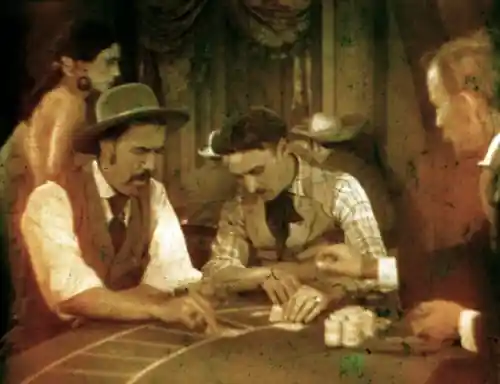
The silent era, often criticized for its overt melodrama, frequently used such dramatic catalysts to propel its narratives. Unlike the more nuanced psychological thrillers of today, films like The Lure or Blind Justice, which might explore the intricacies of motive and consequence over extended periods, Wanderer of the Wasteland wastes no time in establishing Adam's fugitive status. His flight into the desert isn't just a physical escape; it's a symbolic dive into a purgatorial landscape, a place where he must confront his inner demons without the distractions of society. The film’s power lies in its ability to convey this internal turmoil through visual storytelling, relying on Holt's expressions and the vast, desolate backdrops to communicate Adam's despair and isolation.
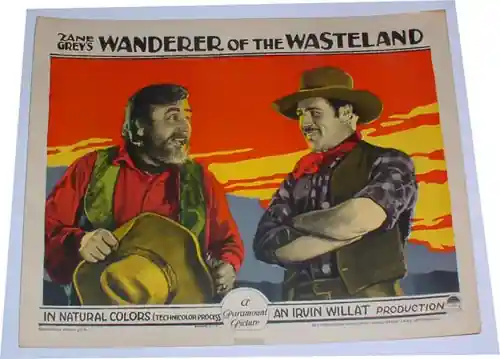
The desert in Wanderer of the Wasteland is not merely a setting; it is an active character, a silent, formidable entity that tests Adam's resolve, purges his spirit, and ultimately shapes his destiny. His flight leads him into its merciless embrace, a landscape of scorching suns, parched earth, and endless horizons. It is here, on the brink of death, that he encounters Dismukes, an old prospector brought to life by the seasoned Noah Beery. Beery, a prolific actor of the era, imbues Dismukes with a weary wisdom, a man who has wrestled with the desert and found a strange companionship within its harshness. His rescue of Adam is not just an act of kindness; it's a symbolic hand reaching out from the wilderness, offering a chance at survival and, perhaps, a different kind of reckoning.
The film excels in its depiction of Adam's hardships. The visuals, even in black and white, convey the brutal reality of desert survival – the thirst, the exhaustion, the gnawing fear. This segment of the film is a masterclass in visual storytelling, where the landscape itself becomes a mirror for Adam's internal struggle. He is stripped bare, physically and emotionally, forced to confront his vulnerability and the consequences of his actions. This trial by sand and sun is a common trope in Westerns, from the earliest nickelodeon shorts to contemporary epics, but Wanderer of the Wasteland elevates it by deeply intertwining Adam's physical suffering with his spiritual penance. The desert becomes his confessional, forcing him into a solitary introspection that society would never have allowed. One might draw parallels to other films where nature plays a pivotal, almost spiritual role, though few silent films manage to convey such a profound sense of isolation and redemption through landscape alone. The sheer scale of the desert vistas, captured with a grandeur that belies the technological limitations of the time, is truly breathtaking. It reminds me of the sweeping natural backdrops often seen in films like The Glory of Youth, where the environment is as much a character as the human players, shaping their fates and reflecting their inner turmoil. However, in this film, the desert's role is far more existential, a silent judge and unforgiving teacher.
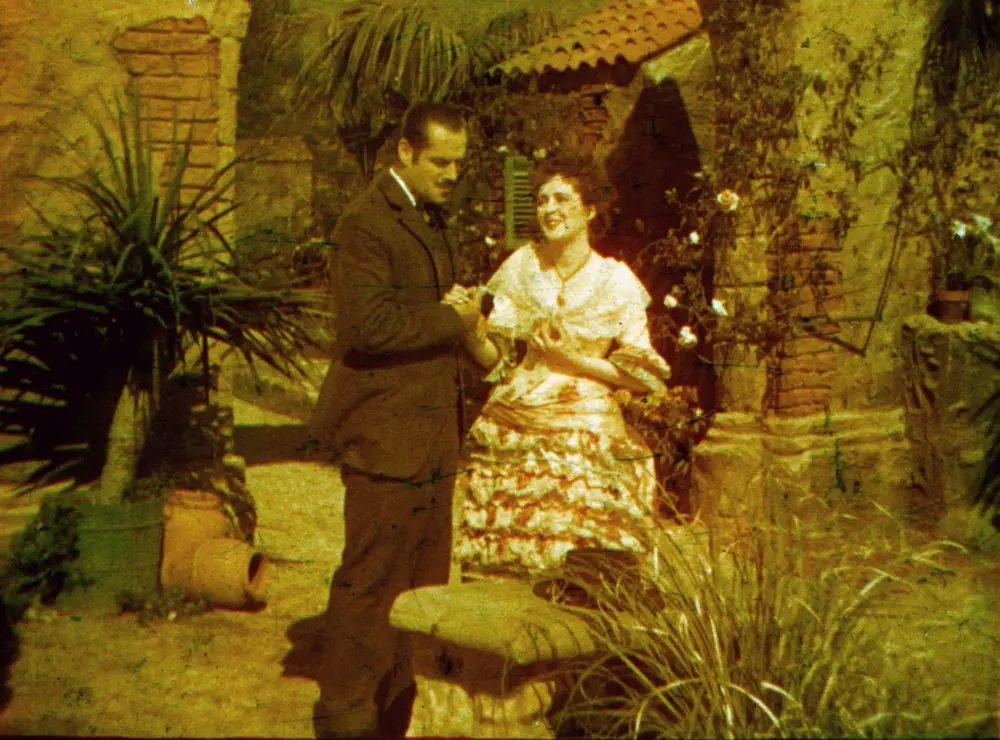
Just as Adam's endurance seems to reach its limit, fate intervenes once more. He stumbles upon the isolated home of the Vireys, a couple whose lives are about to intersect with his in a most tragic fashion. Crucially, these are the parents of Ruth (Billie Dove), Adam's sweetheart, a detail that immediately ratchets up the emotional stakes. Billie Dove, with her ethereal beauty and expressive acting, brings a delicate strength to Ruth, a character who embodies hope and moral clarity. Her parents, however, are entangled in their own domestic drama, a stark contrast to the vast, external struggles Adam has faced. Virey, consumed by an unfounded jealousy, harbors a corrosive belief in his wife's infidelity. This internal rot, a psychological wilderness far more treacherous than the physical one Adam has traversed, culminates in a shocking act of self-destruction. In a fit of despair and rage, Virey triggers an avalanche, an act of almost biblical wrath that consumes both himself and his innocent wife. It's a sudden, brutal turn of events, a reminder that human passion, unchecked, can be as destructive as any natural disaster.
This plot point is quintessentially Zane Grey, often employing dramatic, almost operatic twists to highlight the fragility of human existence and the consequences of unchecked emotion. The avalanche isn't just a convenient plot device; it's a metaphor for the destructive power of suspicion and paranoia, mirroring, in a perverse way, the impulsive violence that set Adam's own journey in motion. The film's ability to juxtapose Adam's external, physical struggles with this intensely personal, internal tragedy of the Vireys is one of its most compelling features. It broadens the thematic scope, suggesting that the 'wasteland' is not just a geographical location, but also a state of mind, a place where human morality is tested and often fails. The performances here, particularly by Kathlyn Williams as Mrs. Virey and James Gordon as Virey, are nuanced despite the silent film conventions, conveying deep-seated anguish and delusion through gesture and expression. The contrast between the open, honest despair of Adam and the secretive, corrosive jealousy of Virey is striking, underscoring the film’s exploration of different forms of guilt and suffering. This dramatic shift in narrative pace and tone, moving from the epic survival tale to an intimate domestic tragedy, showcases the film's ambition. It’s a bold move that keeps the audience engaged, constantly subverting expectations, much like how some European silent films, such as De kantwerkster van Brugge, would often blend grand narratives with deeply personal, often tragic, human stories.
Adam's role in the aftermath of the Virey tragedy is that of the reluctant bearer of ill tidings. He must inform Ruth, his beloved, of the devastating loss of her parents, a burden that adds another layer to his already profound guilt. Yet, it is in this moment of shared sorrow that Ruth's character truly shines. Instead of recoiling from Adam or condemning him for his past, she urges him towards atonement. Her plea is not for vengeance or further flight, but for him to confront his past, to return to the world he fled and seek reconciliation. This is a pivotal turning point, transforming Adam's journey from one of mere survival to one of conscious redemption. Ruth's unwavering faith and moral compass provide the impetus Adam needs to face his fears and seek absolution.
The resolution of Adam's initial transgression is handled with a deftness that avoids saccharine sentimentality. Upon his return, he discovers that his brother Guerd's injury was not fatal, but merely a minor wound. This revelation is a moment of profound grace, a lifting of the crushing weight of accidental fratricide. It frees Adam not just from legal culpability, but from the spiritual torment that has defined his journey. The path is cleared for him to marry Ruth, a union that symbolizes not just romantic love, but the triumph of forgiveness and the possibility of a new beginning. The film cleverly uses this twist to underscore the themes of perception versus reality; Adam believed himself a murderer, but the truth was far less damning, though no less impactful on his personal odyssey. This kind of narrative device, where a character's perceived guilt is ultimately mitigated by a twist of fate, is a hallmark of many adventure and melodrama films of the era, offering a satisfying, if sometimes convenient, resolution. However, in Wanderer of the Wasteland, it feels earned, a reward for Adam's arduous journey of self-discovery and penitence.
The ending, while providing a clear resolution, doesn't diminish the intensity of Adam's trials. Instead, it frames them as necessary steps in his evolution. He emerges from the wasteland not just alive, but transformed, having shed the impulsiveness of his youth and embraced a deeper understanding of responsibility and love. This journey of transformation, from a flawed individual to a man worthy of happiness, is what gives Wanderer of the Wasteland its enduring appeal. It's a timeless tale of human fallibility and the enduring hope for a second chance, themes that resonate across generations and cinematic styles. The film’s strength lies in its ability to tell this story primarily through visual cues and the nuanced performances of its cast, a testament to the power of silent cinema. The emotional arc of Adam, from despair to cautious hope, is beautifully rendered, making his eventual happiness feel genuinely earned. It's a narrative that, while rooted in the Western genre, transcends it, speaking to universal human experiences of guilt, solitude, and the yearning for absolution. The careful crafting of the screenplay, attributed to George C. Hull and Victor Irvin, under the watchful eye of Zane Grey, ensures that every beat, every visual metaphor, serves to deepen this central theme of redemption. The culmination of Adam's journey, finding solace and a future with Ruth, feels like a natural progression of his ordeal, rather than a tacked-on happy ending. It's a testament to the film's ability to weave together grand desert landscapes with intimate human drama, creating a rich tapestry of emotion and adventure that continues to captivate. The film’s exploration of moral ambiguity and the path to self-forgiveness is particularly poignant, making it more than just a simple Western. It delves into the psyche of its characters, a trait often admired in more complex narratives, even those found in contemporary cinema.
The cast of Wanderer of the Wasteland delivers compelling performances, particularly given the constraints of silent film acting. Jack Holt, as Adam Larey, carries the weight of the narrative with a stoic intensity that allows his moments of vulnerability to truly shine. His portrayal of a man tormented by guilt yet driven by an innate sense of justice is both believable and deeply moving. Billie Dove, as Ruth, provides the emotional anchor of the film, her gentle strength and unwavering belief in Adam's goodness serving as a beacon in his darkest hours. Her character is not a passive damsel but an active participant in Adam's journey, urging him towards a higher moral ground. Noah Beery's Dismukes is a masterclass in character acting, conveying wisdom, weariness, and a touch of eccentricity that makes his brief but crucial role memorable. The supporting cast, including William A. Carroll, George Irving, Jim Mason, Kathlyn Williams, Willard Cooley, Jack Holt, James Gordon, and Richard Neill, all contribute to the rich tapestry of the film, each adding a layer of authenticity to this rugged world.
The direction by Irvin Willat is commendable, showcasing a keen eye for capturing the vastness of the Western landscape and effectively using it to reflect the internal states of his characters. The cinematography is often breathtaking, with wide shots that emphasize the isolation and grandeur of the desert. The pacing, a crucial element in silent films, is well-judged, allowing moments of quiet contemplation to breathe before accelerating into dramatic action. The film's legacy lies not just in its faithful adaptation of Zane Grey's work, but in its ability to transcend the limitations of its era, offering a timeless tale of human struggle and redemption. It stands as a testament to the power of visual storytelling, proving that profound narratives do not always require spoken words to leave a lasting impact. Comparing its narrative ambition to films like A Capital Federal or Officer 666, one can see a common thread of dramatic intensity, but Wanderer of the Wasteland distinguishes itself with its profound exploration of the human spirit against the backdrop of an unforgiving natural world. While other films might focus on urban intrigue or comedic capers, this film delves into the raw, existential questions of morality and fate in a way that few of its contemporaries managed. It's a film that demands attention, not just as a historical artifact, but as a vibrant piece of cinematic art that continues to speak volumes about the human condition.
In conclusion, Wanderer of the Wasteland is more than just a silent Western; it is a profound cinematic experience that delves into themes of guilt, atonement, and the transformative power of nature. It’s a film that uses its expansive landscapes not just as backdrops, but as integral components of the characters' journeys. The moral ambiguities faced by Adam Larey, the unexpected twists of fate, and the eventual, hard-won redemption combine to create a narrative that is both epic in scope and deeply personal in its emotional resonance. The performances are captivating, particularly those of Jack Holt and Billie Dove, who convey a wealth of emotion without uttering a single word. The film's ability to maintain tension, develop complex characters, and deliver a satisfying resolution, all within the silent film paradigm, is truly remarkable. It serves as a powerful reminder of the artistry and ingenuity of early filmmakers.
For enthusiasts of classic cinema, and particularly those with an appreciation for the Western genre and the literary works of Zane Grey, Wanderer of the Wasteland is an essential viewing experience. It's a film that not only transports you to a different time and place but also invites you to ponder timeless questions about morality, forgiveness, and the human capacity for change. It reinforces the idea that true cinematic power often lies not in elaborate special effects or rapid-fire dialogue, but in the compelling portrayal of human drama against an evocative backdrop. Its narrative depth and visual splendor elevate it beyond a simple genre piece, cementing its place as a significant work in the silent film canon. It's a film that leaves a lasting impression, much like the indelible marks left upon the desert by those who dare to cross it. The film’s nuanced exploration of human nature, set against the grandeur of the American West, offers a rich viewing experience that continues to resonate. It’s a testament to the enduring power of storytelling, irrespective of the technological advancements that have reshaped cinema over the decades. This enduring quality places it among those rare silent films that speak volumes even in their quietude, making it a compelling study for anyone interested in the foundational elements of film narrative and character development. Indeed, its thoughtful construction and powerful imagery make it a standout, differentiating it from more straightforward action-oriented films of the era like The Clean-Up or The Law Rustlers, by offering a deeper, more introspective journey. It's a film that truly earns its title, inviting us to wander alongside its protagonist, both physically and emotionally, through the profound and often harsh terrain of existence.
IMDb —
1920
Community
Log in to comment.