DbcultAccessing Vault...
Cult Review
Senior Film Conservator

The cinematic landscape, particularly when venturing into the early twentieth century, often reveals forgotten masterpieces, narratives that, despite their age, resonate with an astonishing contemporaneity. Such is the case with Noris, a film that, even a century after its creation, speaks volumes about the human spirit’s enduring struggle against the shackles of convention and the insidious grip of possessive power. It’s a drama that transcends its silent origins, delivering a visceral emotional punch through its potent visual storytelling and the magnetic performances of its cast.
At its core, Noris is an incisive character study, a tragic ballet choreographed around the eponymous protagonist, brought to life with breathtaking intensity by Pina Menichelli. Menichelli, a titan of Italian silent cinema, imbues Noris with a fiery spirit, an artistic soul yearning for expression in a world determined to stifle it. She is not merely a woman; she is a symbol of creative rebellion, a vibrant splash of defiance against a canvas of drab conformity. Noris’s world is one of stifling opulence, a gilded cage meticulously constructed by her guardian, Baron Valerio, portrayed with chilling efficacy by Luigi Serventi. Serventi’s Valerio is not a cartoonish villain but a sophisticated manipulator, his paternalistic veneer barely concealing a predatory possessiveness, a man who sees Noris not as an individual but as an extension of his own wealth and status. The tension between their characters is palpable, a silent scream echoing through the ornate halls of their shared existence.
The narrative’s brilliance lies in its nuanced exploration of this power dynamic. Valerio’s control is not exercised through overt cruelty alone, but through a more insidious form of psychological manipulation, a constant, subtle pressure designed to erode Noris’s self-worth and autonomy. He curates her life, her social circle, even her artistic pursuits, all under the guise of protection and affection. This claustrophobic environment serves as the crucible for Noris’s burgeoning rebellion. Her art, initially a private solace, slowly transforms into a radical act of defiance, each brushstroke a silent protest against her gilded imprisonment. The film, through its masterful use of close-ups and dramatic staging, allows us to witness Noris’s internal struggle, the silent battles waged within her expressive eyes.
Into this suffocating world steps Marco, a struggling sculptor, portrayed with a poignant blend of vulnerability and fervent passion by Nicola Pescatori. Marco represents everything Valerio is not: authenticity, artistic integrity, and a genuine appreciation for Noris’s spirit, unburdened by possessive desire. Their burgeoning romance is a fragile, clandestine affair, a beacon of hope in Noris’s shadowed existence. Pescatori’s portrayal of Marco is understated yet powerful; his quiet intensity provides a stark contrast to Serventi’s theatrical villainy. The chemistry between Menichelli and Pescatori is electric, communicating volumes without a single spoken word, their shared glances and hesitant touches speaking of a profound connection that transcends societal barriers. It's a love story painted with the broad, tragic strokes common in the era, yet rendered with an intimate, raw honesty that feels timeless. One might draw parallels to the doomed passions found in films like The Vanity Pool, where societal expectations similarly collide with personal desires, though Noris offers a more direct confrontation with the artistic impulse.
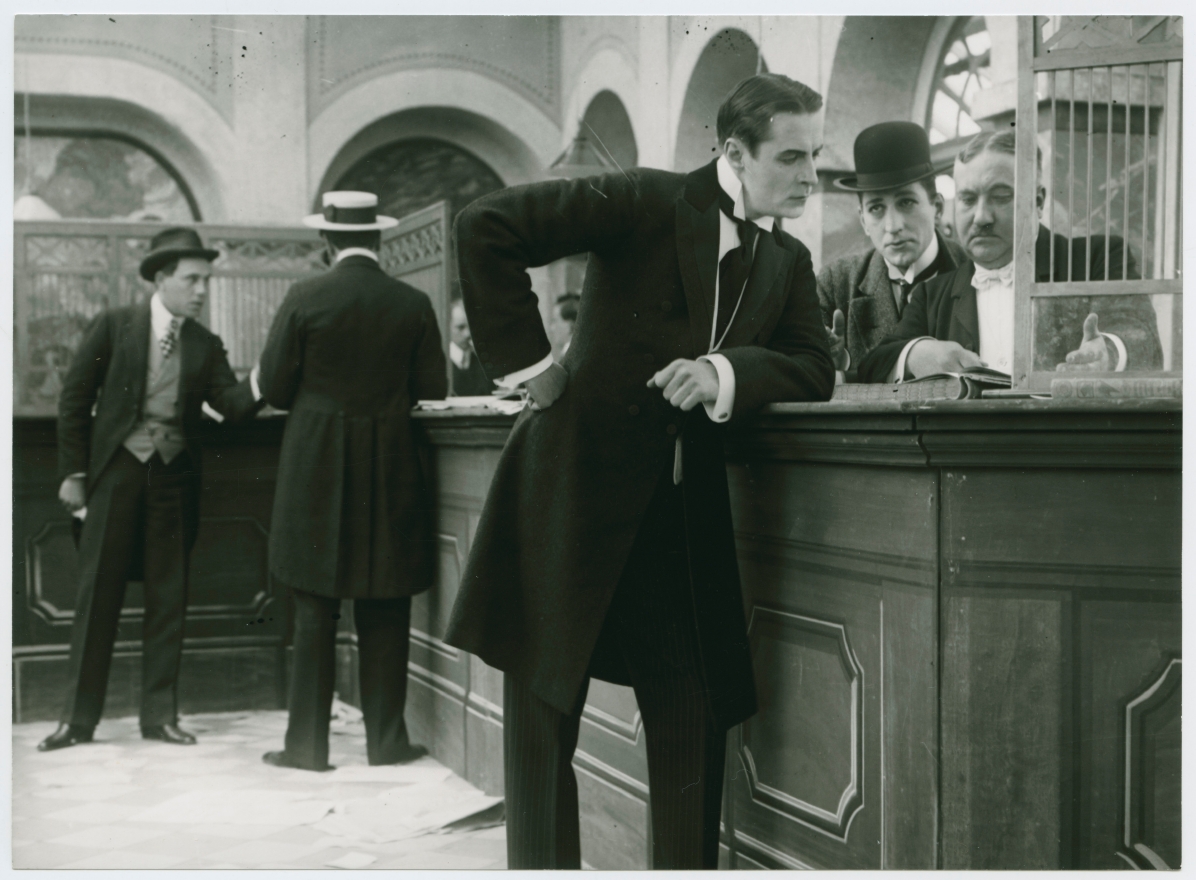
The film’s visual language is a character in itself. The cinematography, even when viewed through the lens of historical restoration, is remarkably sophisticated. Shadows are not merely absences of light but active participants in the drama, often enveloping Valerio, hinting at his sinister nature, while shafts of light illuminate Noris’s face, symbolizing her inner purity and yearning for freedom. The sets, though opulent, feel oppressive, their grandeur serving as a constant reminder of Noris’s confinement. The contrast between the lavish interiors and the stark simplicity of Marco’s studio is a powerful visual metaphor for the film’s central conflict: the clash between superficial wealth and authentic artistic expression. The editing, for its time, is remarkably dynamic, building suspense and accelerating emotional beats with a precision that belies the technical limitations of early cinema. One can imagine the impact of such visual storytelling on contemporary audiences, akin to the psychological depth explored in Mania. Die Geschichte einer Zigarettenarbeiterin, where the inner turmoil of its protagonist is externalized through compelling visual narratives.
The societal critique embedded within Noris is sharp and unflinching. It meticulously deconstructs the hypocrisy of a society that champions art in theory but fears its revolutionary potential in practice, especially when wielded by a woman. Noris’s unconventional paintings, which dare to depict raw emotion and challenge traditional norms, are met with scandal and condemnation. This aspect of the film is particularly potent, highlighting the enduring struggle of female artists to gain recognition and respect in a patriarchal world. The film doesn't shy away from the harsh realities faced by women who dared to defy societal expectations, a theme that resonates with the struggles depicted in films like Alimony, where women are often trapped by legal and social strictures. The film’s climax, an exhibition of Noris’s most provocative work, becomes a public trial, a moment where the carefully constructed façades of respectability crumble, revealing the bigotry and small-mindedness beneath.
Stefano Bissi, in a more understated but no less crucial role, portrays a sympathetic physician, a quiet observer of the unfolding tragedy. His character serves as the audience’s moral compass, a silent witness to Noris’s suffering and Valerio’s machinations. Bissi’s performance is a masterclass in subtlety, conveying profound empathy and powerlessness through his gestures and expressions. He is the voice of reason that goes unheard, the conscience of a society too blind to see its own flaws. His presence underscores the isolation of Noris, highlighting how even those with good intentions are often powerless against entrenched power structures. This role, while not central to the dramatic conflict, is essential for grounding the film in a sense of tragic realism, providing a human counterpoint to the more operatic performances of Menichelli and Serventi. It reminds me of the quiet, observational roles that often provide grounding in grander melodramas, much like some of the supporting characters in The Soul of Broadway, witnessing the struggles of artistic ambition.
The tragic arc of Noris is meticulously constructed, each scene building inexorably towards its devastating conclusion. The film’s refusal to offer easy answers or a saccharine resolution is one of its greatest strengths. It confronts the audience with the brutal truth that not all struggles end in triumph, and that sometimes, the most profound victories are those of the spirit, even in the face of insurmountable odds. The sense of impending doom is expertly woven throughout, creating a narrative tension that grips the viewer from the opening frames. This narrative inevitability, coupled with the emotional depth of the performances, elevates Noris beyond mere melodrama into the realm of profound tragedy. It’s a film that lingers long after the credits roll, prompting reflection on the cost of freedom and the resilience of the human heart.
Menichelli’s Noris is a character of immense complexity. Her journey is not simply one of victimhood, but of fierce agency, even when her choices are constrained. She fights, she creates, she loves, and ultimately, she makes a stand. Her final act, whatever its form, is not one of surrender but of defiant self-assertion, a testament to her unyielding artistic integrity. Serventi’s Valerio, on the other hand, is a chilling portrait of entitled malevolence, his charm a thin veil over a core of pure possessiveness. The subtle shifts in his demeanor, from doting guardian to menacing tyrant, are masterfully executed, making him a truly memorable antagonist. His performance is a stark reminder that the most dangerous villains are often those who operate under the guise of respectability. The film’s exploration of greed and its corrupting influence, particularly within a societal context, brings to mind the thematic depth found in Des Goldes Fluch, albeit with a focus less on material wealth and more on the wealth of human spirit and its subjugation.
The enduring legacy of Noris lies in its audacious spirit and its timeless message. It’s a film that champions the artist, particularly the female artist, and critiques the societal structures that seek to silence dissenting voices. It reminds us that true art is often born from struggle and that its power lies in its ability to challenge, to provoke, and to inspire. The film, despite its age, feels remarkably fresh, its themes of autonomy, creative expression, and the struggle against oppression remaining acutely relevant in today’s world. It serves as a powerful reminder of the rich tapestry of early cinema and the profound stories it was capable of telling, often with a nuance and emotional depth that belies its technical limitations. Any serious cinephile seeking to understand the evolution of cinematic storytelling, particularly within the Italian context, would do well to seek out Noris. It’s a compelling, heart-wrenching experience that reaffirms the power of film to reflect, critique, and ultimately, to move the human soul.
The intricate dance of societal expectations and individual desires, the clash between the conventional and the avant-garde, forms the very bedrock of Noris. It’s a narrative that refuses to simplify human motivations, instead presenting a complex web of affection, manipulation, and artistic fervor. The film’s strength is not just in its dramatic confrontations but also in its quiet moments, the stolen glances, the solitary artistic endeavors, which speak volumes about the characters’ inner lives. It is in these moments that Menichelli truly shines, conveying a universe of emotion with a mere flicker of her eyes or a subtle shift in posture. Her performance is a masterclass in silent acting, proving that true artistry transcends the need for dialogue. The film's ability to communicate profound psychological states without spoken words is a hallmark of the era's best works, rivaling the subtle character development seen in films like Colomba, where internal conflicts are externalized through powerful visual cues and nuanced performances.
Furthermore, the film’s exploration of the artist’s responsibility, not just to their craft but to themselves, is particularly poignant. Noris’s struggle is not merely to create, but to create authentically, to imbue her work with her truth, even if that truth is scandalous to her society. This dedication to artistic integrity, even in the face of personal ruin, is what elevates her character from a tragic figure to an enduring icon. Noris, therefore, stands as a powerful testament to the indomitable spirit of creativity, a poignant reminder that art, in its purest form, is an act of rebellion, a refusal to be silenced, a defiant declaration of existence. It is a film that demands to be seen, to be studied, and to be celebrated for its enduring power and its timely message about the courage required to live and create authentically.

IMDb —
1925
Community
Log in to comment.