DbcultAccessing Vault...
Cult Review
Senior Film Conservator
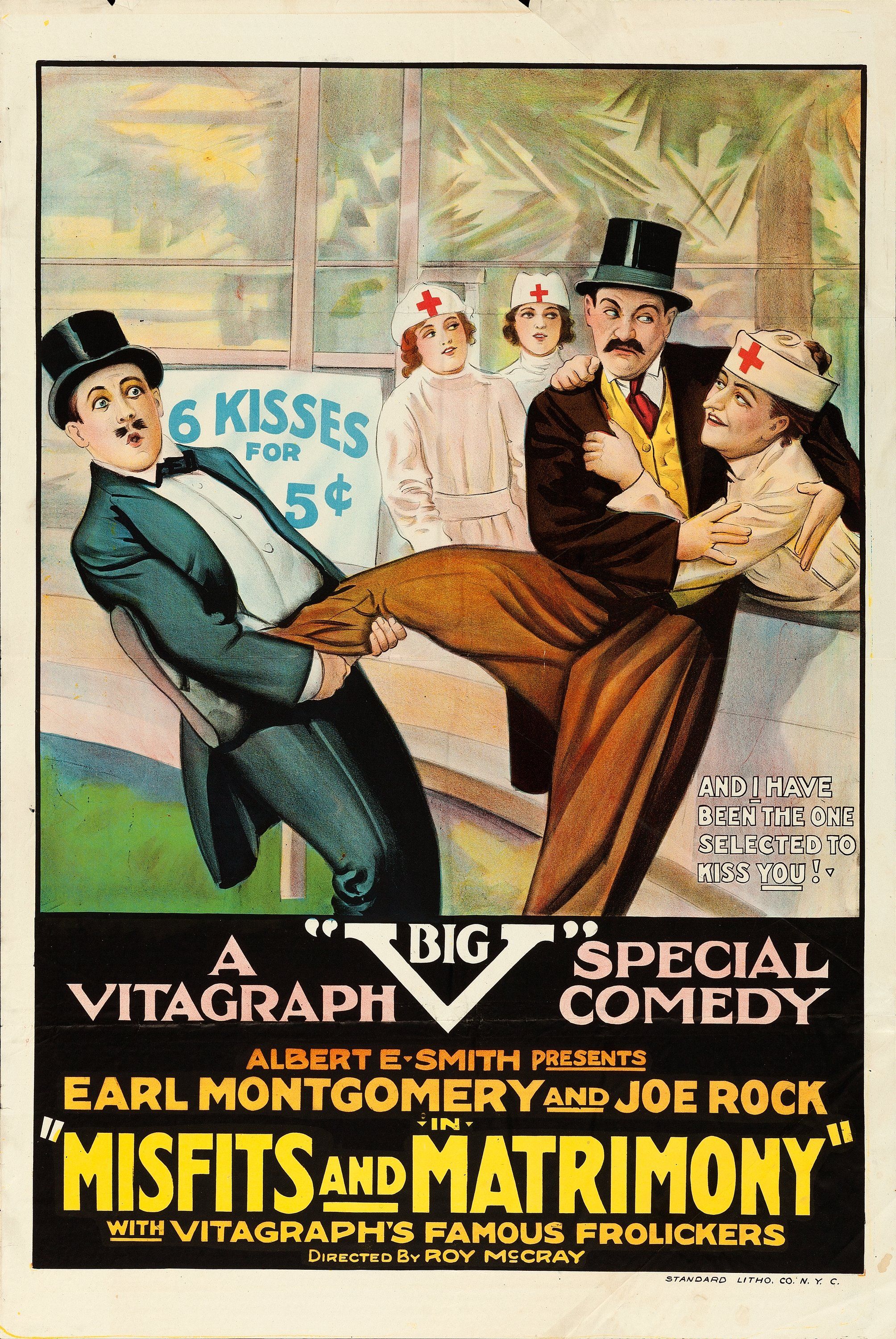
Stepping back into the nascent days of cinema, when the silver screen was still finding its voice, we encounter a delightful, if utterly chaotic, relic: Misfits and Matrimony. This isn't just a film; it's a vibrant, boisterous snapshot of an era, a testament to the raw, unbridled energy of early comedic filmmaking. Released at a time when the world was rapidly changing, and cinema was quickly becoming a ubiquitous form of entertainment, this particular gem offers more than just laughs; it provides a fascinating window into societal norms, gender roles, and the burgeoning art of visual storytelling. Forget the nuanced character arcs of modern dramas; here, the narrative propulsion comes from pure, escalating farce, a comedic snowball rolling downhill with unstoppable momentum. And oh, what a ride it is!
The premise, as wonderfully absurd as it is, immediately plunges us into a world teetering on the edge of the ridiculous. We open on a Red Cross entertainment, a seemingly innocuous setting, yet one that quickly becomes the crucible for utter pandemonium. The very concept of "kisses for sale to the highest bidder" at such an event is a fascinating, if slightly uncomfortable, historical detail. It speaks volumes about the casual commodification of female charm, even in the name of charity, and sets an intriguing, slightly off-kilter tone for everything that follows. This isn't a commentary on morality, not explicitly, but rather a springboard for the grandest of farcical misunderstandings. It's a social occasion, yes, but one that subtly hints at the underlying currents of desire and transaction that often ripple beneath polite society. The scene is set, the stakes are—unbeknownst to anyone—about to be raised astronomously.
Our central figure, an unnamed young woman whose kisses are being auctioned off, becomes the unwitting catalyst for this entire comedic explosion. The film suggests she becomes "unbalanced," a wonderfully vague term that allows for a multitude of interpretations. Is it the dizzying effect of all the attention? A momentary lapse brought on by the strange atmosphere? Or perhaps a deeper, more profound, if temporary, amnesia concerning her marital status? Whatever the cause, this mental shift is the engine of the plot. Forgetting her existing matrimonial bonds, she embarks on a spontaneous, double-barrelled betrothal, promising her hand to not one, but two rival suitors. This singular act of forgetfulness or impulsive desire ignites a chain reaction that spirals into magnificent chaos, a true testament to the power of a single, ill-advised decision in the world of silent comedy. It’s a classic setup for a chase film, but with a matrimonial twist.
The instructions given to these unsuspecting gentlemen only amplify the impending disaster: each is to meet her at the depot, minister in tow. The image itself is priceless: two earnest, hopeful men, each clutching a clergyman, awaiting their bride-to-be at a bustling train station. The depot, a symbol of departures and arrivals, of new journeys, here becomes a nexus of comedic confusion. The film capitalizes on the visual humor inherent in such a setup, painting a picture of escalating absurdity. And as if one minister weren't enough, the comedic logic dictates that more must inevitably join the fray. The mix-up, the inevitable collision of these separate plans, leads to an exponential increase in the number of clergy involved. Imagine the scene: a growing congregation of bewildered reverends, each under the impression they are officiating the *only* wedding of the day, all converging on the same bewildered bride-to-be. It’s a brilliant conceptual gag, perfectly suited for the visual medium of silent film, where expressions and physical comedy carry the narrative weight.
The sheer eagerness of these ministers to "be in at the finish" is another stroke of comedic genius. Their professional solemnity is momentarily cast aside in favor of a frantic, almost competitive zeal to perform the ceremony. This transforms them from figures of spiritual authority into unwitting participants in a grand, ludicrous chase. And what a chase it becomes! Abandoning their decorum, they take to bicycles, a visual gag that never fails to land. The image of a peloton of frock-coated ministers pedaling furiously in pursuit of a runaway wedding is iconic, a testament to the inventive physical comedy that defined the era. This sequence alone solidifies Misfits and Matrimony as a masterclass in escalating visual humor, reminiscent of the intricate, multi-layered chases perfected by cinematic pioneers. It’s a delightful subversion of expectations, turning the sacred into the hilariously profane.
Meanwhile, the two rival lovers, caught in this escalating maelstrom, attempt to elude each other, a chase within a chase. Their desperation is palpable, their confusion endearing. They are not merely pursuing the woman; they are also trying to outmaneuver their competitor, adding another layer of frantic energy to the proceedings. The physical comedy here is paramount, relying on exaggerated movements, near misses, and the inherent humor of frantic, misguided effort. The performances by Jack Duffy, Joe Rock, and Earl Montgomery, though broad by modern standards, perfectly capture the frenetic spirit required. Their expressive faces and dynamic physicality are the bedrock of the film's comedic success, conveying emotions and intentions without a single spoken word. This kind of physical storytelling, so vital to silent cinema, allowed for universal appeal, transcending language barriers and cultural nuances. One could easily draw parallels to the frantic energy seen in other comedic works of the period, where the sheer momentum of the chase often dictated the narrative, much like the escalating marital confusion in His Bonded Wife, albeit with a different focus.
The genius of early silent comedies often lay in their ability to build intricate, almost Rube Goldberg-esque comedic contraptions out of simple misunderstandings. Here, the "unbalanced" woman's momentary lapse is the initial domino, setting off a chain reaction that involves multiple suitors, a growing retinue of ministers, and a cross-country bicycle pursuit. It speaks to the inventive spirit of writers Joe Rock and Earl Montgomery, who understood the mechanics of escalating farce. They crafted a scenario where each new development amplifies the humor, pushing the boundaries of plausibility just enough to remain entertaining without becoming utterly unbelievable within its own comedic universe. This narrative construction isn't just about getting laughs; it's about crafting a carefully choreographed dance of mishaps and mistaken identities, a skill honed by many early filmmakers who were often also performers, intimately understanding timing and visual impact.
And then, as all good farces must, it reaches its inevitable, satisfying conclusion. The sudden appearance of the young woman's actual husband acts as the ultimate comedic deflator, the abrupt reintroduction of reality into a world gone gloriously mad. His arrival is not a moment of dramatic tension, but rather one of weary resignation and decisive action. He doesn't need to explain; his mere presence, coupled with a firm hand, is enough to puncture the balloon of burgeoning marital mayhem. This final act puts an emphatic end to his wife's flirtations, restoring a semblance of order and sanity to a day that had spiraled wildly out of control. It's a classic comedic resolution: the chaos is contained, the absurdity is resolved, and the audience is left with the lingering echoes of delighted laughter. This return to normalcy, often orchestrated by a figure of authority or forgotten truth, is a common trope in silent comedies, providing a neat, often witty, wrap-up to the preceding bedlam. While the film doesn't delve into the emotional aftermath, the humor lies in the abruptness of the cessation of chaos, a sharp contrast to the slow build-up.
The enduring appeal of films like Misfits and Matrimony lies in their timeless comedic mechanisms. The misunderstandings, the chases, the subversion of social decorum – these are elements that transcend generations. While the specific context of a Red Cross entertainment selling kisses might be a historical curiosity, the core humor of mistaken identity and escalating chaos remains universally relatable. It's a testament to the ingenuity of early filmmakers like Joe Rock and Earl Montgomery, who, working with nascent technology, managed to craft narratives that still resonate. They understood that visual storytelling, even without dialogue, could convey complex comedic scenarios and evoke genuine laughter. The film's energy is infectious, a vibrant display of the era's comedic sensibilities, where physical prowess and expressive performance were paramount.
It’s important to view Misfits and Matrimony not just as a standalone piece, but as part of a rich tapestry of early cinema. Its plot, while simple, contains threads that connect to broader themes explored in other films of its time. The concept of an individual's personal life spiraling into public spectacle, for instance, finds echoes in various melodramas and comedies. The film's lighthearted take on marital complications, though far less dramatic, shares a thematic kinship with more serious works exploring the complexities of relationships, such as perhaps the societal constraints depicted in Anna Karenina, albeit through an entirely different lens. Here, the chaos is purely for amusement, a playful jab at the conventions of courtship and marriage.
The performances, particularly from the seasoned silent film actors like Jack Duffy and Joe Rock, are a masterclass in non-verbal communication. Every wide-eyed glance, every frantic gesture, every exaggerated expression contributes to the narrative. They are not merely acting; they are performing a physical ballet of emotion and intent. This demands a unique skill set, one that modern actors rarely employ with such intensity. It's a reminder of how much storytelling can be achieved through pure visual means, a lesson that contemporary filmmakers, immersed in dialogue-heavy productions, could still learn from. The clarity of their actions ensures that even without spoken words, the audience is never lost in the unfolding farce. The very essence of silent film lies in this heightened physicality, turning the human body into a primary instrument of narrative progression and comedic timing.
Moreover, the film's production values, while modest by today's standards, showcase the ingenuity of early cinema. The use of location shooting for the depot and the bicycle chase adds a layer of realism to the otherwise fantastical premise, grounding the absurdity in tangible settings. The editing, though perhaps less sophisticated than later works, effectively builds momentum and emphasizes the comedic timing of the rapid-fire gags. Each cut, each transition, is designed to propel the narrative forward, enhancing the sense of urgency and chaos. It’s a testament to the foundational techniques being developed in the industry, proving that even with limited resources, creative minds could craft compelling and entertaining stories. The film stands as a valuable artifact, not just for its entertainment value, but for its role in the evolution of cinematic language.
In an era dominated by short, often episodic films, Misfits and Matrimony stands out for its tightly constructed plot and relentless pacing. There’s no wasted motion, no superfluous scene; every moment serves to build the comedic tension and propel the story towards its uproarious climax. This efficiency in storytelling is a hallmark of successful early comedies, where the goal was often to deliver maximum laughs in minimal runtime. The narrative arc, from initial misunderstanding to ultimate resolution, is a masterclass in comedic structure, proving that even in the silent era, filmmakers understood the importance of a well-crafted plot. It's a delightful example of how much narrative punch could be packed into a relatively brief cinematic experience, leaving the audience breathless with laughter and admiration for its clever construction.
The film also offers a subtle, perhaps unintentional, commentary on the institution of marriage itself. By presenting it as something that can be so easily forgotten, so impulsively promised, and so frantically pursued, it playfully pokes fun at the solemnity often associated with it. The ministers, usually figures of unwavering gravitas, are reduced to frantic bicycle riders, their dignity momentarily sacrificed for the sake of a chase. This lighthearted irreverence is part of the film's charm, inviting the audience to laugh at the absurdity of human rituals and desires. It’s not cynical, but rather a good-natured ribbing of societal expectations, a reminder that even the most sacred institutions can be fodder for comedic exploration. Compared to the more dramatic explorations of marital strife found in films like The Path Forbidden or The Squaw Man, Misfits and Matrimony takes a decidedly lighter, farcical approach, proving that the complexities of relationships can be explored through various tones.
Ultimately, Misfits and Matrimony is a testament to the enduring power of silent comedy. It’s a film that, despite its age, still manages to elicit genuine laughter and admiration for its clever construction and energetic performances. It reminds us that humor is often found in the most unexpected places, and that the simplest of premises can, in the hands of skilled storytellers, blossom into a riotous explosion of visual gags and escalating absurdity. It’s a joyous romp, a delightful piece of cinematic history that deserves to be rediscovered and celebrated. If you're a fan of the foundational elements of film comedy, the kind that laid the groundwork for generations of laughter, then this film is an absolute treat. It offers a pure, unadulterated dose of early 20th-century mirth, proving that a good laugh truly is timeless, irrespective of whether it's accompanied by a soundtrack or not. Its spirit of playful chaos is a direct lineage to many subsequent comedic masterpieces, making it an essential watch for anyone interested in the evolution of the genre. The film is a vibrant, kinetic experience, a whirlwind of mistaken intentions and hilarious outcomes, concluding with that satisfying snap back to reality that only the best farces can deliver.
IMDb —
1936
Community
Log in to comment.