DbcultAccessing Vault...
6/10
Senior Film Conservator
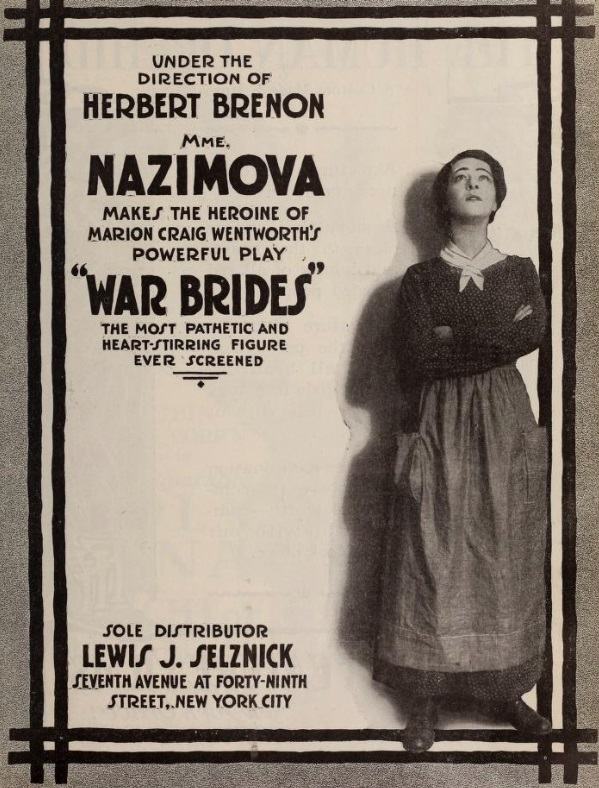
A definitive 6/10 rating for a film that redefined the boundaries of cult cinema. War Brides remains a cornerstone of transgressive art.
In the annals of cinematic history, few films from the silent era resonate with the raw, visceral power and defiant conviction of Herbert Brenon's 1918 masterpiece, War Brides. Released amidst the brutal throes of the First World War, this picture wasn't merely entertainment; it was a thunderous, audacious protest, a cinematic Molotov cocktail hurled at the very concept of militarism and the state's callous disregard for human life. At its heart lies the incandescent Alla Nazimova, whose portrayal of Joan transcends mere acting, becoming an embodiment of universal grief, resilience, and ultimately, radical resistance. This isn't just a story; it's a polemic, a lament, and a rallying cry, all wrapped in the stark, powerful imagery only silent cinema could truly achieve.
The narrative unfurls in a pastoral European village, a seemingly idyllic setting soon to be irrevocably scarred by the encroaching shadow of global conflict. We are introduced to Joan, a young woman whose life, initially marked by the simple joys of love and impending matrimony, is swiftly and brutally redefined by forces far beyond her control. Her marriage to a local lad, portrayed with earnest charm by Charles Bryant, is a fleeting moment of happiness, a fragile blossom crushed almost immediately by the relentless march of war. Within weeks, her husband, along with his three brothers, is conscripted, ripped from the comforting embrace of home and thrust into the inferno of the front lines. This sudden, jarring transition from domestic bliss to martial terror is depicted with an economy of storytelling that is both devastating and remarkably effective, highlighting the arbitrary cruelty with which war plucks individuals from their lives.
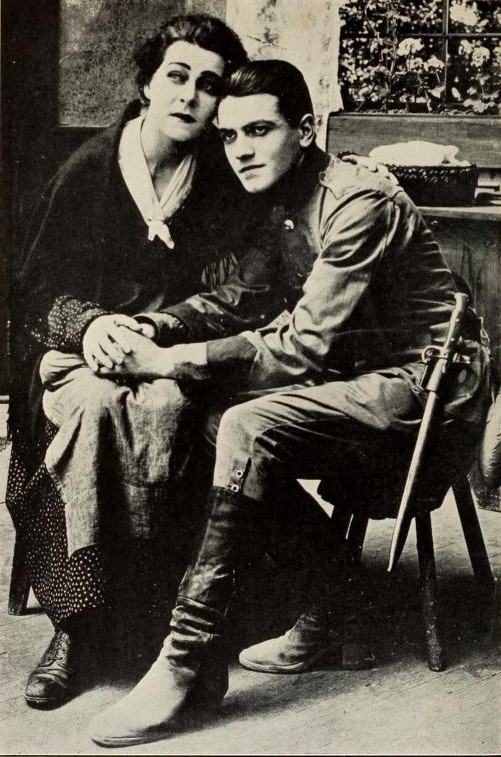
The news arrives like a death knell: her husband has fallen in battle. This moment of profound personal tragedy is where Nazimova’s genius truly ignites. Her initial reaction, a desperate impulse towards self-annihilation, is a gut-wrenching portrayal of despair, a testament to the depth of her character's suffering. Yet, it is the burgeoning life within her—the realization of her pregnancy—that pulls her back from the brink. This pivotal revelation transforms Joan from a grieving widow into a vessel of nascent hope, imbuing her with a renewed sense of purpose and a profound, almost primal, responsibility. It's a powerful narrative pivot, articulating the innate human drive for survival and the extraordinary strength that can emerge from the depths of sorrow. This nascent motherhood, however, also plants the seeds of a deeper, more profound rebellion.
What follows is perhaps the film's most chilling and prescient critique: the state’s audacious and morally reprehensible campaign to replenish its ranks. The military authorities, with a cold, calculating pragmatism, launch a movement encouraging young women to marry departing soldiers, explicitly framing it as a patriotic duty to ensure "another generation of fighting men" for the empire. This governmental mandate, reducing human beings to mere cogs in a war machine, is depicted with an almost clinical detachment that underscores its inherent horror. It’s a moment of stark, terrifying clarity, revealing the state’s ultimate objective: perpetual conflict, sustained by a ceaseless supply of human sacrifice. Joan, witnessing this grotesque perversion of love and life, finds her personal grief transmuted into a searing, righteous indignation.
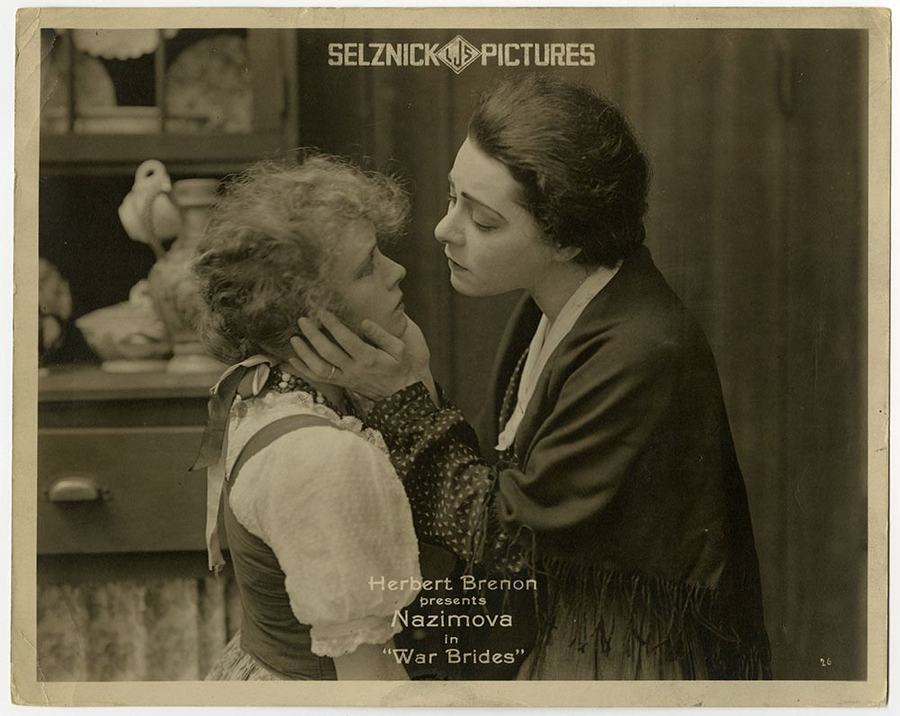
The film's climax is built around the impending visit of the monarch to their war-weary village. This event serves as the perfect crucible for Joan's burgeoning defiance. Galvanized by her own loss and the shared anguish of her community, she organizes the women of the village into a unified, potent force of protest. Their collective response is not one of violence, but of profound, symbolic dissent. Dressed uniformly in stark black, a visual echo of their collective mourning and their refusal to participate in the cycle of bloodshed, they form a long, silent procession. This visual motif is incredibly powerful, a sea of somber figures moving with an almost ritualistic purpose, a stark contrast to the colorful pageantry typically associated with royal visits. It’s a powerful image that resonates with the collective sorrow and resistance seen in other socially conscious films, even if their specific contexts differ. For instance, while The Warning might explore individual moral dilemmas within a societal framework, War Brides amplifies this to a collective, organized act of defiance.
The confrontation is inevitable and deeply symbolic. As Joan leads her silent army towards the monarch, they are met with the stern, armed resistance of soldiers, who threaten to open fire unless the women disperse. This moment encapsulates the brutal power dynamic at play: the state's willingness to use force to suppress even the most peaceful forms of dissent. Yet, Joan, a figure of unwavering resolve, presses onward. Her face-to-face encounter with the ruler is not a plea, but a final, devastating act of protest. In a gesture that is both shocking and profoundly moving, she takes her own life, her suicide a searing indictment, a final, unassailable message from the women that they refuse to be complicit in a system that demands their sons, brothers, and husbands as fodder for a ruthless militarism. Her death is not an act of despair, but of ultimate agency, a refusal to allow her body, or the bodies of future generations, to be conscripted into a war she deems unjust.
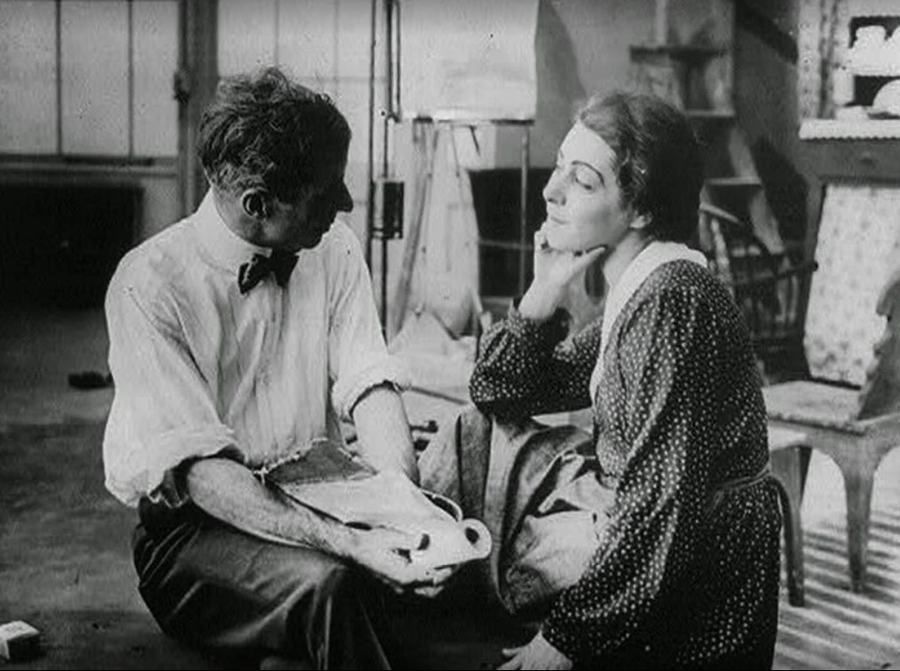
The very soul of War Brides resides in the extraordinary performance of Alla Nazimova. A Russian émigré who had already carved out a formidable reputation on the Broadway stage, Nazimova brought a unique blend of theatrical intensity and nuanced emotional depth to the nascent art of cinema. Her acting style, often described as "exotic" or "bohemian," was a revelation for the time, eschewing the broader, more melodramatic gestures common in early silent films for a more internalized, psychologically driven portrayal. As Joan, she is utterly mesmerizing. Her eyes, often described as pools of expressive darkness, convey volumes of grief, defiance, and a burgeoning maternal strength without the need for intertitles.
Nazimova’s ability to transition Joan from a blissfully naive newlywed to a despairing widow, then to a resolute mother, and finally to a revolutionary martyr, is nothing short of breathtaking. Her physicality, from the subtle slump of her shoulders under the weight of grief to the determined set of her jaw as she leads the protest, speaks volumes. She doesn't just play Joan; she inhabits her, making her anguish palpable and her defiance electrifying. This performance alone makes the film a crucial watch, illustrating the power of a single actor to elevate a strong narrative into an unforgettable experience. Her presence is so commanding that it draws comparisons to other powerful female leads of the era who challenged societal norms, like those in Her Triumph, though Nazimova's role here carries a far more explicit and tragic political weight.
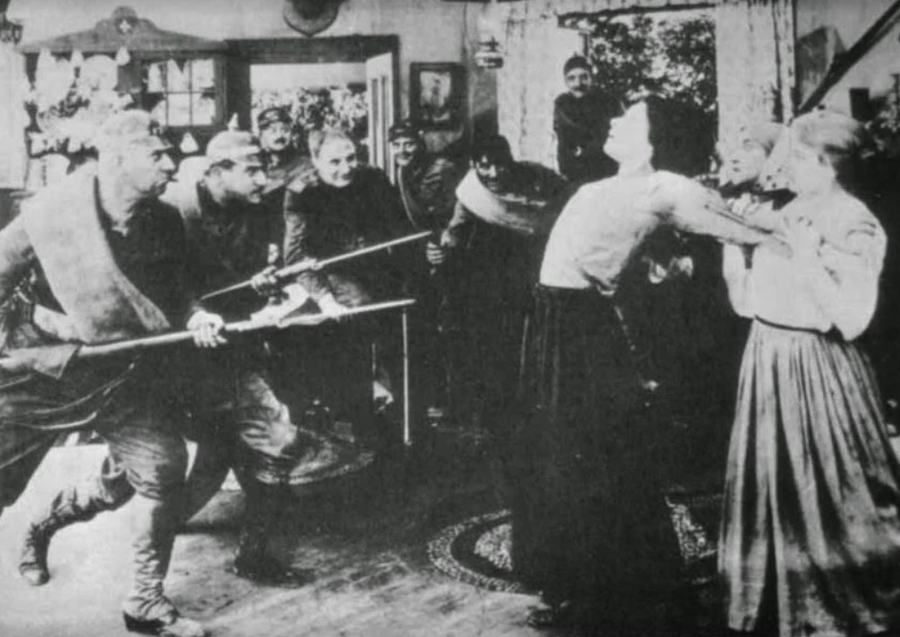
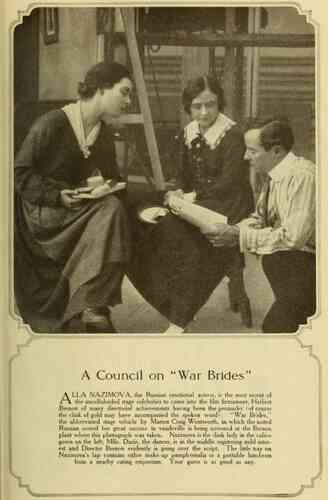
Director Herbert Brenon, known for his versatility and skill in adapting literary works, helms War Brides with a clear vision and an unwavering focus on its potent anti-war message. Working from a script by Marion Craig Wentworth, who adapted her own successful 1915 play, Brenon translates the stage's dramatic intensity into cinematic language with remarkable efficacy. The film's visual storytelling, while characteristic of the period, is employed with a keen understanding of emotional impact. Shots are framed to maximize Nazimova's expressive face, and the staging of the protest march is both grand in scale and deeply intimate in its emotional resonance. The sense of a community united in grief and defiance is powerfully conveyed, a testament to Brenon's directorial prowess.
Marion Craig Wentworth's original play, a sensation in its own right, provided the bedrock for this cinematic adaptation. Her courage in penning such a searing critique of war during wartime cannot be overstated. The play's themes—the dehumanization of women, the state's commodification of life, the futility of conflict—are rendered with uncompromising clarity in the film. The dialogue, translated into intertitles, retains its poetic yet direct force, driving home the moral imperative of Joan's actions. The collaboration between Wentworth and Brenon results in a film that is not only technically proficient for its era but also intellectually and emotionally profound, a true testament to their combined artistic courage.
War Brides is a tapestry woven with a multitude of potent themes. First and foremost, it is an unequivocal pacifist statement. Released at a time when jingoism and patriotic fervor were at their zenith, the film dared to question the very foundations of war, portraying it not as a glorious endeavor but as a brutal, dehumanizing force that devours lives and shatters families. It asks uncomfortable questions about who truly benefits from conflict and at what unspeakable cost.
Beyond its anti-war stance, the film is also a remarkably proto-feminist work. Joan’s journey from a passive victim of circumstance to an active, defiant leader is a powerful exploration of female agency. The state’s attempt to reduce women to mere breeders of soldiers is met with a collective, resounding "no." The women’s protest, led by Joan, is a demand for recognition of their inherent worth, their right to control their own bodies and destinies, and their refusal to be instruments of a patriarchal, militaristic system. This theme resonates strongly, even decades later, and sets it apart from other films that might touch on social issues but lack this explicit feminist core. For example, while films like The Price of Crime might explore individual moral failings, War Brides critiques systemic injustices against an entire gender.
The film also delves into the insidious nature of state control and propaganda. The campaign to encourage "war brides" is a chilling depiction of how governments can manipulate patriotic sentiment to achieve their strategic ends, even if it means sacrificing the lives and autonomy of its citizens. The contrast between the state's grand pronouncements of glory and the devastating reality experienced by ordinary people is starkly drawn, leaving the audience to ponder the true cost of empire. The film's unflinching gaze at these uncomfortable truths is what gives it its enduring power.
The visual language of War Brides is as potent as its narrative. The stark contrast between the initial scenes of domestic warmth and the later imagery of war's devastation is emotionally jarring. The recurring motif of the women in black, a silent legion of sorrow and defiance, is particularly striking. This visual choice amplifies their collective voice, transforming individual grief into a powerful, unified statement. The final scene, with Joan's ultimate sacrifice, is staged with a dramatic flair that ensures its indelible impact. It's a moment of profound, almost operatic tragedy, yet it feels earned, a logical culmination of Joan's journey and the film's overarching message.
Despite being a product of its time, War Brides retains a remarkable contemporary relevance. Its exploration of the human cost of war, the manipulation of patriotism, and the struggle for individual and collective autonomy against oppressive state power continues to resonate in an age still grappling with conflict and societal control. It stands as a testament to the power of cinema not just as a form of escapism, but as a vital tool for social commentary and political protest. It challenges viewers to question authority, to empathize with the victims of conflict, and to consider the profound responsibility that comes with bringing new life into a world perpetually threatened by violence.
The film's daring nature, especially for its release period, is often underestimated. To release such an overtly anti-war film during wartime was a bold move, and it undoubtedly sparked considerable discussion and controversy. Its legacy is not just as a silent film classic but as a significant piece of political cinema, a precursor to many later anti-war narratives. It reminds us that even in the earliest days of the medium, filmmakers and performers were willing to use their craft to speak truth to power, to advocate for peace, and to champion the rights of the marginalized.
In conclusion, War Brides is far more than a historical curiosity. It is a vibrant, emotionally charged, and intellectually stimulating work that continues to provoke thought and stir the conscience. Alla Nazimova's performance is legendary, Herbert Brenon's direction is assured, and Marion Craig Wentworth's script is a masterclass in politically charged storytelling. It is a film that demands to be seen, not just for its historical significance, but for its timeless message: that the human spirit, in its deepest anguish, can find the courage to defy even the most formidable forces of oppression. It's a poignant reminder that while the machinery of war may grind on, the voices of those who refuse to participate, who demand peace and autonomy, will always find a way to be heard, echoing through the ages.
IMDb —
1918
Community
Log in to comment.