DbcultAccessing Vault...
Cult Review
Senior Film Conservator
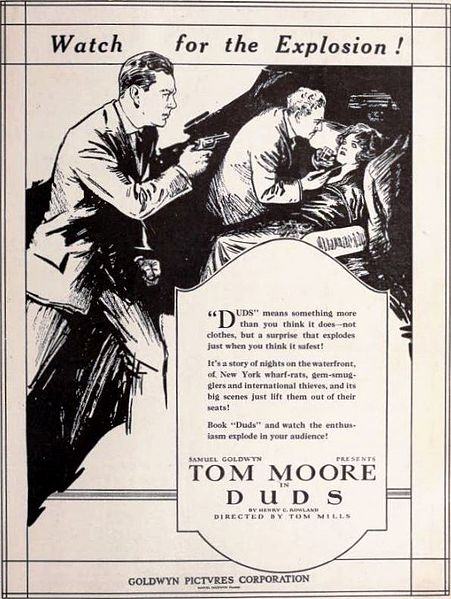
If Duds feels like a velvet-gloved slap, that is because it is: a 1919 gauntlet hurled at audiences still dizzy from wartime rationals and Spanish-flu jitters. The film’s very title—slang for “clothes” but also for “failures”—already winks at the porous membrane between finery and fraudulence. What unfolds across its six crackling reels is less a detective yarn than an existential striptease, each scene peeling another layer of identity until the soul stands shivering under the projector’s carbon-arc glare.
The Sultana diamond is not merely MacGuffin bauble; it is a compacted star, radiating colonial plunder and aristocratic hubris. Cinematographer Edwin Wallock (pulling double duty as the smuggler kingpin) bathes the gem in top-light the color of cognac, so every facet throws amber scalene ghosts across faces—portents of the moral lacerations to come. When the stone surfaces in act three, encased inside Olga’s filigreed locket, the close-up feels like a surgical incision: we watch Patricia’s pupils dilate with a hunger more erotic than any embrace she offers Plunkett.
Silent cinema rarely granted women the luxury of interiority, yet Florence Deshon’s Patricia vibrates with self-authored malice. She enters frame left, cigarette holder twitching like a conductor’s baton, and the intertitle cards suddenly read like fin-de-siècle aphorisms: “A kiss may be a credential— or a coroner's tag.” Contrast that with Naomi Childers’ Olga, all birch-pale hesitancy, eyes flicking downward as though the air itself might bruise her. The film’s genius lies in forcing us to recalibrate: the fragile ingenue survives, the panther-like operative implodes—an inversion that anticipates Hitchcock’s later icy blondes by a full decade.
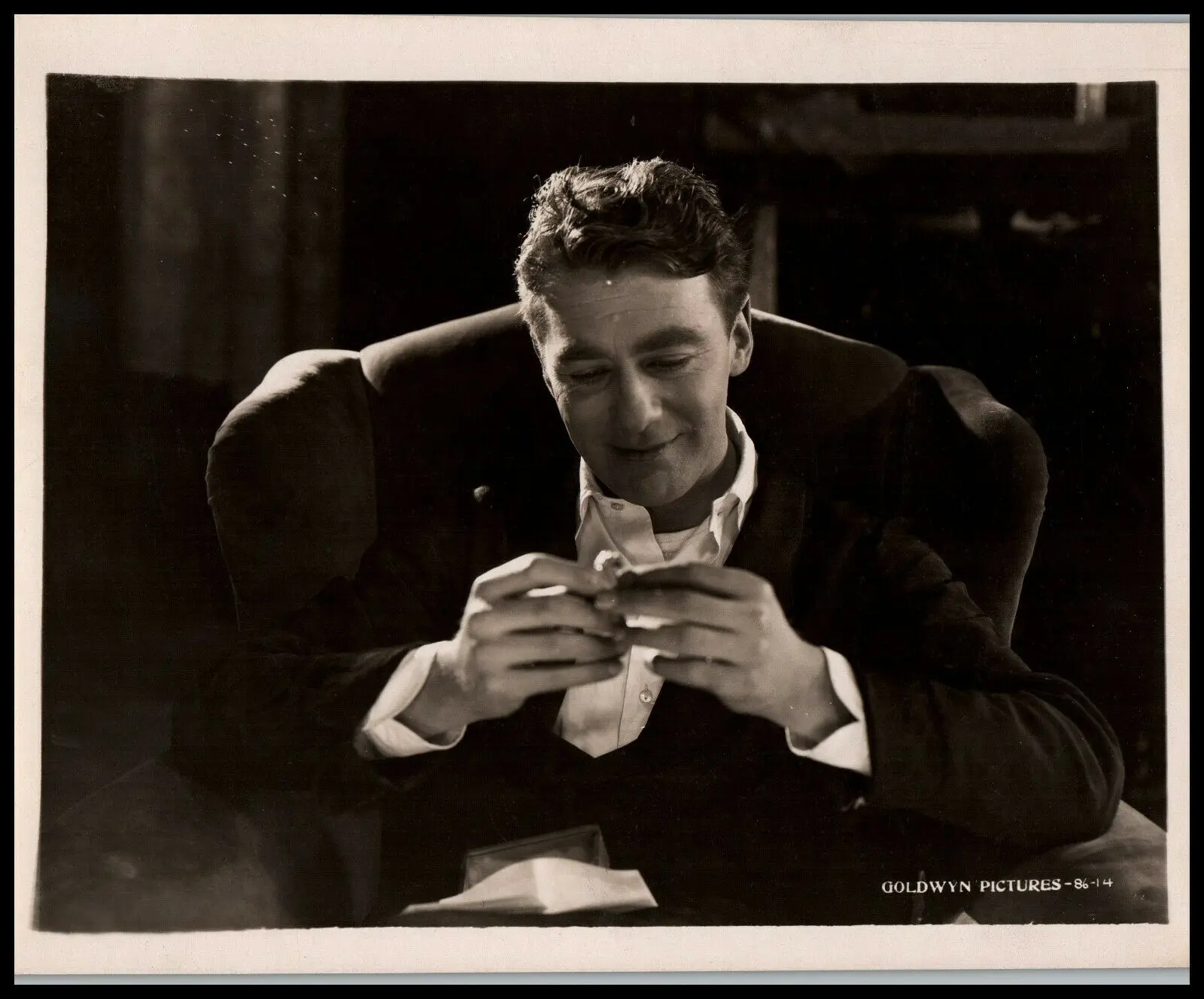
Jack Richardson plays Plunkett as a man forever smelling cordite on his own breath. His shoulders carry the perpetual flinch of someone who has ducked too many shells; when he removes his service revolver, the gesture feels less heroic than hygienic—an attempt to scrub off death. Watch him in the séance scene (a delirious detour lifted from Rowland’s pulp novel): candlelight quivers across his trench-scarred cheek like Morse code from the underworld. The film dares to suggest that valor and trauma are conjoined twins, and the only antidote is not love but velocity—hence the final rail-yard showdown shot at under-cranked speed, bodies hurdling through Eisensteinian montage.
Production designer Milton Ross scavenged army-surplus searchlights, repurposing them as key lights so shadows fall like prison-bar lattice across parquet floors. Note the smugglers’ lair: tarpaulin ripples evoke a ship’s hull, yet chandeliers dangle overhead—maritime and drawing-room codes collide, birthing a sub-genre pocket we might call dockside gothic. Meanwhile, Clarence Wilson’s editing alternates between languid iris-ins and stroboscopic cutaways to ticking clocks, a metronome of encroaching panic.
Though devoid of spoken dialogue, Duds is sonically imagined: gun-butts hit flesh with the wet thwack of mortars in mud; the diamond’s theft is scored by a sudden drop in ambient crowd noise—a negative space louder than any explosion. Contemporary exhibitors were encouraged to accompany reel five with a low, droning oboe d’amore, producing a frequency that vibrated theater seats and, according to one Motion Picture Herald scribe, “made corseted matrons clutch their throats as though memories of no-man’s-land had crept up the aisles.”
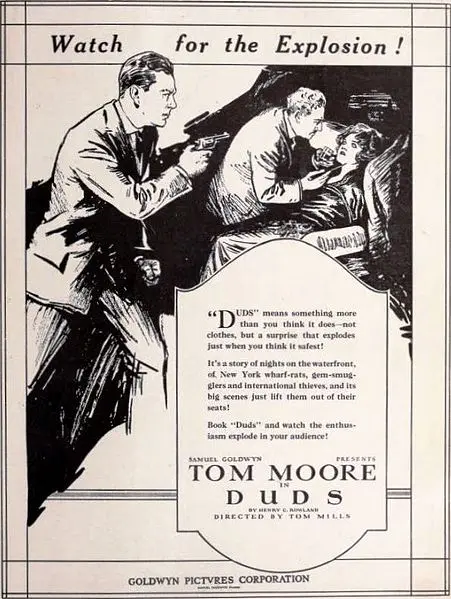
Place Duds beside His Robe of Honor and you see two diverging paths of post-war cynicism: the latter drapes guilt in ecclesiastical velvet, whereas Duds prefers the sweat-stained gabardine of back-alley deals. Conversely, The Vampires: The Poisoner offers episodic villainy; Duds compresses that toxin into one femme, sharpening narrative stakes to a stiletto point. Even the Danish circus noir Manegens Børn, rife with trapeze duplicity, lacks the blunt-force existential fatigue that seeps through every frame here.
Watch Deshon’s left eyebrow when Patricia is first called “mademoiselle”—it hitches a millimeter, a semaphore of disdain that exposes the ruse long before the script does. Richardson, largely forgotten today, anticipates Bogart’s wounded stoicism: he delivers a simple two-finger salute to a beat cop, yet the tremor in those knuckles could fuel a monograph on shell-shock. In the penultimate train compartment, Olga’s silent scream is filmed in profile, mouth agape, but the true horror rests in her reflection on the window: a double-exposure specter that seems to levitate outside the speeding carriage—an out-of-body trauma vision decades ahead of its time.
The film’s marketing tagline boasted, “Every gem has a flaw; every woman, a dagger.” Yet the screenplay subverts its own misogyny: the male establishment—generals, harbor masters, pawnbrokers—proves equally culpable, their ledger ink as bloody as any stiletto. When Patricia is finally bound with her own pearl necklace, the symbolism is delicious; patriarchal accessories turned into shackles. One could read the entire narrative as a sly allegory for the post-suffrage western world, nervously negotiating anxieties about unleashed female agency.
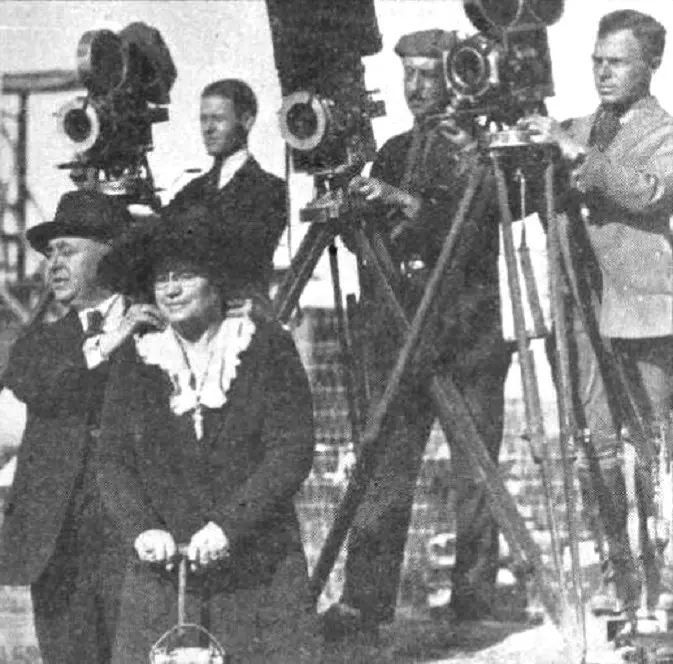
Henry C. Rowland’s source novella was marinated in Argosy sensationalism; adapter Harvey F. Thew shears away exposition, replacing it with laconically sardonic intertitles that land like blackjack hits: “Love and larceny both require the cover of darkness.” Together they craft a world where romance is merely industrial espionage wearing perfume, and every vow carries the aftertaste of gun-metal.
Regional boards excised a full reel for U.S. inland prints—allegedly a torture sequence involving a pulley and a crate of starved rats. No known copy survives; the gap manifests as a jarring narrative elision between Olga’s abduction and Plunkett’s rooftop pursuit. Purists lament the loss, yet the lacuna oddly intensifies the fever-dream texture, as though the film itself were a mutilated war veteran.
Replace the Sultana diamond with a quantum encryption key, Patricia with a black-hat hacker, and you have the skeleton of every cyber-thriller streaming in 2024. The movie intuits that the valuables we guard most fiercely—information, identity—are also the chains that bind us. Its final tableau, Plunkett and Olga silhouetted against the dock’s sodium lamps while reward money flutters like confetti, questions whether acquisition ever equals absolution.
Duds is not some artifact to be politely dusted off; it is a live round lodged in the vertebrae of cinematic history. Its DNA coils through Double Indemnity, through Blade Runner’s replicant melancholy, through every neo-noir where desire and doom share the same blood type. Seek out the 2018 Nederlands Filmmuseum restoration—tinted cyan for night scenes, amber for interiors—and watch it on the largest screen possible, volume replaced by the throb of your own complicit pulse.
Rarely does a silent relic feel so electrically, viciously now. Duds proves that even when voices go unheard, deceit can still scream across a century.

IMDb 1.7
1935
Community
Log in to comment.