DbcultAccessing Vault...
5.7/10
Senior Film Conservator
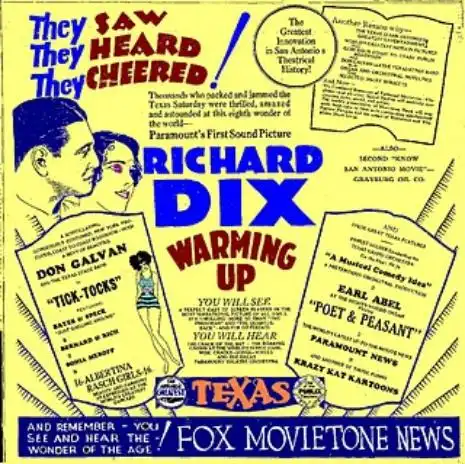
A definitive 5.7/10 rating for a film that redefined the boundaries of cult cinema. Warming Up remains a cornerstone of transgressive art.
If you’re looking for a lost masterpiece of the silent era, this isn’t it. But if you’ve ever sat through a local minor league game just for the atmosphere—the smell of the grass, the weirdly specific insults from the stands—Warming Up has a bit of that same dusty, low-stakes charm. It’s worth a look for Jean Arthur completists, though she’s mostly just there to look concerned in the stands while men in very high-waisted pants glare at each other.
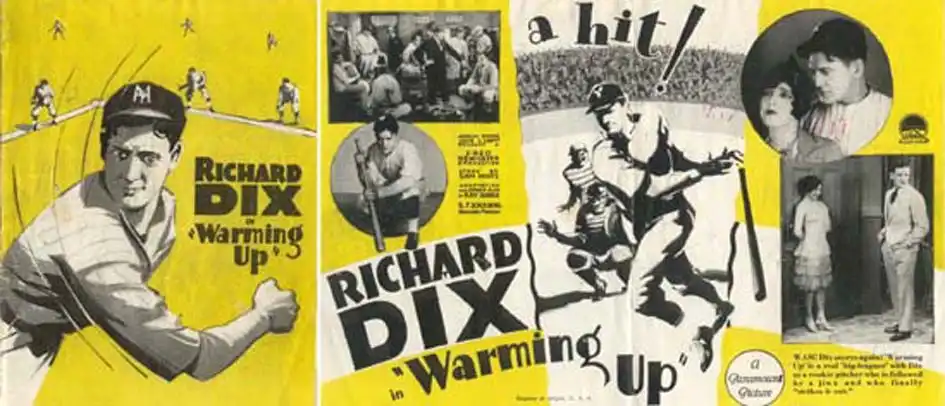
Richard Dix plays Bert, the pitcher. He has this massive, heroic chin and a way of standing on the mound that makes him look like he’s posing for a tobacco card even when he’s just waiting for the sign. His pitching motion is... questionable. It’s that heavy, stiff-armed style you see in old footage where it looks like they’re throwing a shot put rather than a baseball. There’s a specific kind of squint he does when he’s under pressure that feels like he’s trying to remember if he left the stove on back at the boarding house. It’s supposed to be 'intensity,' but it comes off as a very earnest confusion.
The movie is famous for being Paramount’s first foray into synchronized sound—mostly just sound effects and music—and you can tell they were excited about it. The 'thwack' of the ball hitting the glove is loud. Like, unnaturally loud. It sounds more like a wooden plank hitting a sidewalk. After about twenty minutes, you stop jumping, but it never really starts feeling like a natural part of the environment. It’s a gimmick and it knows it.
Jean Arthur shows up as Mary, the owner’s daughter. She’s about twenty-seven here, but she looks younger, and you can see flashes of that nervous, quirky energy that made her a star a decade later. She doesn't have the 'voice' yet—obviously, since there's no dialogue—but her eyes do a lot of heavy lifting. There’s a scene where she’s watching Bert from the stands, and the way she fidgets with her hat says more about her character than any of the clunky title cards do. She’s the best thing in the movie, even if the script gives her almost nothing to do besides be the prize in a contest between two guys who act like children.
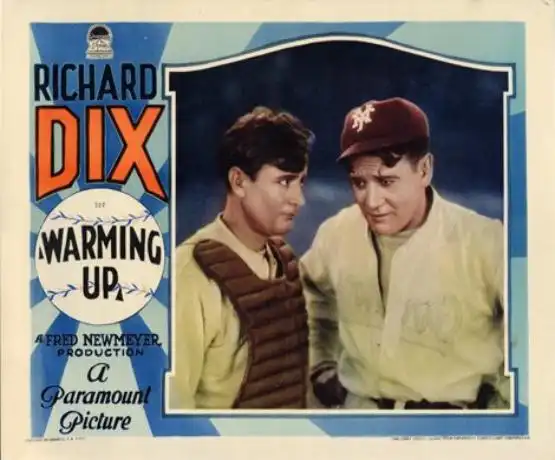
The villain, McRae, played by Philo McCullough, is almost too much. He spends half the movie sneering. Just constant, high-level sneering. At one point, he’s leaning against a dugout wall and he looks so much like a cartoon villain you expect him to start twirling a mustache he doesn't even have. The rivalry isn't really about baseball; it’s about who can be more dramatic in a locker room. It’s a bit like A Girl in Every Port in that sense—that very 1928 version of masculinity where every disagreement has to be settled with a chest-puffing contest.
The baseball action is actually decent for the time. Usually, in these old sports flicks like Galloping Ghosts, the athletes look like they’re moving in fast-forward or don't know how to hold the equipment. Here, the game feels somewhat grounded. There’s a shot from behind the catcher that actually gives you a sense of how terrifying it would be to have a ball flying at your face with 1920s equipment. The crowd scenes have this oddly authentic feeling, too—lots of guys in boater hats looking genuinely annoyed by the heat.
One thing that bothered me: the editing during the big game at the end. It cuts back to the same three or four reactions in the crowd so often it starts to feel like a loop. You see the same guy waving his hat, then three minutes later, he’s doing the exact same wave in the exact same spot. It drains the tension. You start looking at the background extras instead of the play at the plate. There's a kid in the third row who looks like he's completely bored out of his mind, and honestly, I related to him during the middle stretch of the film.
The movie gets noticeably better once it stops trying to be a romance and just sticks to the 'psychological' warfare on the field. McRae tries to get into Bert’s head by heckling him, which is a classic trope, but the way Dix reacts—collapsing internally because someone said something mean to him—is unintentionally funny. He’s a professional athlete who acts like he’s never been teased before in his life.
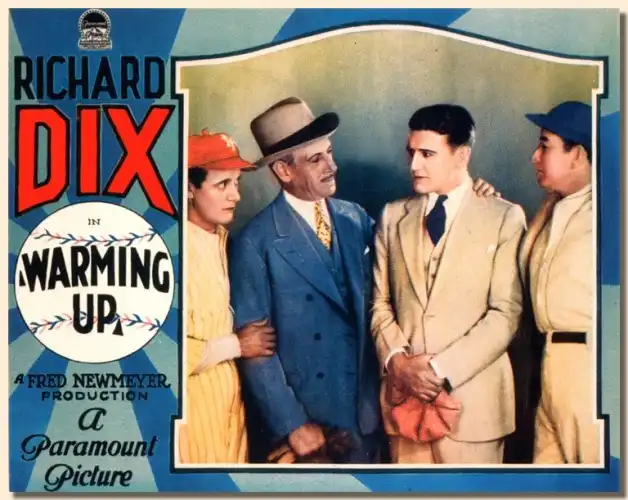
It’s not a long movie, but it feels its length during the scenes where Bert is moping. He mopes a lot. For a guy who just got a shot at the big leagues, he spends a surprising amount of time looking like his dog just died. It’s only when the sun is hitting the infield at that specific late-afternoon angle, creating those long shadows across the dirt, that the movie finds a real mood. Those visual moments are better than the plot.
I don't think I'd watch it twice, but as a snapshot of a sport and an industry both trying to figure out what they were going to be in the 1930s, it’s interesting enough. Just don't expect any deep insights into the 'human condition.' It's just a guy trying to throw a ball past a jerk.
IMDb 3.7
1911
Community
Log in to comment.