DbcultAccessing Vault...
6.7/10
Senior Film Conservator
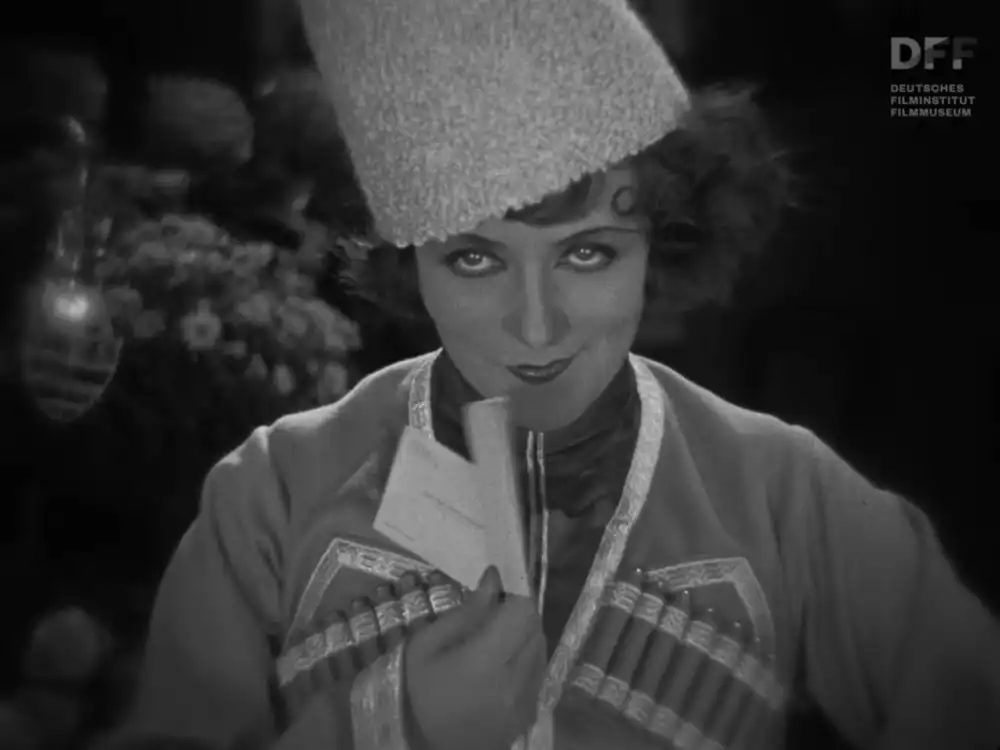
A definitive 6.7/10 rating for a film that redefined the boundaries of cult cinema. Was ist los mit Nanette? remains a cornerstone of transgressive art.
"Was ist los mit Nanette?" (What's Wrong with Nanette?) is one of those old silent films that pops up, and you think, 'Hmm, 1929, German cinema.' If you're someone who loves diving into early film, seeing how they told stories without sound, then yeah, this is probably worth a peek. You'll find a charming little melodrama, a bit silly, but undeniably of its time. For anyone expecting fast-paced action or crisp dialogue, you'll probably be bored stiff. This one's for the patient, the curious, and anyone with a soft spot for big expressions and even bigger hats.
The story itself is pretty straightforward, almost a template: Nanette (played by Ruth Weyher, who has such expressive eyes) inherits a fortune. Suddenly, everyone's interested in her, especially a swarm of suitors. It's all very predictable, but in a comforting way, like watching a familiar play unfold.
There’s this one scene, early on, where Nanette gets the news. Her eyes widen, and then she does this little *gasp* with her hand to her mouth. It’s so over-the-top, but that's the charm of it, right? You just know what's coming: gold-diggers! 💰
Harry Hardt, as one of the main fellas, he's got this *smirk* that he deploys constantly. You can tell if he's good or bad just by how much he's smirking in any given shot. It’s not subtle, not at all, but it fits. He's always well-dressed, too. Always.
The sets are pretty lush for the era. Lots of fancy drawing rooms and cafes. I kept noticing the details in the background, like the way the light catches a particular vase or the pattern on the wallpaper. It makes you feel like you're really stepping back into a grand 1920s European world, even if it's just a studio set. ✨
The movie has a definite rhythm. It often slows down for dramatic pauses, letting the actors *really* emote. Sometimes it works, pulling you into their internal struggle. Other times, I admit, my mind wandered a bit, thinking about what I'd have for dinner. But then something would happen, like a dramatic door slam, and you're pulled right back.
Maria Mindzenty plays a rival or maybe a friend, it's a bit unclear sometimes. But her costumes are fantastic. Every outfit is a statement. There's a scene where she's wearing this dark, beaded dress, and it just *shimmers* even in black and white. Costume design back then, wow.
There's a sequence where Nanette is trying to figure out who's genuinely interested in her and who's just after her money. She tries to test them, I think? The specifics get a little blurry, but the *feeling* of her confusion comes through. It’s not just a plot point; you really get her dilemma.
The humor, when it lands, is often physical. People tripping, exaggerated reactions to small things. It's not laugh-out-loud funny in a modern sense, but there's a gentle amusement to it. Like when someone accidentally spills a drink, and it becomes a *huge* deal. 😅
The ending is pretty much what you'd expect. Everything ties up neatly, perhaps a little *too* neatly. But hey, it's a silent film from 1929; they weren't reinventing the wheel on narrative complexity. It leaves you feeling satisfied, if not particularly challenged.
I found myself wondering about the audience watching this back then. Did they gasp at the same moments? Did they root for the same characters? It's a nice little window into a different time, a different way of storytelling. Don't go in expecting a masterpiece, but do go in expecting a pleasant, *very* old-fashioned diversion.
IMDb 5.7
1933
Community
Log in to comment.