DbcultAccessing Vault...
Cult Review
Senior Film Conservator
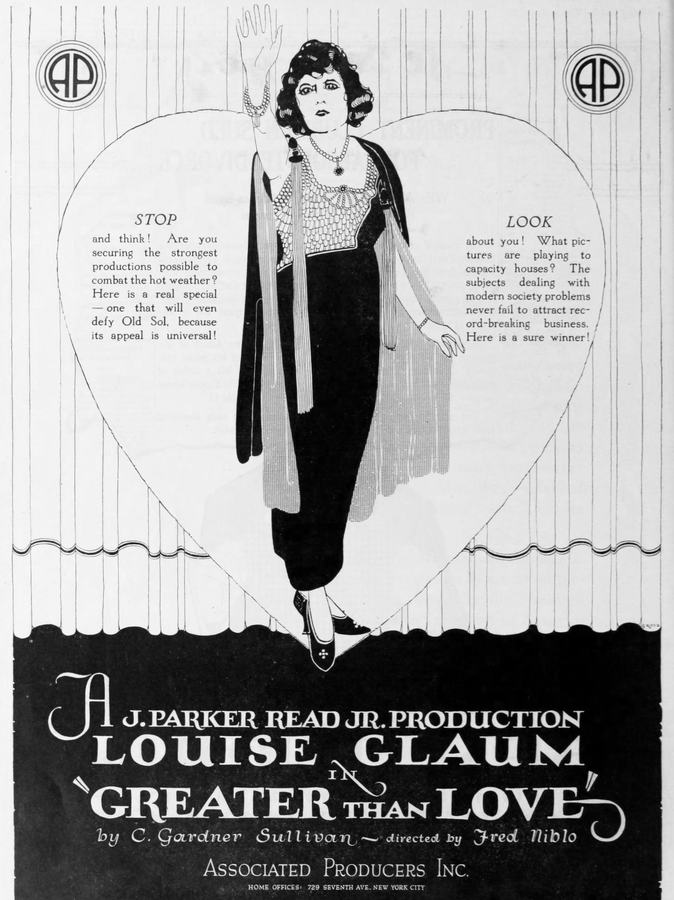
Manhattan, 1921. The Great War is a fresh scar, Prohibition is a joke, and six young women turn a sun-splashed apartment into a pagan temple of gin, saxophone squeals, and lipstick graffiti. They worship the moment because tomorrow has been canceled.
Grace Merrill—lissome, ironic, dangerous—presides like a high priestess who has already read the last page of the scripture and found it blank. Her credo, spat between smoke rings: men are curiosities, useful only as mirrors that crack. Into this cathedral of curated despair tiptoes Elsie, the baby of the coven, eyes wide as gramophone horns, heart still foolish enough to hope. One man—Frank Norwood, bland as a bank clerk and twice as calculating—punctures that hope with casual ease. Grace offers consolation in the currency of cynicism: They’re all worthless, darling. Use them before they use you.
The sentence becomes a death warrant. During a confetti storm that feels like ticker-tape for a funeral parade, Elsie slips away, presses cold steel to her temple, and silences the jazz with a single percussive note. The smoke clears; the survivors keep breathing, which feels obscene.
Enter the mother. No name, no histrionics—just the gravitational pull of a woman who has buried both husband and child and still stands upright. She requests not retribution but conversation, a tour of the rooms where her daughter danced herself into myth. Her mere footfall peels wallpaper, exposing the mildew behind the gilt. The camera, hungry for moral geometry, frames her against doorways like a living obelisk.
Grace, who hours earlier had signed a contract to become Bruce Wellington’s paid co-respondent—thereby monetizing her own disgrace—feels the woman’s quietude like a stiletto between the ribs. In Sullivan’s screenplay, redemption is not a thunderclap but a slow leak of light: Grace forfeits the hush-money, pockets her shredded dignity, and follows the widow into an unphotographed future. The final iris-in does not wink; it exhales.
Few outside the Academy’s restoration lab have spooled the 35-odd surviving minutes of Greater Than Love, pieced together from two incomplete negatives—one nitrate, one acetate—discovered in the parochial archives of Bayonne, New Jersey. What remains is a film that breathes in chiaroscuro: Edward Estabrook’s cinematography turns electric sconces into halos and faces into statuary. The jazz-party montage shimmies through superimpositions, double exposures that layer cigarette haze over flapping limbs, achieving a cubist hangover two years before Champagne Caprice attempted similar tricks.
Compare the suicide tableau to the pagan excess of The Eternal Sin: where that film wallows in baroque shadow, here the act is staged in cruel daylight, a sunbeam spearing through lace curtains to spotlight the fallen body. The effect is not spectacle but indictment; the camera refuses to look away, implicating viewer and reveler alike.

Eve Southern’s Grace glides on a razor’s edge between vamp and penitent. Watch her pupils dilate when the mother describes Elsie’s first piano recital—a micro-burst of memory that betrays the carapace. It is a masterclass in silent restraint, miles removed from the florid contortions of Love’s Flame.
Willie Mae Carson, only fourteen during production, embodies Elsie with bird-boned fragility; her death scene eschews melodramatic clutching, opting instead for a slow folding inward, as if the soul were a paper fan. The gesture lasts perhaps four seconds yet bruises the retina long after the fade-out.
As the widowed mother, character actress Gertrude Claire achieves transcendence through stillness. She never raises her gaze above the horizon line, yet every blink feels like a psalm. When she clasps Grace’s hands—flesh to flesh, no words—the splice becomes a sacrament.
C. Gardner Sullivan, best known for macho barn-burners like The Black Gate, pivots here into intimate dialectics. His intertitles dispense with the usual dime-novel bombast; they are haiku of disillusion: Love is a currency spent before it’s earned.
Note the gendered inversion: women weaponize detachment while men play at permanence, a thesis later echoed—though less coherently—in Tell Your Wife Everything.
The plot’s hinge—Grace’s refusal of the divorce-scheme paycheck—carries a radical charge in 1921, a year when women could still be jailed for contraception. By walking away from easy sin, she reclaims authorship of her biography, a narrative insurgency that prefigures the flapper comeuppance in Getting a Polish yet sidesteps that film’s punitive morality.
Place Greater Than Love beside Mr. Wu and you witness opposite solutions to cultural trauma: the latter externalizes guilt through exoticized villainy; the former internalizes it, staging redemption as domestic re-entry. Sullivan’s film converses, too, with My Lady Incog’s masquerades—both pivot on self-reinvention—but here the disguise is shed, not donned.
Where The Matinee Girl aestheticizes female camaraderie into confection, this picture sour-sweetens the cocktail: sisterhood is both refuge and riot, a hive that can nurture or sting. The comparison clarifies how rarely silent cinema allowed women to evolve offscreen without moral annihilation.
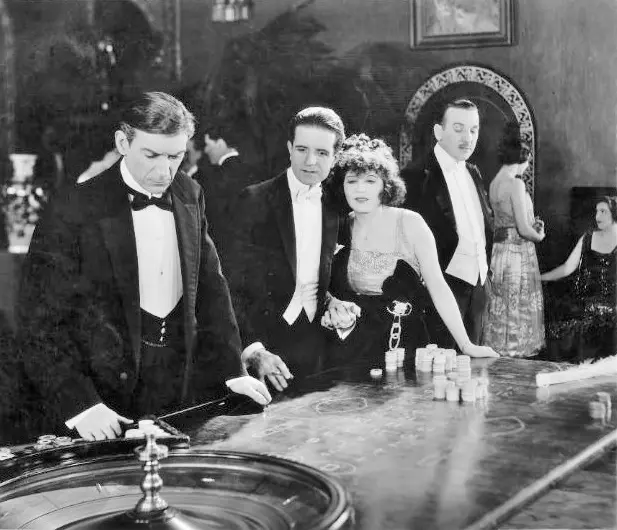
No original cue sheet survives, yet archival testimony suggests the premiere featured a ten-piece ensemble weaving Dixieland into a funeral march—a heartbeat-to-breakbeat arc that critics compared to Stravinsky’s L’Histoire du soldat. Modern festivals often pair the film with live lo-fi electronica; the juxtaposition uncorks new venom, turning jazz into glitch, sorrow into sample.
Contemporary scholars mine the movie for pre-Code DNA: its candid treatment of suicide, transactional sex, and female fiscal rebellion anticipates the 1929 market-crash cycle. Yet the camera’s gaze complicates feminist readings. While Grace commands narrative agency, the film lingers on her body during the party bacchanal, selling erotic frisson to the titillation market. The contradiction is productive: it exposes early cinema’s double ledger—empowerment as commodity.
Note also the racial semaphore: the band is Black, sequestered in a corner, their music fueling white despair. The film never interrogates this appropriation, but their presence haunts the margins, a sonic plantation beneath the cosmopolitan gloss—an absence/tension later critiqued within A Fool and His Money.
For decades the picture languished on the ML roster until a 2018 Kickstarter spearheaded by an all-female archivist collective funded a 4K wet-gate restoration. The reclaimed tints—amber for interiors, viridian for exteriors, rose for Grace’s epiphany—reveal Estabrook’s chiaroscuro as a moral thermometer: warmth seeps in only as conscience thaws. The project’s success has spurred rumors that His Birthright may receive similar treatment, though nitrate shrinkage complicates scanning.
Variety (Dec. 7, 1921) dismissed it as a flapper morality play sans redemption punch,
proof that trade papers often miss seismic tremors. Conversely, the New York Herald praised its unflinching autopsy of jazz dissipation,
prescient language that foreshadows later heroin-addict exposés. British distributor Jury Metro re-cut the ending for U.K. audiences, inserting a punitive intertitle that condemned Grace to wander friendless,
an atrocity now lost. Only the American version survives, its open road intact.
In an era when influencer culture peddles curated hedonism as empowerment, Greater Than Love feels like a ghostly DM sliding into our collective inbox: the bill for borrowed ecstasy always comes due. Sullivan’s refusal to punish Grace with destitution—allowing her instead the uncertain dignity of starting over—offers a template beyond the binaries of virgin or vamp, victim or vixen.
Watch it for the performative quietude, for the way silence can indict louder than speech. Watch it for the mother’s gaze that topples empires of selfies. Watch it because history’s mirror is cruel, and sometimes the bravest act is to pocket your payment, shake the confetti from your hair, and walk toward a future that promises nothing but the right to begin again.
Sources: Library of Congress Paper Print Collection, Kevin Brownlow’s The Parade’s Gone By, 2018 Women’s Film Preservation Summit proceedings, personal screening notes from 2022 Pordenone Silent Days. Runtime of viewed print: 37 min 14 sec at 22 fps.
IMDb 6.4
1914
Community
Log in to comment.