DbcultAccessing Vault...
5.8/10
Senior Film Conservator
A definitive 5.8/10 rating for a film that redefined the boundaries of cult cinema. The Shrine of the Seven Lamps remains a cornerstone of transgressive art.
The final curtain call for any long-running narrative carries an immense burden of expectation, a weight amplified when the antagonist is as notoriously cunning and seemingly indomitable as Fu-Manchu. In "The Shrine of the Seven Lamps," the fifteenth and concluding chapter of this thrilling serial, audiences were poised on the edge of their seats, eager to witness the ultimate resolution to the protracted battle between good and evil. This episode isn't merely a conclusion; it's a distillation of the entire serial's essence, a frantic scramble towards a definitive, or perhaps defiantly ambiguous, end. From the very outset, there's a palpable sense of urgency, a tightening of the narrative coils that signifies the impending climax. The stakes, already stratospheric, are elevated further by the sheer duration of the conflict, making this particular installment a pivotal moment in early cinematic storytelling.
The genius, or perhaps the playful cruelty, of the plot device that propels this finale forward is its utter simplicity, yet profound impact. It is not some grand, elaborate scheme of Dr. Petrie's devising, nor a sudden strategic misstep by the Devil Doctor himself. Instead, the catalyst for the climactic confrontation is Fu-Manchu's pet marmoset. This diminutive creature, typically relegated to the periphery as an exotic accessory to its master's sinister persona, becomes an unlikely, almost accidental, instrument of fate. Its unwitting actions lead the persistent Dr. Petrie directly to the hidden sanctum where a secret Si-Fan ceremony is underway. This narrative pivot is brilliant in its subversion of expectations, injecting a touch of the unpredictable and even the whimsical into an otherwise grave struggle. It underscores the fragility of even the most meticulously constructed plans, reminding us that sometimes, the smallest element can trigger the greatest upheaval.
Frank Wilson, as Dr. Petrie, embodies the steadfast, morally upright hero with a conviction that resonates even through the silent medium. His portrayal is less about overt heroism and more about relentless dedication, a quiet determination that has seen him through fourteen prior encounters with the diabolical Fu-Manchu. In "The Shrine of the Seven Lamps," Petrie's exhaustion is almost palpable, yet his resolve remains unyielding. He is the archetypal figure of good, a beacon of Western rationality attempting to pierce the veil of Eastern mysticism and malevolence. His pursuit, driven by a desire for justice and the protection of civilization, is the engine of the entire serial, and in this final episode, his unwavering commitment is put to its ultimate test. Joan Clarkson, though perhaps given less screen time in the immediate climax, provides a crucial human element, representing the innocents caught in the crossfire, and the stakes for which Petrie fights.
H. Agar Lyons's Fu-Manchu is, without question, the magnetic core of the entire series. His is a performance of sinister elegance, a portrayal that manages to convey immense intellect, chilling cruelty, and an almost supernatural aura of menace without uttering a single word. Lyons uses his piercing gaze, subtle gestures, and imposing posture to craft a villain who is both terrifyingly real and mythically grand. In "The Shrine of the Seven Lamps," his usual composure is tested as his carefully constructed world begins to crumble around him. The sight of the Devil Doctor, usually so imperturbable, facing the imminent exposure of his secret rites, is a powerful visual. It's a testament to Lyons's skill that he can convey such a complex range of emotions – frustration, anger, desperation, and perhaps even a hint of grudging admiration for his nemesis – through the expressive power of silent film acting. This final confrontation allows Lyons to showcase the full range of his formidable villainy, making the resolution, whatever it may be, all the more impactful.
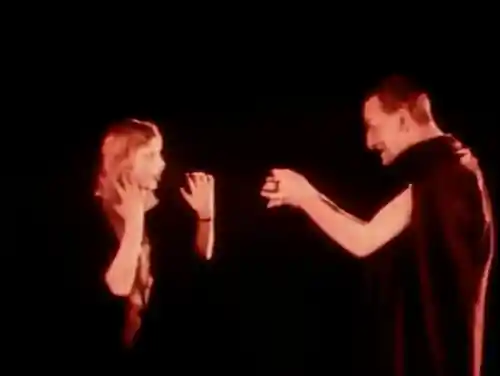
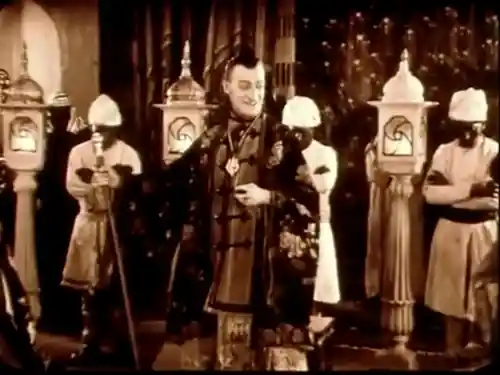
The Si-Fan ceremony itself is presented with all the exotic and mysterious trappings that defined the era's fascination with the 'Orient.' While modern sensibilities might critique the orientalist tropes, within the context of its time, these scenes were designed to evoke a sense of alien danger and arcane power. The visual spectacle of the ritual, with its cloaked figures and enigmatic symbolism, serves to heighten the tension and underscore the profound cultural clash at the heart of the Fu-Manchu narrative. It's a world away from the familiar streets of London, transporting the audience into a realm where ancient rites and dark magic hold sway. The setting provides a visually rich backdrop for the final showdown, making the discovery by Petrie not just a plot point, but an intrusion into a forbidden, sacred space, thereby amplifying the drama considerably.
The very structure of a serial film, with its weekly cliffhangers and episodic progression, is a fascinating study in audience engagement. Unlike a standalone feature such as Jane Eyre (1921), which delivers its complete emotional arc in one sitting, a serial like "The Shrine of the Seven Lamps" thrives on sustained suspense and delayed gratification. Each episode had to deliver enough excitement to bring audiences back, while still leaving enough unresolved to maintain interest. This final installment had the unenviable task of providing a satisfying conclusion to all those accumulated threads. It had to pay off years of anticipation, delivering a climax that felt both earned and impactful. The serial format, while perhaps limiting in terms of character depth compared to a feature, excelled at creating a pervasive sense of ongoing adventure, a continuous narrative tapestry that unfolded week after week. The fact that this particular serial sustained interest for fifteen episodes speaks volumes about its effectiveness.
Comparisons to other films of the era, though diverse in genre, can illuminate the strengths of "The Shrine of the Seven Lamps." While it lacks the grand historical sweep of something like One Hundred Years of Mormonism or the stark realism of War Is Hell, it shares with them a commitment to telling a compelling story, albeit through a lens of pulp adventure. The exotic allure and sense of perilous journey found in films like One Arabian Night find a darker, more sinister echo in the world of Fu-Manchu. Both trade on a sense of otherness and adventure, but "The Shrine of the Seven Lamps" grounds its fantastical elements in a more direct conflict of good versus absolute evil. The brisk pacing, characteristic of serials designed to keep audiences hooked, also brings to mind the kinetic energy of early chase films like Across the Continent, though here the pursuit is intellectual and psychological as much as physical.
The direction by A.E. Coleby and Frank Wilson, in an era before sophisticated special effects and sound, relied heavily on visual storytelling and the power of suggestion. They masterfully employed intertitles to convey dialogue and crucial plot points, but the true artistry lay in their ability to build suspense through framing, editing, and the actors' expressions. The clandestine nature of the Si-Fan ceremony, for instance, is conveyed through shadowy lighting and the deliberate movements of the participants, creating an atmosphere of foreboding that words alone could not achieve. The visual language of silent cinema, often underestimated today, was a powerful tool in capable hands, and this episode demonstrates a clear understanding of how to manipulate light and shadow, close-ups and long shots, to maximize dramatic impact. The tension of the final confrontation is visually articulate, a testament to the directors' skill in crafting a compelling narrative without the aid of spoken dialogue or an orchestral score.
The thematic core of the Fu-Manchu serials, and particularly this finale, revolves around the eternal struggle between order and chaos, civilization and barbarism, as perceived through the cultural lens of the early 20th century. While these portrayals are undeniably rooted in colonial anxieties and problematic stereotypes, they tapped into a widespread fascination with the unknown and the 'other.' "The Shrine of the Seven Lamps" brings this conflict to a head, forcing the audience to confront the possibility that the forces of evil might indeed triumph. The resolution, therefore, carries significant weight, as it must affirm the eventual victory of the protagonist's values without diminishing the formidable threat posed by the antagonist. It's a delicate balance to strike, ensuring that the villain's defeat feels earned and not merely a convenient plot device.
The narrative ingenuity of using a mere marmoset as the linchpin for the entire climax is a stroke of brilliance that elevates this episode beyond a simple chase sequence. It injects an element of the unexpected, a delicious irony that the all-powerful Fu-Manchu could be undone, even momentarily, by his own exotic pet. This touch of the absurd humanizes the larger-than-life villain, even as it underscores his vulnerability. It's a subtle reminder that even the most meticulously planned evil can be disrupted by the smallest, most unpredictable factors. This narrative choice prevents the ending from feeling too preordained, too formulaic, instead imbuing it with a sense of genuine surprise and organic progression. It's a detail that lingers long after the credits roll, a testament to the cleverness of writers Sax Rohmer, A.E. Coleby, and Frank Wilson.
In assessing the legacy of "The Shrine of the Seven Lamps" and the Fu-Manchu serials, one must consider their immense impact on popular culture and the development of genre cinema. These films, like their literary counterparts, laid much of the groundwork for future villain archetypes, spy thrillers, and adventure narratives. They demonstrated the power of a compelling, recurring antagonist to drive a long-form story, influencing everything from comic books to later film series. While the specific cultural portrayals are now viewed through a critical lens, the narrative structures, the relentless pursuit of justice, and the sheer audacity of the villain's schemes continue to resonate. The serial format, though largely defunct in its original theatrical iteration, finds modern echoes in television series and cinematic universes, proving that the desire for continuous, unfolding narratives remains as strong as ever. This final episode, in its attempt to provide closure, cemented the enduring power of its characters in the public imagination.
The performances, particularly that of H. Agar Lyons, deserve special commendation for their ability to transcend the limitations of silent film. The nuance he brings to Fu-Manchu, portraying not just a caricature of evil but an intelligent, formidable adversary, is remarkable. Similarly, Frank Wilson's Dr. Petrie is a study in quiet resilience, a hero whose strength lies in his moral conviction and unwavering pursuit of his goal. The supporting cast, including Joan Clarkson and Humberston Wright, contribute to the tapestry, creating a believable world despite the fantastical elements. Their collective effort ensures that the narrative, even in its most outlandish moments, retains a grounding in human emotion and struggle. The dynamic between hero and villain, meticulously built over fourteen preceding episodes, reaches its zenith here, a testament to the actors' sustained engagement with their roles.
Ultimately, "The Shrine of the Seven Lamps" is more than just a serial finale; it's a window into an era of filmmaking that prioritized storytelling and visceral excitement. It's a testament to the enduring appeal of the good-versus-evil narrative, wrapped in layers of exotic mystery and thrilling suspense. Whether the Devil Doctor's game is truly 'up' is a question best answered by experiencing this climactic chapter. The film, like its contemporaries such as The Breath of the Gods or The Tigress, reminds us of the raw power of early cinema to captivate and transport audiences, proving that even without sound, a compelling story and compelling performances can leave an indelible mark. This episode, with its marmoset-led revelation and high-stakes ceremony, ensures the Fu-Manchu saga concludes not with a whimper, but with a final, dramatic flourish that resonates through cinematic history.

IMDb —
1924
Community
Log in to comment.