DbcultAccessing Vault...
Cult Review
Senior Film Conservator
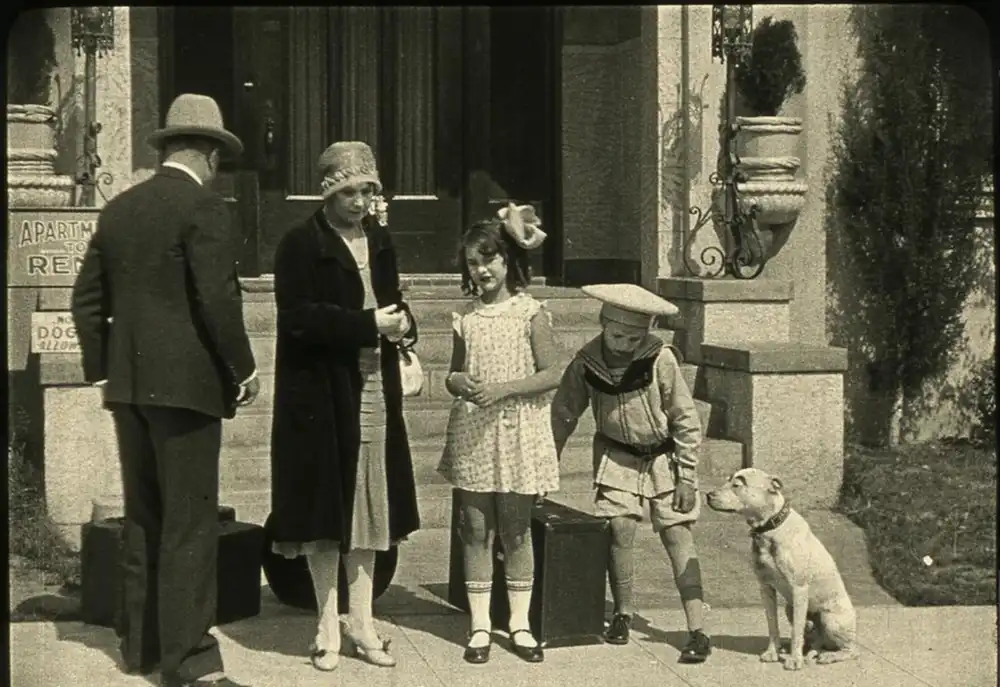
Okay, so "Watch the Birdie" isn't exactly a Saturday night popcorn flick for most. If you're a film history buff, or just *really* into silent cinema and seeing how things were done way back when, you might find something charming here. But if you're looking for modern pacing, snappy dialogue, or anything remotely resembling a plot with twists, you'll probably bounce off this one fast. It's a little slice of the past, mostly for the curious.
It’s a tiny picture, really, probably just a few reels long, starring Lois Hardwick. She was a child star, you know, and she's got that undeniable energy that only kids seem to possess on screen. The whole thing centers around a common phrase from early photography, "watch the birdie." You can almost picture the director, Bill Weber or maybe T. Page Wright, yelling that out behind the camera. 📸
The camera work is pretty simple, as expected for 1918. Lots of static shots, letting the actors do their thing. And Lois, she's often just *being* a kid, which is its own kind of performance. There’s this one bit where she’s just kinda fidgeting, and it goes on a touch longer than you'd expect. It gives it this very unpolished, almost documentary-like feel. Not in a fancy way, just... real.
Arthur Trimble is in it too, playing some grown-up. He’s got that expressive silent film face, you know, big gestures and all. There's a scene where he's trying to get Lois to sit still for a picture, and his exasperation is just *palpable*. Like, you can practically hear him sighing. It’s a simple setup, but it works for a quick chuckle.
What strikes me most is how *slow* it feels sometimes, even for a short. There are these moments where the action just kinda... stops. Maybe someone walks across the room, and the camera just waits. No quick cuts. It’s a good reminder of how different our eyes are trained now. We expect constant movement, don't we? This film, it just lets things *breathe*. Or maybe it just needed to fill some runtime. Hard to say.
The little gags they pull off are so *earnest*. Like, a chase scene involving a very slow dog, or someone tripping over something clearly placed there. It’s not sophisticated humor, but it’s got a certain charm. You find yourself smiling at the effort, even if the joke itself is ancient.
And the sets! They're so sparse. Like, a single chair and a painted backdrop for a whole room. It’s fascinating, seeing how much they had to suggest with so little. No fancy CGI or elaborate dressings. Just pure stagecraft, really. It makes you think about how audiences back then must have filled in the blanks.
One thing that kinda stood out was the title cards. They're short, to the point. But sometimes they interrupt the flow just a little too much. You get a sense of the story, then *bam*, another card. It's not a huge deal, but it does pull you out a bit.
Is it a masterpiece? Nah. But it’s got a certain sweetness. It's a peek into a different time, a simpler kind of filmmaking. You watch it and you think, "Wow, they really did this with so little." It’s less about the plot and more about the *vibe* of early cinema. A film like this, it ain't trying to change the world. It’s just trying to show you a little story, and maybe make you smile.
It makes me wonder about other films from that era, like Don't Play Hookey or even He Loops to Conquer. What little slice of life were they showing? It’s a whole different world, that's for sure.
IMDb —
1920
Community
Log in to comment.