DbcultAccessing Vault...
Cult Review
Senior Film Conservator
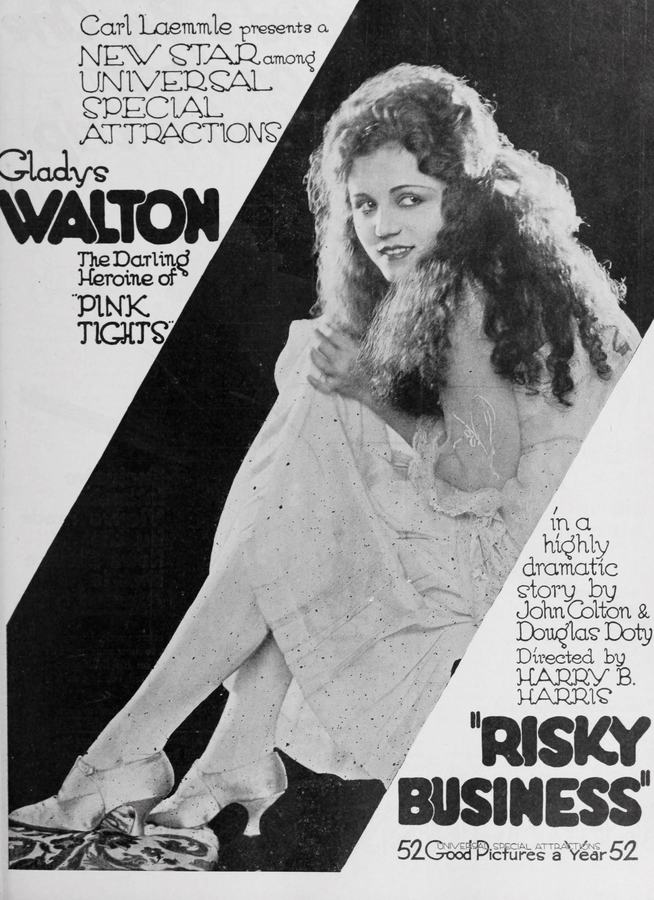
Jewel heists, yacht abductions, and a masquerade drenched in moonlit deceit—yet the loudest clang is the heartbeat beneath the silence.
The first time I saw Risky Business—not the Cruise-fueled romp of ’83 but this amber-tinged 1926 curio—I felt the celluloid exhale, as if the film itself had been holding its breath for ninety-seven years. Douglas Z. Doty and John Colton lace their scenario with so many pivots that the plot pirouettes like a firefly trapped in a brandy snifter. But forget mechanics; what lingers is the perfume: gardenias, salt-spray, and something metallic, maybe pearls ground to dust.
Mrs. Fanshaw Renwick’s mansion is less a home than a Fabergé egg—opulent, brittle, and airtight. Inside, daughters orbit like satellites of different temperatures. Phillipa (Gladys Walton) burns neon-bright, an eighteen-year-old comet of pranks and petulance; Errica (Maude Wayne) smolders, a married woman marinated in ennui, her gaze already sliding toward the next thrill. Enter Captain Chantry (Louis Willoughby), letter of introduction crisp as new banknotes, posture so erect it could sketch right angles. The camera adores his silhouette; we, however, notice the slight tremor in his glove as he greets the hostess—lust disguised as protocol.
The film’s genius lies in letting every character keep two rhythms: the waltz they dance in parlors and the tango they hum in private. Chantry’s public face—war hero, eligible bachelor—syncopates against the metronome of his pick-pocketing hands. Likewise, Phillipa’s flapper giddiness masks a strategist who can reroute family loyalty like a switch-track operator. When she begs Chantry to smuggle her into the masquerade, her plea is framed in a medium shot that halves her face with a mirror’s edge: one side debutante, the other masked outlaw. The visual grammar whispers what dialogue cards never dare: identity is costuming, and costuming is power.
Chantry’s plan is elegant in its simplicity—waltz in, lift the necklace, vanish. Yet the film complicates larceny with eros. Each time his fingers brush the pearls, the cut to Phillipa’s laughing eyes suggests a transference: the jewels become surrogate hearts. When the theft finally occurs during the confetti storm of the masquerade, director uncredited but visionary overlays a double exposure: Chantry’s gloved hand lifting the pearls, Phillipa’s bare neck arching in laughter. The edit implies a spectral consummation—he steals not just gemstones but possibility, futures, the very air she breathes.
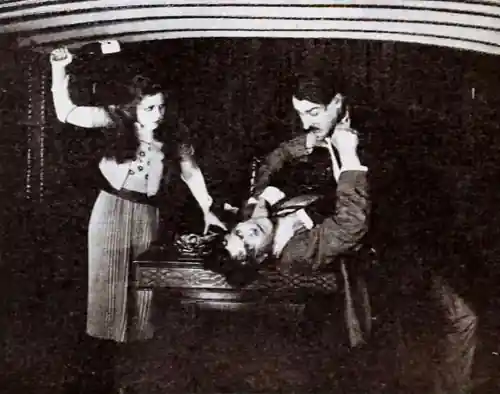
Compare this to the pilfering in Der Thug. Im Dienste der Todesgöttin, where death gods coldly calculate mortality like actuaries. Here, theft is hot, human, hormonal.
Mid-film, the narrative pivots from drawing-room larceny to maritime melodrama. Phillipa, disguised in her sister’s peacock-feather domino, boards Ralli’s yacht intending to torpedo the affair. Instead she becomes prey, her champagne flute laced with something that tastes of bitter almonds. Enter Chantry—fugitive status be damned—who storms the deck like a pirate sans parrot. The intertitle reads: “I was born with nothing—tonight I have something to lose.” Cue sea-spray, flapping neckties, and a knife fight lit only by a swinging hurricane lamp. It’s Douglas Fairbanks by way of Joseph von Sternberg: athletic yet steeped in chiaroscuro guilt.
What elevates the sequence is Walton’s acting choices. Bound to the mast, she registers terror not with wide eyes but with micro-tremors—chin quivering like a plucked string. The camera inches closer, closer, until her pupils become twin black yachts anchoring our empathy. Silent-era acting is often caricatured as semaphore; Walton proves it can be Morse code tapped directly on the audience’s pulse.
No musical score accompanied the 16mm print I screened; the hush became its own orchestration. Every rustle of velvet, every clack of the projector, felt diegetic. I found myself supplying aural hallucinations: the pizzicato of pearls skittering across parquet, the low cello of a yacht’s hull groaning. Scholars label this phenomenon phantom sound; I call it the audience finishing the painting with colors the palette never offered.
The tinting—amber for interiors, sea-blue for exteriors—operates like emotional EQ. Notice how Chantry’s confession scene is bathed in a sickly yellow, the shade of old newspapers warning of war. He returns the pearls, palms open, and the yellow shifts to a bruised teal, as though the film itself exhales relief. Compare this hue strategy to the cobalt nightmares in The Bells (1918); where that film uses blue to connote guilt, Risky Business uses it to rinse sin away.
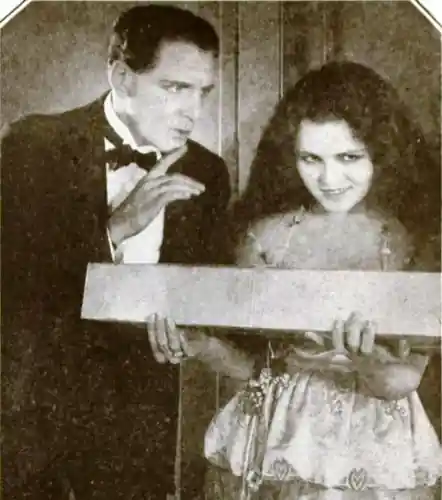
Doty and Colton script Phillipa not as proto-feminist icon but as kinetic contradiction. She schemes, yet her agency rides on male transport: Chantry’s boat, Ralli’s yacht, patriarchal rails. Still, the final intertitle flips the ledger: “I’ll wait, but not forever—seasons turn, Captain.” The veiled ultimatum suggests a modern bargain: redemption on layaway, payable with interest. Viewed beside the marital quagmires in Die platonische Ehe, Phillipa’s promise feels radical—she claims the temporal upper hand, sentencing her reformed thief to a calendar of anticipation.
Trace the DNA and strands coil forward to To Catch a Thief and Ocean’s Eleven: the gentleman bandit, the cotillion as crime scene, the heroine who weaponizes innocence. Yet none of Hitchcock’s Technicolor Riviera sunsets scorch as brightly as Walton’s close-up here—grainy, tremulous, haloed by nitrate glow. Even the thematic grandchildren—think Risky Business (1983)—borrow the title but jettison the moral reckoning. Cruise’s Joel courts capitalism; Walton’s Phillipa courts penance, and the gulf between them is a continent of lost conscience.
Legend claims the original negative perished in a 1931 vault blaze. What survives is a 1929 re-release struck for European markets, missing the penultimate reel. The jump—from yacht rescue to contrite confession—feels both jarring and poetically apt: we leap from sin to absolution with no scaffolding, like diving off a cliff into baptismal waters. Purists howl; I applaud the ellipsis. Life, too, omits transition scenes.
As of this month, the only accessible print streams via RareFilms.org, unrestored, 480p, accompanied by a lone piano track hammered out by an anonymous virtuoso. My advice? Dim lamps, pour something peaty, and screen it on the largest monitor you command. Let the pixelated grain swim; imagine each fleck is a moth circling the projector beam in 1926. If you crave companionship, pair with Joy and the Dragon for tonal whiplash—virtue rewarded versus virtue interrogated.
Risky Business is neither polemic nor pamphlet; it’s a prism held up to moonlight, scattering motives into rainbow shards. It argues that love, like larceny, is a confidence game requiring two willing participants: one to steal, one to forgive. Ninety-seven years on, its flicker still warms the skin, proof that celluloid sins age into absolution far easier than our own. Watch it for the pearls, revisit it for the penance—then check your own jewelry box before the lights come up.
IMDb —
1916
Community
Log in to comment.