DbcultAccessing Vault...
Cult Review
Senior Film Conservator
A Labyrinth of Love, Legacy, and Liberation
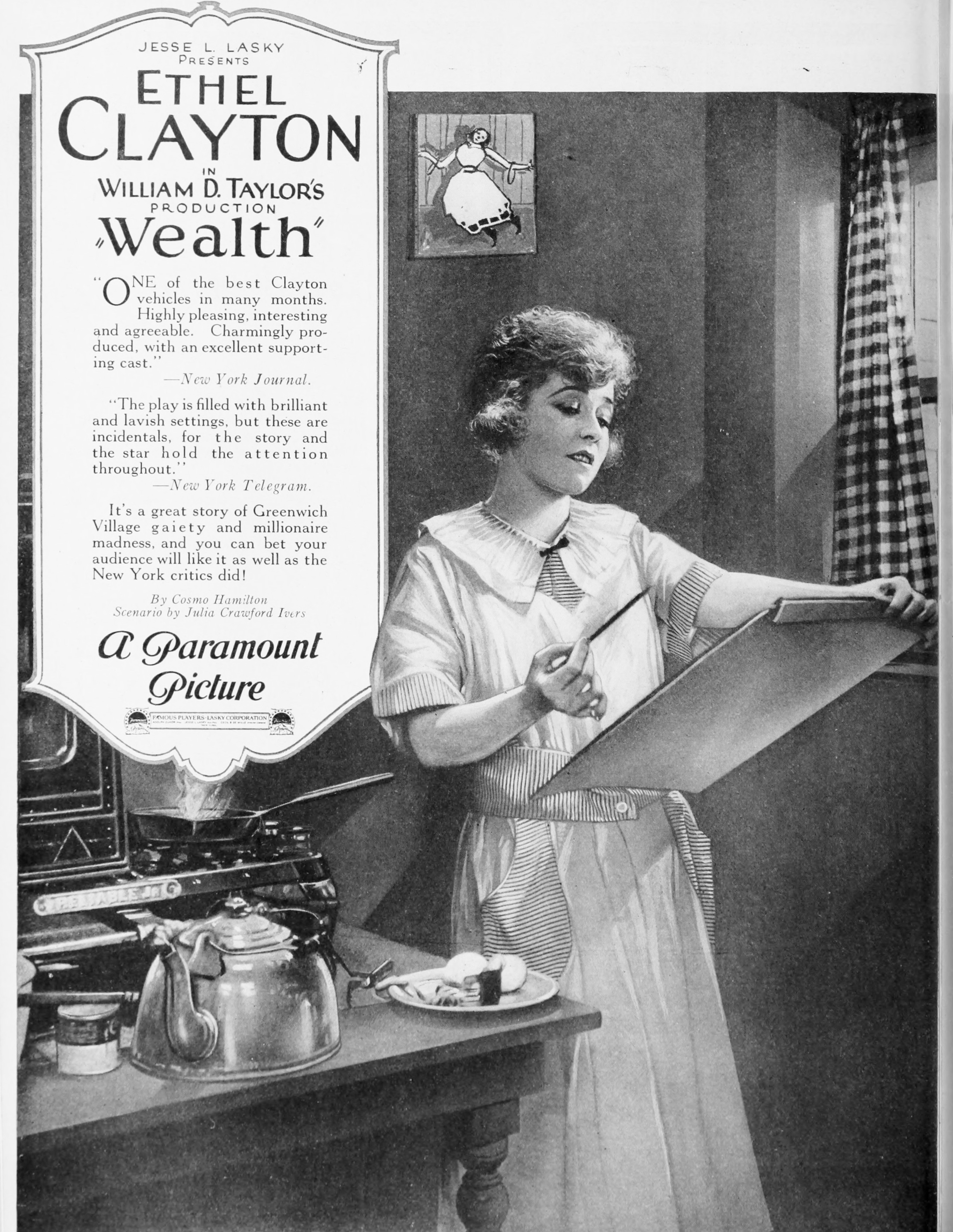
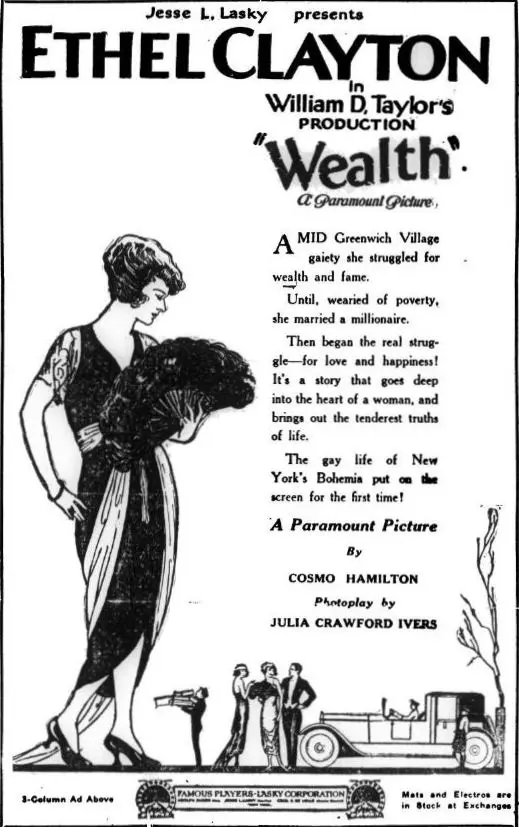
In the annals of pre-Code cinema, few films dissect the tension between individual agency and inherited legacy as incisively as Wealth (1932). Director J.M. Dumont, alongside screenwriters Cosmo Hamilton and Julia Crawford Ivers, crafts a narrative that is equal parts operatic romance and socioeconomic critique. The film’s opening—Mary McLeod’s (Jean Acker) misplaced train ticket—serves as a potent metaphor for her displacement in a world dictated by others’ wealth. This is no mere romantic comedy of errors; it is a taut exploration of how love becomes both a refuge and a battleground when money dictates destiny.
The casting of Jean Acker as Mary is nothing short of masterful. Her performance, understated yet electric, captures the artist’s quiet defiance and vulnerability. Acker’s Mary is a woman who wields her creativity as a shield against the void left by her lack of financial security. In contrast, Phillip Dominick (Herbert Rawlinson) is a paradox—his wealth both a gilded cage and a weapon he wields unknowingly. Rawlinson’s portrayal is a study in subtlety; his eyes betray the internal conflict of a man torn between filial duty and forbidden passion. The chemistry between Acker and Rawlinson crackles with an authenticity that transcends the era’s often-stiff acting conventions.
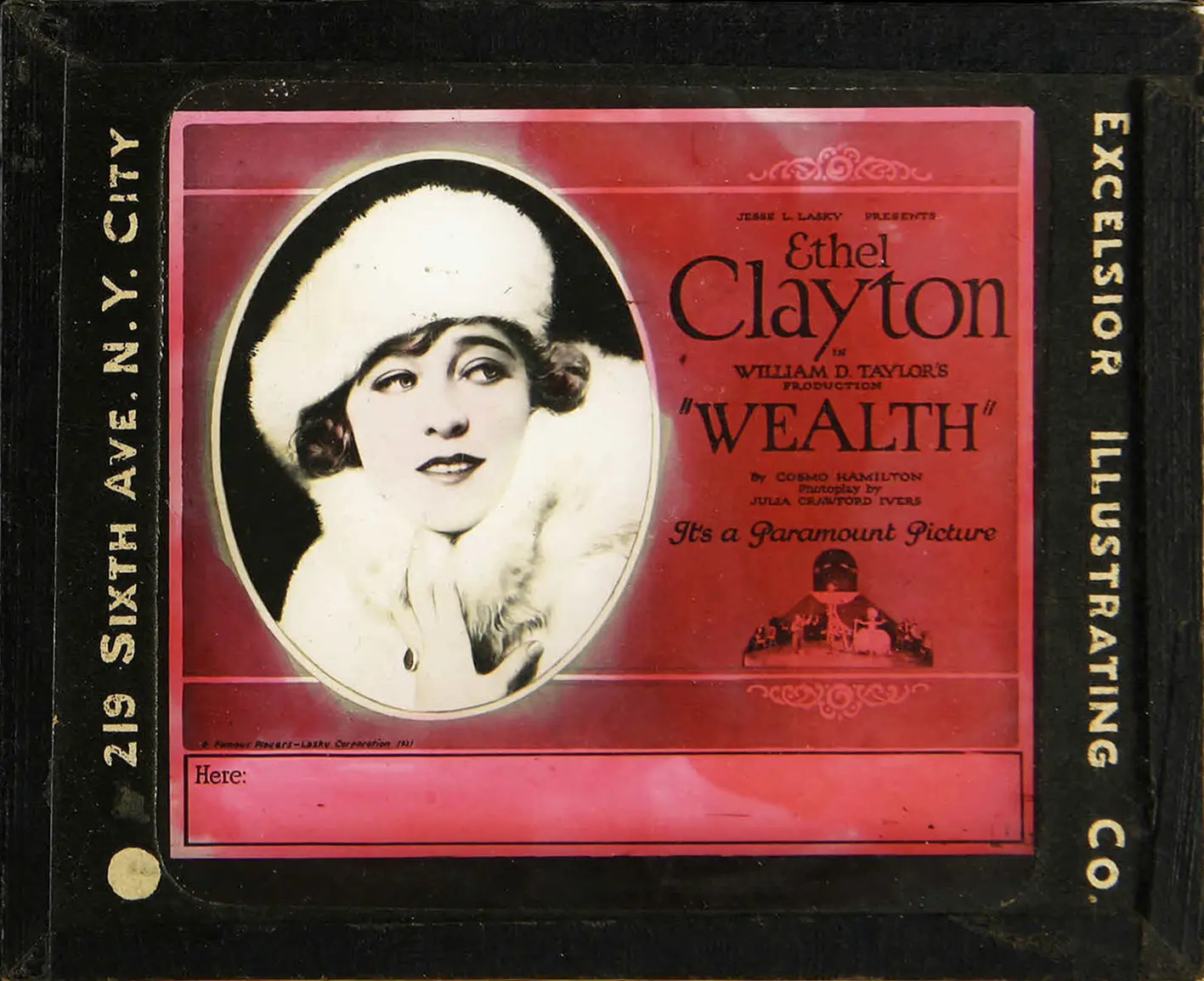
The true antagonist of Wealth, however, is not a person but a system. Mrs. Dominick (Ethel Clayton), the matriarchal figurehead, embodies the dehumanizing force of generational wealth. Her schemes to separate Philip and Mary are not born of malice alone but of an ingrained belief in bloodline supremacy. Clayton’s performance is chilling in its calculated detachment, a reminder that power often masks itself as civility. The film’s most harrowing sequence—the death of Mary and Phillip’s child—serves as a cathartic rupture, exposing the hollow core of a society that values lineage over lived experience.
The production design deserves special acclaim. The opulent sets of the Dominick estate, rendered in stark contrast to Mary’s modest artist’s studio, are visual metaphors for the clash between creative freedom and financial bondage. The cinematography, while restrained, employs shadow and light to underscore emotional stakes: Mary is often lit from below, a visual echo of her struggle to rise above circumstance, while Philip is bathed in cold, clinical tones that reflect his entrapment in a life scripted by his mother.
Comparisons to other pre-Code dramas are inevitable. Like Moora Neya, or The Message of the Spear, Wealth explores the collision between personal desire and societal expectations. Yet where that film leans into colonialist tropes, Wealth is more introspective, focusing on the psychological toll of class disparity. Similarly, the dynamic between Mary and Mrs. Dominick recalls the matriarchal power plays in The Bushranger’s Bride, though with a far grittier emotional palette.
The film’s pacing, while deliberate, may test modern audiences accustomed to rapid cuts and visual overload. However, this measured rhythm allows the tension to simmer, building toward the climactic confrontation where Mary, in a moment of raw resolve, refuses to beg for her own life. It is a turning point that echoes the self-determination themes in For Freedom, albeit framed through a distinctly feminine lens. The final act—Philip’s promise to build a life on his own resources—feels less like a resolution and more like a tentative first step, a choice to confront the past rather than deny it.
The score, a haunting blend of piano and strings, amplifies the film’s emotional gravity without overpowering its subtleties. It is particularly effective during the child’s death scene, where the music’s dissonance mirrors Mary’s spiraling grief. Supporting performances, particularly Claire McDowell’s as a sympathetic confidante and Larry Steers’ as a conflicted family lawyer, add layers of complexity to the central conflict. These characters are not mere plot devices but reflections of the societal pressures that shape Mary and Philip’s choices.
Cinematographically, Wealth is a study in contrasts. The train station’s chaotic energy in the opening scenes gives way to the sterile grandeur of the Dominick estate, a visual echo of Mary’s journey from autonomy to entrapment. The use of mirrors is particularly striking—Mary is often seen reflecting on her own image, a motif that evolves from self-doubt to self-realization. One particularly memorable sequence finds her standing before a shattered mirror, the fragments scattering light across the floor like fractured hopes. It is a silent yet potent commentary on the cost of love in a world where money dictates worth.
The film’s dialogue, though period-appropriate, occasionally veers into melodramatic excess. Lines such as “Your blood is not your prison, Mary—your fear is” feel overly didactic compared to the nuanced subtext of the visual storytelling. Yet these moments are rare exceptions in a script that otherwise excels at balancing emotional intensity with thematic depth. The writers’ decision to let the characters’ actions—rather than exposition—drive the narrative is a bold choice that pays dividends, particularly in the final act where Mary’s quiet defiance speaks louder than any shouted declaration.
For modern viewers, Wealth offers a fascinating lens into the anxieties of the interwar period. The film’s preoccupation with financial independence—a radical concept for women in the 1930s—resonates with contemporary debates about gender and economic equity. It also serves as a cautionary tale about the dangers of conflating wealth with happiness, a theme that feels increasingly relevant in our own era of inequality. Yet what makes Wealth endure is not its social commentary alone but its unflinching portrayal of love as both a redemptive force and a source of suffering.
In conclusion, Wealth is a film that rewards patience and attention. Its exploration of power dynamics, both romantic and familial, is as relevant today as it was nearly a century ago. While it may lack the narrative polish of more recent dramas, its raw emotional core and bold thematic choices cement it as a hidden gem of early 20th-century cinema. For those seeking a tale of love’s resilience against all odds—and a glimpse into the gilded cages of yesteryear—this film is an essential watch.
IMDb 4.8
1935
Community
Log in to comment.