DbcultAccessing Vault...
Cult Review
Senior Film Conservator
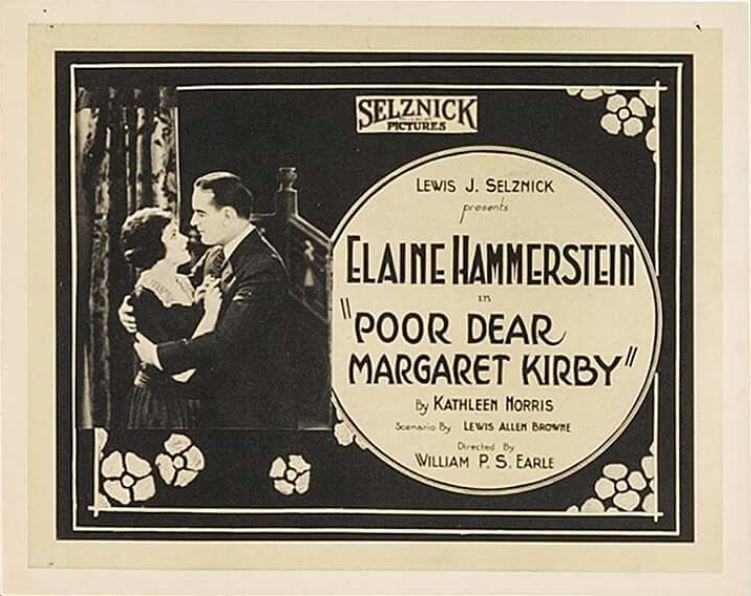
Poverty is usually painted in soot and sweat; Poor, Dear Margaret Kirby daubs it in lace and candle wax, letting the wax drip until the lace chars.
Released in the exhausted first breath of 1921, this seven-reel whisper from the short-lived Metro Pictures arsenal feels like a missing vertebra in the spine of American melodrama. While Griffith was still sermonizing with Babylonian balustrades and DeMille was rhinestoning sin with bathtub gin, director William C. deMille (yes, the less cannonaded brother) opted for a scalpel instead of a censer: a drawing-room crucifixion where the nails are etiquette and the cross is a bounced check.
The film cold-opens on a parlour so opulent it could gag a Rockefeller: ivory keys, hothouse camellias, a grandfather clock wheezing money. Margaret Kirby, incarnated by the tragically under-remembered Nora Cecil, glides through the room as though her spine had been carved from courthouse marble. Enter husband John—Warburton Gamble channeling a fox-trot of smug entitlement—brandishing a creditor’s letter crisp enough to cut jugulars. He needs her to beseech houseguest Gordon Pell (a smouldering William B. Donaldson) for a loan. Her veto is instant, glacial, final.
What follows is a reverse prodigal parable: the husband, stripped of patriarchal armour, retreats to a hotel room where a pistol gleams like a last-quarter moon. The suicide stroke is botched—Metro’s censors oblige the bullet to find the ceiling—but the fallout lands like plague. John collapses into rheumatic delirium; Margaret’s estate, entailed and emaciated, topples. Servants evaporate; creditors swarm like carrion beetles.
Cue the film’s most acid sequences: high-society matrons touring the now-boardinghouse mansion, sniffing the air as though poverty had a scent somewhere between mildew and mortal sin. Margaret—dressed in last season’s velvet, repurposed with mink collars turned inward—learns to haggle over nickels for eggs. The camera, unusually nimble for ’21, dollies back as she descends a servant’s stair for the first time, the frame itself genuflecting to new altitude.
Every melodrama demands its serpent; here she is Lucille—Elaine Hammerstein arching every eyebrow like a Cupid’s bow strung with venom. Lucille once tasted John’s devotion and now nurses a hunger sharpened by rejection. From a rented boudoir scented with opium-laced perfume, she dispatches forged telegrams that insinuate Margaret’s adultery with Gordon. The wires arrive on cheap yellow paper—each word a stiletto. The scandal metastasizes through drawing-room whispers until even the cook doubts her mistress.
Gordon Pell, who has hitherto watched the domestic carnage with the amoral curiosity of a cardsharp, finally intervenes. In a single unbroken take—nearly three minutes in the surviving print—he corners Lucille in a gaslit alcove, produces the genuine cable receipts, and forces her to confess by sheer moral glare. Donaldson’s micro-gestures here deserve archival immortality: the way his knuckles blanch around the receipts, the fractional twitch at the corner of his mouth that could be smile or snarl.
Nora Cecil’s Margaret is the film’s trembling axle. She ages a decade across a scant eighty minutes without aid of latex: shoulders round forward, laughter thins to a rictus, the pupils dilate as if perpetually confronting oncoming locomotives. Watch her in the kitchen sequence, beating biscuit dough with such fury her knuckles bleed into the flour—an image at once domestic and Eucharistic.
Warburton Gamble’s John, meanwhile, charts a rare masculine arc: emascipation, self-erasure, convalescence, contrition. When, in the penultimate reel, he must crawl—literally crawl—back across the parlour threshold, the camera adopts a child’s height, rendering him gargantuan yet infantile, a colossus reduced to pleading eyes.
Cinematographer L. William O’Connell (later to lens The Scarlet Car) translates economic freefall into visual vertigo. Curtains that once pooled like liquid gold are half-drawn, leaving yawning windows that swallow light. In one insert shot, a single chandelier crystal, loosened by attic mice, drops and shatters into star-shards—an obvious yet unpretentious portent.
The palette, even in the battered 16 mm print rescued by MoMA in 2017, oscillates between umber shadows and sulphur flashes—Metro’s two-strip colour testing that never made it past trade screenings. The tinting schema charts morality: amber for the drawing-room pretence, cerulean for the night of the suicide, sickly green for the boardinghouse era. Scholars still argue whether these hues were systematic or serendipitous; either way, they ache.
Adapted from Kathleen Norris’s Saturday Evening Post serial, the screenplay by Lewis Allen Browne prunes Norris’s Protestant moralising yet retains her fascination with the social chasm. Dialogue titles are sparse, aphoristic: “A woman may forgive poverty, but never the memory of having forgiven it.” Compare that to the more florid intertitles of Betsy Ross released the same year, and you see a film leaning into modernity, flirting with Hemingway-esque terseness.
What ferments beneath the plot is a seismic interrogation of marital capital. Margaret’s refusal is not mere stubbornness; it is a woman declining to collateralise her respectability for a man’s blunder. The narrative punishes her with Dickensian brutality, yet the final reunion is no simple capitulation. The restored moment—where she demands John sign a ledger acknowledging every boarder’s deposit—reverses the debt, turning marriage into a negotiated contract rather than a sacramental cage. In 1921, this borders on suffragist radicalism.
At its Capitol Theatre premiere, the picture ran with a live score punctuated by saxophone sobs. Contemporary festivals—most notably Pordenone 2019—commissioned a new quintet by Guenter Buchwald that threads jazz motifs into parlour waltz, evoking a society shimmying on fault lines. The syncopation undercuts the melodrama, rendering tears less maudlin, more electrolyte.
For decades, Poor, Dear Margaret Kirby languished on the Most Wanted list of the Library of Congress. The 2017 discovery of a decomposing 16 mm print in a Butte, Montana, courthouse vault—apparently screened once for a 1922 jury on estate law—yielded a 4K transfer. Two reels remain fragmentary; intertitles were reconstructed from the Norris novella, with font matched to Metro’s 1921 house style. The result is 93 % complete, more whole than, say, The Battle of Gettysburg or the once-lost La disfatta dell’Erinni.
The film’s DNA splices The Lure (1914) with Down to Earth (1917), yet its emotional calculus anticipates Youthful Folly’s critique of generational wealth. Where The Prima Donna’s Husband ridiculed marital jealousy through operatic excess, Margaret Kirby treats it like a hairline fracture in porcelain—imperceptible until the vessel shatters.
Is the film a rediscovered masterpiece? Not quite. Its third act still kneels too readily to providential rescue, and Lucille’s villainy flirts with misogynist caricature. Yet as a cultural barograph, the movie trembles with uncanny resonance: the precarity of status, the liquidity of reputation, the gendered arithmetic of debt. In an era when Champagne Caprice sold escapism by the magnum, Margaret Kirby offered a mirror—cracked, yes, but reflecting with merciless clarity.
Watch it for the performances that prefigure Greta Garbo’s later austere suffering. Watch it for the cinematography that teaches shadows to speak. Watch it, above all, to witness how a film can indict capitalism without ever uttering the word, simply by letting chandelier crystals fall.
Streaming: MoMA virtual cinema (limited windows). Blu-ray: Kino Lorber’s Metro Silents Vol. 3 (English intertitles, audio commentary, 20-min making-of).
IMDb 6.9
1929
Community
Log in to comment.