DbcultAccessing Vault...
Cult Review
Senior Film Conservator
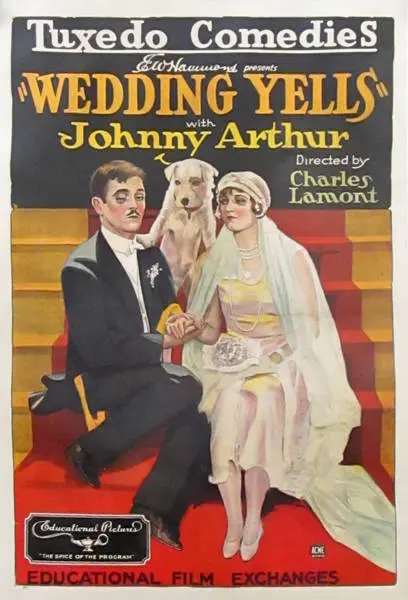
Is “Wedding Yells” a lost gem from the silent era, waiting to be rediscovered by modern audiences? Short answer: yes, but with a significant asterisk. This 1920s farce, while undeniably a product of its time, offers surprising insights into early cinematic comedy and character archetypes that still resonate, albeit through a distinctly antique lens.
It's a film for those with an appreciation for historical cinema, particularly the physical comedy and exaggerated melodrama that defined the silent age. If you're seeking polished narratives, subtle performances, or contemporary humor, this is emphatically not for you. But for cinephiles, historians, and those curious about the roots of screen comedy, it's a surprisingly engaging, if occasionally clunky, watch.
Let’s be blunt: “Wedding Yells” isn't going to redefine your understanding of cinema, nor is it a forgotten masterpiece. What it is, however, is a fascinating snapshot of a particular brand of storytelling. It works because it commits wholeheartedly to its outlandish premise, delivering a brand of physical comedy and moralistic drama that feels both quaint and curiously timeless.
This film works because: It fully embraces its farcical nature, delivering broad physical comedy and a surprisingly intricate, if melodramatic, plot for its runtime. The performances, particularly from Anita Garvin, are utterly captivating.
This film fails because: Its pacing can feel sluggish by modern standards, and Johnny Arthur's portrayal of innocence occasionally borders on caricatural, lacking the depth that might make his character truly endearing. The resolution is chaotic to a fault.
You should watch it if: You have a genuine interest in silent film, enjoy slapstick comedy, and appreciate seeing foundational elements of cinematic storytelling unfold. It's also a must for fans of early Hollywood character actors.
At its core, “Wedding Yells” is a morality play wrapped in a slapstick package. It explores themes of innocence, corruption, and the lengths to which greed can drive individuals. The narrative, while simple on the surface, layers twists and turns with a surprising ambition for a film of its era and comedic genre.
The story pivots around Johnny, a character so guileless and pure that he borders on mythical. He’s the choirboy who’s never been kissed past the age of sixteen, a walking embodiment of virtue in a world perpetually on the verge of corruption. His love for Kathryn is equally unblemished, a vision of romantic idealism that forms the narrative’s fragile heart. One might even argue that Johnny’s purity is so absolute it becomes a comedic prop, a vessel for the chaos that inevitably erupts around him.
Enter Wallace, the archetypal villain with a mustache-twirling ambition. His desire for Kathryn isn't born of affection but of cold, hard cash – an inheritance that hinges on their union. This sets in motion a “dastardly plot” worthy of any melodrama, a scheme designed to separate Johnny from Kathryn and secure Wallace’s financial future. It’s a classic setup, but the film injects it with a manic energy that keeps it from feeling entirely stale.
Wallace’s secret weapon is Anita, a "high-powered vamp" whose very presence crackles with danger and allure. Her assignment is simple: compromise Johnny, shatter his reputation, and clear the path for Wallace. The scene where Anita ambushes Johnny outside the church, dragging him into her car and whisking him away to her apartment, is a masterclass in silent film exaggeration. Johnny's reaction—blushing himself into a fever—is a comical highlight, perfectly encapsulating his extreme innocence.
The climax, set against the backdrop of Johnny and Kathryn’s wedding, is where the narrative truly explodes. Anita, dramatically appearing in rags, halts the ceremony with a fabricated tale of Johnny’s supposed villainy. She paints him as a “wolf in sheep’s clothing,” twisting facts with an almost poetic flair. This moment, designed to be Johnny’s undoing, is unexpectedly subverted when Anita, noticing Wallace's wavering attention, performs a magnificent double-cross, exposing Wallace's true nature and saving Johnny. It’s a chaotic, satisfying turn that elevates the film beyond simple slapstick.
The effectiveness of “Wedding Yells” hinges almost entirely on its cast, and here, it’s a mixed bag that nonetheless provides considerable charm. Johnny Arthur, as the perpetually blushing Johnny, embodies a specific brand of silent-era naivete. His performance relies heavily on exaggerated facial expressions and physical comedy, particularly in moments of shock or embarrassment. While effective for the character’s purity, his lack of range sometimes makes Johnny feel more like a caricature than a fully realized individual. There’s a consistent sweetness, but it rarely transcends the surface-level.
Kathryn McGuire, as Johnny’s beloved, Kathryn, plays the role of the innocent ingenue with grace, if not immense depth. Her primary function is to be the object of both Johnny’s affection and Wallace’s avarice. She projects a gentle charm that makes her believable as the pure-hearted bride-to-be, but the script doesn't afford her many opportunities for dramatic heavy lifting beyond reacting to the unfolding chaos.
Wallace Lupino, as the dastardly Wallace, leans heavily into the villainous tropes of the era. His performance is broad, his gestures theatrical, and his motivations transparently evil. He’s the kind of antagonist you love to hate, and Lupino clearly relishes the opportunity to chew scenery. His portrayal is a consistent source of comedic tension, providing a stark contrast to Johnny’s purity.
However, the true revelation of “Wedding Yells” is undoubtedly Anita Garvin. As the "high-powered vamp," she steals every scene she's in. Garvin possesses an undeniable screen presence, a magnetic energy that transcends the often-simplistic characterizations of the time. Her initial seduction attempts on Johnny are a masterclass in comedic menace, but it's her dramatic entrance at the wedding, dressed in rags and spinning a tale of betrayal, that truly showcases her range. The way she transitions from a convincing liar to a vengeful double-crosser is genuinely compelling and arguably the most nuanced performance in the entire film. She is, in my strong opinion, the film's beating heart, giving it a spark that elevates it beyond mere period curiosity. Without her, the film would lose much of its punch.
The direction in “Wedding Yells” is typical of early silent comedies: straightforward, functional, and primarily focused on delivering gags and advancing the plot through visual means. There’s a clear understanding of comedic timing, particularly in the setup and payoff of physical jokes. The frantic pace of the latter half, especially during the wedding scene, demonstrates a commendable grasp of building comedic momentum.
One notable choice is the use of close-ups to emphasize Johnny’s extreme reactions, particularly his blushes. This technique, while simple, effectively communicates his internal state without the need for intertitles, demonstrating an early
IMDb 6.1
1929
Community
Log in to comment.