DbcultAccessing Vault...
5.2/10
Senior Film Conservator
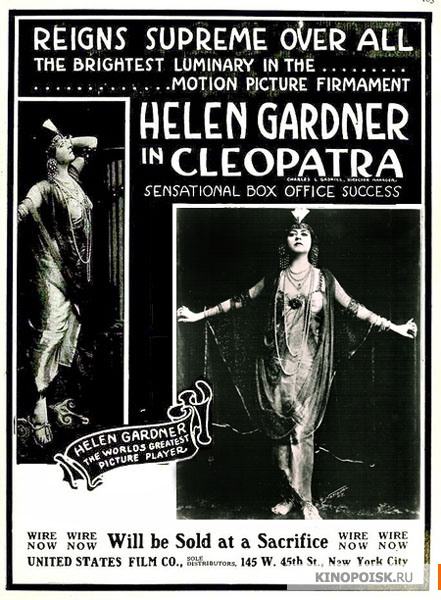
A definitive 5.2/10 rating for a film that redefined the boundaries of cult cinema. Cleopatra remains a cornerstone of transgressive art.
In the nascent years of cinema, when the very language of the moving image was still being painstakingly forged, a film of audacious scale emerged to captivate audiences: J. Gordon Edwards's 1912 rendition of "Cleopatra." This cinematic endeavor, a marvel of its time, sought to translate the legendary allure and tragic grandeur of Egypt's last pharaoh to the silver screen, a feat that, even a century later, retains a certain audacious charm. Far from a mere historical document, this "Cleopatra" is a fascinating artifact, offering a window into the ambitions and limitations of early feature filmmaking, particularly in its daring portrayal of a figure whose mystique has transcended millennia.
To properly appreciate the 1912 "Cleopatra," one must first contextualize it within the burgeoning landscape of early 20th-century cinema. At a time when most films were single-reel shorts, often lasting no more than ten to fifteen minutes, the decision to embark on a multi-reel epic was a monumental undertaking. This was an era just after pioneering works like The Story of the Kelly Gang (1906) had tentatively explored the feature-length format, and historical dramas were gaining traction. Films such as From the Manger to the Cross (1912), also released in the same year, demonstrated a growing appetite for expansive narratives that transcended simple vignettes. What sets "Cleopatra" apart, however, is its unwavering commitment to spectacle and its focus on a figure synonymous with both power and sensuality, a potentially scandalous subject for the moral sensibilities of the era.
The film's very existence speaks volumes about the shifting paradigms of cinematic storytelling. It aimed not just to entertain but to transport, to immerse its audience in the exoticism of ancient Egypt and the political machinations of the Roman Republic. This ambition is palpable in every frame, from the rudimentary yet evocative sets to the elaborate costuming, all designed to conjure a sense of bygone grandeur. While modern viewers might find the production values quaint, for audiences of 1912, these visual flourishes were nothing short of breathtaking. The sheer scale, even by contemporary standards, was impressive, a testament to the nascent industry's burgeoning confidence in its ability to tell complex stories over extended durations.
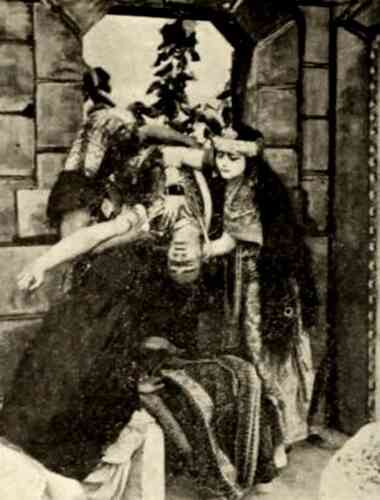
At the heart of this historical epic stands Helen Gardner, who not only took on the titular role but also produced the film—a remarkable achievement for a woman in an industry then overwhelmingly dominated by men. Gardner’s portrayal of Cleopatra is, by necessity, a performance rooted in the theatrical conventions of the time, characterized by broad gestures and exaggerated facial expressions designed to convey emotion without the aid of spoken dialogue. Yet, within these constraints, she manages to imbue her Cleopatra with a compelling intensity.
Gardner’s Cleopatra is a figure of formidable will and undeniable magnetism. She projects an aura of regal authority, tempered by a seductive charm that is both her greatest weapon and, ultimately, her tragic flaw. Her interactions with Marc Antony (played by Pearl Sindelar) are charged with a silent passion that, despite the limitations of early film acting, conveys the depth of their ill-fated romance. One can discern in her performance an attempt to move beyond the mere caricature of a vamp, striving instead for a more nuanced depiction of a queen fighting for her sovereignty against overwhelming odds. Her bold decision to produce the film herself underscores her vision and determination, marking her as a true pioneer, much like Élisabeth as depicted in Les amours de la reine Élisabeth (1912), who also embodied powerful female figures of history.
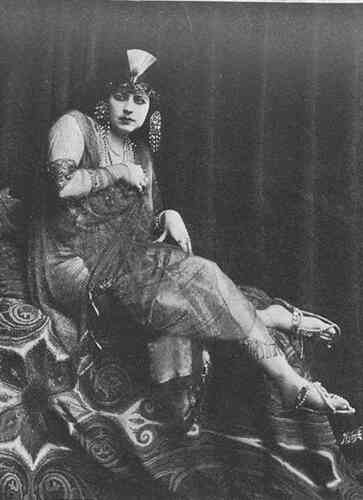
The physical presence of Gardner is central to the film's appeal. Her elaborate costumes, often revealing for the period, and her striking, dark features contribute significantly to the exoticism that the film strives to create. She embodies the "Serpent of the Nile" not just through her actions but through her very being, a visual feast designed to hold the audience spellbound. Her performance, while perhaps melodramatic by today's standards, was revolutionary for its time, setting a precedent for the portrayal of strong, complex female characters in cinema.
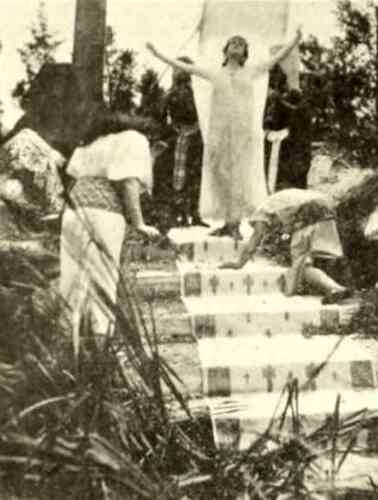
The plot, adapted from Victorien Sardou's play, traces the tumultuous romance between Cleopatra and Marc Antony against the backdrop of Roman political upheaval. The film ambitiously attempts to condense years of historical events—from Cleopatra's initial encounter with Antony, their passionate affair, their defiance of Octavian, to their final, tragic demise—into a coherent narrative. This was a significant challenge given the nascent state of narrative editing and intertitles.
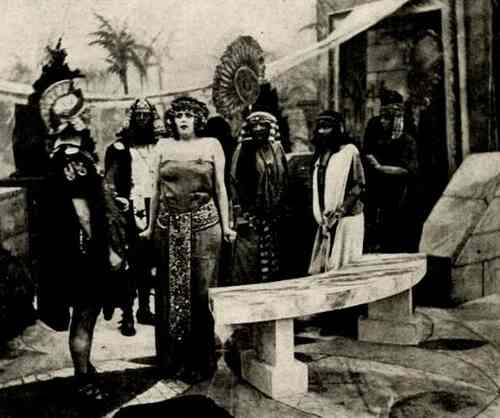
The film excels in its depiction of the grandeur and ultimate vulnerability of the Egyptian court. We witness lavish banquets, military parades, and intimate moments of passion, all carefully staged to convey the opulence that characterized Cleopatra's reign. However, it also subtly portrays the inexorable march of Roman power, personified by Octavian. The stark contrast between the hedonistic luxury of Alexandria and the disciplined, expansionist agenda of Rome is a recurring thematic undercurrent, highlighting the clash of civilizations that defined this historical period.
While the dialogue is conveyed through sparse intertitles, the visual storytelling carries the bulk of the narrative weight. The film relies heavily on tableau vivants and carefully composed shots to communicate plot points and emotional states. This reliance on visual cues, a hallmark of silent cinema, demands a different kind of engagement from the audience, one that rewards careful observation and interpretation. The writers, Victorien Sardou and Charles L. Gaskill, faced the daunting task of distilling a complex historical drama into a format that could be understood by a broad audience without spoken words, a testament to their skill in visual narrative construction.
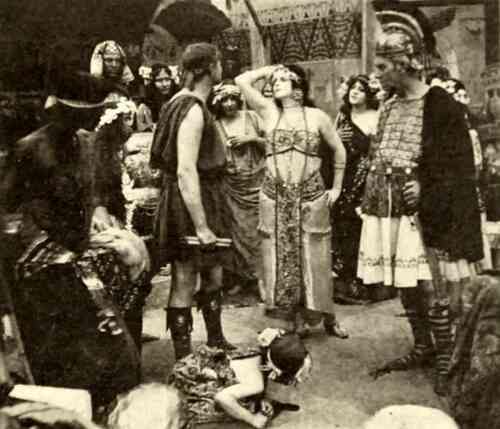
For a film produced in 1912, the attention to detail in sets and costumes is genuinely commendable. While not striving for absolute historical accuracy in every minutia (a luxury often forgone even in much later historical epics), the film undeniably creates a lavish and exotic atmosphere. The Egyptian settings, though clearly studio-bound, evoke a sense of ancient grandeur with their painted backdrops, columns, and statuary. The Roman camps and palaces are similarly rendered, establishing a clear visual distinction between the two warring factions.
The costumes, particularly those worn by Helen Gardner, are a highlight. They are intricate, ornate, and designed to emphasize Cleopatra's regal status and seductive power. From flowing robes adorned with jewels to elaborate headpieces, each costume contributes to the visual splendor. The supporting cast, including Pearl Sindelar as Marc Antony and Miss Fielding and Miss Robson in other roles, are similarly well-attired, helping to populate a believable ancient world.
Special effects, though primitive by today's standards, are employed to create a sense of scale and drama. Battle scenes, while often stylized and relying on large numbers of extras rather than sophisticated choreography, convey the chaos and brutality of warfare. The use of early cinematic tricks, such as superimpositions and dissolve edits, adds a layer of visual sophistication that was cutting-edge for the period. These elements collectively contribute to the film’s ambition to be a grand spectacle, a trait it shares with other epic productions of the time, such as Defense of Sevastopol (1911), which similarly aimed for large-scale historical reenactment.
Despite its many strengths, "Cleopatra" also clearly illustrates the inherent limitations of early cinema. The pacing, by modern sensibilities, can feel slow and deliberate, a consequence of the reliance on static camera positions and the need for actors to hold poses for extended periods to convey emotion. The narrative flow, while ambitious, occasionally suffers from the lack of sophisticated editing techniques that would become standard in later decades.
The dramatic performances, as mentioned, are often broad. While effective for the period, they might appear overly theatrical or even camp to contemporary eyes. This is not a failing of the actors but rather a reflection of the evolving art form; the subtle nuances of screen acting were still being discovered. The soundscape, of course, was entirely live, relying on orchestral accompaniment in theaters to provide emotional resonance, a crucial element that is often lost in modern viewings of silent films.
Moreover, the portrayal of historical figures and cultures, while aiming for grandeur, inevitably reflects the biases and understandings of the early 20th century. The exoticism, while visually appealing, can sometimes verge on caricature, a common pitfall for Western depictions of non-Western societies in that era. However, it's important to view these aspects through the lens of historical context, recognizing that the film was a product of its time, pushing boundaries in some areas while remaining conventional in others.
The 1912 "Cleopatra" holds a significant place in film history, not just as an early epic but as a testament to the pioneering spirit of its creators. It demonstrated the commercial viability and artistic potential of longer, more ambitious narratives, paving the way for countless historical dramas and spectacles that would follow. Its influence can be seen in later silent epics and even in the grand Hollywood productions of the mid-20th century that continued to explore similar historical themes with ever-increasing budgets and technological sophistication.
Furthermore, the film cemented Cleopatra's status as an enduring cinematic icon. Helen Gardner's portrayal set a high bar for subsequent interpretations, influencing how future actresses would approach the role. Each new cinematic Cleopatra, from Theda Bara to Elizabeth Taylor, owes a debt to these early, audacious attempts to capture her essence on film.
Viewing "Cleopatra" today is less about seeking flawless historical accuracy or cutting-edge special effects, and more about appreciating a pivotal moment in film evolution. It's an opportunity to witness the genesis of cinematic spectacle, the birth of the star system, and the audacious ambition of filmmakers who dared to dream big with a nascent art form. It reminds us that even in its infancy, cinema possessed the power to transport audiences to distant lands and bygone eras, to evoke powerful emotions, and to immortalize legends. The film’s quiet power lies in its ability to transcend its technical limitations and communicate a story that continues to resonate: the eternal struggle between love and power, and the tragic consequences when the two collide.
This 1912 rendition, therefore, is more than just a historical curiosity; it is a foundational text in the cinematic canon, a vibrant, if sometimes quaint, testament to the enduring appeal of the Egyptian queen and the boundless potential of the moving image. It stands as a beacon for what early filmmakers could achieve with vision and tenacity, and its legacy continues to echo through every subsequent historical drama that graces our screens. Like other ambitious literary adaptations of the era, such as Dante's Inferno (1911) or Oliver Twist (1912), it pushed the boundaries of what was considered possible for the medium, proving that complex narratives and grand themes could indeed find a home in the flickering shadows of the kinetoscope.
In conclusion, the 1912 "Cleopatra" remains a compelling watch for anyone interested in film history, the development of narrative cinema, or simply the timeless appeal of its eponymous queen. It is a work that, despite its age, still manages to convey the dramatic sweep of its subject matter, inviting us to reflect on the nature of power, love, and destiny in the grand theater of history. Its vibrant colors (in its original tinted prints), its elaborate costumes, and the powerful, albeit theatrical, performance of Helen Gardner coalesce to form a truly remarkable piece of early cinematic art. It’s a foundational stone in the edifice of epic filmmaking, a testament to the fact that even at the dawn of cinema, storytellers sought to capture the grandest narratives for their eager audiences.
IMDb 5.6
1933
Community
Log in to comment.