DbcultAccessing Vault...
7/10
Senior Film Conservator
A definitive 7/10 rating for a film that redefined the boundaries of cult cinema. Weltbrand remains a cornerstone of transgressive art.
The year 1920 remains a watershed moment in the topography of German cinema, a period where the celluloid medium began to grapple with the visceral trauma of post-war collapse and the burgeoning anxieties of the Weimar Republic. Amidst this cultural ferment, Weltbrand (directed by Urban Gad and written by the formidable Jakob Wassermann) emerges not merely as a narrative film, but as a sprawling, ideological monolith. It is a work that demands an almost liturgical attention to its nuances of class struggle and existential dread.
At the epicenter of this tectonic narrative is Christian Wahnschaffe, portrayed with a haunting luminosity that captures the inertia of the over-privileged. Christian is the scion of an industrial dynasty, a man whose environment is so insulated by wealth that reality itself feels like a distant, muffled rumor. The film meticulously constructs his world of velvet and champagne, only to dismantle it through the introduction of Iwan Becker. Becker, the Russian Nihilist, serves as the Virgil to Christian’s Dante, leading him through the various circles of social hell. Unlike the overt villainy found in The Penalty, where physical deformity mirrors moral decay, Weltbrand suggests that the true deformity lies in the indifference of the healthy and the wealthy.
The interaction between these two poles—the industrialist’s son and the revolutionary—is handled with a sophisticated restraint. There is no sudden epiphany, no melodramatic conversion. Instead, we witness a slow, agonizing erosion of Christian’s ego. The lexical density of the visual storytelling here is staggering; the way light falls across the industrial machinery of his father’s factories compared to the stark, shadow-drenched hovels of the poor creates a binary of existence that is impossible to ignore. This is not merely a story of political radicalization; it is a story of a man attempting to find a pulse in a life that has been sterilized by comfort.
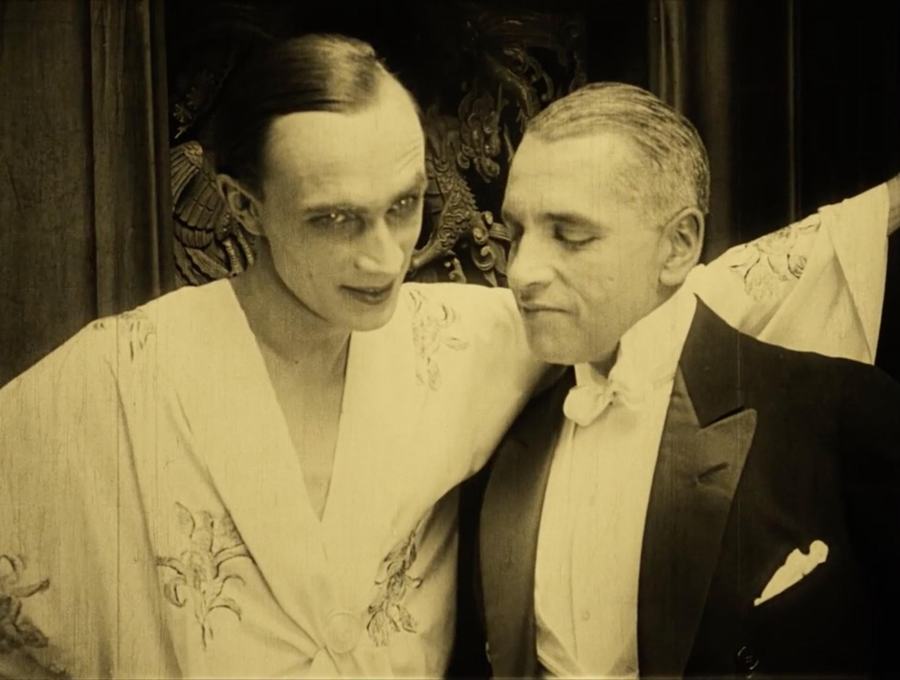
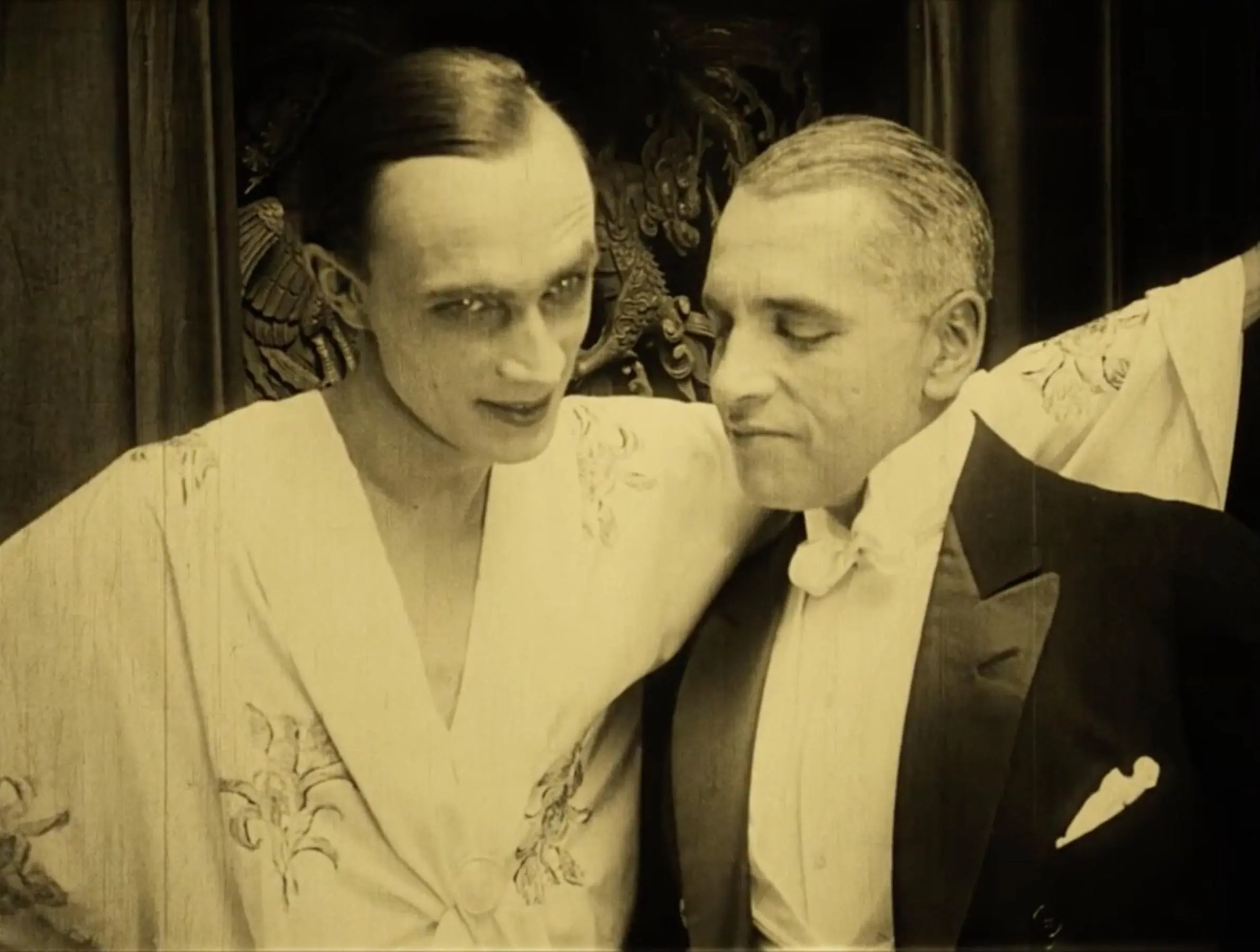
To discuss Weltbrand without acknowledging its gargantuan cast would be a critical oversight. Fritz Kortner delivers a performance of such tectonic intensity that he often seems to threaten the very boundaries of the frame. His physicality is a masterclass in Weimar expressionism—every gesture is laden with the weight of a thousand grievances. Beside him, Conrad Veidt brings that ethereal, almost otherworldly quality that would later define his role in The Cabinet of Dr. Caligari. Veidt’s presence in Weltbrand adds a layer of metaphysical unease, suggesting that the revolution is not just a matter of bread and land, but a spiritual necessity.
The supporting cast, featuring the likes of Reinhold Schünzel and Rosa Valetti, creates a tapestry of social archetypes that feel strikingly modern. Each character represents a different facet of a crumbling society: the cynical opportunist, the tragic victim, the unyielding zealot. In many ways, the film shares the domestic claustrophobia found in The Master of the House, yet it explodes that intimacy onto a global stage. The stakes are not merely the dynamics of a single household, but the survival of the human spirit in an age of mechanical reproduction and mass exploitation.
Visually, Weltbrand is a feast of chiaroscuro. The cinematography utilizes deep shadows to suggest the encroaching darkness of the nihilist movement, while the high-key lighting of the upper-class ballrooms feels brittle and artificial. This visual irony is a hallmark of the era, but here it is executed with a precision that rivals the great works of Murnau or Lang. The sets themselves are characters; the cold, cavernous halls of the Wahnschaffe estate feel as much like a prison as any dungeon. The film’s pacing is deliberate, allowing the viewer to sit with the discomfort of Christian’s transition. It lacks the frantic energy of contemporary American films like Dead Shot Baker, opting instead for a somber, rhythmic progression that mirrors the inevitability of a slow-moving fire.
One cannot help but draw comparisons to the thematic weight of The Count of Monte Cristo, though where Dantes seeks vengeance, Wahnschaffe seeks something far more elusive: absolution. He does not want to punish the world for his father's sins; he wants to burn his own identity to the ground so that something more authentic might grow in the ashes. This internal conflict is what elevates the film from a mere political tract to a profound work of psychological realism.
The influence of Jakob Wassermann’s prose is palpable in every scene. The screenplay, co-written by Bobby E. Lüthge and Paul Georg, retains the novel’s dense philosophical inquiries. The dialogue—conveyed through intertitles that are themselves works of art—is stripped of superfluous sentimentality. It is a script that understands the power of silence. In the moments where Christian and Becker simply watch the world go by, the film achieves a level of profundity that is rare in the silent era. It avoids the simplistic moralizing found in Teufelchen or the straightforward heroism of The Cavell Case.
Instead, Weltbrand embraces the ambiguity of the human condition. Is Christian’s devotion to the poor a genuine act of altruism, or is it merely the ultimate luxury—the ability to choose poverty when one has never known its true, crushing weight? The film doesn't provide easy answers. It leaves the audience to ponder the validity of Christian’s sacrifice against the backdrop of a world that is already beginning to burn. The 'Weltbrand' is not just a revolution in the streets; it is the ignition of the conscience.
As we look back at Weltbrand from the distance of a century, its relevance is startling. In an era of burgeoning inequality and ideological polarization, the journey of Christian Wahnschaffe feels like a contemporary dispatch. The film’s ability to weave together personal transformation with systemic critique is a feat that few modern directors have managed to replicate with such gravitas. It stands alongside other monumental works of the period, such as Outcast or The Whip, yet it possesses a philosophical depth that sets it apart from more conventional melodramas.
The final acts of the film are a harrowing descent into the consequences of ideology. As the movement grows, so does the collateral damage. The film does not shy away from the violence inherent in radical change. It acknowledges that to build a new world, the old one must be razed, and that process is never bloodless. The performances of Lillebil Ibsen and Reinhold Schünzel in these later sequences provide a necessary grounding, reminding us that behind every political movement are individual lives that are often treated as expendable.
In conclusion, Weltbrand is a towering achievement of silent cinema. It is a film that refuses to be forgotten, a flickering testament to a time when cinema was discovering its power to challenge the status quo and probe the darkest corners of the human psyche. It is a demanding watch, yes, but the rewards are as vast as the industrial empire Christian leaves behind. It is a fire that continues to burn, lighting the way for those who dare to question the foundations of their own reality. Whether compared to the social realism of The Squatter's Daughter or the stark drama of After Dark, Weltbrand remains a singular, incandescent experience that transcends its historical context to speak to the universal struggle for meaning in a chaotic world.
Technical Note: The restoration of this film is essential for understanding the full scope of Urban Gad’s vision. The interplay of shadow and texture in the remaining prints suggests a visual complexity that was decades ahead of its time.

IMDb 6.9
1935
Community
Log in to comment.