DbcultAccessing Vault...
Cult Review
Senior Film Conservator
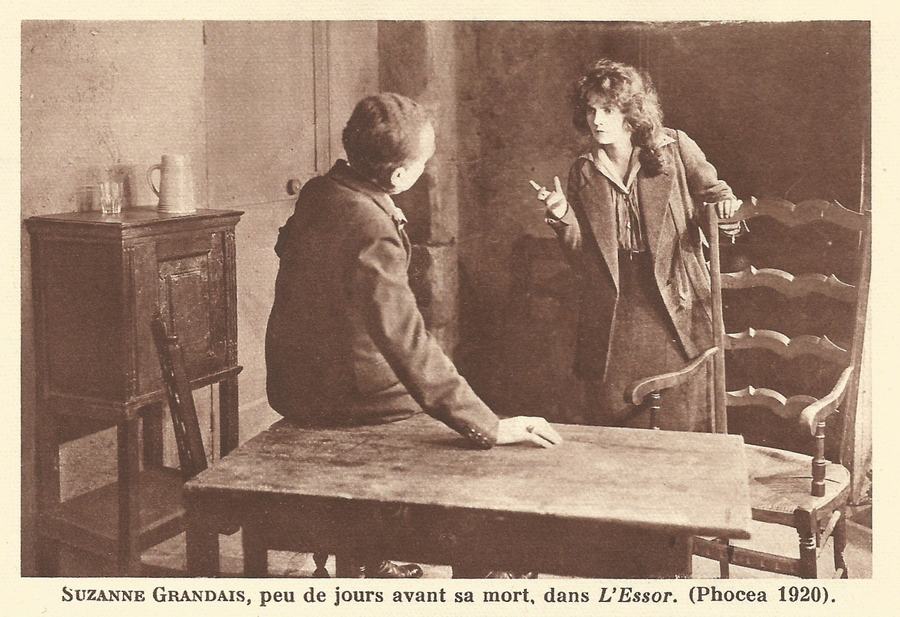
The first time I saw L’essor, the print flickered like a heart arrhythmia—nitrate sprockets gasping for oxygen in a Paris cinémathèque basement. Ninety minutes later I surfaced, lungs full of 1924 ether, convinced I’d inhaled the ozone of a country still licking Verdun’s wounds. Charles Burguet’s film is ostensibly a chase: Suzanne’s quest to wrench Max from Baron de Hofland’s migratory prisons. Yet beneath that thriller skin pulses a treatise on property, bodies, and the queasy alchemy by which landowning men transmute human beings into deeds of sale.
Burguet, never household-famous, stages the abduction as a tableau vivant gone septic. The baron’s limousine—glossy as obsidian—slides past a boulevard café where Suzanne and Max trade kisses that look stolen from a Cocteau line drawing. One smash-cut later, Max is trussed in the back seat, gag absorbing his scream, the camera lingering on the baron’s kid-gloved hand patting the upholstery like a banker appraising collateral. The edit is so abrupt it feels like history itself slamming a door.
Every villa Hofland owns is a different genre of nightmare. In Brittany, a granite manor whose hedge maze turns into a spiral of dead ends; on the Côte d’Azur, a modernist cube with plate-glass windows that transform sunlight into interrogation lamps; in the Marais, a moss-slaked hôtel particulier whose servants’ staircases corkscrew into vertigo. Burguet shoots these spaces like a cartographer mapping the baron’s psyche: low-angle shots that make chandeliers loom like decapitated constellations, corridors stretched by wide lenses until they resemble birth canals in reverse.
Suzanne’s infiltration of each estate weaponizes the very domestic invisibility patriarchy hands women. She enters the Bre mansion as a linen delivery girl, the Riviera cube as a cigarette girl, the Marais house as a piano tuner. Each disguise is a palimpsest: beneath the servant’s apron flickers the garçonne who tangoed in pre-war Montparnasse, beneath the cigarette tray the wartime nurse who stitched shrapnel wounds by candle. Jeanne Bérangère’s performance modulates these strata without overt gesture; a mere tightening of her scarf reads like a gauntlet thrown.
Berthe Jalabert’s chambermaid, credited only as Adèle, is the film’s clandestine archivist. She carries a tiny notebook where she sketches every keyhole she’s peeked through, every wine stain on a tablecloth that might betray a captive’s presence. When she and Suzanne compare notes in a third-class train compartment, the montage intercuts her charcoal hieroglyphs with Suzanne’s face—two dialects of resistance converging.
The tramp, played with Chaplinesque elasticity by Pierre Fresnay, functions as the film’s wandering chorus. His tin-whistle leitmotif recurs whenever the pursuit risks hardening into vendetta; the music nudges the narrative toward solidarity rather than vengeance. In one luminous sequence he barters a tune for a ride on a barge hauling Loire sand, the river turning into a liquid mirror where Suzanne sees Max’s face superimposed over her own. It’s a moment of silent cinema at its most synesthetic: sound imagined so vividly we swear we hear water slapping hull planks.
Hofland’s wealth is never innocent. A throwaway insert of a rubber-stamp invoice from Indochina, a glimpse of mahogany looted from Congo, a toast uttered in guttural Dutch—Burguet seeds the film with breadcrumbs leading to the heart of darkness that finances the baron’s European playpen. When Suzanne finally confronts him, she does not accuse him of kidnapping alone; she indicts his portfolio of extraction. The subtitle card (in the restored version) reads: “Your deeds are written in calluses on anonymous hands.” It’s a line that could headline COP28, yet here it is, nearly a century early.
This anti-imperialist undertow allies L’essor with La suprême épopée, another French silent that dared to splice war trauma with colonial guilt. Both films understand that the same shipping lanes ferrying opium also ferry desperate lovers.
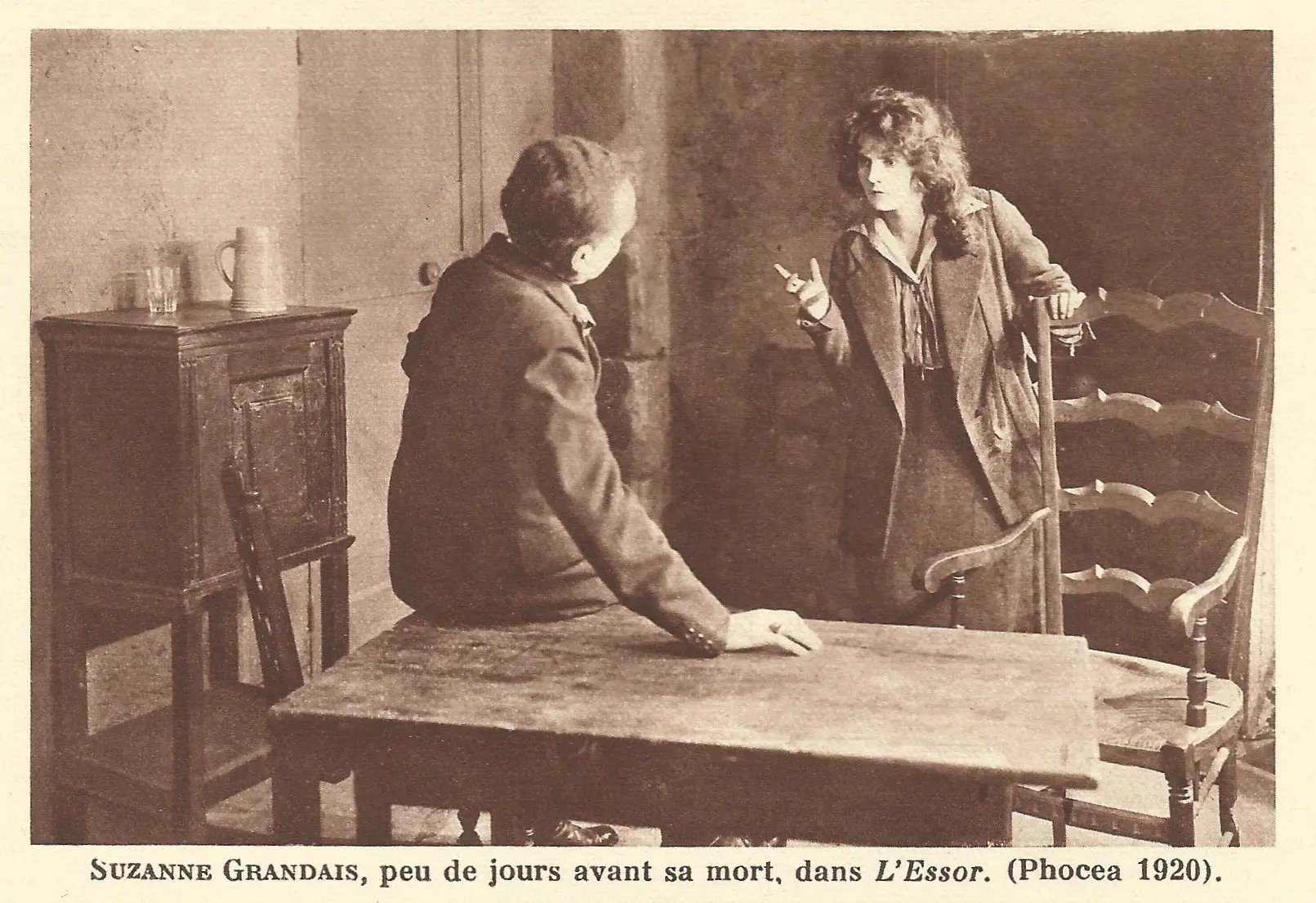
Burguet and cinematographer Georges Cahuzac devise a grammar of entrapment without ever showing the inside of Max’s cell until the final reel. We glimpse only thresholds: doors ajar, padlocks clicked shut, a tray of uneaten bouillabaisse slid across flagstones. The absence of the prisoner’s point-of-view turns spectators into co-conspirators; we share Suzanne’s vertiginous imagination of what horrors might lurk beyond those thresholds. When the door finally swings open, revealing Max chalk-pale yet fiercely alive, the camera executes a 360-degree pan that both liberates the gaze and indicts us for our voyeuristic hunger.
Compare this to the claustrophobic interiors of The White Raven, where the protagonist’s madness ricochets off wallpaper patterns. In L’essor, confinement is not a room but a system—a lattice of ownership that spans continents.
The restored print screened at Il Cinema Ritrovato accompanied the images with a new score by Kali Malone—organ drones that swell like tectonic plates, then fracture into microtonal shards. During the turret climax, the music drops to a sub-audible 18 Hz, the frequency said to induce ocular tremors. Half the audience swore the chandelier vibrated; one viewer fainted. Whether apocryphal or engineered, the anecdote underscores how Burguet’s narrative still leaks into the corporeal present.
Suzanne’s refusal to cede agency anticipates the heroines of Women Who Win and even the noir femmes of the forties. Yet unlike the later archetype who weaponizes sexuality, Suzanne wields knowledge: railway timetables, servants’ gossip, the precise torque needed to snap a pair of handcuffs filched from a gendarme. Her victory is not the death of the villain—Hofland is left alive, bankrupt, but breathing—it is the reclamation of narrative sovereignty. The final shot shows her and Max walking into a marketplace, absorbed by a crowd of union organizers on strike. The camera cranes up until the lovers become indistinguishable from the multitude: private desire subsumed into collective futures.
Jacques Robert’s Max spends most of the film off-screen, yet his absence magnetizes the frame. When at last he appears, his body is a ledger of privation: ribs scoring the shirt, eyes flickering between gratitude and shame at needing rescue. The chemistry between Robert and Bérangère ignites not in clinches but in the way her palm hovers a millimeter from his cheek—as if touch itself might bruise the mirage.
Maurice Escande’s Hofland eschews moustache-twirling villainy; instead he radiates the banal courtesy of a man who has never been told no. Watch how he offers Suzanne a glass of Madeira, the liquid catching the candlelight like liquidated topaz, his smile never reaching the eyes. It’s a performance that prefigures the corporate psychopaths of 1970s thrillers, men who sign invoices with the same hand they use to lock doors.
The 2023 4K restoration by the Cinémathèque française sources a dupe negative discovered in a disused Jesuit chapel in Lyon, wedged between hymnals. The tinting—amber for interiors, cyan for exteriors—follows the original Pathé protocol, validated by laboratory analysis of dye residues. Streaming rights are fragmented: MUBI holds North America, L’essor is rentable on Apple TV in France, and a Blu-ray with Malone’s score drops this December from Éditions Lobster. Catch it however you can; this is not heritage wallpaper but a live wire.
Long after the credits, what lingers is the film’s insinuation that every luxurious surface—mahogany banisters, linen tablecloths, the very air in chandeliered salons—is mortgaged by bodies elsewhere. Suzanne’s odyssey across France becomes a de-colonial audit, her footsteps erasing the baron’s invisible ink. And when the lovers melt into the striking crowd, the camera seems to whisper: love is not a private jewel but a public wager on a world unmade and remade by hands like theirs. That wager feels, in our season of algorithmic abductions and data barons, more urgent than ever.
IMDb —
1935
Community
Log in to comment.