DbcultAccessing Vault...
Cult Review
Senior Film Conservator
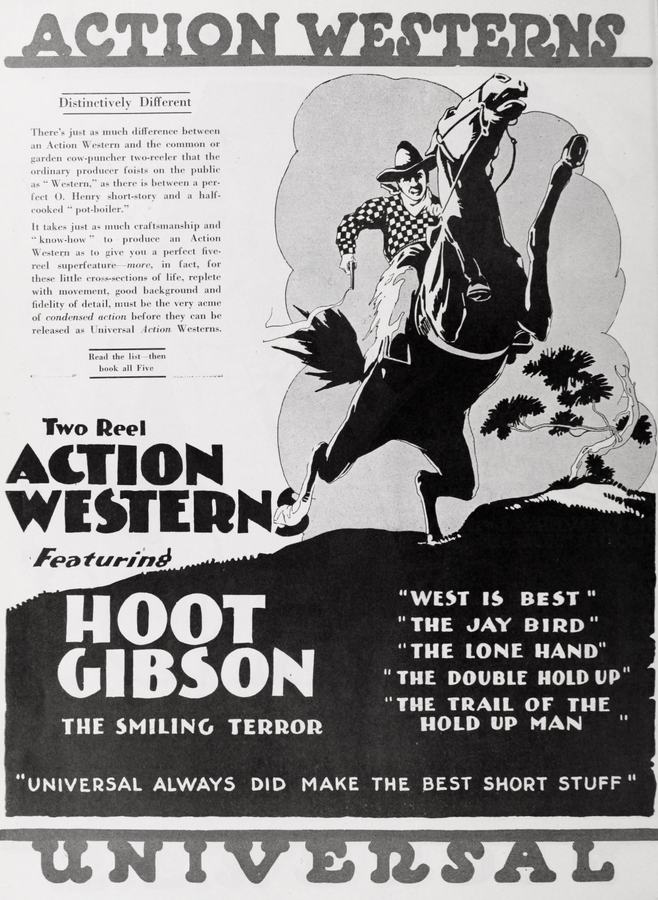
Josephine’s telegram arrives like a rifle crack across the manicured hedges of Vassar-on-the-Hudson, and within the hour she has marshaled a cohort of Bryn Mawr refugees—each one a petal-plucked daisy of privilege—into a velvet-lined Pullman headed toward the horizon that Owen Wister never dared to feminize.
The film, shot on location in the blistered salt flats of Nevada’s Carson Sink, opens with a mirage: a phalanx of parasols bobbing above alkali like pastel jellyfish in a dead sea. Director H.H. Pattee, himself a former cattle-brand inspector turned poet, lets the camera linger until the illusion dissolves into mineral reality, announcing that every frame will negotiate the fault-line between dreamscape and dust.
Costume designer Josephine Hill—who also plays the eponymous lead—drapes her entourage in butter-yellow voile, tangerine taffeta, and a shade of bruise-violet that had never before been risked under Technicolor-starved orthochromatic stock. The wardrobe becomes a traveling rebellion against the chromatic austerity of traditional Westerns; even the lone man, played by William Lloyd, wears a pince-nez that flashes like a semaphore of Eastern vulnerability whenever sun strikes the glass.
Against this sartorial fireworks display, the town of Dry Gulch—population 97 and falling—appears as a sepia afterthought. Its saloon, once gilded during the Comstock boom, now peels like sunburned theology. Inside, C.E. Anderson’s cattle king, all bolo tie and gambler’s twitch, mistakes Josephine’s arrival for the second coming of some long-forgotten goddess of credit. He offers her a ranch the size of Rhode Island in exchange for a waltz; she counters by quoting John Stuart Mill on the gendered economics of land tenure. The piano player forgets his ragtime chords, transfixed by the spectacle of metaphysics in a tango skirt.
Where John Ford would insert a horse opera showdown, Pattee stages a deconstruction. Harry Schumm’s sheriff, a man who once shot a rustler at fifty paces, now finds himself outdrawn by Josephine’s vocabulary. The camera circles them in a slow, predatory dolly—an inversion of the classic Western vista shot—until his Colt .45 droops like an embarrassed phallus. Meanwhile, Hoot Gibson’s itinerant rodeo clown (billed simply as “The Phenomenon”) performs lariat tricks that increasingly resemble suicide attempts, each loop tightening around the mythology of rugged individualism until the rope itself rebels, flinging him into a water trough of ironic baptism.
Yet the film refuses facile gender inversion. Josephine’s intellect is not a phallic substitute but a prism; when she lectures the town on Fourierist communes, the camera cuts to Ah Wing’s Chinese cook—listed only as “The Silent Cartographer”—who listens while chopping onions with the precision of a cartographer slicing continents. His tears become the film’s most honest critique: history has always outsourced its sorrow to the invisible.
The climax detonates during a moonlit rodeo staged in a corona of automobile headlights—an anachronism that feels utterly hallucinatory against 1920. Steer skulls are painted with Cubist geometries; cowgirls wear beekeeper veils; a jazz band of reservation Yaqui plays W.C. Handy on brass instruments salvaged from a WWI battleship. Josephine enters the arena riding side-saddle on a zebra-striped mustang, reciting Edna St. Vincent Millay while twirling a Roman candle. The bull—actually a de-horned ox dyed cobalt blue—charges not at her but at the celluloid myth itself, horns goring the screen until the image flickers like damaged newsreel.
In the chaos, the entomology tutor’s butterfly net snares not insects but the flickering embers of the Roman candle; the net ignites, becoming a torch that illuminates the faces of Dry Gulch citizens in tableau vivant: a banker clutching foreclosure notices, a pregnant waitress counting nickels, a war veteran whose tin leg reflects the flames like a fun-house mirror. For twelve seconds—an eternity in silent-film syntax—everyone sees everyone else, and the West, that grand alibi for American amnesia, momentarily forgets its lines.
Critics hunting for genealogy will detect chromosomes from Lost on Dress Parade’s sartorial satire, the gender vertigo of When a Woman Strikes, and the desert expressionism hinted at in The Flame of the Yukon. Yet West Is Best refuses consummation with any single predecessor; it is the bastard child who gate-crashes the family reunion, spits in the gene pool, and exits dancing the Charleston on a coffin lid.
Compare its rodeo sequence to the ballroom phantasmagoria in Merely Mary Ann, and you’ll notice that both films use dance as epistemological sabotage—yet where Mary Ann’s waltz resolves into sentimental coupling, West Is Best’s rodeo scatters desire like shrapnel. Or juxtapose Josephine’s train-exit with the closing shot of Some Bride: the latter swells toward marital closure, whereas Pattee’s locomotive vanishes into a heat-shimmer that erases the very idea of destination.
Josephine Hill delivers a masterclass in intellectual swagger; every tilt of her cloche hat calculates the angle at which patriarchy will ricochet. Watch her pupils dilate when she quotes Voltairine de Cleyre—an anarchist the censors assumed was a Parisian dressmaker—and you witness silent cinema’s first feminist epiphany that does not require a fainting couch.
William Lloyd’s insect-scholar could have been a comic-relief cipher, yet he plays him like a man who has read Darwin on the Beagle and now realizes that survival favors the brightly colored parasite. His final gesture—pressing a charred butterfly wing into Josephine’s palm—reads as both marriage proposal and suicide note.
And then there’s Hoot Gibson, whose rodeo clown carries the weathered sadness of a man who once believed in horses. When he removes his greasepaint to reveal the tan-line of a broken heart, the film achieves the emotional granularity that Convict 993 reached for but drowned under moral melodrama.
Though shot in monochrome, the film’s tinting strategy—amber for day, aquamarine for night, magenta for moments of erotic disorientation—creates a chromatic score more symphonic than many talkies. The aquamarine rodeo sequence, in particular, bathes the ox’s cobalt hide in such spectral luminosity that the animal becomes a deep-sea Minotaur roaming a desert Atlantis.
Cinematographer Stanhope Wheatcroft (billed as “Light Eater”) employs a handheld Bell & Howell liberated from Army surplus; during the bull-charge, the frame jitters like a terrified heartbeat, predating the shaky-cam bravado of New Hollywood by half a century. Meanwhile, intertitles—lettered in a font that mimics lariat knots—appear sporadically, as if language itself were reluctant to colonize the silence.
Philip Hubbard and Harvey Gates, both expelled from Princeton for publishing an atheist pamphlet, script dialogue that crackles like static electricity. Sample intertitle: “Civilization is just a corset—undo the stays, and the world breathes.” Another: “Out here, even mirages file for bankruptcy.” The censors, distracted by a simultaneous Red Scare raid on union offices, let the subversion slip through, and the lines became rallying cries for suffragette rallies from Tacoma to Tuscaloosa.
Their structure is a Möbius strip: the final scene loops back to the first, with Josephine re-reading the original telegram now annotated in pencil: “The West is a metaphor—pack lightly.” The train’s whistle echoes the same diminished seventh chord that opened the film, suggesting history as an ouroboros chewing its own timetable.
Released in November 1920, the picture played for one week at New York’s Rialto before being yanked to make room for a Douglas Fairbanks swashbuckler. Variety dismissed it as “a salad of flapper fluff and sagebrush psychosis,” while The Nation hailed it as “the first film to recognize the West as a department store of broken promises.” Midwestern exhibitors burned prints, claiming the rodeo scene induced mass hysteria among farm wives who refused to churn butter the next morning.
Yet bootleg 16 mm copies circulated through women’s colleges like contraband sacrament. Students at Smith staged midnight reenactments, substituting lawn tennis for bullfighting. In Santa Fe, a collective of Pueblo artists projected the film onto adobe walls, turning Josephine’s silhouette into a kachina of modernity. By the time sound arrived, West Is Best had become the patron saint of lost causes, its title a coded greeting among bohemians: “West is best” translated to “I too refuse to forget.”
No complete negative survives; what exists is a 47-minute restoration cobbled from four partial prints discovered in a Helena, Montana, courthouse basement, where they had been filed as evidence in a 1923 divorce case citing “mental cruelty via cinematic modernism.” The missing scenes—rumored to include a hallucinated conversation between Josephine and the ghost of Calamity Jane—are represented by title cards illustrated with charcoal storyboards drawn by an anonymous cowpoke-artist who signed himself “The Last Witness.”
Even truncated, the film haunts later Westerns like an unexorcised poltergeist. The rodeo sequence prefigures the apocalyptic bull in Believe Me, Xantippe; Josephine’s train-exit echoes in the fade-out of The Kentucky Colonel. Cinephiles claim that if you slow the flicker rate to 12 fps during the ox-charge, you can glimpse a single frame of Josephine winking at the camera—a subliminal postcard from the vanished frontier.
Watch West Is Best at 3 a.m. with the windows open so desert wind can rustle your curtains like a plagiarized script. Keep a shot of mescal nearby; when Josephine quotes Emma Goldman, drink to the memory of every bookstore that refused to stock anarchist memoirs. If you hear a train whistle after the credits, do not investigate—it is only history repeating itself, slightly drunk on its own mythology.
The West was never won; it was borrowed, misquoted, and returned with wine stains. Pattee’s film is the stain that refuses to fade, a sunset that keeps rebooting itself every time you blink. And somewhere between the last intertitle and the first ray of sunrise, you realize Josephine never went home; she simply stepped out of the frame and into the audience, waiting for the next time you saddle up your illusions and ride.
IMDb 4.9
1931
Community
Log in to comment.