DbcultAccessing Vault...
Cult Review
Senior Film Conservator
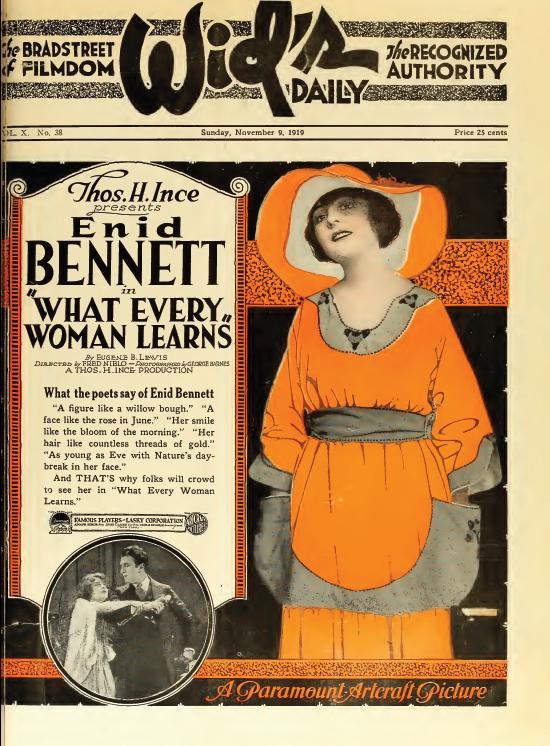
There’s a peculiar enchantment to silent cinema, isn't there? A world where emotions are writ large, where the absence of spoken dialogue forces a different kind of engagement, a more profound reliance on gesture, expression, and the potent symbolism of the visual narrative. And then there are films like What Every Woman Learns, a 1917 melodrama that, even over a century later, still resonates with an unsettling power, exploring themes that, frankly, remain evergreen. This isn't just a historical artifact; it's a raw, unflinching look at choices, consequences, and the fierce, often brutal, journey of a woman finding her voice in a world determined to silence her.
The narrative unfurls around Amy Fortesque, brought to life with captivating intensity by the luminous Enid Bennett. Her world is thrown into disarray by the impending loss of her beloved grandfather. It’s a moment of profound vulnerability, a juncture where wisdom, however well-intentioned, can inadvertently chart a perilous course. His dying counsel—to seize all the joys life has to offer—is a sentiment that, on the surface, feels liberating. But in the context of early 20th-century societal expectations, particularly for women, this advice carries a dangerous ambiguity. Joy, after all, can be fleeting, deceptive, and often confused with mere pleasure or superficial excitement.
Amy stands at a crossroads, presented with two starkly contrasting paths. On one side, there's Walter Melrose, portrayed by the dependable Milton Sills. He's the embodiment of stability, a staid young lawyer whose love for Amy is unwavering, perhaps even a touch predictable, but undeniably sincere. He represents security, respectability, and a quiet, enduring devotion. On the other, we have Dick Gaylord, the charismatic and, crucially, funny suitor. In a world often devoid of genuine levity, his humor becomes a powerful, almost intoxicating allure. Amy, swayed by her grandfather's dying words and perhaps a youthful yearning for excitement, chooses Gaylord, believing his mirth will be the very embodiment of the 'joys' she's been advised to seek. It’s a choice that many women of that era, seeking an escape from the rigidity of convention, might have been tempted by, a gamble on sparkle over substance. This initial decision sets the stage for a dramatic descent, reminiscent of the fateful choices made by protagonists in other melodramas where passion often overrides prudence, much like the tragic romantic entanglements explored in Anna Karenina, where a woman’s pursuit of intense personal happiness clashes violently with societal norms.
The honeymoon, as it were, is brutally short-lived. Gaylord's charming veneer rapidly dissipates, revealing a truly abhorrent character. The humor that once captivated Amy transforms into a cruel, sarcastic weapon. His initial appeal gives way to the harsh reality of a heavy drinker, a man whose dependency on alcohol fuels a volatile temper and a profound disregard for his wife's well-being. The domestic sphere, once envisioned as a haven of joy, becomes a prison of emotional abuse and neglect. Bennett’s portrayal of Amy during this period is particularly heartbreaking; her initial optimism slowly erodes, replaced by a palpable weariness, a quiet desperation that speaks volumes without a single intertitle. The gradual realization that she has made a catastrophic error, that her pursuit of 'joy' has led her into a nightmare, is exquisitely rendered.
This descent into marital hell is a common, yet no less impactful, trope in early cinema, often used to highlight the precarious position of women. Films like The Yellow Passport, while dealing with different social ills, similarly explore a woman trapped by circumstances beyond her control, forced to navigate a treacherous path. Gaylord's character is not merely a villain; he is a cautionary tale, a stark representation of how superficial charm can mask profound depravity. His actions escalate from neglect to outright cruelty, culminating in a truly shocking act of calculated malice.
The film reaches its dramatic crescendo with Gaylord’s insidious plot. Consumed by a toxic blend of jealousy, resentment, and a drunken stupor, he engineers a situation designed to utterly destroy Amy's reputation and perhaps even her life. He tricks Walter Melrose into a meeting in Amy's private room, setting a trap that, in its era, would have been devastatingly effective in implicating Amy in an illicit affair. The scene is thick with tension, the audience acutely aware of the danger lurking beneath Gaylord's feigned cordiality. Theodore Roberts, as Gaylord, manages to convey a chilling blend of manipulative cunning and pathetic self-destruction, even through the exaggerated gestures of silent film acting.
In a drunken rage, Gaylord produces a gun and shoots Melrose. It’s a moment of sudden, brutal violence that shatters any remaining semblance of domesticity. But it’s what happens next that truly defines Amy's character and elevates the film beyond a mere melodrama of victimhood. In a lightning-fast, visceral reaction, Amy seizes the gun. It’s not an act of premeditated murder, but a desperate, instantaneous response to imminent danger, to the ultimate betrayal, and to the years of abuse culminating in this horrific moment. She turns the weapon on Gaylord and kills him. This act, while horrifying, is presented not as a descent into villainy, but as a primal scream for survival, a desperate assertion of agency in the face of absolute tyranny. It’s a moment of profound moral ambiguity, yet one that, through Bennett's performance, feels entirely earned and tragically necessary. The intensity of this confrontation echoes the high stakes and desperate measures seen in other dramatic thrillers of the era, such as False Evidence, where characters are pushed to extreme actions by dire circumstances.
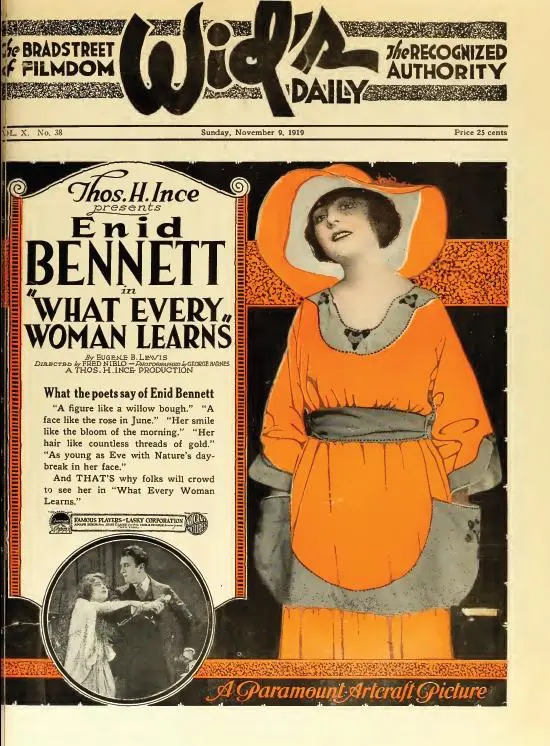
The aftermath is, predictably, a legal maelstrom. Amy, now a widow and a confessed killer, faces the full force of the law and public scrutiny. However, the narrative, perhaps reflecting a nascent societal understanding of domestic abuse and self-defense, ultimately finds her innocent of the crime. This acquittal is a crucial turning point, not just for Amy, but for the film's thematic exploration of justice. It acknowledges that not all killings are equal, that there are circumstances where the victim, pushed to the absolute brink, is justified in their actions. It's a remarkably progressive stance for a film of this period, challenging rigid moral codes and hinting at a more nuanced understanding of human behavior under duress. The legal drama here, while perhaps simplified by the constraints of silent film, serves its purpose in affirming Amy's ultimate innocence and paving the way for her future.
With her name cleared, Amy is free, but the scars of her ordeal undoubtedly run deep. The final act sees her seeking solace and, crucially, happiness with Walter Melrose. Their reunion is not presented as a sudden, passionate rekindling, but rather a gentle, understanding coming together. Melrose, having remained a steadfast presence throughout her ordeal, represents a quiet strength and an unwavering love that stands in stark contrast to Gaylord's explosive personality. It’s a testament to the enduring power of genuine affection and the possibility of finding peace after profound trauma. This resolution, while perhaps a touch idealistic, offers a balm to the preceding turmoil, suggesting that true joy lies not in fleeting excitement, but in profound connection and respect. This journey from despair to cautious hope, marked by the resilience of the human spirit, finds echoes in films like Saving the Family Name, where characters also navigate public judgment and personal redemption.
The strength of What Every Woman Learns lies undeniably in its performances. Enid Bennett, as Amy, delivers a masterclass in silent film acting. Her transformation from naive bride to traumatized survivor to a woman cautiously embracing a new future is utterly convincing. Her eyes, her posture, the subtle shifts in her facial expressions convey a universe of emotion without uttering a single word. She carries the emotional weight of the film with remarkable grace and power. Theodore Roberts, as the villainous Gaylord, is equally compelling, managing to make his character both charmingly deceptive and utterly despicable, a difficult balance to strike. Milton Sills, as the earnest Walter Melrose, provides the necessary anchor of decency and unwavering loyalty, his quiet strength a foil to Gaylord's volatile nature. Even the supporting cast, including William Conklin, Irving Cummings, and Lydia Knott, contribute to the rich tapestry of this dramatic world, their reactions and interactions adding depth to the unfolding tragedy.
Beyond the thrilling plot, What Every Woman Learns is a potent exploration of several enduring themes. It's a cautionary tale about the perils of superficiality and the seductive nature of charm that masks a darker truth. It delves into the societal pressures placed upon women in the early 20th century, particularly regarding marriage and their limited avenues for self-determination. Amy's journey from a choice dictated by a dying wish to an act of desperate self-preservation and ultimately, to a quest for genuine happiness, is a powerful narrative of female agency. The film implicitly asks: what truly constitutes 'joy'? Is it fleeting amusement, or the profound, enduring contentment found in respect, security, and authentic love? The film's conclusion, while offering a hopeful outlook, doesn’t shy away from the immense cost of Amy's journey, suggesting that the lessons learned come at a steep price.
The film also touches upon the complexities of justice. While the act of killing is undeniably grave, the narrative's resolution suggests a burgeoning understanding that context, motivation, and prior abuse must be considered. This nuanced approach to morality is what elevates it beyond a simple good-versus-evil narrative. It challenges the audience to empathize with Amy's impossible situation, a trait shared by many compelling dramas of the period, such as Tangled Fates, which also explored the intricate web of human relationships and their often tragic outcomes.
Eugene B. Lewis's writing, adapted for the screen, crafts a narrative that is both gripping and emotionally resonant. The pacing, typical of early silent features, builds tension steadily, allowing the audience to fully absorb the emotional beats and character developments. While specific directorial credits for such early films can sometimes be ambiguous or shared, the overall execution demonstrates a keen understanding of cinematic storytelling, utilizing visual metaphors and character blocking to amplify the drama. The film serves as an excellent example of how early cinema, despite its technical limitations compared to modern productions, was incredibly adept at crafting compelling, emotionally charged stories that captivated audiences and explored complex human experiences. It showcases the foundational elements of melodrama that would continue to shape cinematic narratives for decades to come, much like Powers That Prey dissected moral ambiguities through powerful performances.
In conclusion, What Every Woman Learns is far more than a historical curiosity. It is a powerful, poignant, and surprisingly progressive silent film that speaks to the timeless struggles of choice, betrayal, and the enduring human quest for happiness and justice. Enid Bennett's performance alone is worth the price of admission (or, more accurately, the digital restoration). It’s a stark reminder that the 'joys' life offers are not always what they seem, and that true strength often emerges from the crucible of adversity. This film is a testament to the enduring power of early cinema to not only entertain but also to provoke thought and reflect the complex tapestry of human experience. It reminds us that sometimes, the most profound lessons are learned through the most harrowing experiences, and that even in the darkest of times, the flicker of hope, and the possibility of a genuine connection, can guide us home.
IMDb —
1931
Community
Log in to comment.