DbcultAccessing Vault...
Cult Review
Senior Film Conservator
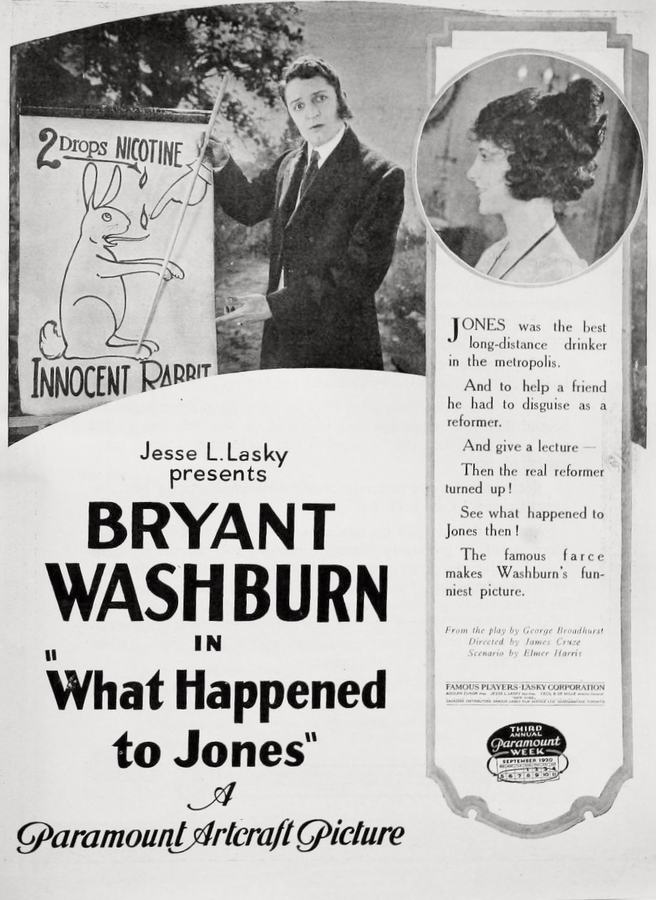
From the first flicker of celluloid, What Happened to Jones announces itself as a locomotive of improbabilities hurtling through the dry American night. The film’s palette—high-contrast silver halide, cigarette-burn edges—feels like a tintype that's learned to laugh. From station lights that bloom like sulphur crocuses to the velvet murk of a boxcar, the camera gulps atmosphere the way its characters swig bootleg liquor. From the outset, the narrative intoxicates: a suitcase crammed with gin bottles rattles like a crate of anxious nightingales, each clink forecasting the comic discord to come.
Jones’s odyssey begins as a favor—deliver hooch to a despondent pal—but swiftly morphs into a referendum on self-invention, America’s favorite indoor sport. When the trunk vanishes, the moral ledger of our hero tilts toward chaos; he bargains with back-alley alchemists, sniffs perdition on the sheriff’s breath, and reflexively slips into the woolen sanctity of Anthony Goodley’s persona. The substitution is not merely cosmetic—it is existential. Bryant Washburn’s Jones toggles between slapstick terror and evangelistic fervor with the elasticity of a vaudeville contortionist. His gait, once loose-jointed, stiffens into the brittle piety of a man who’s skimmed the CliffsNotes of righteousness. The performance is a masterclass in comic modulation, equal parts Harold Lloyd gumption and Chaplinesque pathos, though entirely sui generis.
George Broadhurst’s scenario, distilled by Elmer Harris’s intertitles, treats tension like a balloon artist: each twist produces something comically grotesque. The set-piece inside the Methodist tabernacle—wooden pews lacquered to a mirror sheen—erupts into a carnival of flying hymnals and airborne tobacco plugs. Here, the film tips its bowler hat to Flirting with Death’s macabre ballet while maintaining a tone closer to soda-fizz innocence.
“A temperance sermon delivered by a man marinated in contraband gin is, by definition, a sermon set to self-destruct.”
The riot choreography—bodies tumbling like dice in a back-alley craps game—owes its kinetic snap to a proto-Keaton precision. Chairs collapse, kerosene lamps sway, and through the melee strides Margaret Loomis as Cissy Smith, her eyes twin lanterns of sanity. Loomis plays straight-woman not as foil but as gravitational center, her gaze anchoring the film’s moral compass even as it pirouettes into nonsense.
Richard Cummings’s sheriff—part bloodhound, part blunderbuss—embodies civic authority stripped of nuance. Yet even he is eclipsed by Lillian Leighton’s Amelia Pennington, Goodley’s betrothed. Amelia arrives armed with bustles, barbed bon mots, and a biological clock that clangs like a firehouse bell. Her pursuit of the counterfeit Goodley is both courtship and interrogation, a duel of gazes across lace fans and hymnbooks. In a film obsessed with counterfeit, Leighton’s performance is the most delicious forgery: she plays sincerity as though it were a prank.
Cinematographer Frank Jonasson bathes interiors in umber pools, letting shadows nibble at the edges like mice. The bootlegger’s cellar—its ceiling a tangle of burlap sacks—glows sulfurous, a netherworld where morality is measured in proof. By contrast, the exteriors possess the chalky radiance of a fresh fresco. Jones’s climactic sprint across moonlit rooftops, chimney stacks jutting like blackened exclamation points, feels borrowed from German Expressionism yet filtered through American optimism. The tonal whiplash—gloom to giddiness—mirrors the nation’s own schizoid embrace of Prohibition.
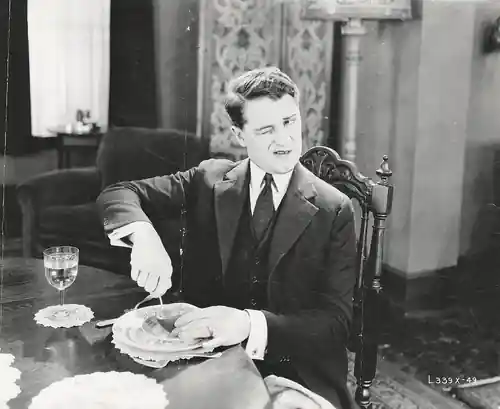
Because the film never synchronized a single audible syllable, its comedy resides in the ricochet of bodies, the percussion of collapsing pews, the silent-film equivalent of rim-shots. Intertitles, meanwhile, glitter with Jazz-Age argot: “He preached virtue with a breath that could spook a still.” Each card arrives timed like a vaudeville drum sting, reminding viewers that dialogue, even when read, can swagger.
Cissy Smith belongs to the emerging sorority of flappers—ankles, ideas, and aspirations unshackled. Amelia Pennington, corseted in Victorian amber, clings to the gospel of domestic subjugation. Their tug-of-war across the male protagonist refracts the era’s seismic gender realignment. Jones, buffeted by these crosscurrents, ultimately allies with modernity, absconding with Cissy toward a horizon that smells of gasoline and possibility. The film thus smuggles a feminist streak beneath its madcap veneer, much like gin beneath a false-bottom trunk.
Where The Wildcat stages anarchic militarism and Spiritismo dabbles in séance hysteria, What Happened to Jones roots its chaos in the quotidian: a small town bristling under moral scaffolding it never truly believed. Its DNA shares strands with Tootsies and Tamales’ culinary bedlam, yet its satire is sharper, more surgical.
When Jones and Cissy vanish into the pre-dawn whistle of a westbound freight, the real Anthony Goodley awakens to a hornet’s nest of unpaid bills, broken vows, and a fiancée who now eyes him like counterfeit currency. The film’s closing iris-in—Jones’s trunk restored but brimming with Cissy’s trousseau—winks at the karmic shell game: identity is luggage, swap the tags and hope the porter looks away. It is a conclusion that refuses penitence, embracing instead the American conviction that reinvention is the better part of valor.
Modern viewers, pickled in meta-comedy, may find surprising sophistication in the way Jones weaponizes self-mythology. The DNA of Tootsies and Tamales, Some Like It Hot, even Mrs. Doubtfire curls inside this 65-minute sprint. Yet the film remains stubbornly itself—an effervescent bootleg brewed before the Hays Code sterilized the cocktail.
Viewed today, What Happened to Jones effervesces like a freshly uncorked bottle of forbidden gin: volatile, fragrant, likely to leave you dizzy and delighted. Its satire of performative morality lands harder in an age of curated social-media personas. Performances crackle, cinematography seduces, and the narrative barrels forward with a locomotive’s heedless momentum. Seek it out on any platform still brave enough to stream pre-Code anarchy; let its mischief whisper that the American talent for self-invention is both blessing and beautiful fraud.
IMDb 6.3
1935
Community
Log in to comment.