DbcultAccessing Vault...
7.3/10
Senior Film Conservator
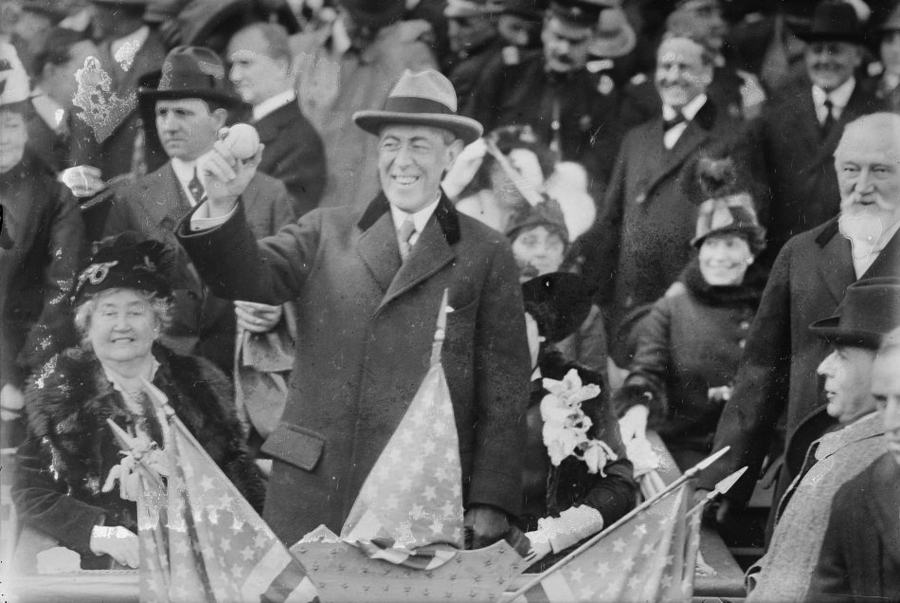
A definitive 7.3/10 rating for a film that redefined the boundaries of cult cinema. 1915 World's Championship Series remains a cornerstone of transgressive art.
Watching the 1915 World’s Championship Series is less like viewing a film and more like attending a séance.
In the modern landscape of high-definition, 120-frames-per-second sports broadcasting, the grainy, hand-cranked ghosts of 1915 offer a jarring, almost transcendental counter-narrative. This isn't just a record of the Boston Red Sox clinching their third title; it is a primal scream from the dawn of the medium. The aesthetic experience is defined by its limitations—the silver halide crystals struggling to resolve the speed of a fastball, the fixed-position cameras that treat the baseball diamond like a theatrical proscenium.
The film possesses a raw, unvarnished quality that contrasts sharply with the calculated melodramas of its contemporary peers. While films like Rags utilized the emerging grammar of close-ups and cross-cutting to manipulate emotion, the 1915 World’s Championship Series relies on the sheer, unadulterated power of the long shot. There is a strange dignity in the wide angles; we see the players not as individual icons, but as components of a larger, sweeping machinery of sport.
Consider the way the outfielders move—a frantic, high-stepping dash that feels more like a sequence from a slapstick comedy than a professional athletic endeavor. Yet, there is no artifice here. Unlike the staged gravitas found in The Day, the tension in this footage is organic, born from the genuine unpredictability of the game. The flicker of the film stock adds a layer of existential weight; every frame is a reminder of the century that has passed since these men stood in the sun.
To understand the 1915 World’s Championship Series, one must place it within the broader context of 1915 cinema. It lacks the pastoral serenity of The English Lake District, opting instead for an urban, dusty grit. Where The English Lake District invites the viewer to linger on the stillness of nature, this sports reel demands an engagement with the chaotic momentum of the city.
In many ways, the film shares a spiritual DNA with the documentary-adjacent realism of Dan or the observational curiosity of Sorvanets. It is a work of accidental anthropology. We see the way the spectators lean over the railings, the absence of safety netting, and the clouds of tobacco smoke that seem to hang permanently over the grandstands. It is a far cry from the opulent, controlled environments of Such a Little Queen. Here, the "queen" is the game itself, and her throne is a patch of trampled grass in Philadelphia and Boston.
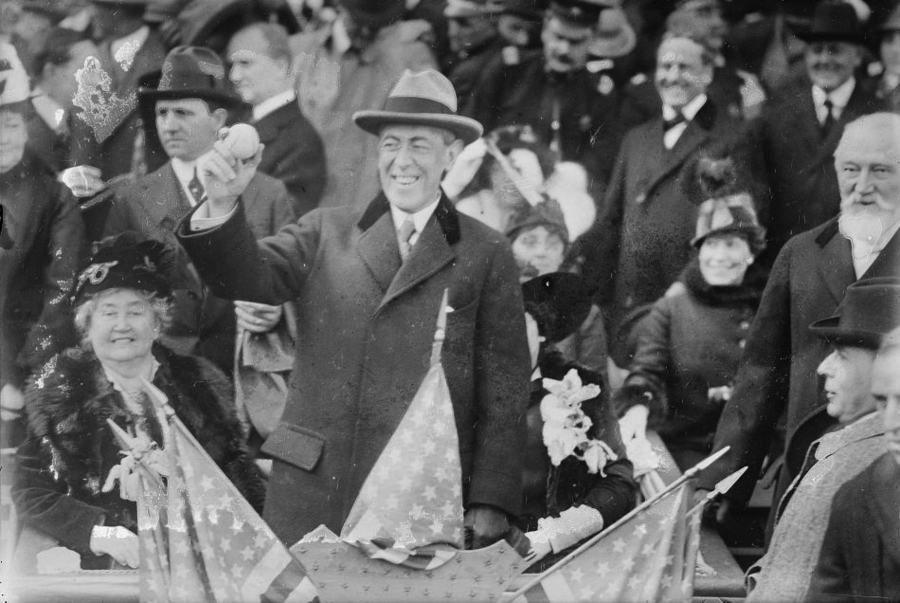
One cannot discuss this series without mentioning the spectral presence of Babe Ruth. At this stage in his career, he was a pitcher of immense promise, though his role in this specific series was relegated to a single pinch-hitting appearance (a groundout, for the historians). Watching the footage, one searches the blurry backgrounds for that unmistakable gait. It is a fascinating exercise in cinematic archaeology. We are looking for the birth of a legend in a film that didn't yet know it was capturing history.
The narrative stakes are high, even if the silent medium strips away the crack of the bat and the roar of the crowd. The Phillies’ Grover Cleveland Alexander, a man whose life would later be dramatized with all the pathos of a Kreutzer Sonata, is seen here in his athletic prime. His delivery is a study in economy and deceptive ease. The film captures the psychological warfare between pitcher and batter with a clarity that transcends the lack of sound. You can see the hesitation in the batter’s shoulders, the predatory stillness of the catcher.
While the film focuses on the diamond, the periphery tells a story of a world on the brink. 1915 was a year of profound upheaval. While the US remained ostensibly neutral, the shadows of the Great War were lengthening. This makes the escapism of the 1915 World’s Championship Series feel all the more poignant. It lacks the overt moralizing of God, Man and the Devil or the religious allegory of Pilgrim's Progress, yet it carries its own weight of human struggle.
There is a sequence where the camera pans across the crowd, and for a brief moment, the Fourth Wall is shattered as a young man waves directly into the lens. In that instant, the distance of a century collapses. He isn't a figure in a history book; he is a contemporary. This moment of connection is more powerful than any scripted revelation in A Mother's Confession. It is the raw power of the moving image to preserve the ephemeral pulse of life.
The cinematography of the 1915 World’s Championship Series is defined by its "stutter." Because the cameras were hand-cranked, the frame rate fluctuates, creating a dreamlike, inconsistent tempo. This gives the baseball action a surreal quality—runners seem to teleport across the basepaths, and the ball itself often disappears into the white noise of the sky.
Modern viewers might find this frustrating, but from an art critic’s perspective, these flaws are the film’s greatest assets. They remind us of the physicality of the medium. Unlike the polished, almost sterile beauty of The Rajah's Diamond Rose, this film feels like it was forged in a furnace. It is a document of labor—both the labor of the athletes and the labor of the cameramen lugging massive wooden tripods through the dirt. It possesses a grit that is entirely absent from the stylized ancient worlds of When Rome Ruled.
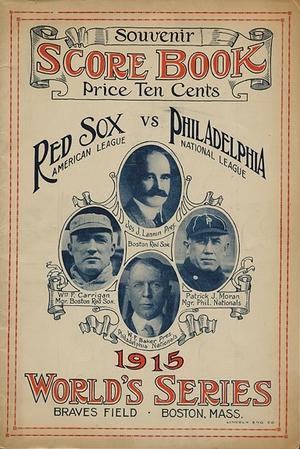
There are moments of unintentional levity that rival the scripted comedy of Pufi - Hogyan lett ünnepelt hös egy jámbor pesti férjböl?. A stray dog wandering onto the field, a fan’s hat blowing away in the wind, the exaggerated gestures of an umpire—these are the textures of reality that narrative cinema often polishes away. In the 1915 World’s Championship Series, these details are preserved in amber.
The film doesn't try to be a grand epic like The Midnight Wedding or a tale of betrayal like The Traitress. It is humble. It is a record of a game. But in its humility, it achieves a kind of immortality. It captures the essence of what it means to gather in a public space and share in a collective ritual. The Red Sox’s victory—winning four games to one—is almost secondary to the preservation of the atmosphere itself.
As we dissect the 1915 World’s Championship Series, we must acknowledge the sheer miracle of its survival. Most nitrate film from this era has long since decomposed into vinegar and dust. That we can still see Tris Speaker’s defensive positioning or Harry Hooper’s swing is a testament to the archival efforts of film historians.
This film is a cornerstone of sports cinema, establishing a visual vocabulary that would eventually evolve into the multi-camera extravaganzas we see today. It is the primitive ancestor of the modern broadcast, yet it retains a soul that is often lost in the transition to digital. There is no commentary to tell us how to feel, no graphics to explain the statistics. We are left alone with the images, forced to interpret the drama through the movement of bodies in space.
In the end, the 1915 World’s Championship Series is a haunting, beautiful, and essential piece of the cinematic puzzle. It bridges the gap between the nineteenth-century pastoral and the twentieth-century industrial. It is a reminder that while the rules of the game may remain largely unchanged, the way we see the world—and the way the world sees us—is in a constant state of beautiful, flickering flux. For anyone interested in the intersection of history, sport, and the sheer magic of the moving image, this is required viewing. It is a silent masterpiece of the mundane, elevated to the level of art by the simple passage of time.
Final Verdict: A visceral, sepia-toned journey into the heart of the American mythos.
IMDb —
1925
Community
Log in to comment.