DbcultAccessing Vault...
4.4/10
Senior Film Conservator
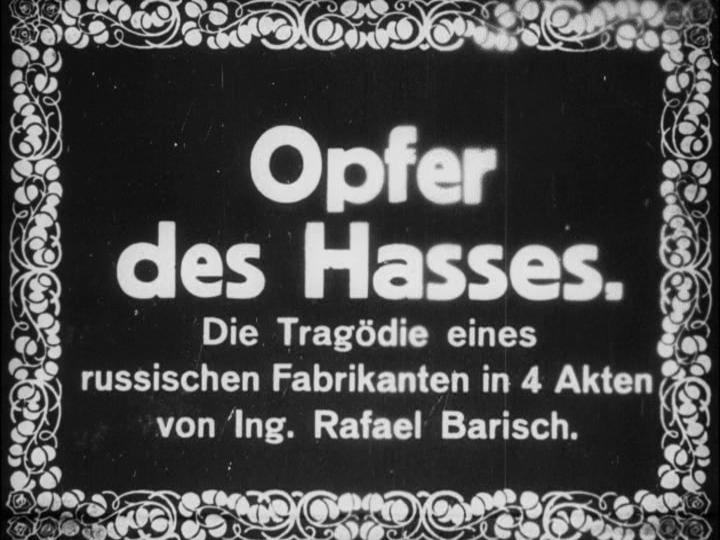
A definitive 4.4/10 rating for a film that redefined the boundaries of cult cinema. Opfer des Hasses remains a cornerstone of transgressive art.
Stepping into the cinematic echoes of the past, we encounter Opfer des Hasses (1923), a silent film whose very title, 'Victims of Hatred,' resonates with a chilling prescience. This is not merely a historical artifact; it is a raw, visceral testament to a period of unprecedented human suffering, meticulously crafted by writer Rafael Barisch. The film plunges its audience into the maelstrom of the Russian Revolution, but instead of focusing on grand political narratives or battlefield heroics, it zeroes in on the most intimate and heartbreaking consequences of societal collapse: the targeting of a Jewish family during a brutal pogrom. It’s a narrative that, even a century later, retains its profound emotional impact and serves as a stark reminder of the fragility of peace and the devastating power of prejudice. The performances, particularly from actors like E.W. Emo and Gyula Szöreghy, transcend the limitations of silent cinema, conveying a depth of despair and terror that speaks volumes without a single uttered word.
The film commences with an almost deceptive sense of normalcy, introducing us to a Jewish Russian manufacturer and his family. They represent a bedrock of stability and prosperity, their lives woven into the fabric of their community through industry and tradition. This initial portrayal of a functioning, contributing family unit is crucial, as it provides a stark contrast to the horrors that are soon to engulf them. Rafael Barisch’s screenplay skillfully establishes their world, allowing the audience to invest in their well-being before the inevitable descent into chaos. The quiet dignity of their early scenes amplifies the tragedy that follows, making the subsequent destruction all the more agonizing to witness. It’s a narrative technique that builds empathy, drawing us into their plight before the hammer blow of historical violence falls.
As the Russian Revolution intensifies, its tremors are felt not just in the corridors of power but in the very homes of ordinary citizens. For this Jewish family, the revolution manifests not as a distant political struggle but as an immediate, existential threat. The film masterfully depicts the gradual erosion of safety, the creeping fear that permeates their daily lives, culminating in the terrifying eruption of a pogrom. The transition from order to anarchy is portrayed with an unsettling realism, showcasing how quickly society can unravel when hatred is given free rein. The manufacturing business, a symbol of their hard work and integration, becomes a target, its destruction a metaphor for the broader ruin inflicted upon their community. This sequence, devoid of dialogue, relies on the potent imagery and the actors' expressions to convey the sheer terror and confusion of the moment.
The tragedy escalates beyond material loss, descending into an unspeakable human cost. The film unflinchingly portrays the murder of family members, a brutal and graphic testament to the senseless violence unleashed by the mob. These scenes are not gratuitous; they are essential to conveying the full horror of the pogroms, demonstrating the complete dehumanization of the victims. The raw emotion conveyed by actors like L. Mandl and Resi Hammer, even through the stylized movements of silent cinema, is palpable, etching the pain and despair onto the viewer's consciousness. The film doesn't shy away from the ultimate price paid, making it a powerful, albeit difficult, viewing experience. In its stark portrayal of suffering, Opfer des Hasses stands as a cinematic lament, a powerful outcry against the barbarity of ethnic violence.
In the realm of silent cinema, the onus on actors to communicate complex emotions without the aid of spoken dialogue is immense. Opfer des Hasses is a masterclass in this regard, with its ensemble cast delivering performances that are both nuanced and profoundly expressive. E.W. Emo, though later known for his directorial work, here demonstrates a formidable acting presence, likely embodying the stoic yet ultimately broken patriarch. Gyula Szöreghy, another key figure, contributes to the film's emotional weight, his portrayal undoubtedly capturing the fear and desperation of a man caught in an inescapable nightmare. The silent film era often relied on exaggerated gestures, but here, there's a delicate balance, allowing the genuine agony to shine through. The subtle tremors of a hand, the widening of eyes, the slump of a shoulder – these are the tools through which profound sorrow is conveyed.
The supporting cast, including S. Schrötter, G. Grohmann, R. Majeritsch, Midy Astory, S. Hammer, and Fred Louis Lerch, each contribute vital threads to this tragic tapestry. Their collective despair and fear create a powerful sense of community under siege. The director, whose identity remains somewhat elusive in historical records for this particular film, nonetheless orchestrates these performances with a clear vision, ensuring that the emotional arc of the narrative is consistently impactful. The blocking, the use of close-ups, and the rhythm of the editing all work in concert to amplify the sense of impending doom and the eventual devastation. The director understood that in a story so reliant on raw human emotion, every frame had to speak volumes.
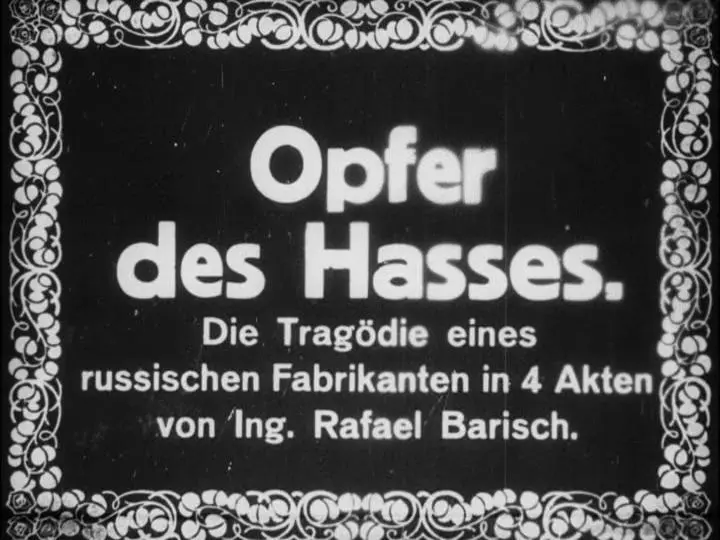
The visual storytelling is particularly potent when depicting the pogrom itself. The chaotic rush of the mob, the frantic attempts to escape, the senseless destruction – these moments are rendered with a stark immediacy that bypasses the need for sound. One might draw parallels to the visceral depictions of mob violence in films like Haceldama ou Le prix du sang, where the sheer force of collective human action, whether for good or ill, is a central theme. However, Opfer des Hasses distinguishes itself by focusing squarely on the victims, making their terror the focal point. The film's strength lies in its ability to evoke a sense of profound vulnerability and the arbitrary nature of such violence, forcing the audience to confront the uncomfortable realities of history.
Opfer des Hasses emerges from a period of significant geopolitical upheaval, specifically the aftermath of World War I and the ensuing Russian Revolution. The film’s release in 1923 places it in a historical context where the memories of such atrocities were still fresh, and the socio-political landscape remained volatile. It speaks to the immediate anxieties of a continent grappling with the rise of nationalism, the collapse of empires, and the terrifying potential for widespread ethnic violence. Rafael Barisch, as the writer, likely drew upon contemporary accounts and the collective consciousness of a society deeply scarred by war and revolution to craft this narrative. The film, therefore, functions not just as a piece of entertainment but as a historical document, reflecting the fears and traumas of its era.
The themes explored in Opfer des Hasses are tragically timeless. The film confronts the insidious nature of anti-Semitism, the devastating impact of societal collapse on minority groups, and the brutal reality of human cruelty when unchecked. These are themes that resonate far beyond the specific historical context of the Russian Revolution, finding echoes in countless subsequent conflicts and genocides throughout the 20th and 21st centuries. In its portrayal of a family losing everything – their livelihood, their home, and ultimately their lives – the film offers a universal narrative of displacement and persecution. One might consider it alongside other films that grapple with the human cost of large-scale conflict, such as The Battle Cry of Peace, which, though an American production with different political aims, similarly sought to convey the devastation of war to its audience.
The film's power lies in its ability to humanize the victims, transforming abstract historical events into a deeply personal tragedy. By focusing on one family, it allows the audience to grasp the full, horrifying scope of a pogrom, making the statistics of violence tangible through individual suffering. This approach is reminiscent of later works that sought to personalize historical injustices, such as The Fixer, which explores the persecution of a Jewish man in Tsarist Russia through a single character's ordeal. Opfer des Hasses, despite its age and silent format, remains a potent and relevant work, urging viewers to reflect on the dangers of unchecked hatred and the importance of empathy in the face of societal strife. Its stark depiction serves as a cinematic plea for tolerance and understanding, a message that, regrettably, remains as vital today as it was a century ago.
While Opfer des Hasses may not be as widely known as some of its silent era contemporaries, its artistic merit and historical significance are undeniable. The film is a testament to the power of early cinema to tackle complex and harrowing subjects with nuance and emotional depth. Rafael Barisch’s screenplay provides a robust framework, allowing for a narrative that is both historically specific and universally resonant. The cinematography, even in what might be surviving truncated versions, undoubtedly captured the bleakness of the setting and the intensity of the human drama. The use of light and shadow, typical of the era, would have been particularly effective in conveying the oppressive atmosphere of fear and the sudden, brutal violence of the pogrom. The stark visuals, combined with the emotive performances, create a haunting tableau that lingers long after the final frame.
The film’s contribution to cinematic history lies not just in its subject matter but in its demonstration of the expressive capabilities of silent film. Without dialogue, the filmmakers had to rely on visual storytelling, character expression, and the pacing of the narrative to convey meaning. Opfer des Hasses achieves this with remarkable success, translating the profound tragedy of its plot into a compelling visual experience. It forces the audience to engage more deeply, interpreting nuances of emotion and action that might otherwise be articulated through speech. This active engagement makes the film’s message all the more potent and memorable. It reminds us that cinema, in its purest form, is a visual medium, capable of communicating profound truths through imagery alone.
In a broader context, Opfer des Hasses contributes to a body of work that seeks to illuminate the darker corners of human history, ensuring that such atrocities are neither forgotten nor repeated. It stands as a valuable, albeit somber, piece of cultural heritage, offering insight into the anxieties and moral challenges of its time. For those interested in the evolution of socially conscious cinema or the history of Jewish representation in film, Opfer des Hasses is an essential viewing. It’s a powerful, somber experience that uses the medium of silent film to give voice to the voiceless, transforming historical trauma into a poignant work of art that continues to resonate with undeniable force today. The film serves as a powerful reminder that even in silence, stories of immense suffering and resilience can scream across generations, demanding to be heard and remembered.
IMDb —
1922
Community
Log in to comment.