DbcultAccessing Vault...
5.5/10
Senior Film Conservator
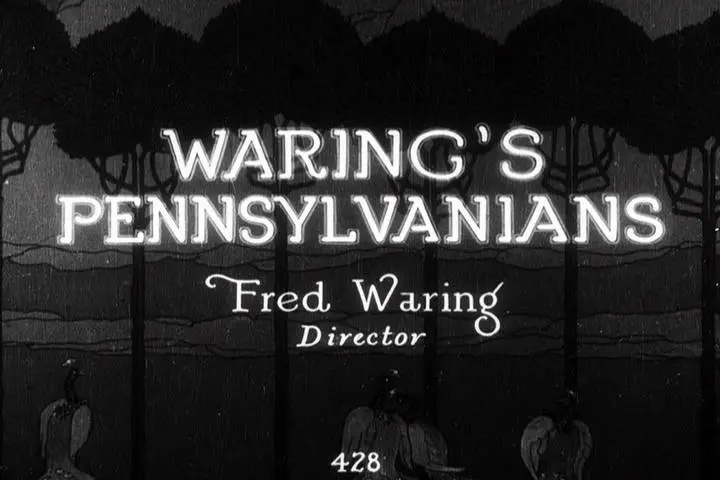
A definitive 5.5/10 rating for a film that redefined the boundaries of cult cinema. Waring's Pennsylvanians remains a cornerstone of transgressive art.
Is Waring's Pennsylvanians worth watching today? Short answer: absolutely, but with a significant caveat. This isn't a narrative film in any traditional sense; it's a historical artifact, a foundational piece of cinema that offers an unparalleled window into the very dawn of synchronized sound, capturing the electric energy of a live musical performance as it transitioned to the silver screen.
This short is tailor-made for film historians, music aficionados with a keen interest in early 20th-century American orchestras, and anyone curious about the technical birth pangs of sound cinema. It is definitively NOT for viewers seeking a conventional plot, character development, or modern cinematic spectacle. Approach it as a living document, and its value becomes immense.
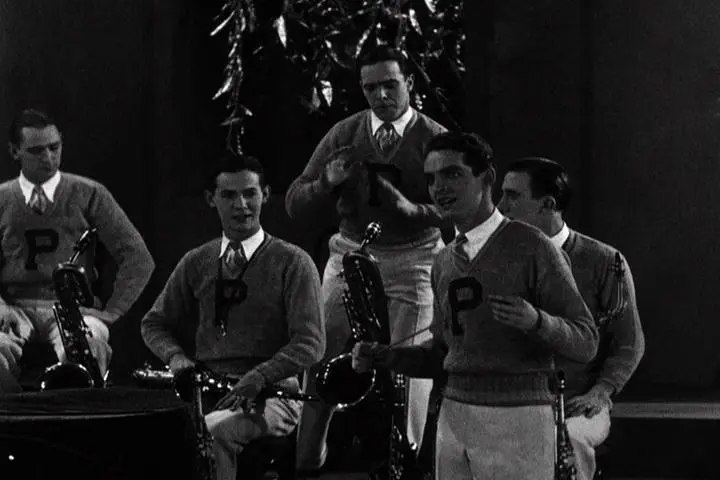
Before we delve into the specifics of Waring's Pennsylvanians, it's crucial to contextualize it within the seismic shift that was the Vitaphone era. In 1926, Warner Bros. unveiled the Vitaphone sound-on-disc system, a technology that promised to liberate cinema from its silent shackles. While The Jazz Singer (1927) is often credited with ushering in the talkie era, it was a series of shorts—like this one—that truly demonstrated the practical viability and commercial appeal of synchronized sound.
These early Vitaphone productions weren't just tests; they were bold statements, proving that the magic of live performance could be captured and replicated. Fred Waring and His Pennsylvanians were at the pinnacle of their popularity during this period, a collegiate orchestra that blended swing, jazz, and popular melodies with an infectious enthusiasm. To capture them on film, with synchronized sound, was a coup, a clear signal of Vitaphone's ambition.
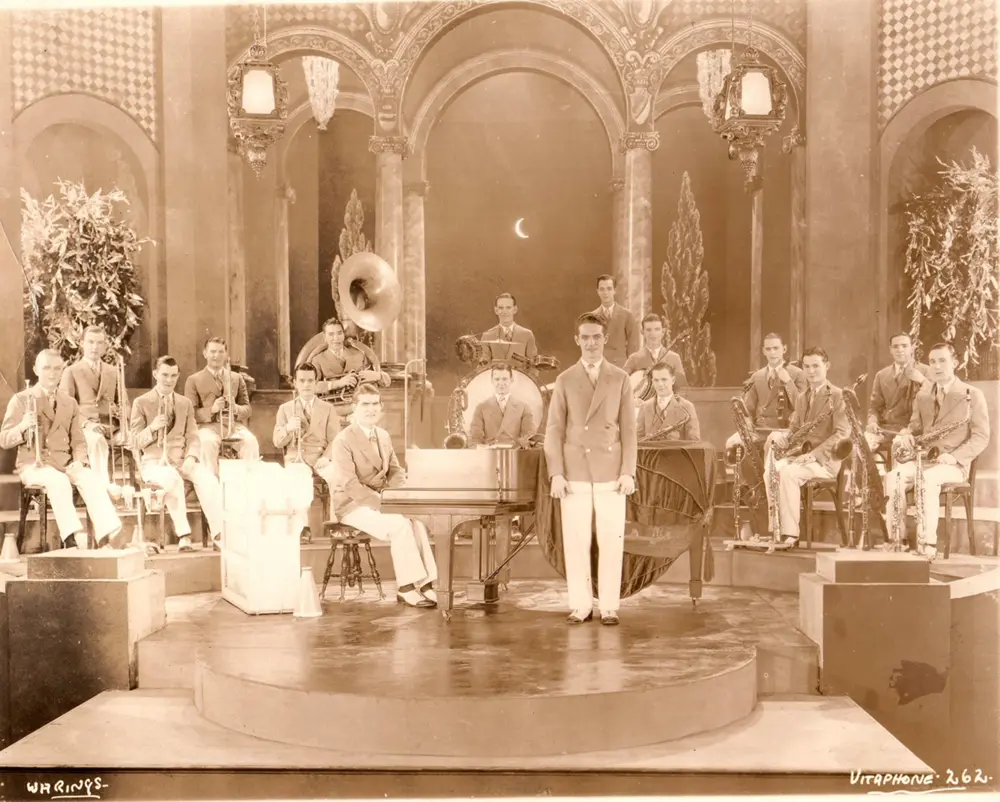
Fred Waring's Pennsylvanians were more than just musicians; they were entertainers. This short perfectly encapsulates that ethos across its three numbers. While the specific titles of the songs aren't provided in the plot summary, one can infer from the group's reputation that they would have been a mix of upbeat, harmonically rich popular tunes designed to showcase their collective talent and individual virtuosity. The camera, largely static, acts as a proscenium arch, allowing the ensemble to command the frame through sheer stage presence.
Waring himself is a fascinating figure to observe. His direction of the orchestra isn't just about conducting notes; it's about orchestrating energy. He moves with a controlled dynamism, his gestures guiding not just the tempo but the emotional arc of each piece. This isn't the stoic, refined conducting of classical music; it's the lively, engaging showmanship of a bandleader connecting directly with his audience, even through the nascent medium of film.
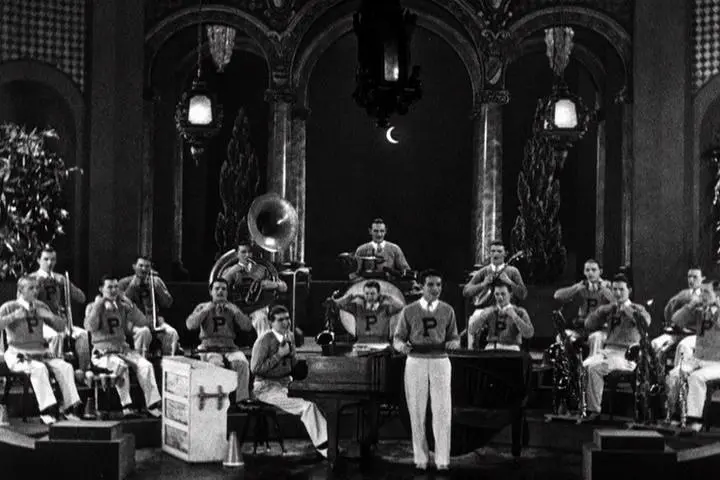
The ensemble's synchronization, both musically and visually, is impressive. Their collective enthusiasm is palpable, a testament to their rehearsed precision and the sheer joy they brought to their craft. In an era where many early sound films struggled with awkward pauses and stilted delivery, the Pennsylvanians' performance feels remarkably fluid and natural. It works. But it’s flawed.
The Waring's Pennsylvanians short is a fascinating case study in early sound film production. The Vitaphone system, while revolutionary, had its limitations. Sound recording was often done with a single, strategically placed microphone, meaning dynamic range could be compressed and spatial separation was minimal. Yet, for its time, the clarity and fidelity of the audio are genuinely remarkable.
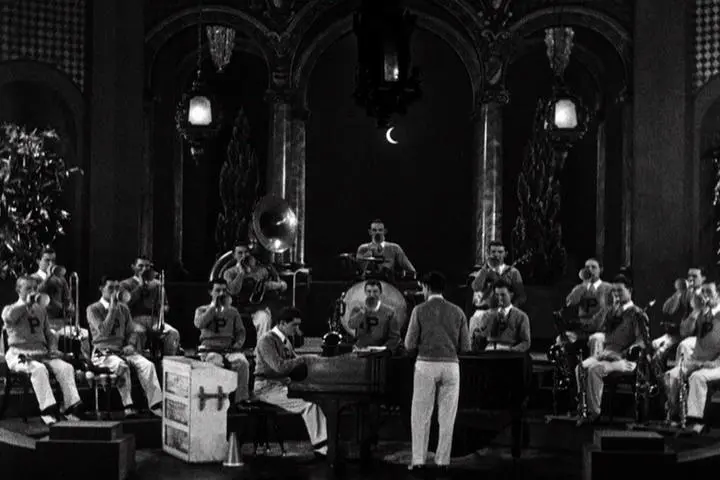
Consider the cinematography: it's rudimentary by today's standards, often comprising static, wide shots designed to capture the entire ensemble. There are no dramatic close-ups, no sweeping crane shots, no rapid-fire editing. The camera is a witness, not an active participant in the storytelling. This wasn't a failure of imagination, but a practical necessity. Early sound cameras were bulky and noisy, requiring soundproof booths or blimps that severely restricted movement.
Despite these constraints, the film achieves its primary goal: to deliver a compelling musical performance. The pacing is dictated by the songs themselves, each number flowing into the next with a natural theatrical rhythm. The tone is unequivocally upbeat and celebratory, reflecting the popular appeal of Waring's music and the optimistic outlook associated with a new technological frontier. It’s a document of immense historical value, even if it feels like watching a stage play through a keyhole.
Here's an unconventional observation: Waring's Pennsylvanians, despite its technical limitations, offers a surprising lesson in audience engagement that modern blockbusters often miss. In an age saturated with special effects and rapid-fire editing, this short reminds us of the raw power of a skilled performer and a well-crafted song. There are no distractions, no narrative complexities to untangle. It’s pure, unadulterated performance.
The film's 'directing' is less about artistic flourishes and more about efficient presentation. It frames the performers, allowing their talent to speak for itself. This simplicity, born of necessity, inadvertently creates an intimacy that forces the viewer to focus solely on the music and the musicians. It’s a bold choice, or rather, a lack of choice that yields a powerful outcome.
"Waring's Pennsylvanians is not a film to be judged by conventional narrative standards. It is a historical beacon, a testament to technological audacity and artistic resilience. Its true value lies not in what it depicts, but in what it represents: the undeniable, irreversible triumph of sound in cinema."
In the grand tapestry of film history, Waring's Pennsylvanians occupies a small, yet profoundly significant, square. It's a short film that dared to dream in sound, a snapshot of a moment when the world was changing, one synchronized note at a time. While it may not offer the narrative thrills of a modern feature, its contribution to the evolution of cinema is immeasurable. To watch it is to connect with the very heartbeat of a revolution.
It’s a demanding watch for the casual viewer, certainly. But for anyone with an appreciation for the foundational moments of an art form, it is an essential, even revelatory, experience. It stands as a vibrant, undeniable argument for the power of innovation and the enduring appeal of pure, unadulterated performance.
IMDb —
1933
Community
Log in to comment.