DbcultAccessing Vault...
Cult Review
Senior Film Conservator
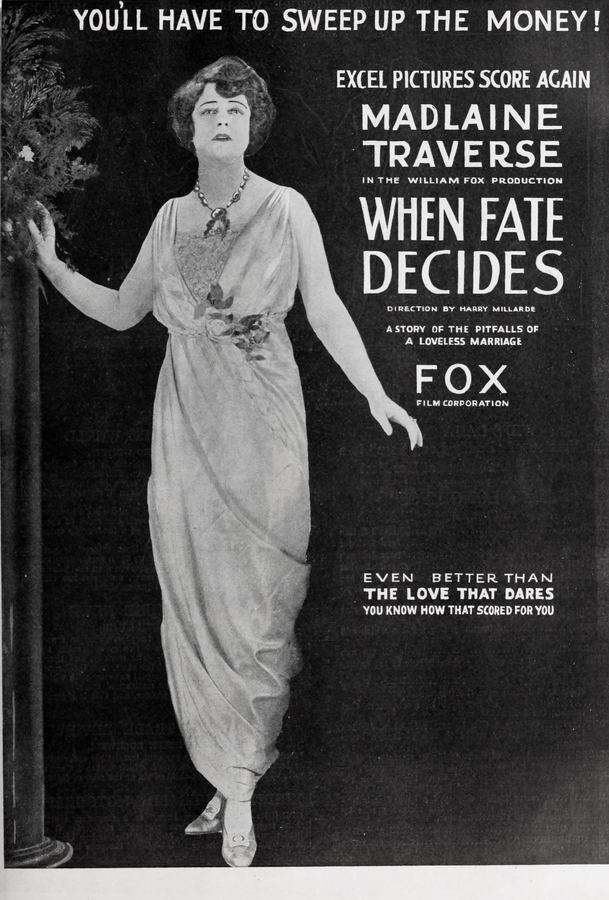
In the annals of early cinema, certain narratives emerge not merely as stories, but as poignant reflections of their time, mirroring the societal anxieties, moral quandaries, and burgeoning desires for autonomy that simmered beneath the surface of seemingly placid lives. 'When Fate Decides' (1919), a compelling drama penned by the insightful duo of Evelyn Campbell and Denison Clift, stands as one such cinematic artifact. It’s a film that, despite its vintage, resonates with a timeless exploration of marital disillusionment, the corrosive effects of infidelity, and the arduous pursuit of justice against a backdrop of grave accusation. This is not merely a tale of a woman trapped; it is a meticulously crafted journey of self-discovery, resilience, and the ultimate triumph of integrity over the machinations of deceit.
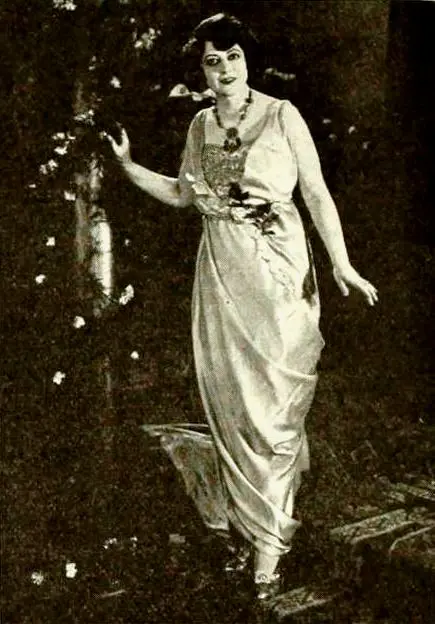
At the heart of this intricate web of human drama is Vera Loudon, portrayed with a nuanced sensitivity by Madlaine Traverse. Vera’s existence is one of stark contrast: outwardly, she possesses the trappings of wealth, yet inwardly, she endures the profound impoverishment of a loveless and deeply humiliating marriage to Herbert Loudon (William Conklin). Conklin imbues Herbert with a repulsive blend of arrogance and hedonism, making his character a stark antagonist from the outset. Herbert is not merely unfaithful; he is brazenly, unapologetically so, parading his affections for Mrs. Alicia Carteret (Claire Du Brey) with an almost theatrical disdain for his wife’s feelings. The dinner party scene, in particular, is a masterclass in silent cinema's ability to convey profound emotional distress without a single spoken word. Vera's quiet dignity, even as her husband openly flirts and disregards her presence, speaks volumes about the societal expectations placed upon women of her era – to endure, to maintain appearances, and to suffer in silence. Traverse’s performance here is a delicate balance of vulnerability and an underlying strength that hints at the formidable character she will ultimately become. Her eyes, often downcast or conveying a deep, aching sadness, are portals into a soul stifled by convention and personal betrayal.
The dynamics of this oppressive marital landscape are not unfamiliar to those acquainted with the social dramas of the period. One might draw parallels with films like Her Husband's Wife, which similarly explores the complexities of marital fidelity and the societal pressures on women, or even Old Wives for New, where evolving marital roles and personal fulfillment begin to challenge established norms. However, 'When Fate Decides' injects a darker, more perilous dimension into these domestic woes, escalating the personal tragedy into a full-blown criminal investigation.
Into Vera's bleak existence steps Donald Cavendish (Clyde Fillmore), a former admirer whose reappearance is both a solace and a catalyst. Fillmore portrays Donald with a commendable blend of chivalry and quiet determination, making him an ideal foil to Herbert's boorishness. Donald witnesses Vera's public humiliation firsthand, a moment of acute empathy that reignites his concern and affection for her. His counsel – a bold suggestion for Vera to abandon her suffocating marriage – is, for its time, a revolutionary thought, challenging the very fabric of social propriety. Vera's initial reluctance is understandable; the societal repercussions for a woman leaving her husband, especially one of Herbert's standing, could be devastating. Yet, Donald's unwavering support plants a seed of defiance within her, a nascent desire for a life free from degradation. The chemistry between Traverse and Fillmore, though subtle, conveys a deep, unspoken understanding and a yearning for a connection that transcends the superficialities of their social circles.
The narrative masterfully employs environmental elements to heighten tension and drive the plot forward. A sudden, torrential rainstorm, a classic cinematic device, forces Donald's automobile to break down, leading him and Vera to seek shelter in a nearby lodge – coincidentally, one owned by the Loudons. This accidental refuge becomes a crucible of fate. The scene where Herbert and Mrs. Carteret unexpectedly arrive, transforming the lodge into a site of potential discovery, is fraught with palpable suspense. The quick thinking and silent coordination between Vera and Donald as they escape unnoticed showcase their growing bond and mutual reliance. The relief of their escape, however, is short-lived. Donald's return to retrieve a forgotten pair of gloves, an seemingly innocuous item, becomes the pivot around which the entire tragedy turns. This seemingly minor detail, a 'MacGuffin' of sorts, escalates into a violent confrontation with Herbert, who, consumed by suspicion and rage, attacks Donald. The ensuing struggle is brief but impactful, leaving Donald to depart without his gloves, unknowingly leaving behind a damning piece of evidence.
The discovery of Herbert Loudon's lifeless body at the lodge plunges the film into the thrilling depths of a murder mystery. The immediate and obvious suspect, of course, is Donald Cavendish. The presence of his gloves at the crime scene, coupled with the known animosity between the two men, creates an almost irrefutable case against him. This narrative turn is a classic trope, designed to elicit both fear for the innocent protagonist and a burning desire for justice. The writers, Campbell and Clift, expertly manipulate audience perception, establishing Donald's innocence through his characterization while simultaneously crafting a compelling circumstantial case against him. The looming threat of an unjust conviction adds a profound layer of urgency and emotional investment to Vera's subsequent actions.
The framing of an innocent party is a narrative device that has captivated audiences for generations, from early thrillers like The Intrigue to more complex crime dramas such as The False Code. 'When Fate Decides' leverages this tension effectively, transforming Vera's personal plight into a quest for absolute truth, not just for Donald's sake, but for her own moral vindication.
It is in the aftermath of Herbert's murder and Donald's subsequent implication that Vera Loudon undergoes her most profound transformation. The passive, suffering wife sheds her skin to reveal a woman of formidable intellect and unwavering resolve. Her journey to uncover the truth is not merely an act of love for Donald, but a desperate assertion of her own agency in a world that has long sought to define and confine her. Vera's detective work is depicted with a surprising degree of realism for its era, focusing on observation, deduction, and an intuitive understanding of human nature. She pieces together clues, revisits scenes, and scrutinizes the behaviors of those around her, ultimately leading her to the real culprit: Mr. Carteret (Henry Hebert). Hebert, though a supporting player, delivers a performance that subtly hints at his character's simmering resentment and vengeful motives, which become clear as Vera unearths his role in the tragedy. His motive, born of the humiliation caused by Herbert's affair with his wife, adds another layer of tragic irony to the narrative, demonstrating how one man's profligacy could unravel multiple lives.
Vera's proactive role is particularly noteworthy. In an age where female characters often served as damsels in distress, her evolution into an active investigator is a testament to the progressive leanings of the script. This echoes a broader shift in cinematic portrayals of women, even if subtly, during the early 20th century, challenging traditional gender roles and hinting at the emergence of stronger, more independent female protagonists. The film effectively argues that the societal expectation for a woman to be a silent sufferer can, under extreme duress, forge an unbreakable will.
Beyond the thrilling plot, 'When Fate Decides' is rich with thematic depth. It is a searing indictment of societal hypocrisy, particularly the double standards applied to men and women in matters of fidelity and public conduct. Herbert's open affair is tolerated, perhaps even gossiped about, but Vera's mere association with Donald, even in innocence, could have ruined her reputation. The film also delves into the unpredictable nature of fate itself, how seemingly random events – a rainstorm, a forgotten pair of gloves – can irrevocably alter the course of lives. The narrative challenges the audience to consider the true meaning of justice, not merely as legal retribution, but as a moral imperative to protect the innocent and expose the guilty, regardless of social standing.
The directorial hand, while not explicitly detailed in historical records as a singular vision, effectively translates Campbell and Clift's intricate screenplay to the screen. The pacing builds steadily, from the slow burn of marital misery to the swift, dramatic turns of the murder investigation. The use of close-ups to convey emotion, a burgeoning technique of the era, is employed to great effect, particularly in capturing Vera’s internal struggles. The supporting cast, including Genevieve Blinn and John Cossar, contribute to the film's atmospheric authenticity, fleshing out the social milieu in which these intense personal dramas unfold. Their performances, though brief, add texture and believability to the world of the Loudons and Carterets.
The film culminates in a satisfying, if hard-won, resolution. Vera's courage not only saves Donald from a wrongful conviction but also frees her from the shackles of her past. Her eventual marriage to Donald Cavendish is not merely a conventional happy ending; it is a profound testament to love forged in adversity, built on mutual respect, shared struggle, and a deep understanding that transcends the superficialities of their previous lives. It signifies a triumph of genuine affection over forced unions and societal expectations. The ending suggests that true happiness is not found in wealth or status, but in authentic connection and the courage to pursue justice and personal liberation.
In a landscape of early cinema that often leaned heavily on melodrama, 'When Fate Decides' distinguishes itself through its robust plot construction, well-defined character arcs, and its willingness to tackle complex moral questions. It's a film that, even a century later, offers a compelling glimpse into the human condition, proving that the battles for love, justice, and personal freedom are indeed timeless. For aficionados of classic cinema, it provides not only entertainment but also a rich historical document of storytelling at the dawn of the moving image. It leaves us pondering the myriad ways 'fate' intercedes, sometimes cruelly, sometimes beneficently, in the intricate tapestry of our lives.
IMDb 5.4
1926
Community
Log in to comment.