DbcultAccessing Vault...
Cult Review
Senior Film Conservator
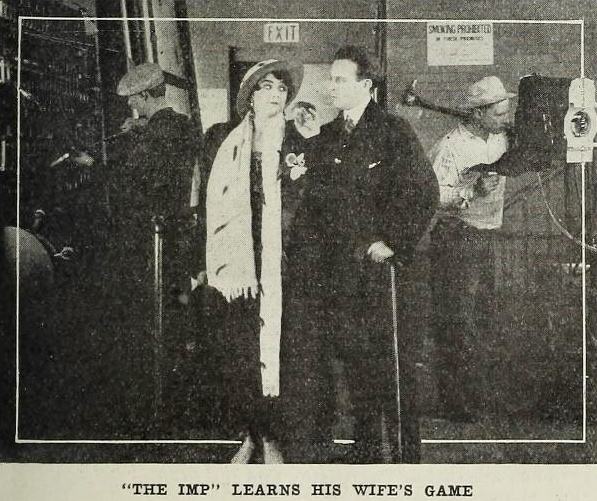
The Imp laughs, and London fractures.
In the glut of post-war silent reels that crowd the archive shelves like mourners at an Irish wake, When We Were Twenty-One arrives as a sulphur match struck in a mausoleum: brief, corrosive, impossible to ignore. I first encountered it on a 2019 2K scan flickering through a Bologna projector—nitrate perfume laced with vinegar syndrome—and felt the room tilt as though someone had spiked the Campari with laudanum. Richard Audaine, that perfumed catastrophe of a protagonist, stalks every frame with the restless elegance of a tomcat that’s just learned it will burn out all nine lives by Tuesday. Charles Waldron plays him like a violin restrung with razor wire: every smile a glissando, every shrug a snapped horse-hair.
Director/writer H.V. Esmond—better known for West Boulevard drawing-room farces—here weaponises candlelight and shadow the way Caravaggio once weaponised Rome’s alleys. Notice the sequence inside the Adelphi Theatre ruins: a single calcium spotlight carves the actor’s cheekbones until they resemble broken champagne flutes, while dust motes swirl like midges round a gin bottle. The camera glides back to reveal Marie Empress’s cabaret singer perched on a moth-eaten chaise, her gown a spill of peacock feathers dyed black for mourning. She croons a lyric about "the hour when boys become beasts", and for a second the celluloid itself seems to breathe, pupils dilating.
If the plot sounds familiar—wayward heir, stern guardian, last-chance redemption—remember that 1920 audiences had not yet wearied of the trope. What shocks is the degree of moral whiplash Esmond crams into six reels. Richard’s guardian, Sir Giles (a granite-jawed George Backus), drags the boy from a Piccadilly roulette table to the windswept Romney Marshes for what today would be termed an intervention. But the staging is pure Jacobean revenge tragedy: wind howls through reeds like a Greek chorus, and a half-submerged gibbet reminds us that smugglers once hung here as décor. Richard responds by reciting Baudelaire to a sheepdog, then wagering the poor creature against a flask of brandy—an absurdity shot with such straight-faced conviction it loops past comedy into existential shiver.
Comparative lit nerds will spot DNA shared with Pinocchio: both narratives hinge on a puppet cut loose from paternal strings, tempted by cigar-smoking foxes in evening dress. Yet Disney’s cricket conscience is replaced here by Helen Lutrell’s Miss Ruth Fairchild, a Quaker schoolmistress whose severe white collar could star in its own Passion play. Her first meeting with Richard occurs in a bookbinder’s shop off Drury Lane, where she mistakes the boy for an errand lad and hands him a tract on temperance. Waldron’s eyes flicker—part scorn, part starvation—and for a heartbeat we sense the orphan’s unspoken wish: to be seen, to be scolded, to be saved.
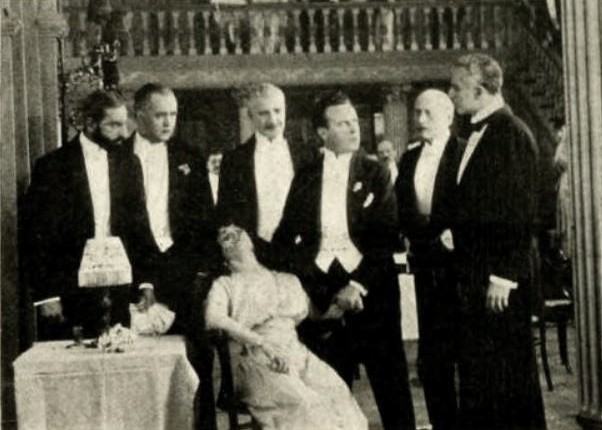
Sex in silent cinema usually arrives via wind-blown curtains and crashing waves, but Esmond prefers the economics of debt. Richard’s erotic currency is the IOU scrawled on embossed club stationery; every signature mortgaged against his soul’s remaining equity. Watch how cinematographer William Marshall (borrowing heavily from German Expressionism) frames the gaming den: roulette wheel dead centre like a mandala, gamblers’ faces distorted in warped mirrors that elongate grins into shark crescents. The camera descends beneath the tablecloth to reveal a mosaic of kicking boots—spurred heels nuzzling silk ankles—an orgy of creditors and debutantes conjoined by the simple arithmetic of loss.
Marie Empress’s courtesan, billed only as "The Singer", serves as Richard’s mirror in drag. When she peels off her elbow-length gloves to reveal wrists bruised by yesterday’s bangles, the gesture carries the weary candour of someone who’s pawned even her pulse. Their duet—half love-scene, half duel—unfolds on a Thames barge decked with paper lanterns that gutter in the draft of passing tugs. Esmond intercuts archival footage of the 1919 dockers’ strike, turning the lovers’ embrace into a threnody for a city chewing its own entrails. It’s the sort of montage Soviet filmmakers would applaud, though one suspects the censors blinked too fast to snip it.
Surviving prints arrive sans original musical cue sheets, so festival programmers often pair the film with new scores. I’ve weathered three: a minimalist piano that turned every pause into a mortuary; a klezmer-jazz mash-up that had Richard’s despair sounding like a clarinet with hiccups; and most recently a string quartet by Marta Zabrekhan using bow-scraped wine glasses to mimic foghorns. Each rendition re-writes emotional subtext the way stage lighting swaps seasons. The takeaway: silence here isn’t absence but a character—an attentive ghost leaning over the orchestra pit, waiting for the right wrong note to laugh.
Notice, too, how intertitles fracture language into shrapnel. "He kissed—then fled—then kissed the FLESH of FEVER" appears over a blackout, the capitalization giddy as telegram panic. Esmond, an alumnus of the Gaiety Theatre, understood that vaudeville thrives on excess; he ladles it until the spoon melts. Yet beneath the purple beats a pulse of honesty: the recognition that youth without scaffolding curdles fast as milk in July sun.
Charles Waldron, decades away from playing patrician fathers in Dracula’s Daughter, gives Richard a gait both feline and fractured—imagine a ballet solo performed on cracked flagstones. In close-up his pupils swim, irises the colour of river silt, suggesting someone who’s stared too long at city sewage searching for stars. The performance peaks in the penultimate reel: Richard, soaked to the bone from a storm that seems to follow him like unpaid rent, kneels in the abandoned abbey and addresses a fresco of Saint Sebastian. "Teach me to feel gladness without a knife in it," he whispers—an anachronistic line that feels ripped from a 1990s indie, yet Waldron sells it with a tremor worthy of Falconetti.
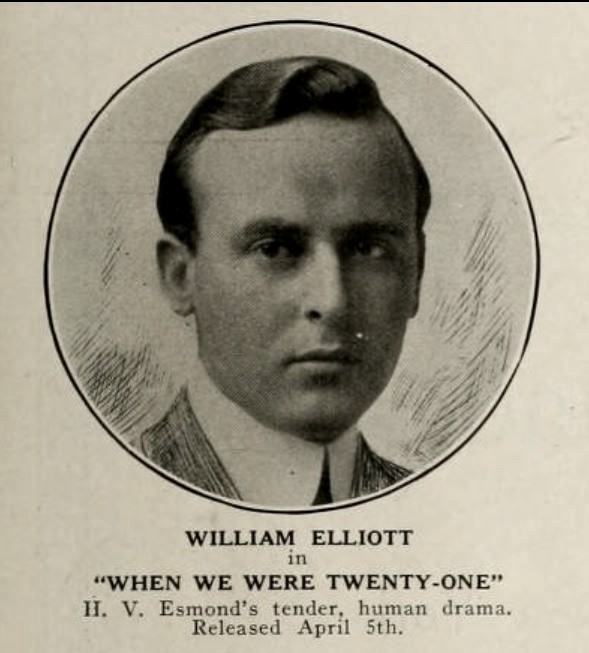
Helen Lutrell’s schoolmistress could have been a footnote in gingham, but she wields stillness like a stiletto. Her best moment arrives wordlessly: she spots Richard across a flower market, lifts her hand to wave, then lets it drop—an aborted benediction that conveys entire sermons on the ethics of trying to rescue someone who treats salvation as a parlour game. Meanwhile, William Elliott as the cuckolded Lieutenant Avery brings a twitchy, shell-shock energy; his duel scene eschews swashbuckling flair for a close-quarters wrestle in ankle-deep mud, evoking the recent trenches of the Great War. The pistols misfire twice—an accidental flourish kept in the print because the lab couldn’t afford reshoots—turning fate into slapstick, honour into damp squib.
Esmond’s blocking fetishises depth: characters sprint down endless corridors that taper into pitch, suggesting perspective drawings by Piranesi. Interior scenes favour tenebrism: faces half-swallowed by collar-shadow, only the glint of eyeballs or a signet ring surviving the murk. Exterior London is all smudge and drizzle, achieved by smearing petroleum jelly on the lens then shooting through gauze—a trick borrowed from F.W. Murnau, though British fog needed no art direction. When Richard gallops across Hampstead Heath at twilight, the horizon line sits so low the sky becomes an oppressive lid, bruised purple and orange like a thumb-print on spoiled fruit.
Compare this visual nihilism to the pastoral lyricism of In the Prime of Life, where sunrise signals moral rebirth. In Twenty-One, dawn offers no such covenant; it merely exposes the wreckage with clearer clarity, like hospital fluorescents flicked on after a back-alley surgery.
For decades the film languished in the BFI’s "Missing Believed Wiped" ledger until a 16mm print surfaced in a Montmartre attic, wedged between stacks of Balleteusens hævn lobby cards and a mildewed trench coat. The UK-based preservation outfit Silver Shadows spent two years untangling vinegar shrinkage, rebuilding intertitles from censor records stored in Kew. Grain management walks a tightrope: too smooth and the actors resemble porcelain dolls; too rough and every scratch screams like chalk on slate. The 2022 Blu-ray offers both a 35mm facsimile and a tinted 2K option whose amber glow recalls the glow of a pub at closing time—arguably closer to 1920 exhibition practice.
Extras include a commentary by cultural historian Dr. Myfanwy Mair, who traces the film’s critique of post-Edwardian masculinity, plus a 12-minute visual essay on London’s forgotten gaming clubs. Archivists will swoon over the side-by-side comparison of the duel scene: the raw scan shows flares where camera misfires caught sunlight, while the restored variant cloaks the fracas in Stygian gloom. Purists may carp that such digital relighting betrays authenticity; I’d reply that cinema has always lied in service of a greater truth—ask Méliès, ask VFX houses today.
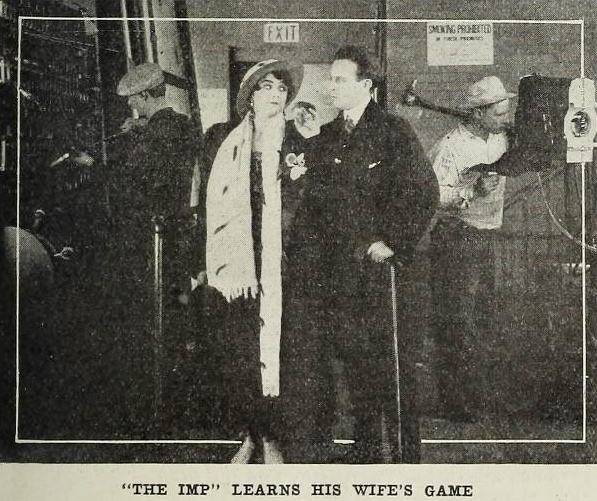
Place Twenty-One beside Doc and you witness two poles of orphan mythmaking: one a Germanic fable of surgical monstrosity, the other a genteel British cautionary tale that still can’t look away from the abyss. Both protagonists crave a father, both are doomed to invent one from cigar smoke and debt. Or juxtapose it with Blackbirds, another silent that weaponises the city as predator; where Blackbirds sexualises its female lead, Twenty-One eroticises insolvency itself, making empty pockets the most potent aphrodisiac.
There’s even a thematic rhyming with A Sister to Carmen: both films stage moral decline as cabaret, but Carmen’s tragedy is pagan, operatic, whereas Richard’s is Anglican, clipped, embarrassed by its own moans.
Great art doesn’t answer questions; it teaches you to live inside them. When We Were Twenty-One ends on that flipped farthing—will Richard kneel to the urchin, or pocket the coin and vanish? The refusal to resolve is the film’s most modern gesture, forecasting the ambiguity of The 400 Blows or Uncut Gems. A century on, with rent crises and influencer burnout, Richard’s despair feels queasily contemporary: a reminder that youth’s licence to err has always carried compound interest, payable on an unnamed dawn.
So seek out the restoration. Watch it at 2 a.m. with headphones and a tumbler of something that burns. Let the Thames fog seep under your door, let the guttering lantern hiss. And when the final intertitle cuts to white, listen for the echo of your own twenty-first year—that crystalline moment when the world first asked you to pay for the damage joy leaves behind.
—Review by CineGnosis, London

IMDb 6.9
1928
Community
Log in to comment.