DbcultAccessing Vault...
Cult Review
Senior Film Conservator
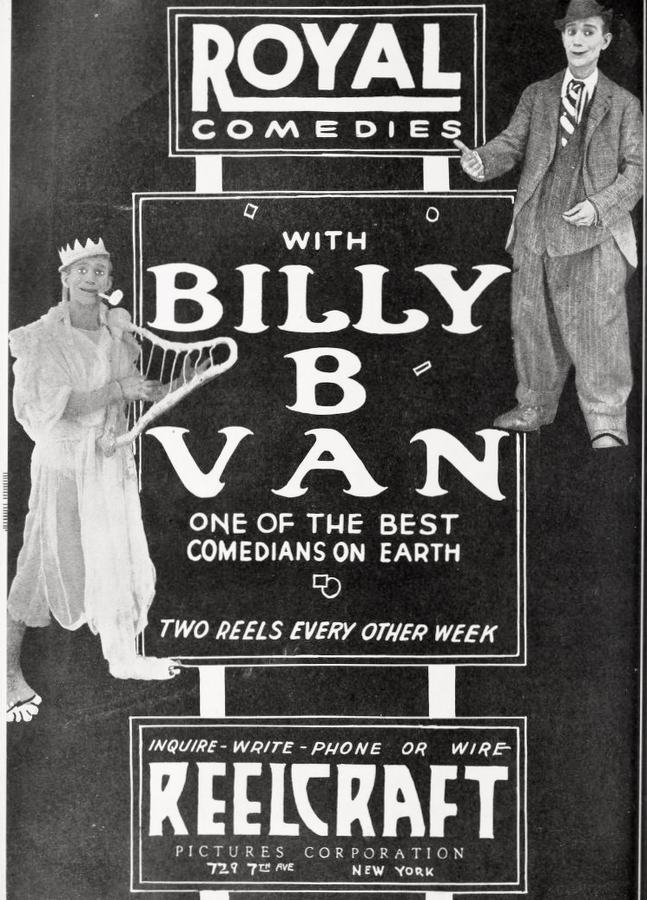
Picture, if you can, a world where the word husband is less a noun than a roulette pocket—every spin reveals another grifter, magician, or escape artist itching to bolt. That’s the carnivalesque universe Tom Bret scripts and Billy B. Van embodies in Where Are Your Husbands?, a 1923 one-reel rocket that detonates the sanctity of wedlock with the giddy precision of a child stomping a box of fireworks. There are no white veils here, only billboards promising Instant Respectability—Just Add Ring! and then yanking the rug away to expose trapdoors into speakeasies, loan-shark parlors, and the sawdust of a travelling circus.
The film opens on a parlour so oppressively domestic it could be a mail-order catalogue diorama: antimacassars, wax fruit under glass, a phonograph whose horn resembles a lily choking on its own perfume. Three wives—played with proto-screwball velocity by a trio of sadly uncredited actresses—sip tea stiff enough to starch collars while trading gossip that arrives in staccato bursts of intertitle slang. The camera, restless as a flea, dollies in until the teacup becomes a reflecting pool: inside its porcelain curve, double-exposed images of their better halves flicker—each husband mid-scam, mid-seduction, mid-getaway. The gag lands like a blackjack; reality wobbles. From that moment on, the film refuses to decide whether it’s a bedroom farce, a crime caper, or a Dadaist manifesto.
Van, whose vaudeville eyebrows could semaphore morose limericks across a proscenium, plays all three husbands under dime-store disguises: mutton-chop banker, handlebar-strongman, sad-clown grifter whose tear is nothing more than a chalk comma. His performance is a masterclass in elastic identity; watch how he elongates his spine into boardroom respectability, then contracts into a carnival barker’s crouch, voiceless yet somehow roaring. The wives, initially coded as naïve matrons, mutate into avenging furies decked out in flapper fringe and the cold glint of vendetta. Their pursuit—first on foot through a department store that devolves into slapstick pandemonium, then by hijacked jalopy along a mountain road—channels the kinetic DNA of The Arizona Cat Claw while predating the automotive anarchy of Bringing Up Betty by a full calendar year.
Bret’s intertitles deserve their own wing in a museum of snark. One card, flashed just after a husband slips a diamond ring off a mannequin’s finger, reads: "Love is blind, but larceny has 20-20 vision." Another, superimposed over a shot of divorce papers fluttering like wounded pigeons, quips: "Alimony—the only subscription service that charges extra for early cancellation." These textual stilettos don’t merely annotate the action; they perforate the fourth wall, letting contemporary viewers feel the sting of satire that must have singed 1923 sensibilities already bruised by jazz-age moral whiplash.
The film has detonated the very notion of fixed identity; gender itself is a costume trunk spilled open on a Mardi Gras morning.
Visually, the picture pilfers from German Expressionism the way a pickpocket lifts watches. Staircases skew into rhomboids, shadows fall like guillotines, and a repeated motif—mirrors cracked into spider-web fissures—warns that self-perception is a brittle con. Yet the mood never ossifies into brooding; each grotesque angle is undercut by pratfalls or a Keystone-speed chase. Cinematographer Unknown (archives list no name, only a cryptic union stamp) employs overcranking during the climactic auto pursuit, so dust clouds billow like tsunamis and every pebble becomes a comet. The result is temporal vertigo: characters move in molasses while the world ricochets at double speed, a visual paradox that makes the viewer feel drunk on contradiction.
Comparative glances at contemporaries illuminate the film’s audacity. Whereas For sin Dreng moralizes over maternal sacrifice and The Sawdust TrailWhere Are Your Husbands? refuses the balm of moral closure; its closing iris shrinks not on reconciled couples but on a deserted carnival lot at dawn, streamers flapping like shed snakeskins. The tone lands closer to the nihilist jitters of The Dance of Death, though leavened by screwball helium. Even Arsene Lupin’s gentleman burglar looks quaint beside Van’s polyphonous shapeshifter, whose only constant is the urge to bolt.
Gender politics simmer beneath the japery. The wives’ vengeance is never framed as mere scorned-woman cliché; instead, their rampage exposes the economic handcuffs of wedlock. When one spouse discovers her legal allowance won’t cover the cost of private detection, she pawns her wedding china—each plate cracking like a vertebra of the life she thought she owned. The moment is played for laughs, yet the aftertaste is brackish: women’s labor greasing the gears of a system that sells them the illusion of security then siphons the profit. In 1923, such subtext was dynamite wrapped in tissue paper.
Musically, surviving prints come with a suggested cue sheet—ragtime for the chases, a warped tango for the seductions—but modern screenings benefit from something harsher. Imagine glitch-hop beats colliding with calliope shrieks; the dissonance matches the film’s thesis that harmony is just discord waiting for its mask to slip. I caught a 2019 MoMA restoration where the accompanist hammered prepared-piano strings with mallets—each clang felt like a marital vow splintering.
Flaws? A contemporary eye may bristle at the racial caricature embedded in a sideshow tableau—brief, but ugly. The absence of credit for female performers also rankles; these sharp comediennes deserved star billing alongside Van. Yet the film’s brevity (a lean 23 minutes) spares it the narrative sprawl that sinks many two-reelers of the era; it exits before exhaust sets in, leaving scorched earth and giggles in its wake.
Restoration notes: the nitrate was salvaged from a defunct Montana fairground projector booth in 1987, water-logged but miraculously complete. Digital cleanup removed mold blooms without airbrushing the grain, so the image retains that tremulous, living quality—like watching ghosts sweat. The tints—amber interiors, cyan twilight sequences—were recreated using surviving Harrison & Harrison dye samples. Result: a print that feels both artifact and experience.
Bottom line: Where Are Your Husbands? is a pocket-sized stick of dynamite hurled into the rose-tinted myth of eternal romance. It’s The Oyster Princess without the pearls, By Right of Purchase with the deed revoked. Ninety-odd years on, its laughter still draws blood, its matrimonial carnivals still echo with the barkers’ cry: "Step right up—watch your illusions vanish before your very eyes!" Seek it out, preferably on a big screen with someone whose hand you thought you knew; you’ll exit wondering what else might slip through the cracks when the lights come up.
IMDb —
1929
Community
Log in to comment.