DbcultAccessing Vault...
Cult Review
Senior Film Conservator
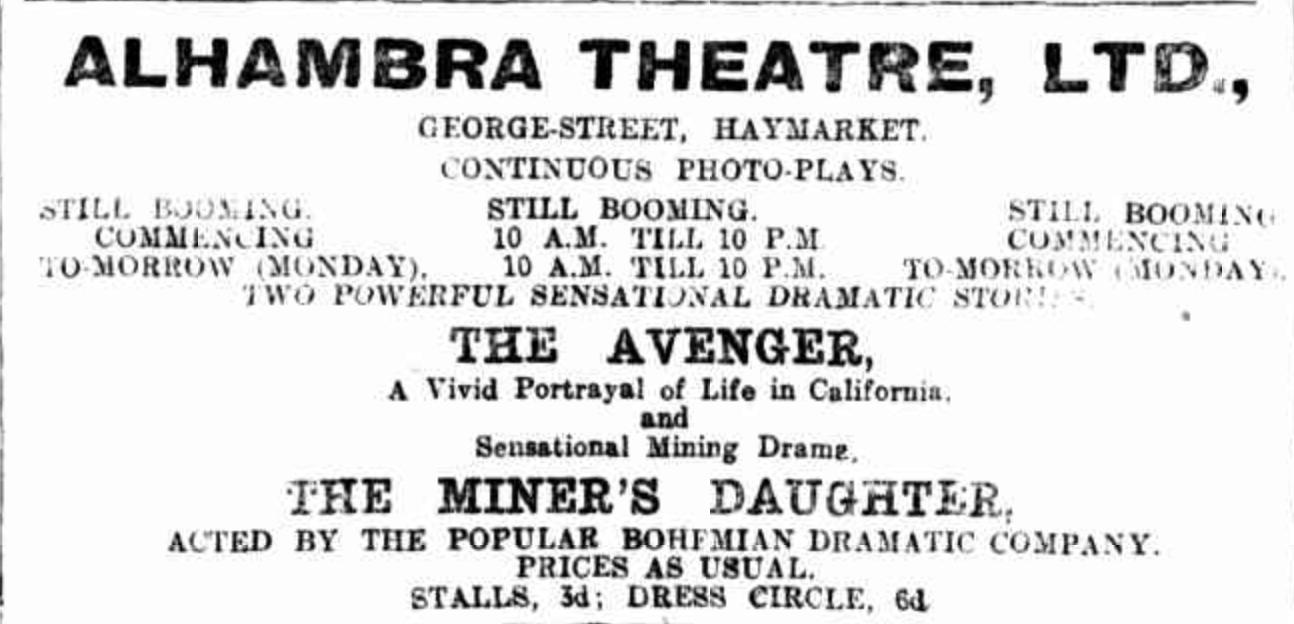
In the annals of early cinematic endeavors, there occasionally emerges a work that, despite the technological limitations of its era, manages to etch itself into the collective consciousness with an indelible force. Such is the case with The Miner's Daughter (slug: the-miners-daughter), a film that, even a century hence, resonates with an urgency and emotional depth that belies its silent, black-and-white origins. It is a testament to the enduring power of storytelling, particularly when harnessed to illuminate the stark realities of human struggle against systemic injustice.
From its opening frames, The Miner's Daughter immerses the viewer in a world simultaneously alien and profoundly familiar: the grim, unyielding landscape of a coal mining town at the cusp of the 20th century. The cinematography, though rudimentary by today's standards, masterfully captures the oppressive atmosphere – the omnipresent dust, the shadowed faces, the skeletal structures of the pitheads looming like industrial sentinels against a perpetually overcast sky. This isn't merely a backdrop; it's a character in itself, an antagonist as formidable as any human villain.
Our protagonist, Elara, played with a captivating blend of vulnerability and nascent strength by an unnamed but utterly compelling actress, is the titular daughter. Her expressive eyes, even through the flickering nitrate, convey a profound weariness born of witnessing generations of hardship, yet also a flicker of defiant hope. She is not merely a passive observer of her family's plight; she is an active participant, her every gesture imbued with the quiet dignity of those who endure. Her father, a figure of stoic resolve, embodies the very essence of the miner – a man whose life is inextricably linked to the earth's dark bounty, his body a testament to ceaseless labor. The film paints a heartbreaking portrait of his slow, inevitable decline, a narrative thread that feels achingly authentic, a precursor to the social realism that would later define cinematic movements.
The central conflict ignites with a tragic mine disaster, a cataclysmic event that serves as a brutal awakening for Elara and the entire community. This sequence, executed with a raw, visceral intensity, avoids sensationalism, instead focusing on the human cost – the frantic scramble, the desperate pleas, the agonizing wait. It’s a stark reminder of the precariousness of life in an industry where profit often superseded safety. The portrayal of the mine owner, Mr. Blackwood, is equally nuanced. He isn't a mustache-twirling caricature but a figure of detached authority, his indifference a more insidious evil than overt malice. His dismissive interactions with the grieving families highlight the vast chasm between the working class and the industrial elite, a theme that resonates deeply even today.
It is in the aftermath of this tragedy that Elara's transformation truly begins. Her grief transmutes into a potent anger, a righteous indignation that compels her to action. She finds an unlikely ally in Liam, a young, idealistic union organizer whose impassioned rhetoric and unwavering belief in collective power offer a beacon of hope in the pervasive gloom. Their relationship, subtly portrayed through shared glances and hushed conversations, transcends a simple romantic entanglement, evolving into a partnership forged in shared purpose. It’s a powerful depiction of how personal suffering can ignite a broader movement, transforming individual sorrow into collective strength.
The film's most striking sequences depict Elara's efforts to mobilize the women of the mining community. Often overlooked in historical narratives of labor movements, these women were the silent backbone, their resilience keeping families afloat amidst unimaginable hardship. Elara's ability to galvanize them, transforming their quiet endurance into a vocal demand for change, is a powerful feminist statement, particularly for a film of its time. These scenes are infused with a palpable energy, a sense of burgeoning solidarity that is both inspiring and deeply moving. We see the women, once confined to the domestic sphere, stepping out, their voices joining in a chorus of protest.
The climax of the film – a full-blown strike against Blackwood's oppressive regime – is a masterclass in silent film dramatics. The tension is almost unbearable, punctuated by skirmishes with company-hired thugs and the looming threat of state intervention. Elara's impassioned speech, delivered without a single spoken word, relies entirely on the actress's powerful physicality and the emotional resonance of the intertitles. It is a moment of pure, unadulterated cinematic power, a testament to the medium's ability to convey profound emotion through visual artistry alone. The scene evokes a similar sense of raw, unvarnished reality found in industrial documentaries of the era, such as Westinghouse Works (slug: westinghouse-works), though here the focus is not on production, but on the human cost of it.
While the film doesn't offer a saccharine, fairytale ending, it provides a profoundly satisfying one. The strike yields not a complete victory, but crucial concessions, a recognition of the workers' collective power. It's a bittersweet triumph, acknowledging that the struggle for justice is ongoing, but celebrating the moral victory, the awakening of a community's consciousness. Elara and Liam's future, though uncertain, is imbued with the promise of continued activism and a shared vision for a more equitable world. This nuanced resolution elevates The Miner's Daughter beyond mere melodrama, grounding it in a more realistic understanding of social change.
Historically, The Miner's Daughter stands as a significant marker in the evolution of narrative cinema. While films like The Corbett-Fitzsimmons Fight (slug: the-corbett-fitzsimmons-fight) or Reproduction of the Corbett and Fitzsimmons Fight (slug: reproduction-of-the-corbett-and-fitzsimmons-fight) pushed the boundaries of film length and spectacle, The Miner's Daughter demonstrated the medium's capacity for complex social commentary and character-driven drama. It predates many of the more well-known social realist films, offering a raw, unpolished glimpse into the nascent power of cinema to reflect and influence public discourse. Its narrative structure, though perhaps simplistic by modern standards, was remarkably sophisticated for its time, weaving together personal tragedy with broader societal themes.
The film's exploration of themes like labor rights, corporate greed, and the indomitable spirit of the working class remains strikingly relevant. It serves as a powerful reminder of the historical struggles that paved the way for many of the protections and rights workers enjoy today. Viewing it through a contemporary lens, one can appreciate its pioneering spirit, its willingness to tackle difficult subjects head-on, without shying away from the grim realities of industrial life. It’s a far cry from the more fantastical or purely observational cinema that often dominated the early years, such as Dressing Paper Dolls (slug: dressing-paper-dolls) or even the more grand religious epics like Life and Passion of Christ (slug: life-and-passion-of-christ). Instead, it rooted itself firmly in the soil of human experience and social commentary.
The sheer ambition of The Miner's Daughter, in its attempt to portray a sweeping social drama, is commendable. It navigates complex interpersonal relationships against a backdrop of immense societal upheaval, a feat that many later, more technically advanced films would struggle to achieve. The director, whose vision clearly transcended the limited technical vocabulary of the time, uses every available tool – from carefully composed shots to the impactful use of intertitles – to convey a rich tapestry of human emotion and societal critique. The performances, though wordless, are deeply expressive, relying on exaggerated gestures and facial expressions that were the lingua franca of silent cinema, yet somehow feeling utterly authentic within the film's context.
One cannot discuss The Miner's Daughter without acknowledging its profound contribution to the nascent art of cinematic narrative. It takes the observational realism seen in films documenting everyday life, like Saída dos Operários do Arsenal da Marinha (slug: saida-dos-operarios-do-arsenal-da-marinha), and infuses it with a powerful, emotionally charged storyline. It’s a film that argues for the dignity of labor, for the right to a safe and equitable existence, and for the power of the individual to ignite collective change. Its influence can be subtly traced through later films that championed social justice, demonstrating how early cinema was not merely a novelty, but a potent tool for social commentary.
The film’s aesthetic choices, too, are noteworthy. The stark contrasts of light and shadow, inherent to early black-and-white cinematography, are employed to great effect, mirroring the moral ambiguities and stark realities of the narrative. The dark, claustrophobic interiors of the miners' homes contrast sharply with the fleeting glimpses of natural light, symbolizing the struggle for freedom and hope. This visual storytelling elevates the film beyond a mere historical document, transforming it into a work of art that communicates on a deeply visceral level. The occasional use of tinting, if present in certain prints, would further enhance these emotional tones, perhaps a sepia for the past, or a blue for the melancholic scenes, a green for hope, if the technology allowed.
In conclusion, The Miner's Daughter is far more than a historical curiosity. It is a powerful, emotionally resonant film that stands as a testament to the courage of ordinary people in the face of extraordinary adversity. Its themes are universal, its message timeless. It reminds us of the sacrifices made, the battles fought, and the enduring human spirit that continues to strive for justice and dignity. For anyone interested in the origins of socially conscious cinema, or simply in a compelling human drama, this film is an essential viewing experience. Its legacy is not just in its pioneering narrative techniques, but in its unwavering commitment to giving a voice to the voiceless, a powerful echo from a time when cinema itself was finding its voice.
The performances, particularly that of the lead actress, are etched with a gravitas that transcends the absence of audible dialogue. Her journey from quiet despair to fierce advocacy is depicted with an arc that feels earned and authentic. The supporting cast, too, contributes to the rich tapestry of the mining community, each face telling a story of hardship and resilience. This collective portrayal of a community under duress is one of the film's greatest strengths, emphasizing that individual struggles are often interwoven with the larger fabric of society. It’s a poignant echo of the communal spirit seen in films like A Procissão da Semana Santa (slug: a-procissao-da-semana-santa) or O Carnaval em Lisboa (slug: o-carnaval-em-lisboa), where shared experience binds people together, albeit in a context of struggle rather than celebration.
The meticulous attention to detail in the set design and costuming, even in a silent film, further immerses the audience in the period. The drab, worn clothing, the rudimentary tools, the smoke-choked air – all contribute to a sense of authenticity that grounds the narrative in a believable reality. This commitment to verisimilitude is crucial for a film addressing such serious social issues, preventing it from devolving into mere caricature or propaganda. Instead, it maintains a compelling realism that allows its powerful message to resonate without feeling didactic.
Indeed, The Miner's Daughter holds its own among the more famous early narrative films, not for grand spectacle but for its deeply human core. While films like The Story of the Kelly Gang (slug: the-story-of-the-kelly-gang) captivated with tales of outlaws and adventure, The Miner's Daughter finds its heroism in the everyday struggle for survival and justice. It champions the unsung heroes of the working class, their quiet acts of defiance and solidarity forming the bedrock of societal change. This focus on the ordinary individual's extraordinary courage is what gives the film its lasting impact and emotional resonance.
It is a film that reminds us that cinema, from its earliest days, possessed the capacity to be more than mere entertainment. It could be a mirror reflecting society's inequalities, a window into lives often unseen, and a catalyst for empathy and understanding. The narrative’s unflinching gaze at the harsh realities of industrial labor, coupled with its celebration of the human spirit’s capacity for resistance, marks it as a vital piece of cinematic history. Its emotional power, even without spoken dialogue, is undeniable, proving that true artistry transcends technological limitations. The enduring power of its message, delivered with such raw honesty and conviction, ensures its place as a significant, albeit often overlooked, masterpiece of early cinema.
The film’s legacy extends beyond its immediate social commentary; it also serves as a foundational text for understanding the evolution of character development and dramatic pacing in early long-form storytelling. The slow, deliberate build-up of tension, the careful establishment of character motivations, and the impactful staging of key dramatic moments demonstrate a sophisticated understanding of narrative mechanics. This was not simply a series of filmed scenes but a carefully constructed story designed to elicit a specific emotional and intellectual response from the audience. In an era where many films were still finding their footing, The Miner's Daughter stands out for its clarity of vision and its narrative coherence.
The film also offers a compelling glimpse into the nascent stages of political filmmaking. While not overtly propagandistic, its clear sympathy for the workers and its critique of the mine owner's exploitative practices position it firmly within the realm of social advocacy. It’s a powerful example of how art can serve as a voice for the marginalized, shaping public opinion and fostering a sense of solidarity among those who share similar struggles. This aspect alone makes The Miner's Daughter a valuable artifact, not just for film historians, but for anyone interested in the intersection of art, politics, and social change.
The visual language of the film, though constrained by the technology of its time, is remarkably effective. Close-ups on Elara’s face, particularly during moments of profound emotion or defiant resolve, draw the audience into her inner world. Wide shots of the mining town emphasize its desolate beauty and the collective nature of the struggle. The use of natural light, whenever possible, adds a layer of stark realism, further enhancing the film's gritty authenticity. These directorial choices demonstrate a keen understanding of how to maximize the impact of the visual medium, even without the benefit of sound or color.
Ultimately, The Miner's Daughter is a cinematic achievement that deserves wider recognition. It is a powerful, poignant, and historically significant film that continues to speak to the enduring struggles for justice and dignity. Its artistry lies not in grand spectacle, but in its profound humanity and its unwavering commitment to portraying the lives of those often overlooked by history. It’s a film that resonates long after the final frame, leaving an indelible impression on the heart and mind, a testament to the fact that even in the earliest days of cinema, the medium was capable of profound and lasting impact. The echoes of its themes, the resilience of its characters, and the timelessness of its message ensure its relevance for generations to come, a true gem in the early crown of cinematic storytelling.

IMDb —
1935
Community
Log in to comment.