DbcultAccessing Vault...
Cult Review
Senior Film Conservator
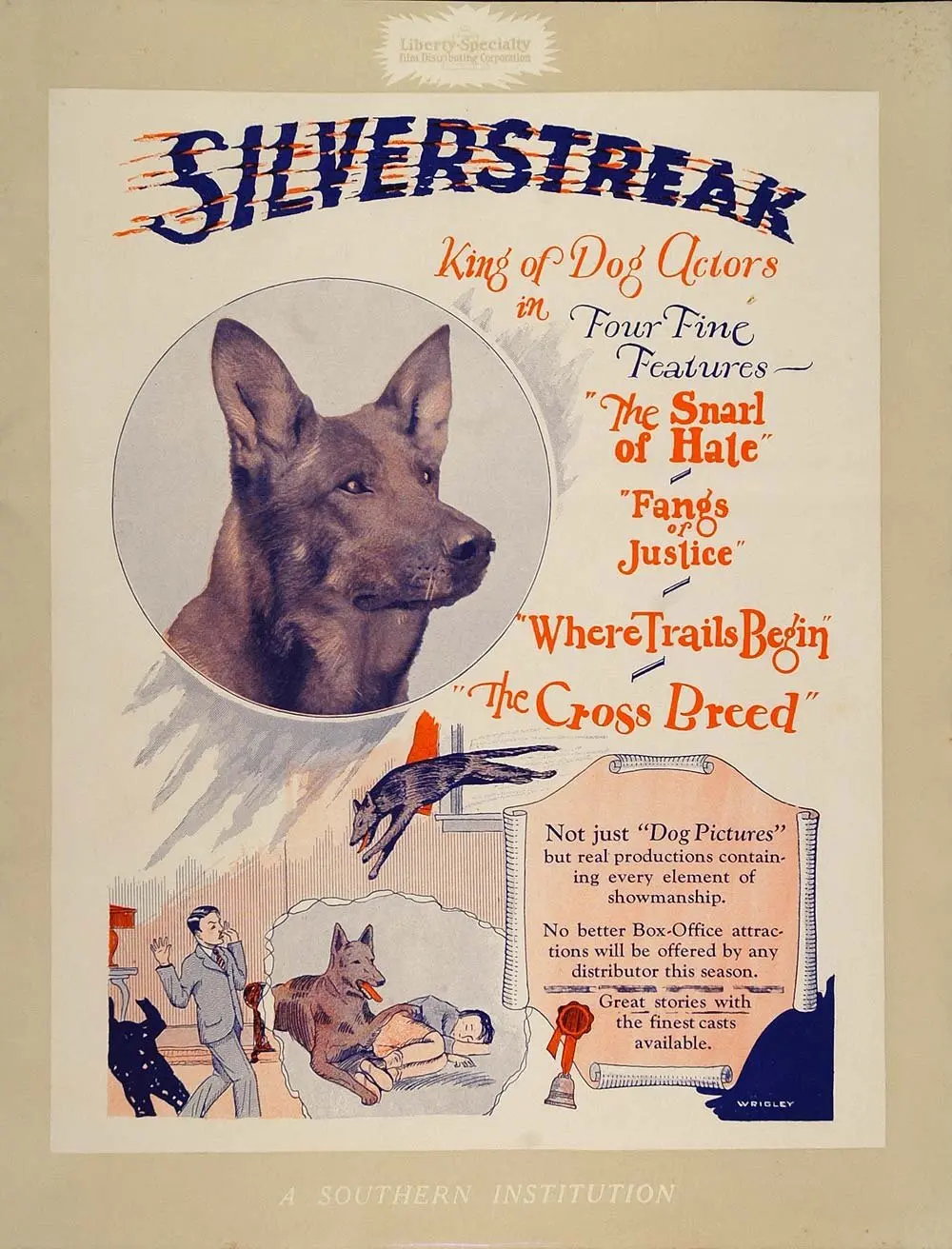
Is this film worth watching today? Short answer: yes, but only if you have a genuine appreciation for the unvarnished pulp of the silent era and the peculiar charm of canine-led action sequences. It is not a high-concept drama, but rather a functional, high-energy artifact of 1920s B-movie craftsmanship.
This film is specifically for historians of the Western genre and fans of legendary animal actors like Silver Streak. It is absolutely not for those who require modern pacing, complex dialogue, or a narrative that doesn't rely on the 'dog saves the day' trope every fifteen minutes.
1) This film works because Silver Streak possesses more screen presence and emotional range than most of the human cast combined.
2) This film fails because the human subplots, particularly the romantic tension, feel like placeholders between the action beats.
3) You should watch it if you want to see the DNA of the modern action-adventure hero in its most primitive, canine form.
In 1927, the cinema was undergoing a quiet revolution, but in the world of the Western, the formula remained king. Where Trails Begin is a fascinating study in how a production can be elevated by a single non-human element. Silver Streak was a direct competitor to Rin Tin Tin, and in this film, his athleticism is nothing short of breathtaking. There is a specific sequence where the dog navigates a crumbling cliffside to deliver a message that is more tense than any of the gunfights involving Johnnie Walker. The camera, handled with a rugged efficiency, lingers on the dog’s paws and eyes, creating a level of empathy that the script fails to provide for the human characters.
Unlike the more polished drama found in films like The Living Image, or the Lady of Petrograd, this movie doesn't care about the psychological interiority of its leads. It cares about movement. It cares about the chase. The direction by the uncredited hand (often attributed to the producers' influence) ensures that the landscape is treated as an obstacle course rather than a setting. This gives the film a kinetic energy that many of its contemporaries lacked. It is raw. It is fast. It is unapologetically simple.
Johnnie Walker plays the lead with a stoicism that borders on the wooden. While he looks the part of the frontier hero, his performance lacks the nuanced desperation we see in later silent masterpieces or even the gritty realism of Downfall. However, the film finds its human heartbeat in the comedic relief provided by Hughie Mack. Mack, a veteran of the silent screen, uses his physicality to offset the grim stakes of the plot. His interactions with Silver Streak provide the film’s only moments of genuine warmth, suggesting a hierarchy of character where the dog is first, the comedian is second, and the hero is a distant third.
The villainy of Albert J. Smith is another highlight. Smith doesn't just play a bad guy; he plays a predatory force of nature. His performance is a masterclass in the 'silent heavy' archetype—all squinted eyes and aggressive posture. When he shares the screen with Charlotte Stevens, the tension is palpable, though Stevens is unfortunately relegated to the 'damsel in distress' role that was so prevalent in films like The Grip of Evil. It is a shame the writers didn't give her more to do, as her brief moments of defiance suggest an actress capable of much more than just screaming for help.
The writing by Ben Allah and Samuel Bischoff is, to be blunt, a series of convenient accidents tied together by title cards. The plot relies heavily on characters happening to be in the right place at the right time, or more often, the dog knowing exactly where the villain’s secret hideout is located without any logical explanation. This lack of narrative rigor is common in the era, but it stands in stark contrast to the more tightly woven stories found in No Man's Woman. In Where Trails Begin, the trail doesn't just begin; it meanders through a valley of clichés.
One particularly egregious example of this is the climax, where the resolution of the land dispute is handled with a single title card explaining a legal loophole that hadn't been mentioned in the previous forty minutes. It’s lazy. It’s frustrating. But strangely, it doesn't kill the film's momentum. The audience isn't here for the legalities of frontier land-lending; they are here to see Silver Streak tackle a man off a moving horse. On that front, the film delivers with visceral impact. The dog is the star. The humans are just the scenery.
Technically, the film is a product of its budget. The cinematography captures the vastness of the outdoors with a clarity that suggests a high-quality lens was used, but the interior sets are noticeably flimsy. You can almost see the walls shake when a door is slammed. This creates a jarring disconnect between the 'real' world of the mountain chases and the 'fake' world of the town offices. This is a common flaw in B-Westerns of the time, yet it adds a layer of unintentional surrealism that modern viewers might find charming.
The pacing is where the film truly struggles. At roughly an hour, it should feel like a sprint, but the middle section gets bogged down in repetitive dialogue cards. If you compare the editing here to the fluid visual storytelling of Parisette, the deficiencies become clear. Where Trails Begin is a blunt instrument. It hits hard when it needs to, but it lacks the finesse of the era's more prestigious outputs. It works. But it’s flawed.
Where Trails Begin is worth watching if you are interested in the evolution of action cinema and the history of animal performers. It provides a raw look at the transition period of the late silent era where spectacle began to trump story. If you enjoy seeing a very smart dog outsmart a group of grown men, you will find immense value here. However, if you are looking for a deep narrative or complex character arcs, you will likely be disappointed by its reliance on genre tropes.
Where Trails Begin is a fascinating, if somewhat clunky, piece of cinematic history. It isn't a masterpiece, and it doesn't try to be. It is an honest, hardworking B-movie that knows exactly what its audience wants: a hero to cheer for, a villain to hiss at, and a dog that can do things most humans can't. While it lacks the sophistication of I Have Killed or the poetic depth of Ikeru Shikabane, it possesses a rugged charm that is hard to ignore. It is a reminder that even in the silent era, the 'summer blockbuster' mentality of stunts over substance was already alive and well. Watch it for the dog, stay for the scenery, and ignore the plot holes.
IMDb —
1917
Community
Log in to comment.