DbcultAccessing Vault...
Cult Review
Senior Film Conservator
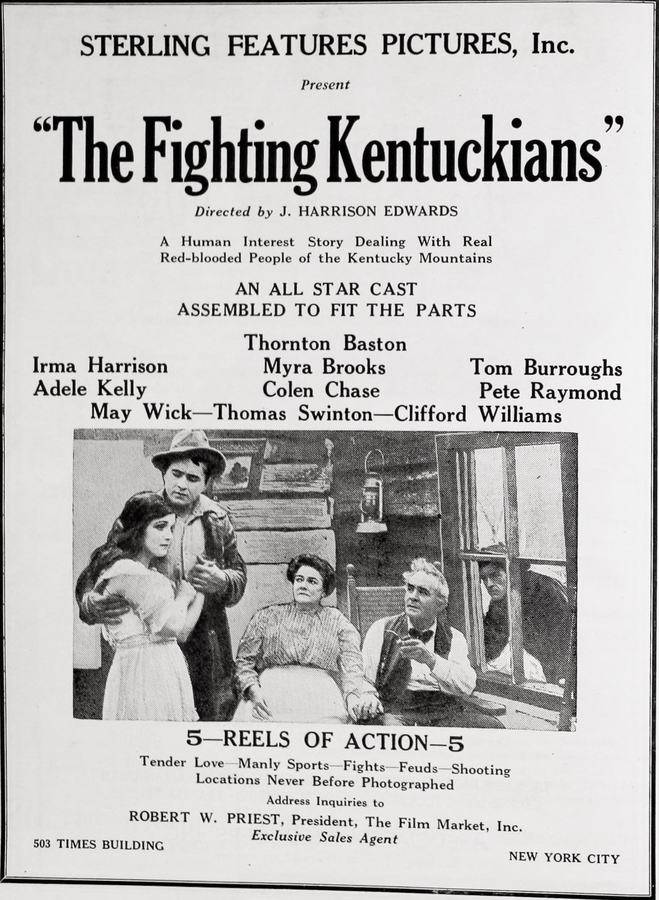
In the pantheon of early 20th-century cinema, few genres capture the raw, unvarnished anxieties of a nation in flux quite like the post-war melodrama. The Fighting Kentuckians, directed with a keen eye for regional texture and emotional resonance, stands as a fascinating artifact of 1920. It is a film that bridges the gap between the agrarian idealism of the 19th century and the industrialized trauma of the 20th. While many films of this era sought to either glorify the battlefield or retreat into pure escapism, this production chooses a middle path, examining the corrosive effects of jealousy and the resilience of the human spirit amidst the wreckage of global conflict.
The opening sequences of the film are steeped in a luminous, almost ethereal quality, capturing the rolling hills of Kentucky with a reverence that borders on the hagiographic. Here, Ned Catlin (portrayed with a stoic vulnerability by the ensemble cast) represents the quintessential American yeoman. His departure for the French front is not merely a plot point but a symbolic severance of the American soul from its isolationist roots. The cinematography during these early scenes utilizes soft lighting to emphasize the purity of Ned’s relationship with June Reeves, creating a stark contrast with the jagged, shadow-heavy framing that defines the war sequences. Much like the emotional landscape in Hearts and Flowers, the film relies heavily on the environment to mirror the internal states of its protagonists.
Central to the film's dramatic tension is the villainous neighbor, a character whose machinations provide the narrative’s dark heartbeat. His conscription is not a duty but a tactical opportunity. The brilliance of the screenplay by J. Harrison Edwards and Charles T. Dazey lies in how it handles the 'Enoch Arden' trope—the supposed death of a loved one who later returns. However, unlike the tragic resignation found in Paid in Full, the deception here is calculated and predatory. The villain’s return with the false news of Ned’s death is filmed with a claustrophobic intensity; the camera lingers on his expressions, revealing a psychopathy that was quite advanced for the cinema of the time. This manipulation of truth reflects the broader societal fears of the era regarding the reliability of information coming from the front, a theme also explored with varying degrees of success in Soldiers of the Emperor.
Perhaps the most striking element of The Fighting Kentuckians is the agency afforded to June Reeves. In an era where female characters were often relegated to the role of passive observers or prizes to be won, June’s role in the climax is revolutionary. When Ned returns, weakened and ambushed, it is not his military training that saves him, but June’s physical and moral fortitude. She does not merely scream for help; she engages the antagonist, knocking him senseless. This act of reclamation transforms the film from a standard war drama into a proto-feminist statement. It echoes the visceral strength seen in Her Greatest Performance, where the female lead must navigate a world of male-driven chaos through sheer force of will.
When examining the technical merits of the film, one cannot ignore the influence of the burgeoning realism movement. While Godless Men utilized the harshness of the sea to convey moral decay, The Fighting Kentuckians uses the topography of the American South as a battlefield for the soul. The use of tinting—blue for the nocturnal ambushes and amber for the domestic interiors—is executed with a precision that directs the viewer's emotional response with surgical accuracy. The editing, particularly during the cross-cutting between Ned’s struggle in France and the villain’s courtship of June back home, creates a sense of temporal urgency that was quite sophisticated for 1920. This technique is reminiscent of the pacing found in From the Valley of the Missing, though applied here to a more intimate, character-driven scale.
The film delves deeply into the concept of 'the enemy within.' The real threat to the Kentuckian way of life is not the foreign adversary in the trenches of France, but the domestic opportunist who exploits the absence of the virtuous. This thematic core aligns the film with other works like Humanity and And the Law Says, both of which grapple with the erosion of social contracts in the wake of upheaval. The villain’s draft status and subsequent return are handled with a cynicism that suggests a burgeoning disillusionment with the romanticized view of the soldier. He is a 'soldier' only in uniform; in spirit, he remains a scavenger. This nuance provides a layer of social commentary that elevates the film above its melodramatic trappings.
As the credits roll—or would have rolled in a modern context—the viewer is left with a profound sense of the 'fighting' spirit mentioned in the title. It is not merely a reference to combat, but to the persistence of love against the gravity of lies. The performances, particularly by the supporting cast including May Wick and Jack Baston, provide a grounded reality that prevents the film from drifting into the overly theatrical style seen in The Broken Commandments. There is a grit here, a recognition of the physical and psychological toll of war that feels surprisingly modern. Even when compared to international works of the same period, such as 'A mala nova or the Swedish sensibilities of Carolina Rediviva, this film maintains a uniquely American focus on the sanctity of the homestead and the individual's right to defend it.
The screenplay’s structure is remarkably tight. Every scene serves to either heighten the emotional stakes or advance the inevitable collision between Ned and his rival. Unlike the sprawling, sometimes aimless narratives of Jaffery, The Fighting Kentuckians moves with the relentless momentum of a steam engine. The introduction of the villain’s draft notice acts as the inciting incident that sets two parallel journeys in motion—one toward the physical front and the other toward a moral abyss. The resolution, while satisfying, avoids the saccharine pitfalls of many contemporary romances. There is a lingering shadow, a suggestion that while the villain is defeated, the world they return to is irrevocably changed. This tonal complexity is also found in Out of the Drifts, where the environment itself acts as a witness to human frailty.
In conclusion, The Fighting Kentuckians is a masterclass in the utilization of genre to explore complex societal shifts. It utilizes the framework of a WWI drama to investigate themes of identity, betrayal, and the subversion of gendered expectations. While it may lack the massive scale of later war epics, its intimacy is its greatest strength. It reminds us that the most significant battles are often fought not on foreign soil, but in the hearts and homes of those left behind. For fans of the silent era looking for a film that offers more than just pantomime, this work provides a rich, multi-layered experience that rewards close viewing. It sits comfortably alongside other genre-defining works like The Riddle of the Tin Soldier and The Devil Dodger, contributing its own unique voice to the cinematic conversation of the 1920s. The restoration of such films is vital, for they provide the blueprints for the storytelling techniques we still employ today. Through Ned and June, we see the enduring power of truth in an age of misinformation—a lesson that remains as relevant now as it was a century ago.
IMDb 5.8
1924
Community
Log in to comment.