DbcultAccessing Vault...
Cult Review
Senior Film Conservator
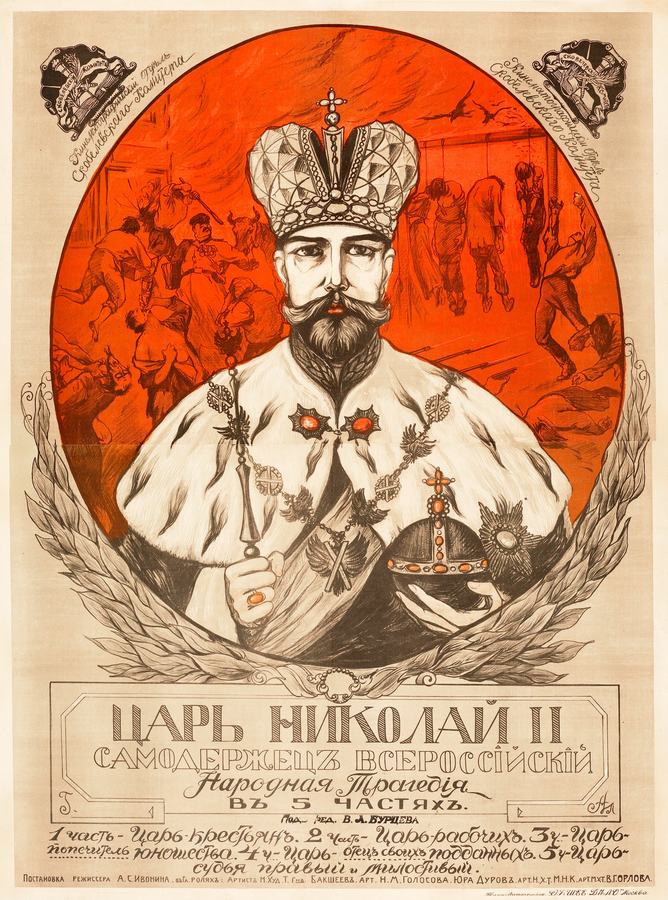
There are films that merely recount history, and then there are those that immerse you in its very texture, its sorrow, its inexorable march towards an predestined end. Aleksandr Voznesensky's 'Tsar Nikolay II' belongs unequivocally to the latter category, a cinematic masterpiece that transcends mere biographical depiction to become a profound meditation on power, fate, and the crushing burden of an empire in its twilight. Released during a period of significant global upheaval, this film, even without the benefit of sound, speaks volumes through its visual poetry and the searing performances of its ensemble cast.
From the opening frames, Voznesensky establishes a mood of pervasive melancholy, a sense of impending doom that hangs over the imperial court like a shroud. This isn't a story of a triumphant monarch, nor even a villainous one, but rather a poignant exploration of a man utterly overwhelmed by circumstances beyond his control. N. Golosov’s portrayal of Nikolay II is nothing short of revelatory. He eschews caricature, presenting us instead with a figure of profound internal conflict—a man of deep religious conviction, devoted to his family, yet tragically indecisive and ill-equipped for the monumental task of governing a vast, restless empire on the brink of revolution. Golosov embodies the Tsar's fatal flaw not as weakness, but as a kind of gentle, pious stubbornness, a refusal to engage with the harsh realities of political life, preferring the solace of domesticity and spiritual retreat. His eyes, often downcast or gazing into an uncertain distance, betray a soul burdened by a crown he never truly desired, a destiny he could neither embrace nor escape. The subtle tremors in his hands during moments of state crisis, the almost imperceptible flinching from direct confrontation, paint a vivid picture of a monarch dissolving under the immense pressure.
Vera Orlova, as the Empress Alexandra, delivers a performance that is both captivating and disquieting. Her Alexandra is not merely the devoted wife but a woman consumed by a fragile health and an almost fervent, desperate mysticism. Orlova imbues the Empress with a palpable sense of anxiety, her movements often stiff, her gaze intense, reflecting a mind increasingly isolated and reliant on spiritual solace. The film subtly hints at the influence of figures like Rasputin, not by explicitly showing him, but by depicting Alexandra's almost hypnotic conviction in supernatural intervention, a belief that further alienates the imperial couple from their increasingly skeptical court and populace. Her scenes with Golosov are particularly powerful, showcasing a shared, almost symbiotic retreat from the world, a closed circle of familial devotion that inadvertently seals their tragic fate. The visual language employed by Voznesensky in these intimate moments—often tight shots, emphasizing their isolation—is remarkably effective, drawing the viewer into their cloistered, doomed world. It’s a compelling study of how personal convictions, however well-intentioned, can have catastrophic public consequences. Much like the societal decay explored in The House Built Upon Sand, 'Tsar Nikolay II' delves into the insidious ways internal vulnerabilities can lead to external collapse, showcasing a parallel narrative of a foundation eroding from within.
The supporting cast, while perhaps less central, contributes significantly to the film’s rich tapestry. M. Kemper, possibly portraying a disillusioned aristocrat or a key military figure, embodies the growing dissent within the traditional power structures. His performance, often characterized by subtle shifts in posture and expression, speaks volumes about the erosion of loyalty and the creeping sense of despair among those who once upheld the throne. Pyotr Baksheyev, in a role that likely represents the burgeoning revolutionary spirit, provides a stark contrast to the opulence and decay of the court. His scenes, whether depicting the simmering unrest among the populace or the direct confrontations that mark the film's climax, are imbued with a raw, unyielding energy. The film, through these characters, masterfully illustrates the chasm between the ruling elite and the masses, a divide that becomes increasingly insurmountable as the narrative unfolds. The interplay of these performances highlights Voznesensky’s nuanced understanding of the complex social dynamics at play during this tumultuous period. It’s a ballet of discord, where every gesture and glance contributes to the escalating tension.
Voznesensky’s directorial vision, bolstered by Aleksandr Voznesensky’s incisive screenplay, is nothing short of masterful. The film employs a sophisticated visual vocabulary, utilizing stark contrasts between the lavish imperial residences and the grim realities of wartime Russia. The cinematography, even in its silent era constraints, is breathtaking, capturing both the grandeur and the claustrophobia of the imperial court. Long, sweeping shots of desolate landscapes and war-torn battlefields are juxtaposed with intimate, almost suffocating close-ups of the imperial family, emphasizing their isolation and the immense weight of their predicament. The pacing is deliberate, allowing the psychological drama to unfold organically, building a sense of dread with painstaking precision. This measured approach allows the audience to fully grasp the gradual, yet inevitable, unraveling of the empire. The screenplay, devoid of spoken dialogue, relies heavily on visual storytelling and the emotional depth of the performances, a testament to Voznesensky’s skill as a writer. He crafts a narrative that is both historically resonant and deeply personal, transforming a pivotal moment in world history into a profoundly human tragedy. The thematic echoes of a society grappling with immense change and the struggle against unseen forces are also present in films like The Iron Hand, though 'Tsar Nikolay II' grounds its struggle in the human cost of political failure rather than pure individual heroism.
One of the film's most striking aspects is its exploration of the First World War. Voznesensky doesn't shy away from depicting the brutalizing impact of the conflict, not just on the soldiers at the front, but on the morale of the entire nation. The scenes depicting the Tsar's visits to the front lines, intended to bolster spirits, instead reveal his profound disconnect from the suffering of his people. His attempts at leadership are portrayed as earnest but ultimately ineffectual, further cementing the perception of a monarch out of touch with reality. The film cleverly uses visual metaphors—mud-soaked uniforms, endless lines of weary soldiers, the stark imagery of makeshift hospitals—to convey the horror and futility of the war, a conflict that drains the lifeblood of the empire and accelerates its collapse. This portrayal of war as a catalyst for societal breakdown is handled with a stark realism that was quite advanced for its time, eschewing jingoism for a more somber, reflective tone. The futility of their struggle, contrasted with the sheer weight of the impending collapse, also brings to mind the desperate acts and consequences explored in Life's Shadows, albeit on a much grander, national scale.
The film's exploration of faith and superstition is another compelling dimension. Nikolay's deep piety and Alexandra's reliance on spiritual advisors are presented not as mere character quirks, but as integral components of their worldview, a lens through which they interpret the tumultuous events around them. This spiritual myopia, however, becomes a tragic flaw, preventing them from engaging with practical solutions and exacerbating their isolation. Voznesensky subtly critiques this reliance on the ethereal in the face of very real, material crises, suggesting that sometimes, faith can become a form of denial. The production design, even in the black and white medium, is meticulously detailed, transporting the viewer directly into the opulent yet increasingly decaying world of the Romanovs. The costumes are historically accurate and convey not just social status but also the psychological states of the characters. The grand ballrooms, the intimate studies, the austere military headquarters—each setting is imbued with a specific atmosphere that enhances the narrative. The attention to historical detail, combined with the film's profound emotional resonance, makes 'Tsar Nikolay II' a truly immersive experience.
In an era where many films focused on simpler narratives or more overt sensationalism, 'Tsar Nikolay II' stands apart for its intellectual rigor and emotional depth. It's a film that demands contemplation, inviting viewers to ponder the complex interplay of individual character, historical forces, and the tragic inevitability of change. The final sequences, depicting the relentless advance of the revolution and the ultimate demise of the imperial family, are handled with a solemn dignity that avoids melodrama, instead opting for a stark, almost documentary-like portrayal of historical fact. The film doesn't sensationalize their end but rather frames it as the poignant, almost quiet, conclusion to a long, drawn-out tragedy. It’s a testament to Voznesensky’s genius as a filmmaker and Aleksandr Voznesensky’s skill as a writer that a silent film can convey such profound historical weight and emotional resonance. The film leaves an indelible mark, prompting reflection on the nature of leadership, the fragility of power, and the often-cruel hand of history. This is not merely a historical drama; it is a cinematic elegy, a lament for a lost world, executed with unparalleled artistry and profound human understanding. It resonates with the tragic themes of personal failings and grand ambitions gone awry, much like the cautionary tale woven through The Price of Fame, but on a scale that encompasses an entire nation's destiny.
The enduring power of 'Tsar Nikolay II' lies in its ability to humanize figures often relegated to the annals of history, transforming them from abstract historical entities into flesh-and-blood individuals grappling with immense, impossible pressures. Golosov's Nikolay is not a villain, but a man caught in the unforgiving gears of history, a figure whose personal virtues—his devotion, his piety—become his greatest liabilities in a world demanding ruthless pragmatism. Orlova's Alexandra is a woman whose desperate love and spiritual fervor tragically isolate her, making her a symbol of the imperial court's detachment. The film is a masterclass in visual storytelling, where every gesture, every set piece, every costume choice contributes to a meticulously crafted narrative of decline. Voznesensky doesn't preach; he observes, allowing the unfolding tragedy to speak for itself. The film's legacy extends beyond its historical accuracy; it lies in its profound exploration of human nature under duress, and its timeless portrayal of the end of an era. It’s a work that challenges viewers to look beyond simplistic narratives of good and evil, urging them to understand the complex forces that shape both individual destinies and the course of nations. The stark visual storytelling, the profound emotional performances, and the unwavering commitment to a nuanced historical perspective cement 'Tsar Nikolay II' as an unforgettable cinematic achievement, a poignant reminder of the fragility of empires and the enduring human cost of revolution.
IMDb 6.7
1919
Community
Log in to comment.