DbcultAccessing Vault...
6.2/10
Senior Film Conservator
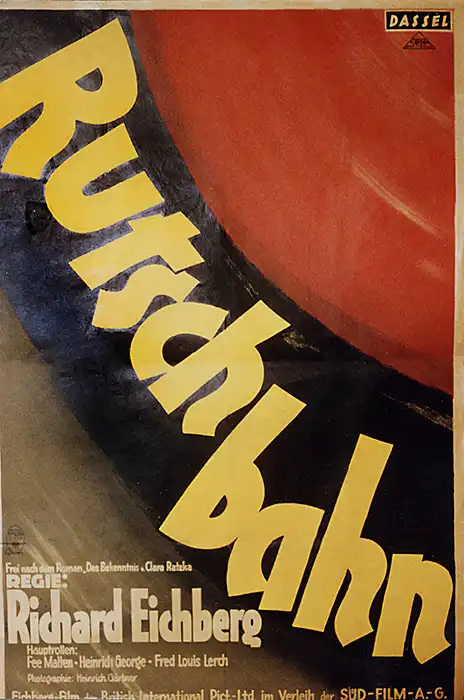
A definitive 6.2/10 rating for a film that redefined the boundaries of cult cinema. Whirl of Youth remains a cornerstone of transgressive art.
So, Whirl of Youth from 1927. If you're a serious silent film devotee, especially of early German melodrama, you might find something here, a kind of clunky charm. But for pretty much anyone else, honestly, it's a hard watch. The pacing alone will test your patience, and the performances often feel like a stage play shot with a camera that's a bit too far away. If you're looking for a smooth narrative or anything resembling modern emotional beats, skip it. But if you're into the raw, sometimes baffling mechanics of early cinema, there's definitely a weird fascination.
The film kicks off with Heli (Mona Maris) and her brother navigating life with their recently widowed mother. It’s all very domestic, a bit somber, but then the mother goes and marries Heinrich George’s character. And boy, is he a piece of work. George, a formidable presence even in silent pictures, plays the stepfather with such broad, theatrical menace that it’s almost comical. He’s all bluster and arm-waving, a walking, scowling caricature. You can almost feel the film trying to convince you this man is truly evil, but sometimes it just feels like he's auditioning for a particularly loud stage villain role.
The tension builds, predictably. Arguments erupt, and the brother is often on the receiving end of the stepfather's rage. There's a scene where George is just absolutely laying into the brother, and Heli steps in. This is the big moment, the one the whole plot summary hinges on: she throws a hatchet. The act itself is surprisingly quick, almost understated. One moment, George is yelling, the next, he's falling. The camera doesn't linger on the impact, almost as if it’s embarrassed by the sudden violence. It’s less a shocking murder and more a clumsy accident captured on film. This lack of dramatic emphasis makes the ensuing panic from the mother feel a little unearned, like everyone is overreacting to something the audience barely registered.
After the death, the film shifts into a kind of somnambulant procedural. The characters mostly wander around looking distraught, but without much direction. Mona Maris as Heli has these moments where her eyes convey a real depth of sadness, a quiet despair that hints at something more profound. Then, it's often broken by a sudden, almost exaggerated gasp or a dramatic hand-to-forehead gesture that feels like it belongs in a different movie. It’s like two different performances fighting each other for screen time.
The pacing after the main event really drags. There’s a particular shot of Heli just staring out a window for what feels like an entire minute. You watch her, then you watch the static background, and then you’re wondering if the director just forgot to yell “cut.” It doesn't build suspense or convey inner turmoil so much as it just… exists. The 'whirl' in the title feels deeply ironic. Everything moves at a glacial pace, and the emotional impact often gets lost in the slow, deliberate movements of the actors.
Background details are sparse, which isn't unusual for the era, but the sets often feel like temporary constructions, especially the interiors of the house. The furniture looks a little too pristine, a little too arranged. The crowd scenes, when they happen, have this oddly empty feeling, like half the extras wandered off for a coffee break before the camera rolled. It doesn't quite sell the idea of a bustling world around these characters.
One of the more bizarre moments involves the local authorities. They arrive, eventually, but seem less interested in the actual crime and more in just moving people around the set. There’s one officer who keeps adjusting his cap, almost compulsively. It’s a tiny, inexplicable detail that pulls you right out of any seriousness the scene might be trying to achieve. You find yourself focusing on the cap rather than the investigation.
The film struggles with its tone. It wants to be a serious melodrama about family, guilt, and the consequences of violence, but its execution often leans into unintentional comedy or just plain awkwardness. The emotional beats are broad, sometimes too broad, and the quieter moments often just feel like dead air. There are glimpses of what could have been a powerful story, particularly in Heli's quiet suffering, but they're often buried under an uneven rhythm.
So, is Whirl of Youth a lost classic? No, not really. But is it worth digging up if you’re into the quirks of silent cinema? Absolutely. It’s a fascinating, if flawed, artifact. You get to see early performances, some strange directorial choices, and a narrative that ambles its way to a conclusion. Just be prepared for a slow burn, and maybe a few chuckles at moments the film probably intended to be dramatic. It’s more of a historical curiosity than a gripping cinematic experience, but sometimes, those are the most interesting films to watch.
IMDb 5.8
1935
Community
Log in to comment.