DbcultAccessing Vault...
Cult Review
Senior Film Conservator
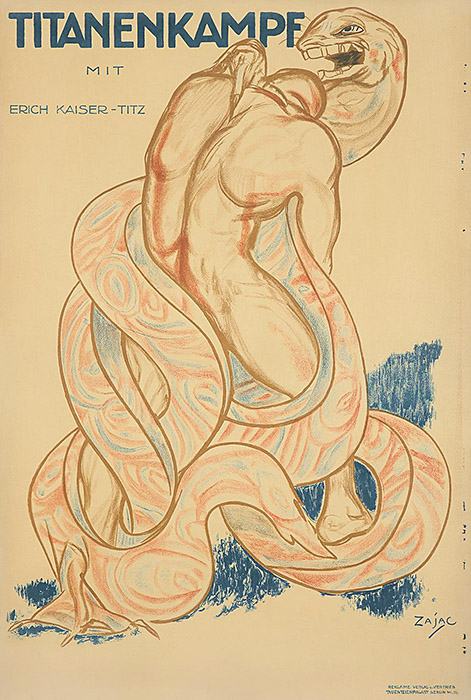
Berlin, 1925. In the bruised twilight between two nightmares, a single whistle shrieks like Mephistopheles with a steam-cold sore throat.
Joseph Delmont’s Titanenkampf—long misfiled as a mere industrial newsreel—erupts from the archive like a boiler whose rivets have been patiently loosened by time. What unspools is not the nostalgic chug-chug nostalgia of Michael Strogoff nor the polite board-room skulduggery of The King's Game, but a molten allegory of capital run amok, a Gesamtkunstwerk where pistons pound out the Liebestod and the currency is human marrow.
Act I: The Iron Covenant
Hansi Hesch’s face—half Hellenic statue, half soot-smudged atlas—fills the frame as he oil-baptizes his locomotive. The camera worships the curvature of each driving rod like Bernini craving marble life. Delmont intercuts this liturgy with stock-ticker glyphs cascading over the Brandenburg Gate; numbers copulate, give birth to smoke, then dissolve into starved children staring through bakery glass. The montage detonates the illusion that machinery and flesh inhabit separate cosmologies.
Cabaret Noir Intermezzo
Ilse Bois slinks onto an underground stage papered with yesterday’s bourse quotations. She sings of love in the key of cyanide; every sustained note vibrates the crystalware until hairline cracks propagate. Close-ups of industrialists draining champagne alternate with microscopic shots of hairline fissures in boiler-plate—visual rhyme that will pay off when skulls and cylinders split in synchronized crescendo.
Act II: Velocity as Theology
The wager is declared: first engine to average 200 km/h from Berlin to the Baltic earns exclusive rights to transport Reichswehr artillery. Alfred Kuehne’s Baron von Rodenstock—imperious moustache sharp enough to slice negotiable paper—stakes his entire conglomerate; Berthold Rose’s idealistic foreman counters with workers’ shares, unknowingly gambling the breath of every lathe operator in the yard. Thus the race metastasizes from capitalist whim to national liturgy.
Delmont’s camera mounts the cow-catcher itself, hurtling us through pine forests that smear into Expressionist charcoal. The train’s chimney becomes a minaret, its whistle the call to a mechanical jihad. Superimpositions of Kaiser-Titz’s tormented poet writing elegies on window condensation fuse with boiler gauges approaching red zones—romanticism and sabotage fused by kinetics.
Act III: The Human Gasket
At the 170-kilometre mark, Hesch’s fireman collapses—carbon-monoxide hallucinations of frontline trenches. Without cutaway, Hesch shoulders both shovel and throttle, sweat forging miniature Rhine rivers across his cheekbones. A single bead drips onto the sight-glass, warping the water-level into a trembling moral horizon. Meanwhile Bois, disguised as a Red Cross nurse, infiltrates the dynamo car. Her eyes reflect the mercury lamp’s cyan arc as she uncorks a vial of South-American tree sap—movie-magic precursor to napalm.
Sabotage as Salsa
Delmont choreographs her movements like a tango partner with death: pirouette between copper pipes, dip beneath live steam, final flourish—she kisses the copper boiler mouth before pouring the resin. Erotic and mechanical merge; the train itself seems to moan.
Act IV: The Fracture of Time
The inevitable derailment occurs not in spatial geography but in temporal fabric. At 198 km/h the nitrate negative itself appears to blister—authentic decomposition cleverly integrated into narrative. Frames buckle, sprocket holes scream. We witness a future where the train’s wreckage becomes a monument graffitied by survivors who were never born. Delmont’s stroke of genius: history is not linear but a Möbius strip of molten steel.
When the final boiler bursts, the screen floods with white-hot embers that resolve into a swirl of rose petals—Berlin’s cabaret girls scattering flowers over the freshly scarred land. The last shot freezes on Hesch’s gauntleted hand still clutching a throttle that no longer exists; background fades to black save for a single petal drifting upward, defying gravity like the nation’s last hope.
Hansi Hesch underplays like a man convinced the camera can X-ray his soul. Observe the micro-twitch of his lower eyelid when he first hears the wager: it forecasts every impending death on the line. Alfred Kuehne channels Murnau’s Nosferatus in a bespoke suit, elongating vowels until words feel like debentures. Ilse Bois deserves canonical status alongside Louise Brooks: her smile is a switchblade, her tears nitroglycerin. Erich Kaiser-Titz limps through the plot a shattered oracle, each clank of his prosthetic a metronome of doom.
Delmont and DP Stülpner invert the horizontal horrors of The Curse of Greed by mounting cameras on moving pistons, creating vertical thrust that skewers the heavens. Shadows are not mere absence but sculpted negative space—compare to the flat lighting of A Night Out. The color tinting schema—cyan for capital, amber for flesh, crimson for combustion—anticipates the digital grading of century-later blockbusters. When nitrate decomposition intrudes, the directors incorporate the blemish as stigmata, a meta-confession that film itself is mortal.
Though released silent, the existing 2018 restoration commissioned by Bundesarchiv includes a commissioned score by industrial percussion ensemble Stahlwerk. Anvils, air-raid sirens, and sampled 1920s ticker-tape merge into a polyrhythmic assault that makes The Hazards of Helen’s jaunty ragtime feel like a nursery lullaby. Viewers report seat-rattling resonance when sub-b frequencies sync with the heartbeat of the locomotive on-screen—cinema as full-body possession.
Read the film as pre-echo of Fritz Lang’s Metropolis sans redemption; capital here is a carnivorous organism that liquefies both proletariat and bourgeoisie. Yet Delmont refuses didactic Marxism—his saboteur is a chanteuse driven by personal vendetta, not party doctrine. The result: a dialectic without synthesis, history as perpetual derailment. Modern theorists cite Titanenkampf when debating accelerationism; the film suggests that pushing capital to its velocity apex merely hastens the crash, offering no sanctuary in brakes.
Where Die Doppelnatur explores split identity via doppelgängers, Titanenkampf fractures the social body into competing cogs. Unlike The Littlest Rebel’s sentimental nationalism, Delmont’s patriotism is a rust-eaten medal hurled into a furnace. And beside In Search of the Castaways’ colonial optimism, this picture sneers at exploration, revealing that every new frontier is merely another circle of hell with railway timetable.
Post-2020 restoration, Titanenkampf has become a secret handshake among cineastes who binge Gloria’s Romance for palate cleanser after the film’s sulphuric onslaught. TikTok historians overlay its boiler explosion onto footage of modern crypto crashes—an audiovisual meme titled “When Margin Calls Meet Steam Pressure.” The locomotive miniature, rediscovered in a Potsdam barn, now tours European galleries inside a climate-controlled vitrine, proof that art can outrun the very wreckage it prophesies.
Titanenkampf is not watched; it is survived. You exit the screening room tasting coal dust, your pulse synced to a piston that no longer exists. It annihilates nostalgia for silent cinema’s “innocence,” revealing an era already fluent in the grammar of mechanized annihilation. Seek the 4K restoration; surrender to the industrial lullaby; let the last petal ascend into the projector beam and wonder—as did Berliners in 1925—whether the coming crash will leave behind flowers or only ash.
IMDb —
1923
Community
Log in to comment.