DbcultAccessing Vault...
Cult Review
Senior Film Conservator
There are films that narrate a story, and then there are films that exhale a contagion—Der lebende Leichnam belongs to the latter tribe. Richard Oswald’s 1918 adaptation of Tolstoy’s once-banned novella doesn’t merely depict a marriage asphyxiated by dogma; it weaponizes the very texture of celluloid, turning each frame into a splinter of ice lodged beneath the viewer’s fingernail.
Shot in the dying embers of WWI Berlin yet set against the onion-domed opulence of Romanov Saint Petersburg, the picture revels in geopolitical dissonance: German Expressionism colliding head-on with Slavic fatalism. The streets are studio constructs—cardboard palaces dusted with Epsom-salt snow—but the spiritual frostbite they radiate feels mined straight from Dostoevskian bedrock. Oswald’s camera, often hand-cranked at uneven speeds, stutters like a guilty conscience, so that even a simple carriage ride resembles a cortège.
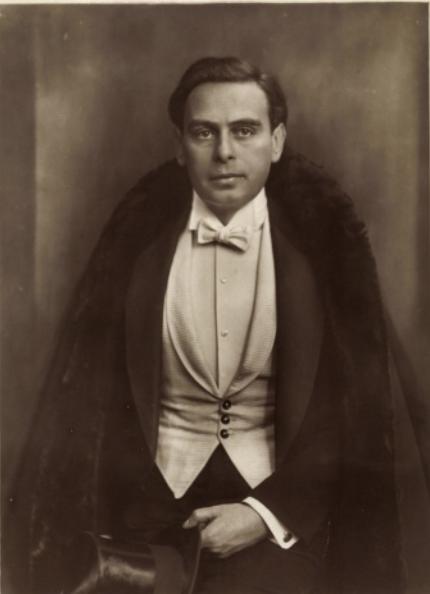
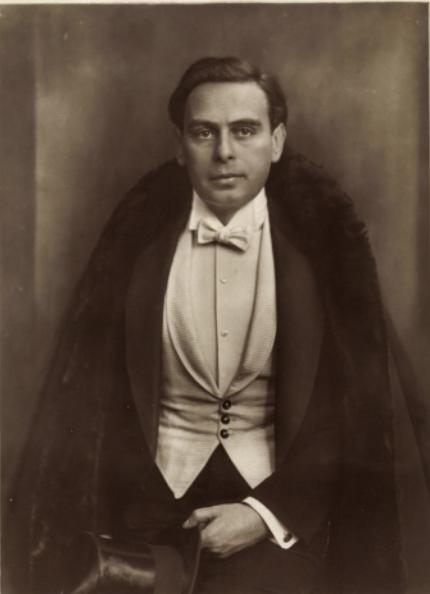
Alexander Moissi’s Fyodor is a cadaverous tour-de-force; cheekbones jut like cliff faces, eyes sunk in violet shadow. Watch the sequence where he hacks off his officer’s epaulettes with a sewing scissor—each snip a renunciation of caste, each metallic click amplified on the optical soundtrack of silence. The performance is neither melodrama nor naturalism but some mutant hybrid: Kabuki grief filtered through Viennese psychoanalysis.
Martha Angerstein-Licho’s Lisa, corseted into breathlessness, weaponizes stillness. She barely moves in the opening confession scene, yet every pore vibrates with marital claustrophobia. Compare this to the more florid suffering of Love’s Law released the same year, where the heroine’s eye-rolling hysterics feel almost vaudevillian. Here, restraint is revolt.
Leo Connard’s Viktor Karenin could have been a mere dandyish foil, but Connard injects a vein of porcelain insecurity: watch how he fingers his watch-chain like a rosary whenever Fyodor’s name surfaces. The performance predicts the brittle nouveau riche types in The Pride of New York, yet predates them by half a decade.
Cinematographer Willy Goldbaum treats light like a prosecuting attorney. In the monastery belfry where Fyodor seeks refuge, shadows are carved so deep they swallow facial contours; only the brass bell’s glint survives, implying that faith itself is a resonant void. Conversely, Viktor’s drawing-room is blasted with over-exposed klieg lights—every gilded cornice a reproach, every teacup’s sheen a small torment of respectability.
Color tinting—amber for interiors, cerulean for exteriors—operates as emotional shorthand, yet Oswald occasionally bleeds the two, so that a nocturnal street scene will flicker with amber intrusions: streetlamps, lanterns, the burning tip of Fyodor’s cigarette. The result is a moral aurora borealis, heaven and hell swirling in the same gutter.
Though technically silent, the film is sonically suggestive. Intertitles are sparse, sometimes mere nouns: “GUILT,” “RESURRECTION,” “RECKONING.” The absence of verbose exposition forces the viewer to inhabit auditory negative-space: you hear the crunch of imaginary snow, the thud of a body that isn’t there, the metallic scrape of an Orthodox thurible. Compare this laconic strategy to the chatty intertitles of Cy Whittaker’s Ward, where every farmyard joke is spelled out like a bedtime story.
Tolstoy’s original text is a scalpel, Oswald’s film is the wound. The novella’s moral absolutism—Church bad, individual good—is muddied here. The tribunal sequence, staged like an Inquisitional opera, grants the clergy a mournful dignity: their chant of “Lord have mercy” reverberates under low-angle shots that elongate them into Byzantine saints. One priest, played by Emil Rameau, has eyes so compassionate they border on erotic; when he extends a hand toward Fyodor, the gesture pulses with homosocial longing, perhaps even love.
This queasy ambivalence distinguishes the film from other religiously-scarred dramas of the era such as The Crimson Stain Mystery, where clerics are mustache-twirling hypocrites. Oswald, a gay Jew in Wilhelmine Germany, knew the agony of institutional exclusion; his camera lingers on icons not to blaspheme but to mourn the unreachable face of God.
Fyodor’s self-burial is also a symbolic castration; by erasing his social identity he abdicates the patriarchal privilege that once shackled Lisa. Yet the film refuses a facile feminist victory. Lisa’s new marriage, though sanctioned, is haunted: Viktor’s possessiveness mutates into surveillance—he hires a detective to trail her every step, a narrative flourish predating the stalker tropes of Zigomar contre Nick Carter by a couple of years.
In a bravura montage, Oswald cross-cuts Lisa’s lace-veiled wedding with Fyodor’s ritual shaving of beard in a tavern: each stroke of the straight-razor peels away layers of masculinity until the blade nicks skin, blood blooming like a crimson poppy against snowy lather. The intertitle reads: “FREEDOM,” but the irony scalds.
Oswald fractures chronology with epileptic abruptness. A childhood memory of Fyodor’s first kiss with Lisa intrudes mid-orgy: the camera whips from a prostitute’s breast to a sun-dappled orchard where two adolescents press lips, then smash-cuts back to debauchery. The splice is so jarring it feels like a sprocket-hole tear in the soul. This anticipates the modernist time-cubism of The Image Maker (1920), yet arrives two years earlier, staking claim to cinematic innovation often credited to post-war French Impressionists.
Post-WWI German inflation haunts the production design. Notice the wallpaper in Fyodor’s garret: patterns misalign, seams visible like surgical scars. Furniture is half-finished, varnish applied only where the camera might see; austerity becomes aesthetic. This decrepitude rhymes with Karenin’s nouveau-riche parlor, whose ostentatious chandeliers hang so low they threaten decapitation—wealth as guillotine.
Compare to the open-plains optimism of A Knight of the Range, where horizons promise reinvention. Here, every corridor dead-ends into orthodox iconography, every window frames a funeral.
Banned by Weimar censors for “undermining matrimonial sanctity,” the film survived only in a Russian archival print with Bulgarian subtitles, rediscovered in 1998 during a Sofia warehouse flood—water damage stippling the emulsion like stigmata. The restored Blu-ray reveals textures previously unseen: frost crystals on Fyodor’s beard are individual spindles of silver halide; you could almost melt them with breath.
Modern echoes reverberate in von Trier’s Breaking the Waves and Kieslowski’s A Short Film About Love, both of which plumb the crucible of faith and voyeurism. Yet few descendants capture the specific Slavic chill—the sense that redemption itself is a bureaucratic procedure requiring stamped documents.
To watch Der lebende Leichnam is to swallow a shard of communion glass: it lacerates even as it consecrates. The film does not comfort; it indicts—marriage, church, state, self. Yet its aesthetic splendor is so severe, so luminously cruel, you cannot look away. Stream it at 2 a.m. when the world feels laminated in dread; let its frost crawl under your skin. You will emerge shivering, yes, but electrically, murderously awake.
IMDb 7.2
1930
Community
Log in to comment.