DbcultAccessing Vault...
Cult Review
Senior Film Conservator
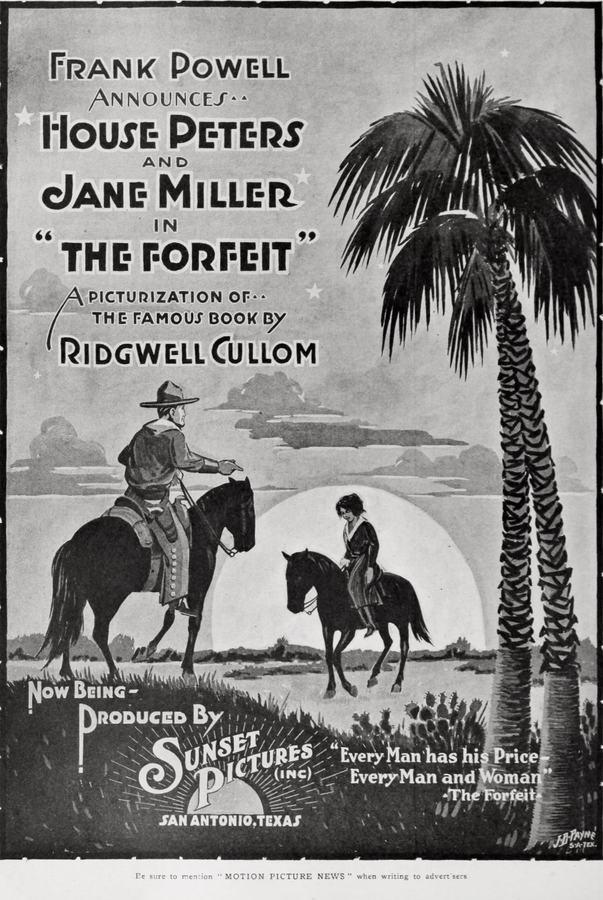
The cinematic tapestry of the late 1910s, particularly within the burgeoning genre of the American Western, often wove together threads of rugged individualism, moral ambiguity, and the relentless pursuit of justice or, conversely, vengeance. Frank Powell's 1919 production, The Forfeit, stands as a particularly potent exemplar of this era’s narrative prowess, deftly blending the visceral excitement of frontier action with the intricate emotional landscape of a deeply human melodrama. It is a film that, even a century later, resonates with a profound understanding of human nature’s complexities, showcasing how the choices made under duress can echo through generations, shaping destinies in unforeseen and often heartbreaking ways.
At its core, The Forfeit is a sprawling saga of familial estrangement and the arduous journey toward self-made prosperity, juxtaposed against a tragic descent into lawlessness. The narrative commences with the stern, unyielding hand of a patrician father, whose rigid adherence to societal expectations leads him to disinherit his eldest son, Jeffrey Masters. This act of paternal repudiation, rather than crushing Jeffrey, ignites within him a formidable resolve. He forsakes the comfortable confines of his New York upbringing, venturing westward to the untamed expanses of Texas cattle country. There, through sheer grit, acumen, and an unyielding spirit, he systematically builds an immense fortune, transforming himself from a dispossessed heir into a formidable titan of the plains. This initial setup immediately establishes a central theme: the contrasting paths of two brothers, both cast out, yet forging vastly different destinies in the crucible of the American frontier. It echoes the stark choices faced by characters in other period dramas, such as those grappling with the unforgiving societal strictures seen in Broken Ties, where familial bonds are stretched to their breaking point by circumstance and pride.
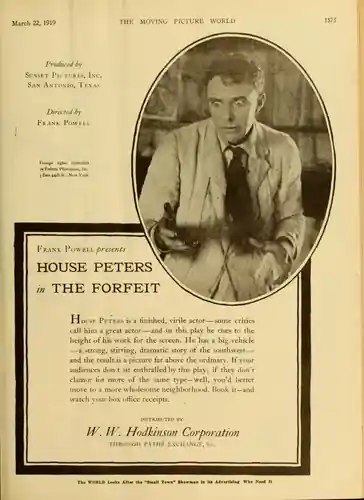
The narrative then pivots to Jeffrey's younger brother, Bob, who, in a parallel act of defiance, incurs his father's wrath by marrying Elvine Van Blooren, known affectionately as Effie, against the family's express wishes. Bob, too, finds himself summarily disinherited, his future abruptly severed from the comforts of inherited wealth. His journey westward, however, takes a far more sinister turn. Instead of embracing the arduous path of honest toil and entrepreneurial endeavor that characterized Jeffrey's rise, Bob succumbs to the allure of quick riches and the desperate camaraderie of the criminal underworld. He aligns himself with a band of rustlers, swiftly demonstrating a ruthless cunning and natural leadership that elevates him to the head of the gang. This stark contrast between the brothers' responses to disinheritance—one building, the other destroying—forms a poignant commentary on character, resilience, and the seductive dangers of desperation. The film, through these parallel narratives, explores the profound impact of parental authority and the myriad ways individuals react to perceived injustice, a thematic exploration that resonates with the moral quandaries presented in films like The Deemster, where fate and ethical choices intertwine with dire consequences.
Effie, in the interim, remains tragically oblivious to the depths of her husband's criminal entanglement. Facing mounting financial hardship and desperate for a means to secure a future, she stumbles upon information regarding the rustler gang's secluded hiding place. Motivated solely by the promise of a substantial $10,000 reward, a sum that represents salvation from her predicament, she informs the authorities. The dramatic irony here is immense and heartbreaking. Effie, in her desperate attempt to secure a better life, inadvertently condemns the very man she married. It is only after Bob is apprehended, tried, and summarily hanged that the horrific truth dawns upon her: she, through her unwitting actions, caused her husband's death. This moment of devastating realization is portrayed with a quiet, gut-wrenching power, characteristic of the era's best melodramas, where the weight of consequence often falls heaviest on the innocent or the well-intentioned. The film masterfully uses Effie's plight to explore themes of moral ambiguity, the unforeseen repercussions of desperate acts, and the crushing burden of guilt, reminiscent of the tragic heroine's journey in Assunta Spina, where external pressures and personal choices converge into a sorrowful destiny.
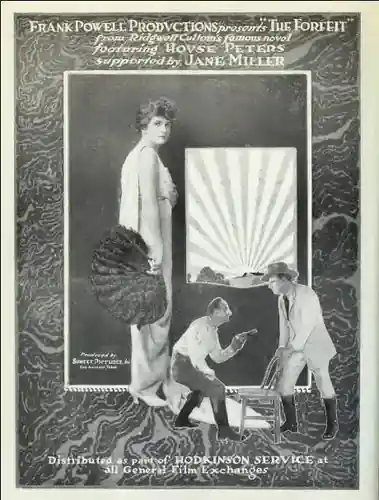
Jeffrey, meanwhile, his fraternal instincts finally stirring, embarks on a quest to locate his estranged brother. His arrival in the Western town, however, is met with a scene of profound horror: Bob's lifeless body suspended from a gallows. The image is stark, brutal, and unforgettable. Jeffrey, his heart consumed by a potent cocktail of grief, shock, and furious indignation, cuts down his brother's body. In that moment, standing over the tragic remains of his kin, he makes a solemn, unyielding vow of vengeance against the person responsible for this heinous act. The audience, privy to Effie's unwitting role, is immediately placed in a position of agonizing dramatic irony, aware of the impending collision between Jeffrey's righteous fury and Effie's profound sorrow and guilt. This setup creates an almost unbearable tension, as the film meticulously lays the groundwork for a confrontation that seems destined to destroy all involved.
Four years elapse, a period during which the raw edges of grief and vengeance presumably begin to dull, though the scars remain. It is at a bustling cattle convention, a nexus for the titans of the Western industry, that destiny, with its peculiar and often cruel sense of humor, orchestrates a meeting between Jeffrey and Effie. Unaware of each other's past connection to Bob, a powerful and undeniable attraction blossoms between them. Their shared experiences of hardship, resilience, and a certain world-weariness forge an unexpected bond, culminating in a whirlwind romance and their subsequent marriage. This phase of the film is crucial, as it allows the audience to witness the genuine affection and mutual respect that develops between Jeffrey and Effie, making the inevitable revelation of the past all the more devastating. The film skillfully builds this romantic interlude, allowing the audience to invest emotionally in their burgeoning relationship, only to then threaten it with the specter of past transgressions. It’s a classic melodramatic device, but executed here with a compelling sincerity that elevates it beyond mere contrivance, exploring how love can bloom in the most unexpected and fraught circumstances, much like the intricate emotional entanglements in Getting Mary Married, albeit with far darker undertones of fate.
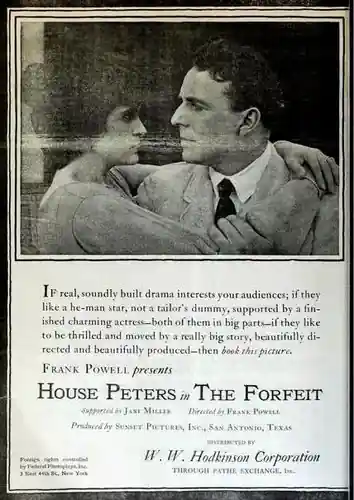
The fragile edifice of their newfound happiness, however, cannot withstand the relentless assault of the past. Sikem Bruce, a former member of Bob's rustler gang, emerges from the shadows, a living embodiment of the sins that refuse to stay buried. He reveals Effie's unwitting role in Bob's death to Jeffrey, unleashing a torrent of pain, betrayal, and a resurgence of Jeffrey's long-dormant vow of vengeance. The revelation shatters Jeffrey's world, transforming his love for Effie into a bitter resentment. He confronts her, his words laced with anguish and condemnation, telling her to forget their marriage, effectively tearing asunder the bond they had so recently forged. This moment is the narrative's emotional zenith, a brutal collision of love and duty, forgiveness and retribution.
The climax of The Forfeit is a breathtaking display of action and emotional catharsis. Sikem Bruce, ever the agent of chaos, ambushes Jeffrey, seeking his own form of twisted justice or perhaps merely reveling in the destruction he has wrought. In a moment of pure instinctual devotion, Effie, despite Jeffrey's rejection, throws herself into the path of danger, shielding him from Sikem's attack and sustaining a grave wound. This act of self-sacrifice is the ultimate testament to her love and her yearning for redemption. Jeffrey, witnessing Effie's unconscious form, bleeding and vulnerable, experiences a profound epiphany. The scales fall from his eyes, and the fog of vengeance dissipates, replaced by an overwhelming wave of love and a realization of Effie’s true character. He bests Sikem, dispatching the last vestige of the past's destructive power, and turns his attention to Effie, her unconscious state serving as a stark reminder of the depth of his feelings. In this crucible of violence and vulnerability, Jeffrey finally understands that his love for Effie transcends the past, her unwitting betrayal, and his initial vow of vengeance. It is a powerful conclusion that champions forgiveness and the redemptive power of true affection, a theme often explored in silent dramas that prioritize emotional resonance over explicit dialogue, much like Purity, where a woman's past ultimately informs her path to self-acceptance and love.
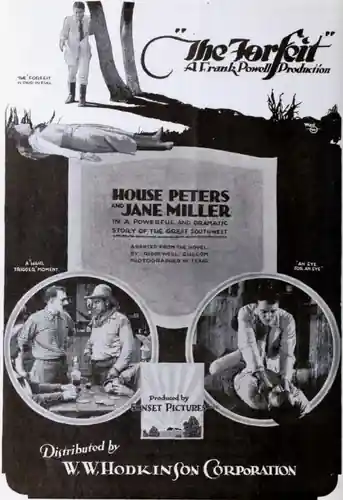
The cast of The Forfeit delivers performances that are deeply emblematic of the silent film era's unique demands. L.H. Welles, as Jeffrey Masters, embodies the stoic, self-made Western hero with a commanding presence. His portrayal is one of contained emotion, conveying resolve, grief, and ultimately, profound love through nuanced facial expressions and powerful physicality. He manages to communicate Jeffrey's transformation from a disinherited son to a vengeful brother, and finally to a man capable of forgiveness, without uttering a single word, relying entirely on the visual language of silent cinema. Blanche Abbott, as Effie Van Blooren, is equally compelling. Her character's journey is arguably the most tragic and complex, requiring a delicate balance of vulnerability, desperation, and ultimately, unwavering love. Abbott conveys Effie's unwitting complicity, her crushing guilt, and her ultimate self-sacrificing devotion with an emotional depth that draws the audience into her plight. Her expressive eyes and gestures communicate volumes, making her character's internal turmoil palpable.
William Human, George Murdock, House Peters, Hector V. Sarno, and Jane Miller, in their supporting roles, contribute significantly to the film's rich tapestry. William Human, likely in a role requiring a more villainous or desperate edge, would have used exaggerated, yet effective, gestures to convey his character's motivations. House Peters, a prominent actor of the era, would bring a certain gravitas and experience to his role, likely lending authority or menace depending on his character's alignment. The ensemble, under Frank Powell's direction, works in concert to maintain the narrative's emotional intensity and dramatic momentum, a hallmark of well-executed silent productions. Their ability to convey intricate emotional states and complex character arcs solely through visual means is a testament to their craft and the directorial vision. The physical acting, often maligned as overly theatrical by modern standards, was in fact a highly refined art form, essential for conveying narrative and emotion to audiences without spoken dialogue. This expressive style is a fascinating aspect of silent films, where the actors become living embodiments of the story, much like the intense, physical portrayals seen in The Bells, where psychological states are externalized through performance.
Frank Powell's direction is taut and purposeful, guiding the audience through the film's intricate plot with a clear vision. He understands the rhythm of silent storytelling, utilizing intertitles effectively to advance the plot and provide crucial emotional context, while allowing the visual action and the actors' performances to carry the bulk of the narrative weight. The cinematography, while perhaps lacking the sophisticated camera movements of later eras, is effective in establishing the expansive Western landscapes and intimate character moments. The use of natural light and carefully composed shots contributes to the film's authentic feel, immersing the viewer in the rugged frontier environment. The pacing is deliberate, allowing the dramatic tension to build organically, culminating in moments of intense action and profound emotional release. Powell, working from a screenplay by himself and Ridgwell Cullum, ensures that the complex narrative, with its numerous twists and turns, remains coherent and emotionally resonant. The writers skillfully weave together themes of class, inheritance, justice, and love, creating a story that is both epic in scope and deeply personal in its impact. The moral ambiguities presented, particularly through Effie's actions, elevate the film beyond a simple good-versus-evil Western, pushing it into the realm of thoughtful drama, much like the challenging moral landscapes explored in Outwitted, where characters navigate complex ethical dilemmas.
The film's exploration of revenge as a driving force, and its ultimate sublimation into forgiveness, is particularly noteworthy. Jeffrey's initial vow is understandable, almost primal, but the narrative does not allow it to fester indefinitely. Instead, it uses the crucible of Effie's self-sacrifice to force a re-evaluation, demonstrating that true strength lies not in relentless retribution, but in the capacity for empathy and understanding. This thematic arc is both compelling and timeless, offering a powerful message about the human capacity for growth and redemption. It aligns with the emotional complexity found in films like The Price Woman Pays, which often delve into the moral and emotional costs of difficult choices.
In conclusion, The Forfeit stands as a compelling and emotionally rich example of silent Western drama. It transcends its genre confines by delving into universal themes of family, betrayal, love, and the arduous journey toward forgiveness. The film’s intricate plot, well-drawn characters, and the expressive performances of its cast make it a captivating viewing experience, even for contemporary audiences. It serves as a potent reminder of the sophistication and narrative depth that silent cinema was capable of achieving, proving that compelling storytelling does not require spoken dialogue to resonate deeply with its viewers. The film’s ability to build suspense, evoke genuine emotion, and ultimately deliver a satisfying, albeit hard-won, resolution, solidifies its place as a significant contribution to the cinematic landscape of its era. For enthusiasts of silent films and Westerns alike, The Forfeit offers a fascinating glimpse into a bygone era of filmmaking, showcasing how timeless narratives can be crafted with ingenuity and heartfelt artistry, leaving an indelible mark on the viewer's consciousness. It’s a film that, like a well-worn leather saddle, tells a story of enduring strength and character, a truly remarkable artifact from the golden age of cinema.
IMDb 6.9
1935
Community
Log in to comment.