DbcultAccessing Vault...
5.7/10
Senior Film Conservator
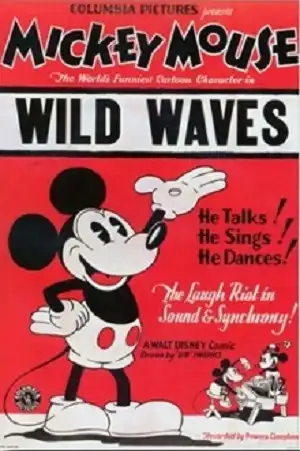
A definitive 5.7/10 rating for a film that redefined the boundaries of cult cinema. Wild Waves remains a cornerstone of transgressive art.
If you have seven minutes to spare today, you should probably watch this just to hear Mickey’s early singing voice. It is bizarrely high-pitched and operatic in a way that feels totally disconnected from the Mickey we know now.
Fans of old-school animation will love the bouncy, rubber-hose style. People who want an actual plot or a hero who takes his job seriously will probably be annoyed by how long it takes him to notice anyone is drowning.
The movie starts with Mickey just kind of vibing on the beach. He’s a lifeguard, but he’s mostly just dancing around and singing to the seagulls.
The seagulls actually have these really judgemental faces. They look like they’ve seen too many tourists and are over it.
Then Minnie shows up and gets immediately swept out by a wave. The way the water is animated is fascinating because it doesn't look like water at all.
The waves have these little hands that reach out to grab her. It’s creepy if you think about it too long, like something out of The Fall of the House of Usher but with more white gloves.
Mickey finally notices she’s in trouble, but he doesn't exactly rush. He sort of bops his way over to the rescue.
There is a specific moment where he’s rowing out to her and the boat keeps hitting the waves with a rhythmic thud. It’s very hypnotic.
Once he gets her back to shore, Minnie is crying her eyes out. Her tears are huge, like golf balls hitting the sand.
Does Mickey give her a blanket or check if she's okay? Not really.
He starts singing again to cheer her up. It’s a very 1929 solution to a near-death experience.
He starts playing music on a bunch of random stuff he finds on the beach. This part reminded me a bit of the frantic energy in Fast and Fearless, just way more musical.
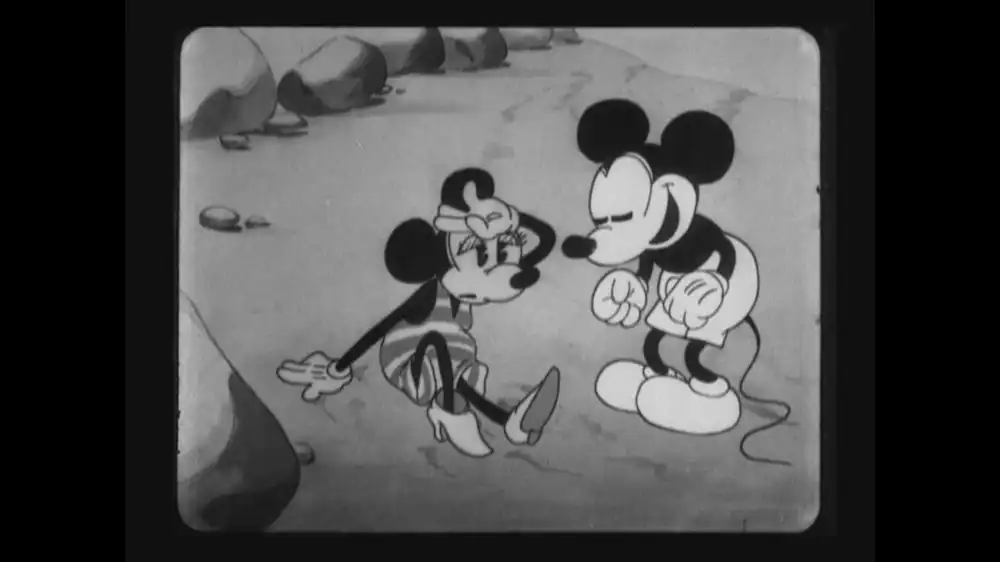
He uses a fish as an instrument at one point. The fish looks deeply unhappy about its new career as a flute.
The background characters, like the walruses and seals, all join in. They have this synchronized swaying that is honestly a bit unsettling to look at for too long.
One walrus has a mustache that defies the laws of physics. It just floats there on his face while he dances.
The music is handled by Carl Stalling, and you can really tell. It has that frantic, stop-and-start energy that defined early cartoons before they got too polished.
I noticed a small smudge on the lens or the film strip during the scene where Mickey is dancing on the sand. It’s a tiny black dot that flickers for about three seconds, but it makes the whole thing feel more real.
It’s a reminder that people actually sat there and drew every single frame of this madness. There's a simplicity here that you don't see in something like The Old Homestead which feels much more grounded.
The ending is just Mickey and Minnie dancing while the sun goes down. Or maybe it's just the screen fading to black, it’s hard to tell with the old film stock.
Minnie’s dress is also weirdly short in this one. It keeps riding up while she’s dancing and it feels like the animators were still figuring out her character design.
There’s no real lesson or big emotional payoff. It’s just a mouse, a girl, and a bunch of musical sea creatures.
The sound of the wind at the very beginning is surprisingly effective. It’s just a low whistle, but it makes the beach feel lonely and cold before the music starts.
I think the weirdest part is how Mickey treats the rescue like an inconvenience to his singing schedule. He’s a bit of a diva in this era.
It isn't a masterpiece, but it’s got a lot of heart. Or at least a lot of lung capacity from Mickey.
Watch it for the walrus. Stay for the fish-flute.
IMDb 6.1
1928
Community
Log in to comment.