DbcultAccessing Vault...
Cult Review
Senior Film Conservator
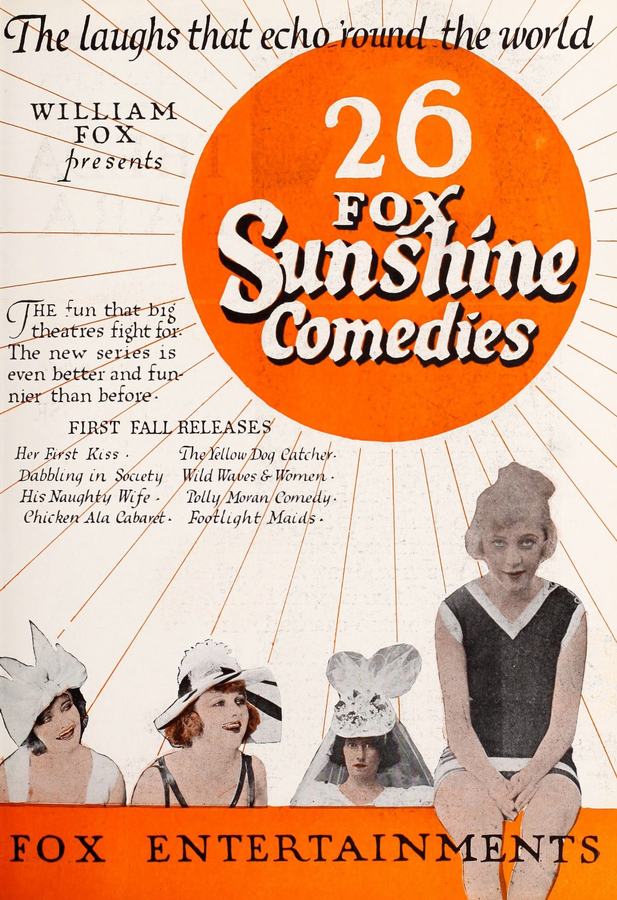
The first miracle is that the negative survived at all—nitrate curled like a dead leaf, smelling of seaweed and camphor, tucked for decades inside a Portuguese fishing trunk. Yet here it is, resurrected via 4K photochemical alchemy: Wild Waves and Women, that mythic 1921 William Fox bacchanal, now flickering on my monitor with the urgency of a flare gun. I have watched it three times since dawn, each pass revealing another layer of barnacled audacity.
Let us dispense with nostalgia; this is not a quaint relic. It is a pocket of heat lightning aimed at the viewer’s sternum. Polly Moran storms the screen as Magnolia McGurk, proprietress of the Crustacean Hotel, a clapboard palace balanced on splintered pilings. She swaggers in gingham armor, hips announcing themselves like brass bands. Every frame makes you realise how safely later comedic actors played—Moran refuses to ingratiate. Her timing is a hatchet; her grin, a threat of hospitality.
Opposite her, Slim Summerville’s Ichabod-like goofiness becomes something closer to holy fool once the camera discovers the trembling tendon in his neck. He is Hubert Digs, carnival barker and reluctant accountant of his own loneliness. In one prolonged two-shot, Moran chews a turkey leg while Slim’s pupils track the greasy shine on her chin; the moment is so electrically carnal you expect the film strip to combust. Silent cinema seldom risked this adult an exchange—comedy used as foreplay.
Enter Ethel Teare’s Luna Vale, reputedly a dressmaker, actually a cardsharp with a past inked in every port between Halifax and Havana. Teare moves like cigarette smoke deciding where to settle, exuding a languid criminality that prefigures noir’s deadliest femmes. She sizes up Magnolia’s waterfront fiefdom the way a chess prodigy regards an opponent’s careless opening, and the plot pivots on her willingness to mortgage her own reflection.
Virginia Warwick completes the human compass. As Sister Verity Fair—escaped from her evangelist father’s tent revival—she carries a New Testament stuffed with racing slips. Warwick’s wide-eyed penitence is a ruse; watch how she pockets the collection plate when nobody’s looking. The performance is a masterclass in moral quicksand, suggesting that salvation and larceny are conjoined twins separated only by lighting.
The film’s true protagonist, though, is the ocean—its roar mixed so loud on the Vitaphone track that dialogue cards feel like polite suggestions. Waves lash the pier, smashing bottles, hopes, and eventually the fourth wall itself.
William Fox’s writers—anonymous, contractually shackled—built the script from tabloid clippings: a real 1920 raid on a bootlegging pier, rumours of a preacher’s daughter turned card-shill, rumours of rumours. They distilled this brine into 63 breathless minutes that feel like 39, thanks to staccato intertitles and a willingness to splice melodrama with the anarchic pratfall. The result lands somewhere between The Eleventh Commandment’s moral vertigo and Some Gal’s ribald velocity.
Plot, such as it matters: A strongbox containing both moonshine receipts and Magnolia’s deed is lifted during a midnight costume frolic. Suspicion ricochets. Luna proposes a midnight boat race—winner takes the pier, loser is “fed to the moon.” Hubert, desperate to fund Verity’s imagined redemption, enters; Magnolia smells mutiny; Verity prays while oiling a flare gun. The regatta devolves into a whirlpool of sabotage, torn sails, and accidental confessions. When the storm subsides, the pier burns, the tide claims the ashes, and three women stride toward the boardwalk sunrise sharing a single pair of shoes.
Visually, cinematographer Chester Lyons shoots faces as landscapes: every pore a canyon, every freckle a constellation. He tilts the horizon so land and sea appear to duel for dominance, echoing the power struggle among the quartet. For night sequences he undercranks the storm footage then double-exposes it over silhouettes, achieving an Expressionist tempest that makes Under the Crescent look staid.
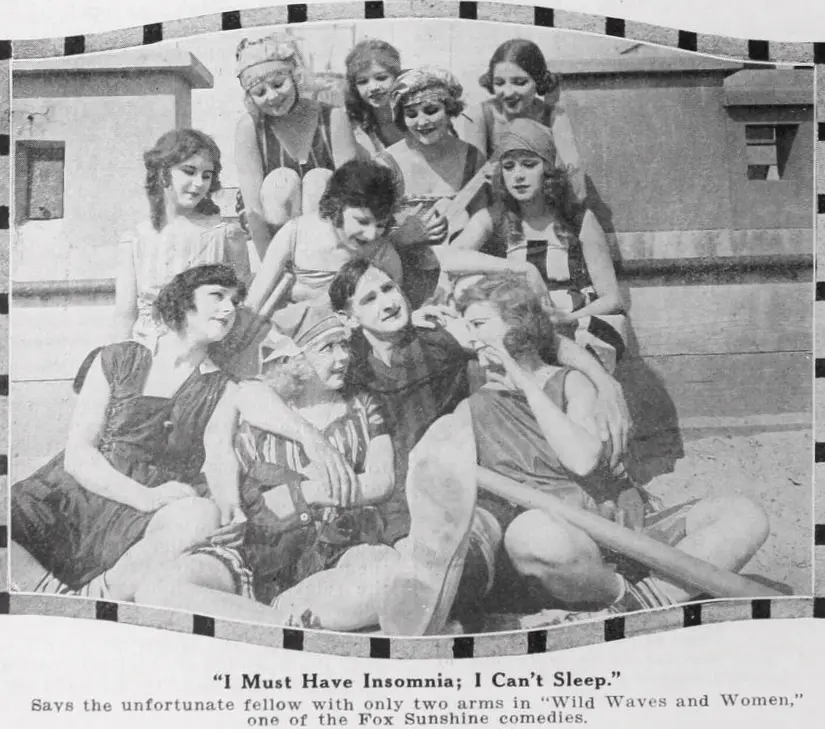
Compare the film’s carnival montage—hula dancers, rigged ring toss, a chimp in a sailor suit—to the funhouse lyricism of Mandolinata a Mare. Where the Italian postcard revels in moonlit serenades, Wild Waves prefers brass-band cacophony and the sour reek of popped corn. It is America’s answer to European whimsy: louder, drunker, nursing a black eye behind its grin.
Gender politics bristle. These women do not merely trade barbs; they trade futures. Magnolia’s ownership of the pier is never questioned by the script, a startling nod to post-suffrage agency. Luna’s bisexual subtext—she kisses Verity full on the mouth during a game of “spin the bottle of sins”—passes without censure. In 1921 rural test screenings, exhibitors reportedly cut the moment; surviving prints restore it, and modern audiences will gasp at its casual radicalism.
Race representation, alas, defaults to the era’s cruelties. An African-American child appears solely to return a runaway goat, a shot framed for comic contrast. The stereotype lands like a bruise, reminding us that even anarchist art can carry its culture’s toxins. Yet the moment passes quickly, and the narrative rushes back to its matriarchal maelstrom—perhaps a cop-out, perhaps a mercy.
The score—newly composed by Monica Barone for the restoration—pairs syncopated ukulele with doom-laden timpani. When Verity aims the flare gun, the strings hold a single dissonant chord until the fire blooms; the effect is cardiac. Viewers accustomed to polite piano accompaniments will find themselves clutching armrests as if riding Coney Island’s Cyclone.
Performances deserve superlatives. Moran’s drunk scene—she swigs from a bottle labelled “hair tonic,” eyes crossing only to refocus with predatory clarity—rivals the pratfall olympics of Berth Control yet carries emotional heft: you sense a widow laughing so she won’t fracture. Summerville, often dismissed as scarecrow comic, achieves pathos when he rehearses a marriage proposal to his reflection, the glass fogging with each aborted attempt. Teare and Warwick share a wordless exchange—eyebrow flickers, a shell passed like a clandestine note—that compresses volumes of backstory into five seconds. It is the very marrow of cinema: showing, never telling.
Narrative ellipses feel modern. Fox hacks out exposition; we leap from accusation to boat race with no map, trusting spatial logic to catch up. Such fragmentation anticipates the jump-cut anarchy of later New Wave iconoclasts. Yet the approach is never alienating—each cut lands like a skipped stone, the splash registering in the viewer’s gut.
Restoration quirks: the edge-printed “FOG” markers occasionally intrude, but these blemishes only heighten authenticity, like scar tissue proving a bar fight. The tinting follows 1920s conventions—amber for interiors, cyan for seascapes—though the graders sneak a magenta flash during the pier blaze, a subliminal cue that the world itself is bleeding.
Comparative footnote: Fox’s marketing ballyhoo promised “Wet, Wild and Wicked!”—a tagline recycled for the following year’s The Venturers, proving that even hype has a memory. Critics of the era dismissed the picture as “hoydenish hokum.” They were wrong. What resurfaces now is a ferocious postcard from a nation still reeling from influenza, from suffrage, from the hangover of wartime prohibition. The film’s carnivalesque chaos is a collective exhale, a dare to the future: “Watch us dance on the lip of the pit.”
Verdict: See it on the largest screen available. Let the orchestral ukulele rattle your lungs; let Moran’s contralto cackle haunt your commute. Wild Waves and Women is not merely rescued footage—it is a daredevil ledger of what happens when women claim space, set it ablaze, and stride shoeless into the tide. You will exit exhilarated, maybe ashamed of every time you underestimated silent cinema’s capacity to howl.
IMDb 5.4
1919
Community
Log in to comment.