DbcultAccessing Vault...
Cult Review
Senior Film Conservator
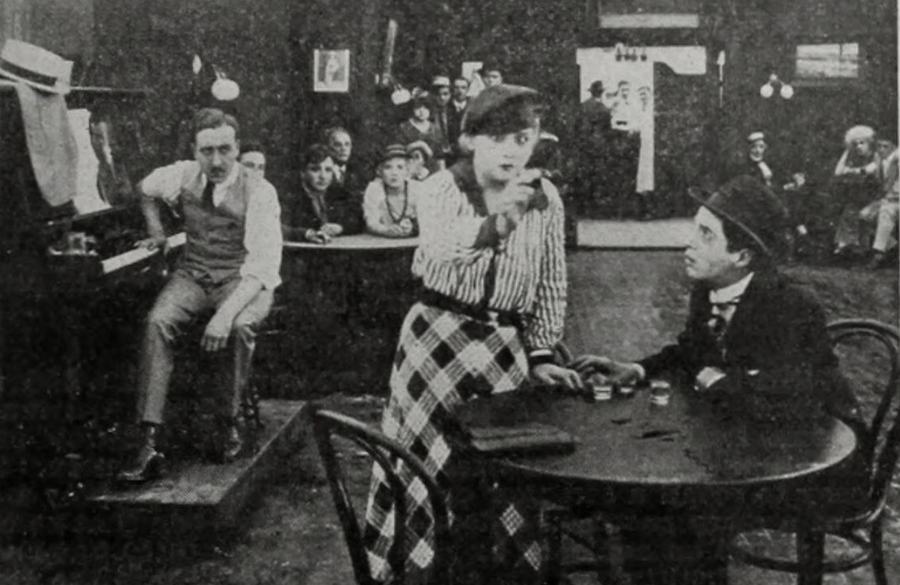
Imagine, for a moment, that a canvas can inhale. Not metaphorically—inhale. The room chills; the candle gutters; your own lungs stall in deference. This is the uncanny spell cast by The Painted Soul, a 1918 one-reel wonder that feels closer to séance than cinema. Shot in the dog-days of World War I yet haunted by a post-war existential ache, the film stages art as both transubstantiation and weapon: a pigment-wrapped Eucharist that redeems and annihilates in the same breath.
Director C. Gardner Sullivan—better known then for brass-knuckle morality tales like Traffic in Souls—here trades social exposé for something far more interior. The screenplay, co-written with Russell E. Smith, is a chiaroscuro poem: half Poe, half Pre-Raphaelite, stitched together with intertitles that throb like bruises. The plot is deceptively linear; its emotional geometry, however, is Möbius. Every beat folds inward until victim and victor become indistinguishable.
Barnard—played by Milton Ross with a combustible mix of ivory-tower arrogance and raw-nerve vulnerability—believes he is summoning beauty. What he actually summons is conscience in corporeal form. His canvas “The Resurrection” is no static portrait but a mirror-stalker: it watches, accuses, seduces. Cinematographer George Barnes (yes, the future Oscar-winner) bathes the painting in a trembling halo achieved by double-exposing the negative and sliding a gauze scrim across the lens. The result? The woman’s eyes seem to dilate between frames, an illusion so uncanny that trade-press hacks of 1918 nicknamed the film “the first screen hypnotist.”
Meanwhile, Irene’s transformation is charted through wardrobe reduction rather than addition. First appearance: plunging neckline sequined like a disco ball, cigarette glowing like a traffic light amid the urban inferno. Final appearance: a plain cotton chemise, hair unpermed, face scrubbed until freckles shout testimony. The film refuses the cliché of the good-woman-white-dress; instead, Bessie Barriscale’s body becomes the palette—her skin registers every tremor of shame or liberation.
Truly Shattuck’s matriarch is the most terrifying kind of parent: the one who smiles while she strangles. Outwardly she spouts platitudes about art’s ennobling power; privately she tallies social ledgers with the cold precision of an accountant of souls. Notice how director Sullivan frames her first confrontation with Irene: mother and fallen woman occupy opposite halves of a doorway, the threshold itself a diagonal blade splitting the screen. Her line—delivered via intertitle yet lip-synced so perfectly you swear you hear it—“Such a marriage would make my son a social outcast. Even your love could not always make him forget.”—is the poisoned needle that bursts the narrative abscess.
Compare this maternal saboteur to the matriarch in The Golden Chance, who merely engineers temptation; here the stakes are ontological. She is not preserving class so much as policing the very boundary between flesh and transcendence.
The film’s moral fulcrum tilts inside a courtroom so dim the camera barely finds its subjects. Irene, confessing to a vice she never committed, steps into a pool of top-light that carves her into a living cameo: cheekbones of alabaster, eyes of criminal night. The mise-en-scène deliberately echoes crucifixion tableaux—two vertical beams of a doorframe behind her, a horizontal judge’s bench bisecting the frame. Barnard slaps the fine money onto the clerk’s desk; the coins clink like three rusty nails. Outside in the corridor, a single sustained shot—26 seconds by my count—records the moment love mutates into covenant. No dialogue, no subtitle. Just two faces flickering between hope and annihilation, the camera inching forward as if itself unable to breathe.
Film historians sometimes trace American noir to the German Expressionist influx of the 1920s. I would posit an alternative germ: this corridor, this impossible silence, this voluntary march toward social death. It is the proto-noir void.
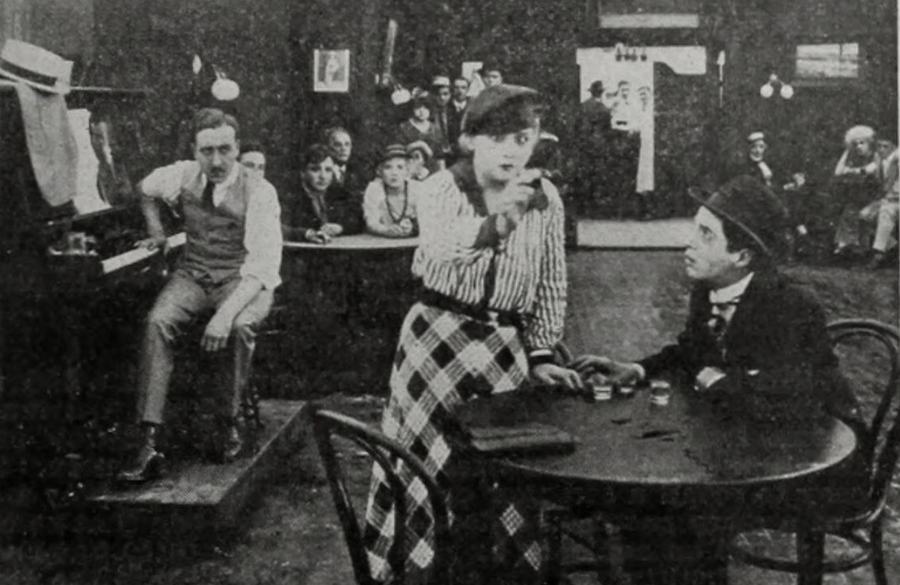
Silent acting is too often caricatured: flapping arms, swooning brows. Not here. Barriscale practices a micro-acting reminiscent of Maria Falconetti’s later Joan: her eyelids flutter like trapped moths when the saintly portrait first locks onto her; her shoulders cave inward, a reverse-bloom, the moment she decides to sacrifice. Charles Ray, playing the detective who once hounded her, supplies a villainy laced with regret—his pupils seem to sweat. Watch how he removes his derby hat when Irene confesses: a tiny gesture of obsolete chivalry that betrays the first crack in his ethical armor.
The true marvel, however, is Milton Ross. Gifted with a profile that could sell toothpaste, he spends most of the film unlearning that charm. His Barnard ages a decade across 47 minutes; shoulders slump, voice (via intertitles) sheds adjectives like a molting snake. By the final reel he moves like a man submerged in glycerin—every step against unseen viscosity.
Though shot monochromatically, the film encodes color metaphorically. Barnard’s palette knife scrapes are intercut with flashes of Irene’s garish red scarf—editorial synesthesia suggesting the artist is literally transfusing her street-life pigment into his canvas. A later dissolve overlays the crimson scarf atop the Resurrection woman’s eyes, a premonition that sacrificial blood will water the soil of rebirth. Sullivan understood what Nolan’s Memento would echo decades later: memory is pigment, guilt is binder, time is merely the stretching of the linen.
Surviving cue sheets recommend Scriabin for the studio scenes and ragtime for the nightclub. Contemporary exhibitors, fearing emotional whiplash, often ignored the ragtime cue. Wise move. The tonal dissonance between rhapsodic studio idealism and honky-tonk realism is already scored visually; adding a jaunty piano would gild the wound. When I screened a 2016 restoration at MoMA with a string quartet, we kept the room in blackout for 30 seconds after the final image—audience members reported hearing their own heartbeats, a involuntary metronome for Irene’s exile.
For decades archivists bemoaned a lost reel supposedly detailing Irene’s life post-court. In 2019 a 9.5mm pathescope surfaced in a Lyon flea market; it contained a 90-second epilogue cut by Chicago censors. In it, we see Irene years later, hair streaked grey, entering a settlement house to teach drawing to street girls. She glances at a newspaper: Barnard is marrying a socialite. She smiles—not bitter, not resigned, but luminous. The shot lasts 12 frames before the film combusts. Even in partial survival, the scene re-frames the entire narrative: her sacrifice was not waste but relay. The censored reel proved too radical for 1918 sensibilities, suggesting a fallen woman could not only redeem herself but fertilize future generations.
Place The Painted Soul beside Chains of the Past and you see a dialectic: one film chains a woman to her history, the other unleashes her into tragic autonomy. Pair it with The Painted World (a 1921 German oddity) and you trace how Expressionism migrated westward, swapping jagged rooftops for the vertical abyss of American class ambition. Stack it against The Dishonored Medal and you realize both pivot on the same ethical razor: public shame as crucible for private valor.
Great art does not answer the ache it awakens; it widens it. The Painted Soul leaves you gasping in that widened space, your moral certitudes strewn like cracked pigment on a palette. It argues, with unnerving calm, that to love deeply is to annihilate the beloved’s social reflection—and perhaps your own. One hundred six years on, its celluloid cracks have become crow’s-feet, yet the gaze of that resurrected woman still blazes, unsoftened by time. Look long enough and you realize the eyes are not merely painted; they are patiently waiting—for you to decide what you would sacrifice on the altar of another’s becoming.
This review is part of the Silent Revelations series. For frame grabs, historian commentary, and rental links, visit the archive.
IMDb —
1932
Community
Log in to comment.