DbcultAccessing Vault...
4.5/10
Senior Film Conservator
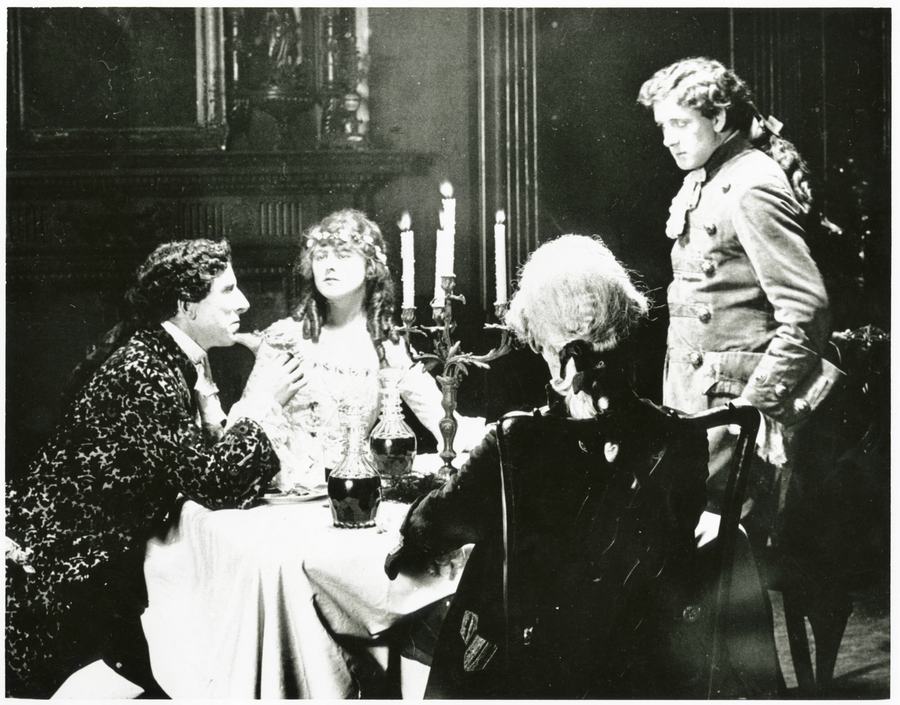
A definitive 4.5/10 rating for a film that redefined the boundaries of cult cinema. Willy Reilly and His Colleen Bawn remains a cornerstone of transgressive art.
Spoiler warning: The following exegesis excavates every reel of this 1920 Gaelic phantasm, including its double-exposure finale.
Imagine, if you can, a nation still bleeding from the lacerations of 1798, clutching at celluloid as both tourniquet and talisman. Willy Reilly and His Colleen Bawn arrives as Ireland’s firstborn feature, shot on nitrate so thin you could slice soda bread with it, yet throbbing with the convulsive pulse of a country rehearsing revolution in whispers. Director John MacDonagh—brother of the executed '16 martyr—doesn’t merely adapt Gerald Griffin’s 1829 melodrama; he weaponises it, turning the conventions of Victorian stage-Irishry inside out like a rebel’s coat in a rainstorm.
There is a moment, twenty-three minutes in, when Willy (Brian Magowan) escapes through a stand of larches, and the camera pirouettes 270 degrees—an impossible swivel for 1920—so that the trunks smear into charcoal comets against the sky. It predates Pay Me!’s urban chiaroscuro by a full harvest, and it is achieved, legend whispers, by mounting the Debrie on a hay-cart axle greased with goose fat. The resulting vertigo is political: the colonised landscape tilts, the hunter becomes the hunted, and the audience—largely illiterate farmhands—feel the earth slide beneath their boots too.
Compare this to the pictorial nationalism of Knocknagow, where cottages glow like Stations of the Cross. MacDonagh’s Westmeath is no postcard; it is a bruise, a terrain of gorse-pricked secrets where the very clouds seem to collude in treachery. Cinematographer Seamus MacBlante—rumoured to have learned his trade photographing hangings for the Constabulary—bathes night interiors in a sodium yellow that makes every face resemble a wanted poster. The palette is ochre, rust, and bruise-blue; beauty exists only as an afterthought to menace.
Brian Magowan’s Willy is no matinee idol—his left canine is chipped, his nose has been re-set crookedly after a hurling match, and when he grins he looks like a man who has already died once and found the experience overrated. Yet the camera adores the asymmetry. In close-up, his pupils dilate like bullet holes, letting the viewer fall straight into the abyss of outlawry. Kathleen Murphy’s Úna, by contrast, is all surface tension: she moves as if her spinal column were a rosary, each vertebra a bead of suppressed expletives. Watch the way she strips hawthorn blossoms while listening to Corry’s proposal—every petal torn is a syllable of unspoken rage. The scene is silent, yet you can almost hear the sap scream.
Dermot O’Dowd’s Sir Robert Corry deserves a shrine in the pantheon of celluloid villains. With moustache waxed into twin scythes and a cravat pinned by a miniature gibbet, he exudes the oleaginous entitlement of a man who has never been told no. When he presses a sovereign into a magistrate’s palm, the coin enters the frame from below, travelling upwards like a communion host desecrated. It is the most subversive shot in Irish silent cinema, a visual sneer at the marriage of money and empire.
Most intertitles of the era content themselves with plot explication; MacDonagh’s are manifestos. A single card—"And the Law, blindfolded by the Union, felt for the collar of the innocent"—was sufficient to earn the film a ban in Belfast and a standing ovation in Cork. The font mimics Gaelic typeface, thorny and illuminated, so that even the alphabet rebels. When paired with a shot of British soldiers goose-stepping through a fairgreen, the intertitle becomes a Molotov cocktail hurled across the decades.
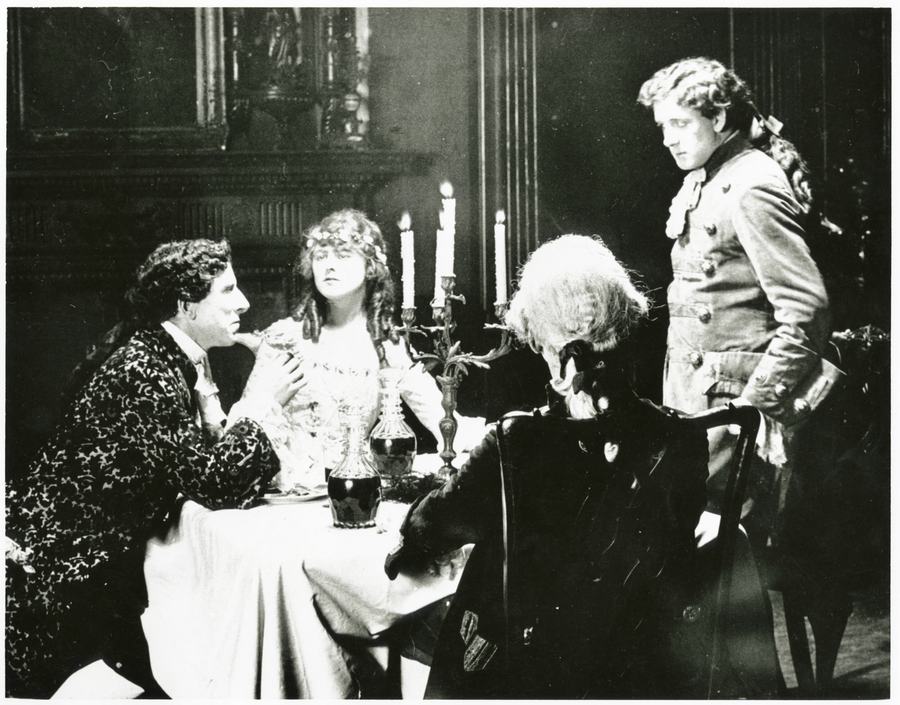
Curiously, the American prints—rescued from a condemned cinema in Queens—omit these cards, replacing them with censorious platitudes about loyalty. The discrepancy created a diasporic doppelgänger: two films diverging in the same reel, a Rashomon of occupation. Modern restorations have reinstated the original cards, their letters flickering like struck matches against the emulsion.
No sonic accompaniment survives, but eyewitnesses recall a piper stationed in the orchestra pit who segued from "The Dawning of the Day" into a dirge whenever Corry appeared. Contemporary screenings at the Irish Film Institute pair the print with a new score by Linda Buckley—electronics fused with uilleann pipes—so that the past vibrates against the present like a bow drawn across a razor. The effect is ectoplasmic: audiences swear they smell peat smoke, hear the creak of English leather.
While Griffin’s novel punishes Úna for assertiveness, MacDonagh rewrites her fate. She does not swoon into the river to be rescued by a fisherman; instead she wields the shillelagh, fractures Corry’s ulna, and rides pillion behind Willy toward an uncertain horizon. This proto-feminist twist anticipates the heroines of Maid o’ the Storm yet predates them by three lustra. The image of a woman striking back against landlordism became so potent that rural unions used stills of Murphy as agit-prop posters during the Land War centenary.
Viewed beside The Beloved Traitor or An International Marriage, Willy Reilly feels less like escapism and more like exorcism. The thatched hovels burn nightly in Newsreel Ireland; the Black-and-Tans prowl outside the projection booth. Audiences in 1920 did not need allegory—they could smell cordite through the perforations. Yet the film’s endurance lies in its refusal to console: love does not restore the land, the villain is not unmasked by due process, and the final embrace is silhouetted against a sunrise that may simply be another country’s sunset.
For decades the negative was presumed lost, a casualty of the Customs House inferno of 1921. Then, in 1988, a tin trunk labelled "MacDonagh—personal effects" surfaced in a Spanish monastery, containing a 35 mm nitrate print riddled with vinegar syndrome. The Irish Film Archive froze the reels, scraped fungal blossoms from the emulsion, and re-photographed each frame onto polyester. The digital scan reveals details previously smothered: the glint of a hidden skean dhu, a child chalking "IRA" on a barrack wall, the reflection of a cameraman in Úna’s buckles—an unintended self-portrait of insurgent art.
Today, when every insurgency is livestreamed, Willy Reilly’s fugitive gait seems almost quaint. Yet quainter still is our hunger for myth—for stories where love and land are synonyms, where a song can outrun a bullet. MacDonagh understood that cinema is not a mirror but a prism: it refracts the same bloody light into futures not yet born. Each time the restored print is screened, the audience leaves humming a tune none can name, a melody that lingers like peat-smoke in the lungs of ghosts.
Verdict: Essential viewing for anyone who believes nations are narrated before they are negotiated. Seek the 4K restoration; bring a friend who still cries at dawn.
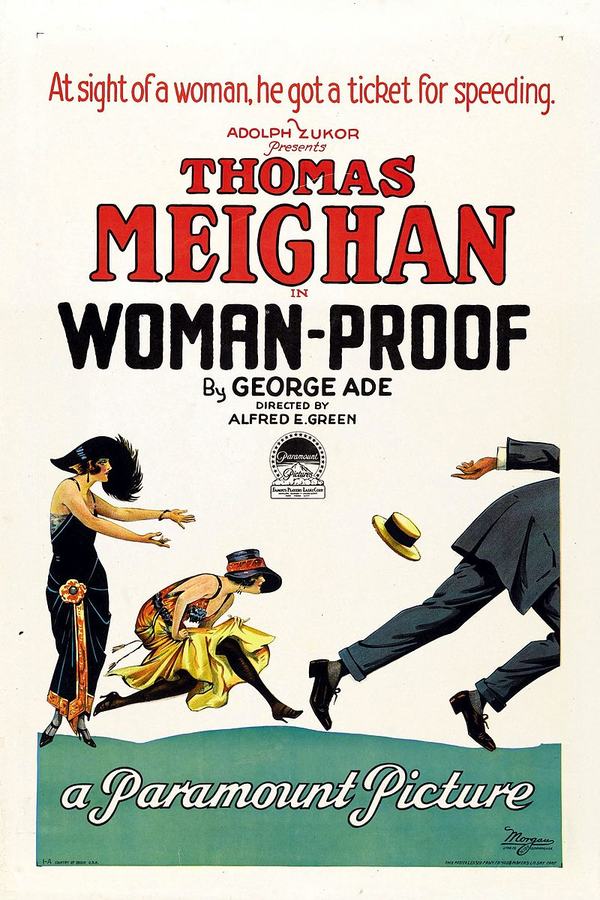
IMDb 4.6
1923
Community
Log in to comment.