DbcultAccessing Vault...
Cult Review
Senior Film Conservator
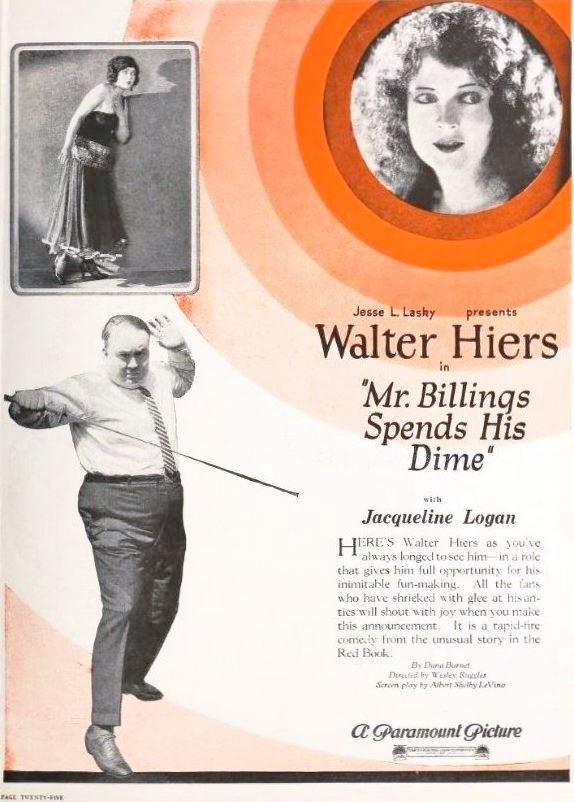
In the twilight years of the silent film era, a peculiar charm often emanated from narratives that dared to juxtapose the mundane with the magnificent, transforming ordinary lives into extraordinary odysseys. Mr. Billings Spends His Dime, released in 1929, stands as a testament to this particular brand of cinematic alchemy. It’s a film that, at first glance, might appear to be a simple romantic comedy, but beneath its surface, it pulses with an undercurrent of adventure, political intrigue, and the timeless triumph of the underdog. This isn't just a story; it's a delightful exploration of how a single, seemingly insignificant act—the spending of a dime—can unravel a tapestry of destiny, forever altering the trajectory of a man's life and, indeed, the fate of a nation.
At the heart of this captivating narrative is John Percival Billings, portrayed with a nuanced blend of timidity and burgeoning courage by the inimitable Lucien Littlefield. Littlefield, a character actor of considerable repute, often found himself in supporting roles, but here, he takes center stage, delivering a performance that anchors the entire film. Billings is introduced as a quintessential everyman, a diligent but unremarkable department store clerk whose days are a monotonous parade of ledgers and customer interactions. His true escape, his vibrant inner life, resides within the pages of romance novels, a subtle yet profound detail that immediately endears him to the audience. He yearns for a life less ordinary, a love as passionate and grand as those he devours in print. This foundational characterization, penned by Albert S. Le Vino and Dana Burnet, is crucial. It sets the stage for his dramatic transformation, making his eventual heroism not merely a plot device, but a deeply satisfying culmination of suppressed desire and unexpected opportunity.
Littlefield’s portrayal is a masterclass in silent film acting. His expressions, from the hopeful glint in his eye as he reads to the wide-eyed wonder upon seeing Suzanna’s photograph, convey a rich inner world without uttering a single word. He imbues Billings with a quiet dignity, a sense of longing that resonates universally. It’s a performance that reminds us of the power of the human spirit to transcend its circumstances, a theme subtly echoed in other silent films focusing on personal growth, though perhaps less overtly political. The journey of Billings from a daydreaming clerk to a man of action is not a sudden metamorphosis but a gradual awakening, spurred by the potent forces of love and circumstance.
The genesis of Billings's adventure is remarkably prosaic yet profoundly impactful: a picture on a cigar box. This image, depicting the stunning Suzanna Juárez, played by the luminous Jacqueline Logan, ignites a spark within him that no romance novel ever could. Logan, a prominent actress of the silent era, brings an ethereal beauty and an underlying strength to Suzanna. She is not merely an object of desire but a woman whose circumstances are intrinsically linked to the political turmoil of her homeland, Santo Dinero. Her father, President Estaban Juárez (Josef Swickard), is battling the tides of revolution, a struggle that inadvertently draws Billings into its vortex. Logan’s screen presence, much like her notable turn in Miss Jackie of the Army, where she also portrays a woman of agency caught in dramatic events, elevates Suzanna beyond a mere damsel in distress, hinting at her resilience and importance to the plot.
The fateful 'lucky dime' bestowed upon Billings by a customer acts as the literal and metaphorical key to his destiny. This seemingly insignificant coin enables him to purchase the very cigar that bears Suzanna's image, leading him to information of immense value. This plot device, while simple, is brilliantly effective, highlighting the often-unseen connections between small actions and grand consequences. The information, which Billings astutely sells to a group of conspirators for a substantial $5,000, is his ticket to Santo Dinero and, more importantly, to Suzanna. It’s a narrative twist that combines elements of espionage with romantic pursuit, creating a unique blend of genres that keeps the audience engaged. This willingness to embrace both personal and political stakes differentiates Mr. Billings Spends His Dime from more straightforward romantic narratives of the time.
The setting of Santo Dinero is more than just a backdrop; it's a vibrant, volatile character in itself. The film skillfully portrays the simmering tensions of a nation on the brink of revolution, with President Juárez struggling to maintain control against formidable opposition, including figures like Clarence Burton, who often played formidable antagonists. This political unrest provides a dramatic canvas upon which Billings's personal quest unfolds. His arrival in Santo Dinero is not merely a romantic rendezvous but an immersion into a world of genuine danger, far removed from the idyllic settings of his beloved novels. This juxtaposition of a naive romantic in a perilous political landscape generates both humor and suspense.
The direction masterfully balances the lightheartedness of Billings's romantic pursuit with the genuine threat of the revolution. Scenes of charming encounters between Billings and Suzanna are intercut with moments of political intrigue and escalating conflict. The visual storytelling, characteristic of the silent era, relies heavily on strong compositions, expressive acting, and intertitles to convey the complex political machinations. The film avoids being overtly didactic, instead letting the characters' actions and reactions guide the audience through the perils of Santo Dinero. The ensemble cast, including Edward Patrick, George Field, Walter Hiers, Robert McKim, Guy Oliver, Patricia Palmer, and George Fawcett, contribute to the vibrant atmosphere of this fictional nation, each playing their part in the unfolding drama, from loyalists to revolutionaries.
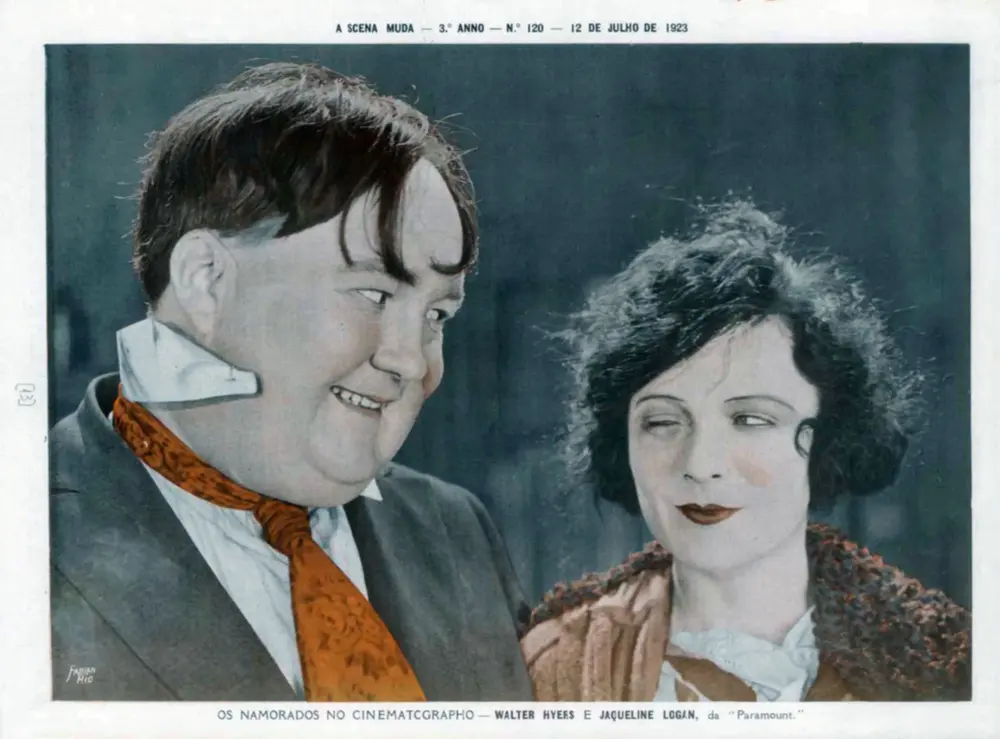
At its core, Mr. Billings Spends His Dime is a delightful exploration of escapism, destiny, and the latent heroism within the most unassuming individuals. Billings's initial retreat into romance novels is not merely a character quirk; it's a profound commentary on the human need for something more, a yearning for a grander narrative than one's daily routine. His journey is a testament to the idea that sometimes, the very stories we consume can inspire us to write our own. The film suggests that courage isn't the absence of fear, but the willingness to act in spite of it, especially when motivated by a noble cause or a profound love. This theme of an ordinary person rising to extraordinary challenges is a recurring motif in cinema, but here it is handled with a particular warmth and sincerity.
The screenplay by Albert S. Le Vino and Dana Burnet is a marvel of concise storytelling, managing to weave together romance, comedy, and political thriller elements into a cohesive and satisfying whole. They understand the power of visual narrative, crafting scenes that are both emotionally resonant and dramatically impactful. The pacing is brisk, a necessary quality in silent films where every gesture and intertitle must count. The writers successfully build tension around the revolution while never losing sight of the central romantic arc, ensuring that Billings's personal stakes remain paramount even amidst national crisis. This delicate balance is a hallmark of strong storytelling, reminiscent of how other silent films, like The Yellow Passport, managed to blend personal drama with broader social or political commentary.
Released in 1929, Mr. Billings Spends His Dime arrived at a pivotal moment in cinematic history, just as the advent of sound was irrevocably transforming the industry. It stands as one of the last vestiges of a dying art form, showcasing the refined techniques and narrative sophistication that silent films had achieved. The performances, particularly Littlefield’s, are a masterclass in non-verbal communication, relying on exaggerated yet heartfelt expressions and body language to convey complex emotions. The film's ability to engage an audience without spoken dialogue is a powerful reminder of the universal language of cinema and the skill of its practitioners during this transitional period. While films like Dawn or Destiny pushed artistic boundaries with their visual poetry and philosophical depth, Mr. Billings Spends His Dime excels in its accessible, engaging narrative, proving that silent cinema could be both profound and broadly appealing.
The film's resolution, where John not only saves the government but also wins Suzanna's heart, is the quintessential Hollywood ending, yet it feels earned. Billings's journey from an anonymous clerk to a national hero and a beloved romantic figure is a testament to his growth and courage. It’s a satisfying conclusion that reaffirms the film's optimistic worldview. The chemistry between Littlefield and Logan, though conveyed through glances and gestures rather than dialogue, is palpable, making their eventual union feel like a natural and joyful outcome. This kind of wholesome, adventurous romance, often punctuated by light comedy, was a beloved staple of the era, offering audiences a much-needed escape from the realities of the nascent modern world.
Mr. Billings Spends His Dime, despite its age and the limitations of its medium, remains a compelling watch. It’s a film that speaks to the enduring human desire for adventure, love, and purpose. It reminds us that heroism isn't exclusive to the physically imposing or the socially prominent; it can reside within the quietest of hearts, waiting for the right catalyst to ignite. The film's charm lies in its earnestness, its belief in the power of individual agency, and its delightful blend of genres. It’s a cinematic artifact that not only entertains but also offers a glimpse into the storytelling sensibilities of a bygone era, proving that a well-crafted narrative, compelling characters, and a touch of romantic idealism can transcend the boundaries of time and technology.
The film serves as a valuable historical document, showcasing the talents of its cast and crew in a period of intense artistic and technological innovation. It stands as a vibrant example of how silent cinema, even in its twilight, could deliver intricate plots and deeply felt emotions. For those interested in the evolution of film, or simply seeking a heartwarming tale of an everyman's unexpected journey, Mr. Billings Spends His Dime is a delightful discovery. It’s a gentle reminder that sometimes, all it takes is a lucky dime and a picture on a cigar box to change everything. The film's enduring appeal lies in its simple yet profound message: that even the most unassuming among us possess the capacity for greatness, and that true love can be the most potent catalyst for courage. This sentiment resonates across decades, linking it thematically to other tales of unexpected heroism and romance, proving its timeless quality.
The craftsmanship visible in every frame, from the careful staging to the expressive performances, speaks volumes about the dedication of filmmakers during the silent era. It's a testament to their ability to communicate complex narratives and emotions without the aid of spoken dialogue, relying instead on the universal language of visual storytelling. This film, much like a carefully preserved antique, offers a window into a different time, a different way of experiencing cinema, yet its core themes of love, courage, and destiny remain as relevant today as they were nearly a century ago. It's a film that truly makes a dime feel like a million-dollar investment in cinematic joy.
IMDb 6
1927
Community
Log in to comment.