DbcultAccessing Vault...
Cult Review
Senior Film Conservator
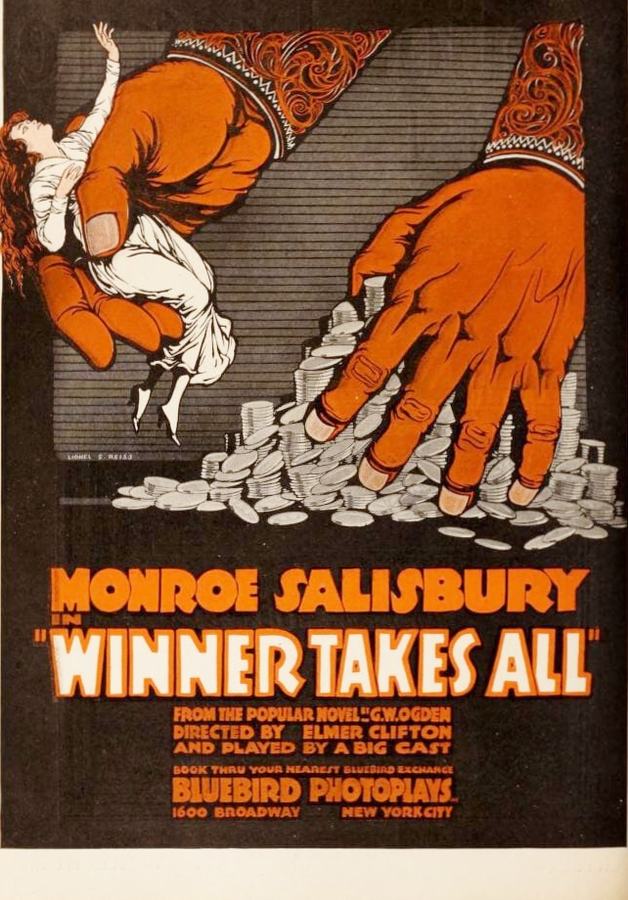
Winner Takes All, a 1917 Western directed by C.W. Ogden and Verne Hardin Porter, is a masterclass in tension and moral complexity. Set against the unforgiving backdrop of the American frontier, the film transcends the typical cattle-rustling tropes to deliver a narrative steeped in psychological depth and visceral conflict. This is not merely a story of land disputes; it is a meditation on the corrosive allure of power, the redemptive potential of love, and the fragile line between justice and brutality.
Saul Chadron (Alfred Allen), the film’s central antagonist, is a figure of chilling authority. His sprawling ranch, a symbol of unchecked capitalism, becomes a fortress against the encroaching homesteaders who dare to claim their own stake in the land. Chadron’s methods are as calculated as they are cruel: hiring outlaws to terrorize settlers and manipulating the townspeople’s prejudices to maintain his grip on power. His character is a stark reminder of the monopolistic excesses that plagued post-industrial America, rendered with a nuance that avoids caricature.
Alan MacDonald (likely portrayed by Jack Nelson, as per historical records), the homesteader leader, emerges as a reluctant hero. His journey from a cautious survivor to a defiant champion is anchored by his growing affection for Frances Landcrafe (Betty Schade), a woman whose presence introduces a tender counterpoint to the film’s brutality. Frances is not a passive muse; her quiet strength and moral clarity challenge Alan to confront the cost of his resistance. Their romance unfolds with the urgency of a last stand, each scene charged with the understanding that love and survival are inextricably linked.
Mark Thorne (Sam De Grasse), the hired gun, embodies the darkest facets of human nature. His role as Chadron’s enforcer is not merely one of physical violence but of psychological manipulation. Thorne’s demand for payment after faking Alan’s death, followed by the abduction of Chadron’s daughter, Nola, is a masterstroke of narrative cruelty. This sequence, steeped in moral ambiguity, forces the audience to question who the true villains are: Chadron, whose greed fuels the chaos, or Thorne, whose ruthlessness executes it. The film’s brilliance lies in its refusal to sanitize either.
Thorne’s descent into madness—a result of his own actions—culminates in a climactic shootout that is both cathartic and tragic. His death, at the hands of Alan, is not a tidy resolution but a bittersweet acknowledgment of the cost of justice. The film’s refusal to romanticize vengeance is its most compelling trait, a stark contrast to many Westerns that glorify the lone hero’s triumph.
The film’s visual language is as deliberate as its narrative. Wide shots of the arid plains emphasize the isolation of the characters, while the use of chiaroscuro in scenes like the masquerade ball heightens the tension between desire and danger. The masquerade sequence itself is a standout, a juxtaposition of elegance and menace that mirrors the duality of the characters. Frances, veiled in mystery, becomes a symbol of the moral compass that Alan must follow—a beacon in a world of shadows.
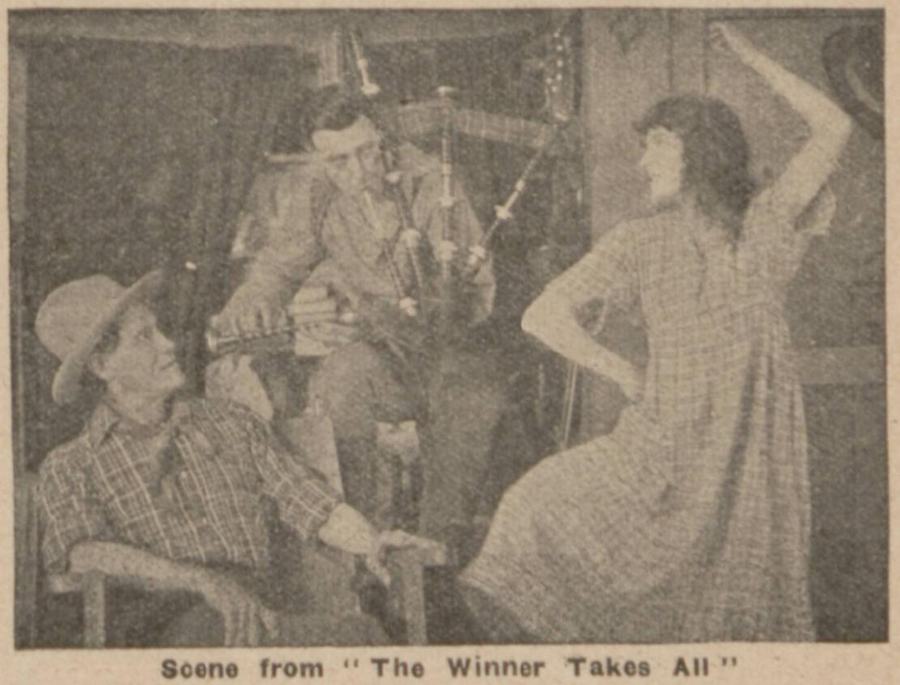
Winner Takes All also excels in its pacing. The script, penned by C.W. Ogden and Verne Hardin Porter, moves with the inevitability of a Greek tragedy. Each act builds upon the last, escalating the stakes until the final confrontation feels both shocking and predestined. The film’s runtime, though brisk by modern standards, is meticulously structured, with no extraneous scenes. This efficiency is a testament to the writers’ understanding of narrative economy.
The cast delivers performances that elevate the material. Alfred Allen’s portrayal of Chadron is chilling in its restraint; his quiet menace is far more unsettling than overt villainy. Betty Schade, as Frances, brings a quiet resilience that anchors the film’s emotional core. Sam De Grasse’s Thorne is a study in volatile energy, his performance oscillating between charm and menace in a way that keeps the audience perpetually off-balance.
Historically, Winner Takes All fits within the early 20th-century Western tradition, a genre often used to explore America’s fraught relationship with expansion and morality. While it shares thematic DNA with films like Mountain Dew (its focus on land rights) or Herod (its exploration of power dynamics), it distinguishes itself through its psychological depth and refusal to offer easy resolutions. The film’s depiction of a community turning on its own—Chadron’s hanging due to the townspeople’s fear of unrest—echoes the same moral dilemmas faced by real settlers during the frontier era.
Winner Takes All endures not merely as a historical artifact but as a nuanced exploration of human conflict. Its exploration of greed, love, and justice remains startlingly relevant, offering a mirror to contemporary issues of corporate power and individual resistance. The film’s climax, where Alan is free to claim Frances and his land, is not a happy ending but a recognition of the cost of freedom. The land, once a symbol of promise, is now a site of contested memory.
For modern audiences, the film is a reminder of cinema’s capacity to blend action with introspection. It stands alongside works like The Inner Struggle in its examination of inner turmoil and Without Hope in its unflinching portrayal of despair. While its silent format may feel alien to some, the story’s emotional resonance transcends the lack of spoken dialogue.
In conclusion, Winner Takes All is a triumph of early American cinema. It challenges viewers to see beyond the surface of its Western trappings and engage with the deeper questions of morality, power, and survival. A century after its release, it remains a testament to the enduring power of storytelling to illuminate the human condition.
IMDb —
1919
Community
Log in to comment.